Ingredients and steps on one page. Print it, or choose “Save as PDF” in the print dialog.
Sekai Gohan
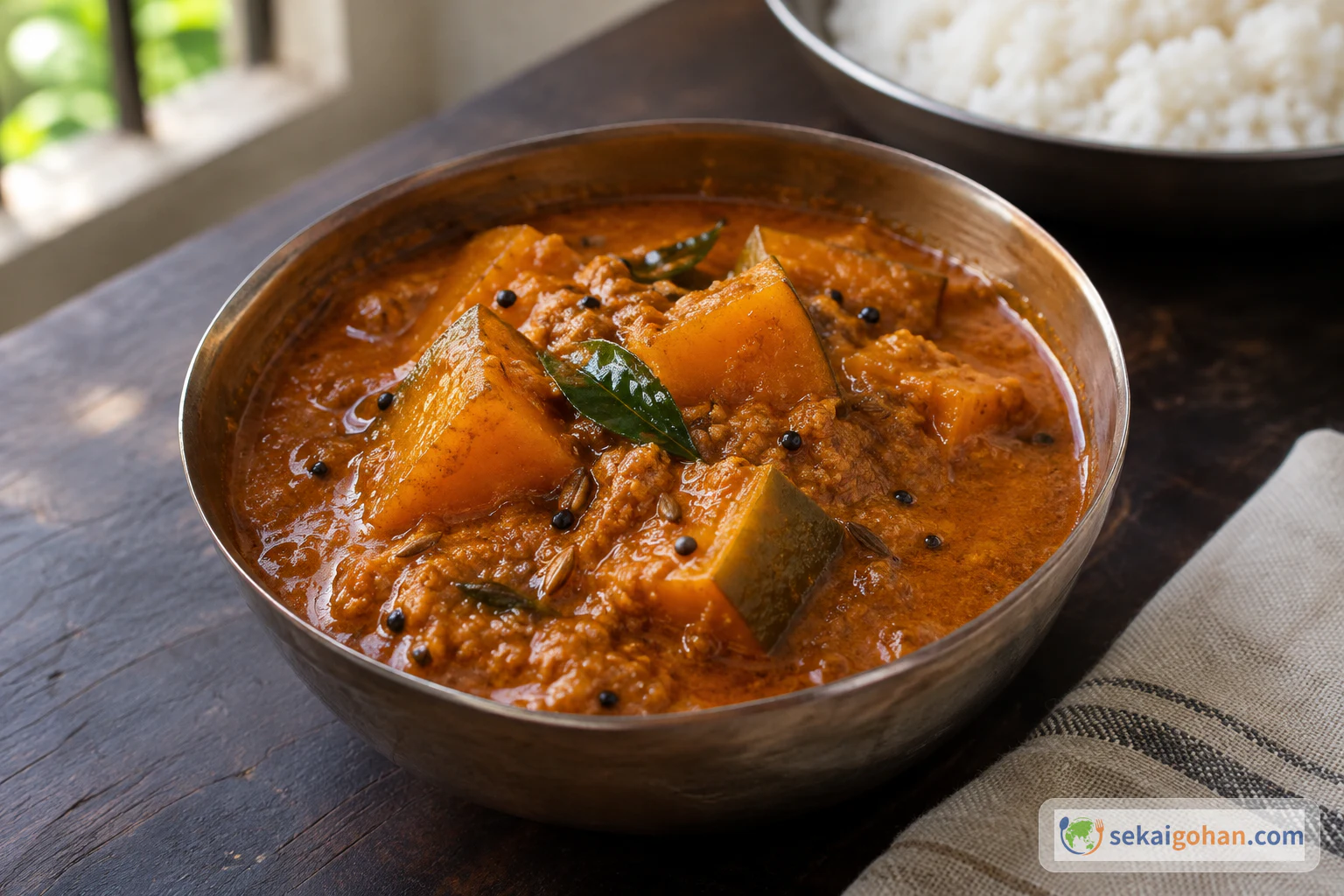
Mathanga Pulinkari: Kerala Pumpkin in Tamarind and Roasted Coconut
Ingredients
| Ingredient | Amount | Role |
|---|---|---|
| Pumpkin (mathanga) | 5 oz (150 g), in ½-inch (1.3 cm) cubes | The vegetable; its sweetness meets the sour |
| Water | 1 cup | For boiling the pumpkin |
| Salt | ½ tsp, plus more to taste | Seasons the pumpkin as it cooks |
| Tamarind paste (puli) | 1 tsp (or 3 tsp tamarind juice) | The sourness the dish is named for |
| Grated coconut | 2¾ oz (75 g) | Paste: body and roasted aroma |
| Dried red chillies | 7 | Paste: heat and colour |
| Urad dal | 1 tsp | Paste: thickness and richness |
| Coriander seeds | 3 tbsp | Paste: the main spice aroma |
| Curry leaves | 1 sprig | Paste: roasted with the coconut |
| Water | 2 tbsp | Paste: loosens it for grinding |
| Water | up to ¼ cup (60 ml), as needed | Thins the curry after the paste goes in |
| Oil | 2 tsp | Tempering: the hot fat |
| Black mustard seeds | ¾ tsp | Tempering: popped first |
| Cumin seeds (jeera) | ½ tsp | Tempering: warm aroma |
| Fenugreek seeds (methi) | ¼ tsp | Tempering: a faint bitter edge |
| Curry leaves | 1 sprig | Tempering: crackled in the oil |
| Shallots | 2–3, optional | Tempering: sweetness |
| Cooked rice | as needed | To serve |
Steps
1Cut the pumpkin into even cubes
Scoop out the seeds and fibres, then pare away the hard rind. Cut the flesh into ½-inch (1.3 cm) cubes and weigh out 5 oz (150 g). All the cubes go into the pot together, so make them as even as you can and they will soften together. The pile is ready when every cube is about the same size and bright orange on all sides.
2Dry-roast the coconut and spices
Set the iron kadai over low-medium heat with no oil. Add the grated coconut, urad dal, dried chillies, coriander seeds and one sprig of curry leaves. Stir constantly for about 20 minutes, scraping up from the bottom so nothing sits still. The roast is done when the coconut has turned an even golden brown, the kitchen smells of toasted coriander.
Keep the heat low and the spatula movingScorched coconut or coriander turns the whole curry bitter, and nothing added later covers it. If you smell burning, start the roast again with fresh coconut. A slow, even golden brown is what gives pulinkari its depth.
3Grind the paste
Transfer the roasted mixture to the mixer jar and add 2 tbsp water. Grind until smooth, scrape down the sides, and grind again. Keep to the 2 tbsp of water, because a wetter paste thins the curry later. The paste is ready when it is thick, dark brown and smooth, with no grit left.
4Boil the pumpkin with tamarind
Put the pumpkin cubes in the saucepan with 1 cup water, ½ tsp salt and the tamarind paste (or 3 tsp juice). Stir until the tamarind dissolves, then bring to a boil and keep it bubbling gently. Taste the liquid here: it should be clearly sour. Stop when the pumpkin is about three-quarters cooked, with sharp corners and a skewer that meets slight resistance at the centre.
Add the paste at three-quarters doneAdd the coconut paste when the pumpkin is about three-quarters cooked, and let the pumpkin finish cooking in the sauce.
5Stir in the coconut paste
Spoon the paste into the pot and stir well until it dissolves into the liquid. If the curry looks too thick to move freely, add water, up to ¼ cup (60 ml). Taste and add salt if needed. The liquid changes from clear tamarind brown to an opaque, muddy brown sauce that coats every cube.
6Simmer on low until the pumpkin is soft
Turn the heat to low and let the curry bubble gently for 5–8 minutes, stirring now and then so the paste does not catch on the bottom. Strong heat makes the coconut split and the sauce turn oily and broken, so keep the bubbles small and slow. While it cooks, set out the tempering pan and spices. Turn off the heat when a skewer slides into the pumpkin with no resistance and the sauce leaves a trail behind the spoon.
7Temper and pour over
Heat the oil in the small pan and add the mustard seeds. When they pop, add the cumin and fenugreek and sauté for 1 minute. Add the second sprig of curry leaves, and the sliced shallots if you are using them, and stir as the leaves crackle. Pour the sizzling tempering over the curry right away, while the fenugreek is golden and before it darkens.
Hot oilMustard seeds jump out of the pan as they pop. Stand back from the stove, keep children away, and pour the hot tempering slowly over the curry so it does not splash.