Ingredients and steps on one page. Print it, or choose “Save as PDF” in the print dialog.
Sekai Gohan
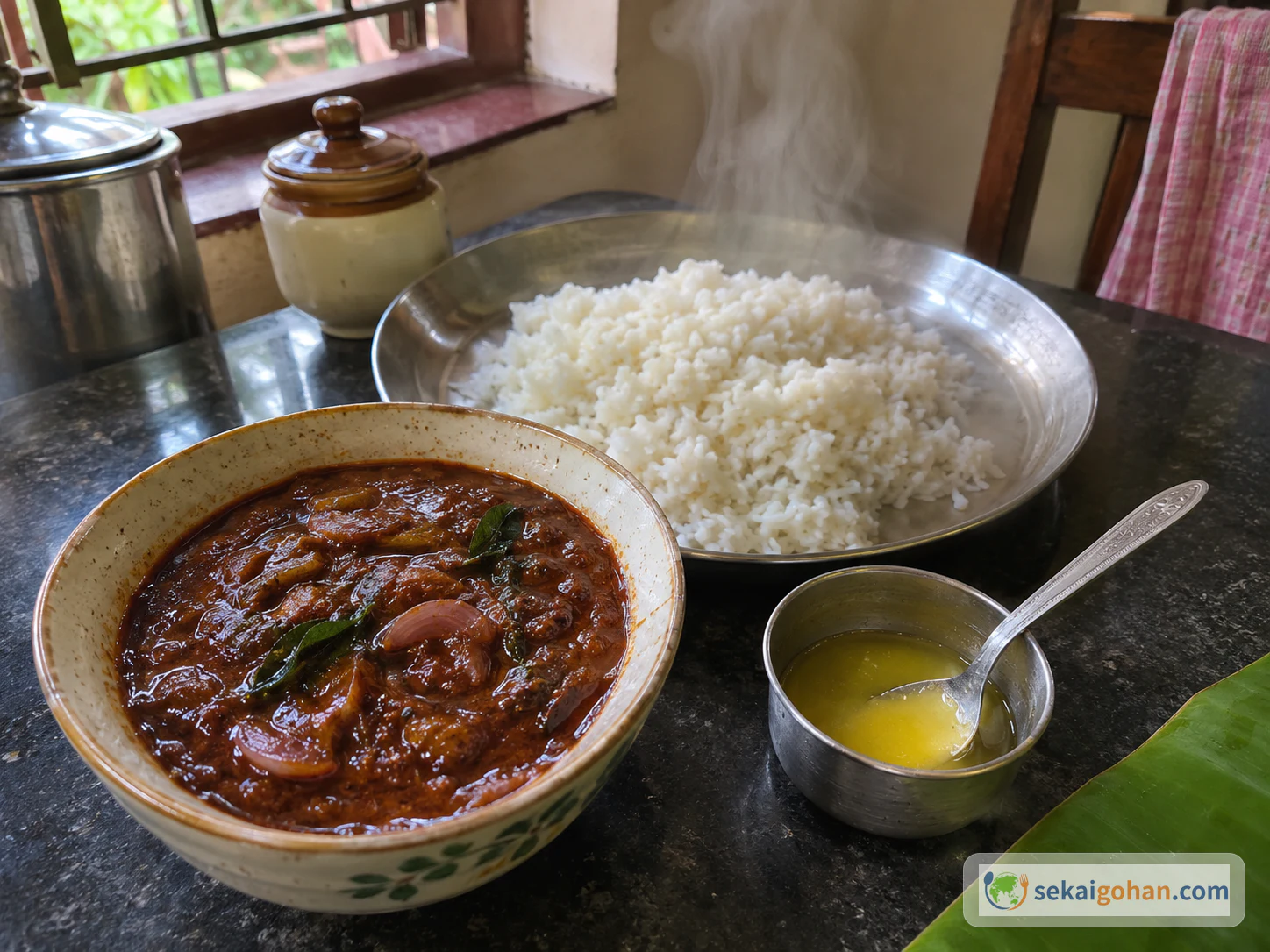
Ulli Theeyal: Kerala Shallots in Roasted Coconut Tamarind Gravy
Ingredients
| Ingredient | Amount | Role |
|---|---|---|
| Grated coconut | ½ cup | Body, colour and roasted aroma of the gravy |
| Coriander seeds | 2 tbsp (or 1 tbsp ground coriander) | Warm, citrusy depth |
| Dried red chillies (to roast) | 10 (or 2 tsp red chilli powder) | Heat and red-brown colour |
| Curry leaves (to roast) | 10 | Roasted leaf aroma, ground into the paste |
| Coconut oil | 2–3 tbsp | Cooking fat. It carries the aroma and separates at the end |
| Mustard seeds | 1 tsp | Their popping tells you the oil is hot enough |
| Fenugreek seeds | ¼ tsp | A gentle bitter note. More turns the gravy bitter |
| Dried red chillies (for tempering) | 2 | Whole chillies fried in the oil, separate from the 10 above |
| Curry leaves (for tempering) | a few | Fresh aroma in the oil, separate from the 10 above |
| Small onions (ulli, sambar onions or shallots) | 20, sliced | The filling. Sweet once browned |
| Garlic | 6 cloves, sliced (optional) | Optional extra. The method below is written without it |
| Tamarind paste | 3 tsp (or a lemon-sized ball of tamarind) | The sourness that holds the gravy together |
| Turmeric powder | ¼ tsp | Colour |
| Salt | to taste | Seasoning |
Steps
1Roast the coconut and whole spices
Put the grated coconut, coriander seeds, 10 dried red chillies and 10 curry leaves in a heavy frying pan over medium-low heat. Stir constantly for 5–7 minutes, scraping the coconut in from the edges of the pan, where it colours fastest. If you are using ground coriander or chilli powder, add it only at the very end, once the coconut has coloured, and stir just until it smells fragrant. Stop when the coconut is an even golden brown, with no white patches and no black specks, and the pan smells toasty.
2Cool and grind to a smooth paste
Tip the roasted mixture onto a plate or into a bowl and let it cool. Put it in the blender or grinder with a very small splash of water. Grind, scraping down the sides, and add water only a little at a time if the blades can't move it. The paste is ready when it is dark brown, smooth and thick, and it clings to the walls of the jar instead of running.
3Temper the seeds in coconut oil
Heat 3 tbsp coconut oil in the pot over medium heat and add the mustard seeds. When they start to pop and crackle, add the fenugreek seeds, the few curry leaves and the 2 dried red chillies. Keep this short, because fenugreek turns bitter if it darkens too far, and move straight on to the shallots.
4Brown the shallots with turmeric
Add the sliced shallots and the turmeric to the pot and stir to coat them in the spiced oil. Sauté for 5–7 minutes, stirring often so they colour evenly. Judge by colour, not the clock, because browning is what gives the sweetness. They are done when the edges are golden brown and the centres are soft and translucent.
5Add the paste and tamarind
Stir the coconut paste into the shallots, then add the tamarind paste or strained tamarind water. Add water a little at a time, stirring, until the gravy coats a spoon heavily. Season with salt and bring it to a boil. It is ready to simmer when it looks like a thick, muddy brown gravy that bubbles all over.
6Simmer until the oil separates
Cover the pot and simmer over medium heat for at least 10 minutes. Lift the lid now and then to stir the bottom so nothing catches. Taste for salt and sourness toward the end. It is finished when the coconut oil separates and floats, forming a red-orange ring at the edges and droplets on the surface, and the gravy is thick and glossy.