Ingredients and steps on one page. Print it, or choose “Save as PDF” in the print dialog.
Sekai Gohan
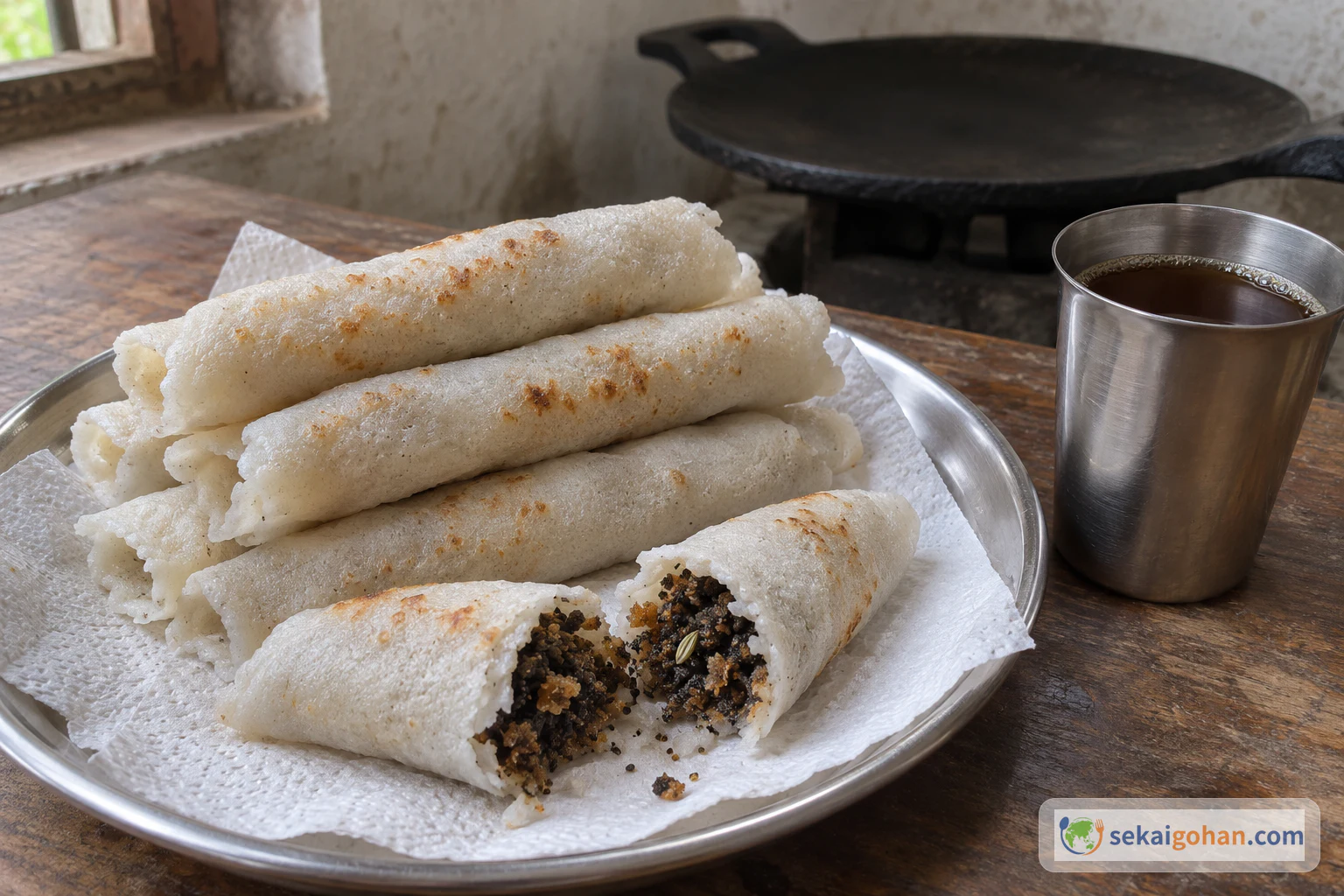
Til Pitha: Assamese Griddle Rolls of Sticky Rice, Sesame and Jaggery
Ingredients
| Ingredient | Amount | Role |
|---|---|---|
| Glutinous rice (bora saul) | 3 cups | The entire shell. Its starch alone holds the sheet together |
| Black sesame seeds (til), raw | 1½ cups | The heart of the filling. Toasted, then crushed coarsely so it keeps some texture |
| Jaggery (gur), shaved | 1½ cups | Sweetness and depth, and it binds the filling |
| Fennel seeds | 1½ tbsp | A light, sweet aroma running through the filling |
Steps
1Wash and soak the rice
Put the glutinous rice in a large bowl and wash it, changing the water several times, until the water runs clear. Cover the rice with plenty of fresh water and leave it for 4 hours. Press a grain between your fingers at the end. It is ready when it breaks apart easily.
2Drain the rice for another 4 hours
Tip the rice into a colander or sieve and leave it for another 4 hours. Spread the grains out and press a shallow dip into the middle so the water runs out faster. A wide sieve dries the rice sooner, so start checking it early. Stop when the grains feel damp to the touch and no water drips from them.
3Grind in short bursts
Grind the drained rice a small handful at a time, in pulses of 10 to 15 seconds. Stop between pulses and scrape down the inside of the jar. If the jar warms up, let it rest before you grind the next batch. Sifting is optional; if you do sift, put the coarse bits back in the grinder. The flour is right when it is off-white, a little coarse, and clumps softly when pressed.
4Pack the flour and chill it
Tip each batch into a clean, dry bowl as soon as it is ground and press it down lightly. Add the next batch on top and press again. Packing the flour keeps it from drying out. Cover the bowl tightly with cling film and refrigerate for 5 to 6 hours or overnight. Before cooking, leave the bowl at room temperature for about 10 minutes. A handful should hold together when you squeeze it and crumble when you open your hand.
5Toast and crush the sesame
While the flour chills, put the black sesame in a dry pan over low heat and stir it constantly. Take it off the heat as soon as it smells toasty and the seeds start to pop. Let it cool a little, then pulse it in the food processor to a coarse grind. Stop while you can still see broken seeds, before it turns to powder or paste.
6Rub the filling together
Put the crushed sesame, shaved jaggery and fennel seeds in a wide bowl. Rub them together between your fingertips and break up every large lump of jaggery as you go. Keep the jaggery raw and do not melt it. Taste, and add more jaggery if you want it sweeter. Let the filling cool completely. It is ready when it looks like an even, grainy crumb.
7Heat the iron pan
Set the heavy griddle or cast-iron pan over low heat, completely dry, with no oil. The thicker the pan, the less the sheets brown. Let it heat all the way through. Then hold your palm flat 6 to 7 inches above the surface. The pan is ready when you can keep your hand there without pulling it away at once, and it stays on low for the whole batch.
8Sift a thin oval and lay the filling
Take a scoop of flour from the bowl and put it in the sieve. Shake it over the pan in an oval, thin enough that the iron shows through in places. Press it lightly with your fingertips so it joins into one sheet. After 2 to 3 seconds, spoon a few teaspoons of filling in a line along the middle, parallel to the long sides, and stop short of the edges. The sheet should look pale and matte with no brown spots.
9Roll when the edges lift
Watch the edges. As soon as they start to lift off the pan, start rolling from one long side, using your fingertips or a spoon handle to raise that first edge. Roll quickly across to the other long side, lifting the sheet rather than pressing down on it. Check the middle before you start: if it still looks like loose white powder, wait a few more seconds. You are done when the sheet has closed into a tube with the filling sealed inside.
10Crisp at the edge, wipe, repeat
Push the roll to the edge of the pan to crisp, and do not let it brown. Before the next sheet, wipe the loose flour off the pan with a dry cloth and throw it away. Turn the rolls at the edge now and then. When they are crisp all over but still pale, move them to the lined plate and stack them in the order they were made. Keep going until the flour is used up.