Ingredients and steps on one page. Print it, or choose “Save as PDF” in the print dialog.
Sekai Gohan
Medu Vada: South Indian Fried Urad Dal Rings
Ingredients
| Ingredient | Amount | Role |
|---|---|---|
| Skinless split urad dal (urad dal dhuli) | 1 cup (200 g) | The body of the batter; holds air when whipped |
| Water, for soaking | 3 cups | Softens the dal so it grinds smooth; drained before grinding |
| Water, for grinding | 3–4 tbsp (45–60 ml) | Just enough to turn the blender; more makes the batter loose |
| Salt | ¼ tsp plus ⅛ tsp | Seasons the batter; goes in at the grinding stage |
| Curry leaves | 4–5 leaves, chopped | The main aroma |
| Ginger | ½ inch piece, chopped | Warmth and fragrance |
| Green chilli | 1–2, chopped | Heat; adjust to taste |
| Onion | 1 small, chopped (about 3 tbsp) | Sweetness and bits of texture |
| Whole black peppercorns | 10, crushed | Sharp bites of pepper |
| Oil | As needed for deep-frying | Frying |
Steps
1Soak the dal overnight
Rinse the urad dal under running water until the water runs clearer. Put it in a large bowl with 3 cups of water and leave it overnight, about 8 hours. On a warm night, or if the soak will run past 12 hours, cover the bowl and soak it in the refrigerator. In the morning the grains are plump and split easily when pressed between two fingers.
2Grind with very little water
Drain the dal completely and rinse it in fresh water, letting it drip dry in a sieve. Tip it into the blender with 3–4 tbsp (45–60 ml) of water and the salt. Grind, scraping down the sides, until the paste is smooth with no grit left between your fingers. The batter is right when it is thick and falls from a spoon in one lump rather than pouring.
3Whip until it floats
Scrape the batter into a mixing bowl. Whip at medium speed with a hand mixer, stand mixer or balloon whisk for 4–5 minutes. The batter swells in volume, turns visibly paler and feels light and fluffy on the whisk. Drop a small blob into a glass of water; when it floats, the batter is ready.
4Fold in the aromatics
Add the curry leaves, ginger, green chilli, onion and crushed peppercorns. Fold them through with a spoon, turning the batter over gently so you keep the air you just whipped in. The salt went in at the grinding stage, so do not add more. Stop as soon as the green and purple flecks are spread evenly through the pale batter.
5Shape the rings
Set a kadai or deep pot of oil over medium heat. Rub a little oil on a sheet of plastic wrap and wet your hands in the bowl of water. Take a lemon-sized portion of batter, flatten it slightly on the wrap or your palm, and press your thumb through the centre to make a clean hole. The ring is ready to fry when the hole stays open and the batter does not stick to your wet fingers.
6Fry until deep gold
Slide the ring gently into the oil, close to the surface, and fry the first one alone to check the heat. Add two or three at a time once the heat is right, leaving room between them. Turn each vada when the underside is pale gold, and keep turning so both sides colour evenly. Lift them out when they are deep golden brown all over and crisp.
7Drain on paper
Lift each vada with a slotted spoon, let the oil drip back into the pot, and set it on the paper-lined tray. Keep them in a single layer, side by side, never stacked, because stacked vada steam each other and lose their crust. Shape and fry the next batch while these drain. They are ready to serve when the sizzle has died down and the paper under them has taken up the surface oil.
8Serve hot
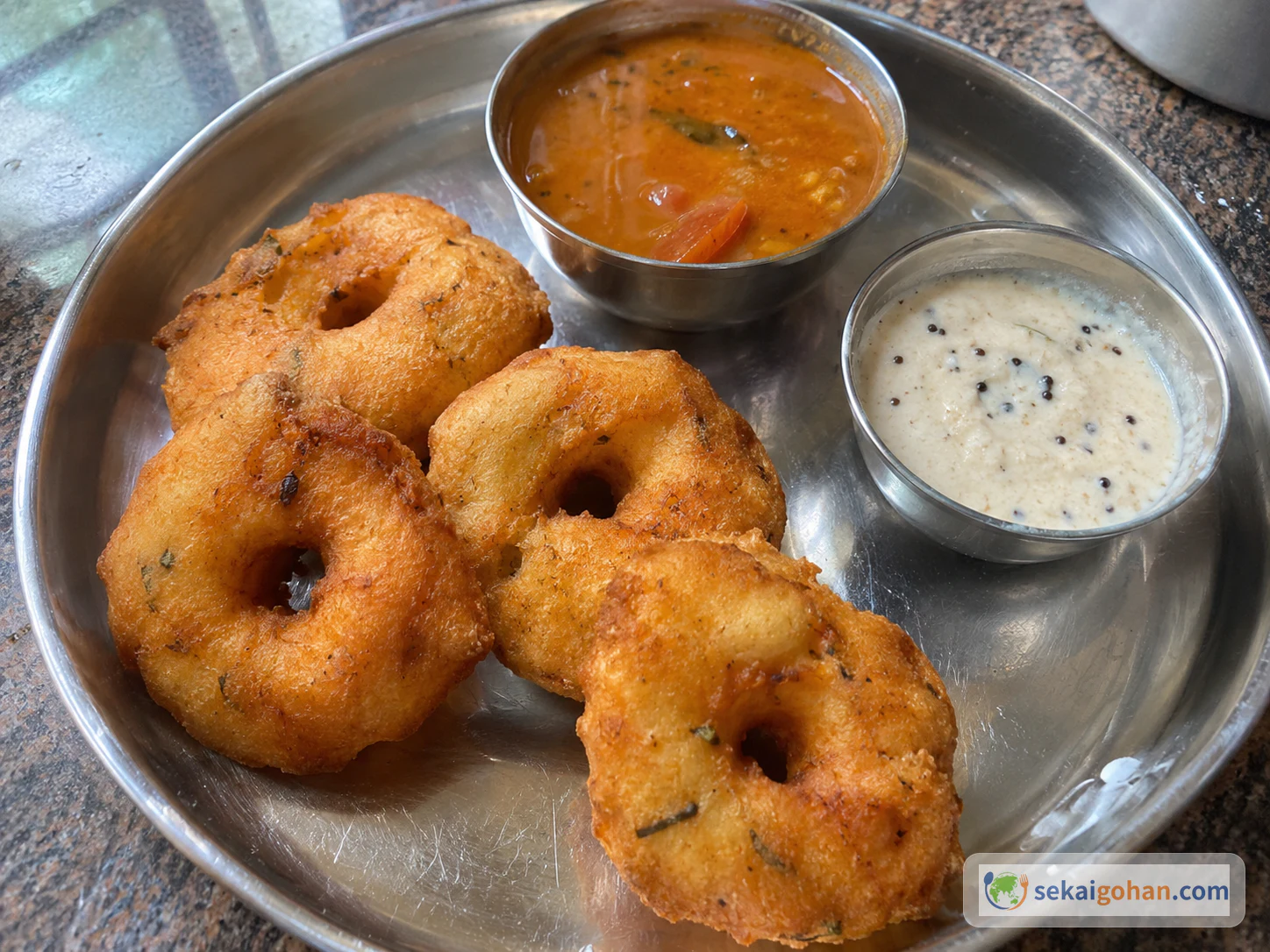
Put two or three vada on each plate with a bowl of sambar and a bowl of coconut chutney beside them. Serve right away; the crust is at its best in the first minutes out of the oil. Tear a piece, dip it, and the inside should be soft and open, with no wet, pasty layer at the centre. Keep frying the rest of the batter in batches so each plate goes out still steaming.