Ingredients and steps on one page. Print it, or choose “Save as PDF” in the print dialog.
Sekai Gohan
Ven Pongal Recipe: South India's Savory Rice and Mung Dal Porridge
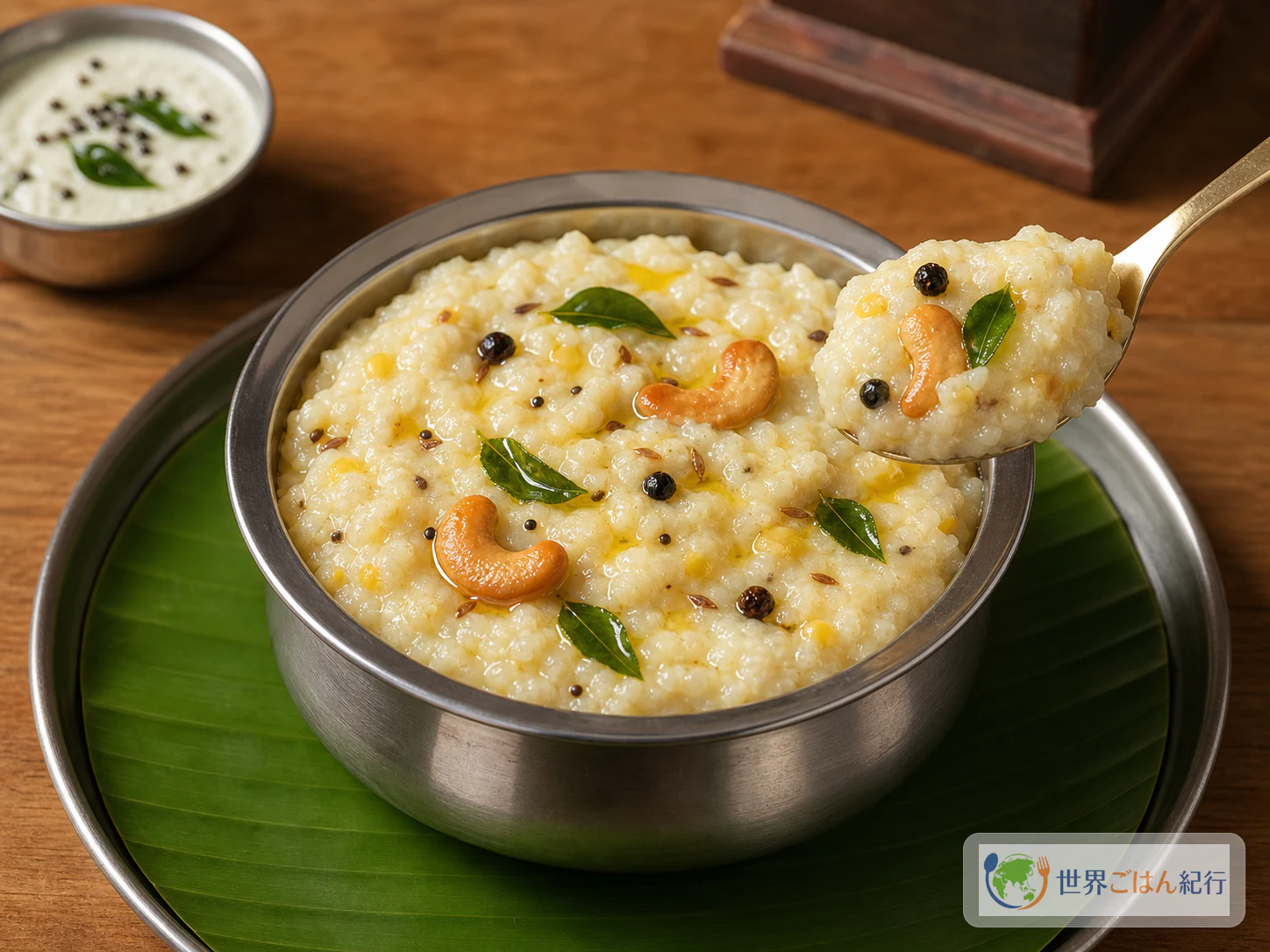
Ingredients
| Ingredient | Amount | Substitutes & notes |
|---|---|---|
| Rice | 5.5 oz (160 g) | Short-grain, sona masuri or similar all work. Long-grain basmati gives a lighter result |
| Skinless mung dal | 2.75 oz (80 g) | Yellow split mung beans. Red lentils can stand in at the same amount but fall apart sooner |
| Water | 1 quart (1 L) + ¾ cup (200 ml) for adjusting | Have boiling water ready for the added amount |
| Ginger | 15 g | 2 mm to 0.125 inch (3 mm) dice. 2 tsp if from a tube |
| Salt | 1 tsp | Adjust by adding up to 1/4 tsp at the end |
| Ghee | 3 tbsp | 3 tbsp unsalted butter works, but the milk aroma comes a little forward |
| Cumin seeds | 1 tsp | Whole, not ground. You want the aroma that pops in the oil |
| Black pepper (whole) | 1 tsp | Crush coarsely. With ground pepper alone, try 1/2 tsp first |
| Cashews | 1.5 oz (40 g) | Split in half. Peanuts change the aroma and texture |
| Curry leaves | 10 leaves | Optional. Do not replace with bay leaves |
| Asafoetida (hing) | a pinch | You can make it without. Some products contain wheat flour |
Steps
1Dry-roast the mung dal
4 min
Warm a heavy pot over medium heat for 1 minute and add 2.75 oz (80 g) skinless mung dal. Keep turning with a wooden spatula; stop the heat when the dal is dry and fragrant and a few grains have turned deep yellow. Roasting to brown makes it bitter and loses pongal's lightness. Move it to a sieve and rinse twice together with 5.5 oz (160 g) rice.
2Cook the rice and dal slowly
35–40 min
Put the rinsed rice and dal, 15 g thinly sliced ginger, 1 quart (1 L) water and 1 tsp salt in the pot and bring to a boil over high heat. Skim the scum when it boils, set the lid ajar by 1 inch (2 cm) and lower to medium-low heat. Cook 30 minutes with the pot surface bubbling quietly, and when the bottom threatens to show, add ½ cup (100 ml) boiling water at a time. Go on when the rice has no hard center and the dal collapses with a light press of a finger.
3Even out the texture in the pot
3 min
Lower to low heat and press from the bottom of the pot only 8 to 10 times with a wooden spatula or potato masher. Do not make a complete paste; stop at a glossy, thick state where about half the rice grains remain. The guide is a thickness where a track drawn on the bottom with the spatula stays for about 1 second before slowly closing. If it is too heavy, add boiling water 3.5 tbsp (50 ml) at a time and stir.
4Pop the aroma in ghee
3 min
Put 3 tbsp ghee in a small frying pan and heat over medium heat, then add 1 tsp cumin seeds, 1 tsp coarsely crushed black pepper and 1.5 oz (40 g) cashews split in half. When fine bubbles form around the cumin and the edges of the cashews turn a pale golden brown, add 10 curry leaves and a pinch of asafoetida. It spits right after the leaves go in, so keep your face away and cook for only 10 seconds.
5Mix in the hot aromatic oil and serve at once
2 min
Pour the aromatic oil, bubbles and all, into the pot. With the pot on low heat, check the salt and stir for 30 seconds. It is done when the streaks of oil have vanished from the surface, the whole is glossy and thick, and the black pepper and cumin are scattered evenly. As it sits, the rice takes up water and starts to firm. When it does, add 2 tbsp boiling water at a time until it drops slowly from a spoon.
6Serve with chutney or sambar
2 min
Serve hot in a shallow bowl and top with the reserved cashews and curry leaves. A white coconut chutney makes it mellow, and a sour sambar sharpens the outline of each bite. If you have neither, plain yogurt mixed with a pinch of salt and 1 tsp lemon juice also takes up the richness of the ghee.