Ingredients and steps on one page. Print it, or choose “Save as PDF” in the print dialog.
Sekai Gohan
Nihari: Pakistan's Slow-Cooked Bone-Marrow Curry for Breakfast
Steps
1Make the fried onions
20 min
Put 5 tbsp neutral oil (or ghee) in a large pot and heat over medium. Add the 3 sliced onions. Stirring now and then, fry slowly for 15–20 minutes. When they are an even deep golden brown, remove to paper towels. Set half aside for topping and return the other half to the pot later. Use the oil left in the pot as it is.
Fried onion tipThe right move is to take the onions out "a little early." They darken further from residual heat, so pull them out one shade before the color you want. If they burn, bitterness comes out and ruins the whole nihari. Store-bought fried onions save a great deal of time.
2Sear the meat and bones
5 min
Turn the heat to high under the pot with the onion-frying oil. Add the beef shank and brown it well on every side. About 5 minutes is the guide. Then add the marrow bones and brown them the same way. When the surfaces of the meat and bones are brown, lower the heat for the moment. This searing triggers the Maillard reaction and creates deep umami.
3Fry the spices
3 min
Lower the heat to low and add all the nihari masala spices to the pot, including the bay leaves. For 1–2 minutes, coat the oil and spices together without letting them burn. Add the grated 4 cloves of garlic and 1 knob of ginger and fry another minute. Return half of the fried onions to the pot for the simmer and mix lightly. It has worked when the fragrance of the spices rises and fills the kitchen.
4Add water and begin simmering
10 min
Pour in 2.75 quarts (2.5 L) water and add 2 tsp salt. Raise the heat to high and bring to a boil. When it boils, carefully skim the scum (gray foam) that floats to the surface. When you've finished skimming, cover and drop to the lowest heat. The long simmer begins here.
Simmering time guideTraditional nihari simmers for 6–8 hours. This article uses a realistic 4–5 hour recipe. In a pressure cooker it can be shortened to 1.5–2 hours. Slow simmering over low heat, however, lets the marrow gelatin dissolve fully. We recommend making it on a day when you have time. Starting the night before a holiday and eating it the next morning is the most authentic.
5Simmer over low heat for 3–4 hours
Keep the lid on and simmer for 3–4 hours at the lowest heat. Once every 30 minutes, open the lid, stir lightly and check the water level. If it reduces too much, add hot water. Keep the meat always submerged. After 3 hours, try the meat with a fork. The goal is that the fibers fall apart. The marrow should have melted into the gravy, and a golden layer of oil floating on the surface is ideal.
6Adjust the thickness with flour
5 min
In a small bowl, dissolve 3 tbsp flour in ½ cup (100 ml) water, breaking up any lumps. Pour it a little at a time into the simmering pot while stirring quickly. Simmer about 5 minutes and check the thickness. The gravy should be thick enough to coat the back of a spoon. Taste for salt and adjust if needed.
The secret to thicknessTraditional nihari is thickened by marrow gelatin alone. But the beef bones you can get may not have enough gelatin. Making up the difference with flour is a common method in Pakistani homes too. If you add too much it turns gluey, so add a little at a time. For the authentic way, add one beef trotter (paya) and its natural gelatin gives a perfect thickness.
7Finish and serve
5 min
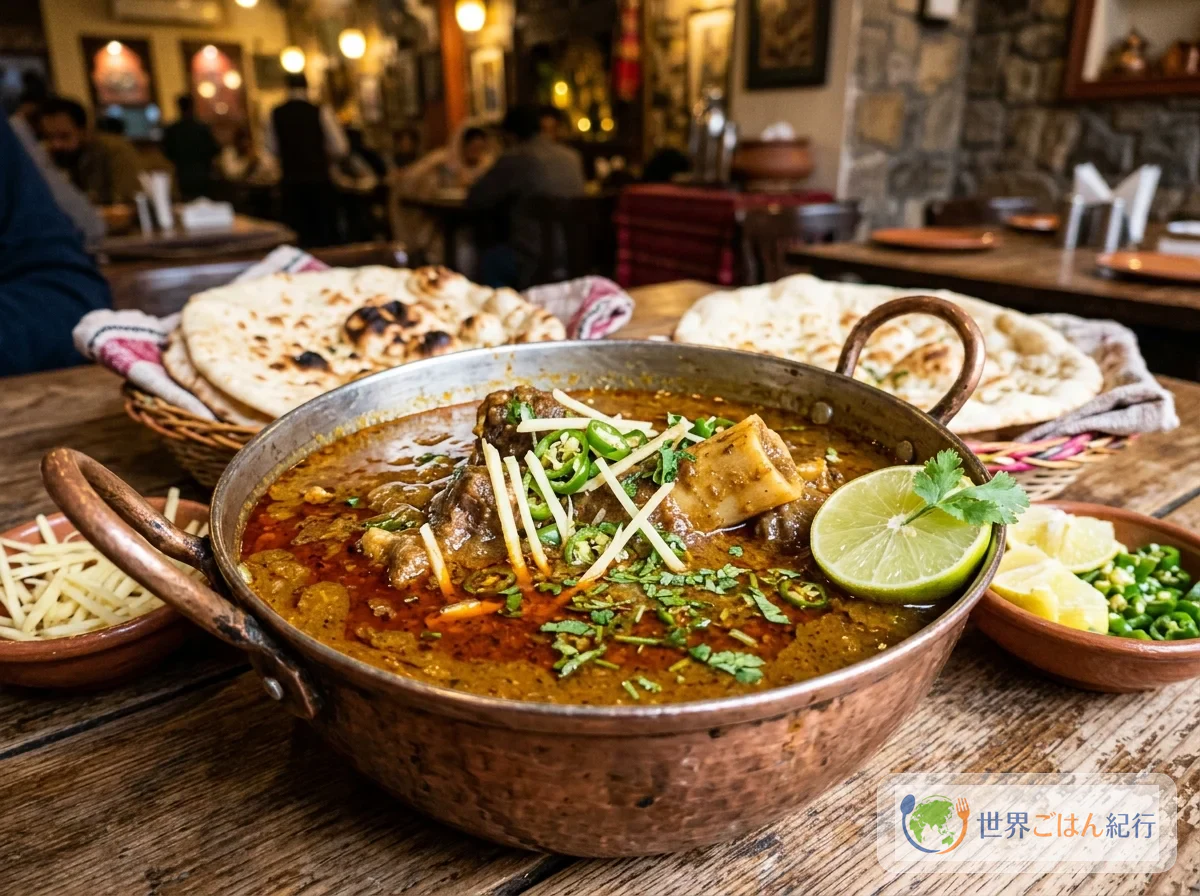
Ladle plenty of hot gravy into a deep bowl. After checking that the meat falls apart and a thin film of oil floats on the surface, arrange the meat and bones in balance. Pile the julienned ginger on generously and scatter the sliced green chiles. Sprinkle plenty of cilantro and top with fried onions. Add the lemon wedges and it is done. Serve with fresh naan or sheermal (a naan baked with ghee).