Ingredients and steps on one page. Print it, or choose “Save as PDF” in the print dialog.
Sekai Gohan
Pol Roti Recipe: Sri Lanka's Coconut-Scented Flatbread
Steps
1Moisten the coconut and chop the aromatics
Mix 2 oz (60 g) desiccated coconut and ½ cup (100 ml) coconut milk in a bowl and leave for 10 minutes. It is ready when the liquid has soaked into the flakes, they feel moist, and no pool of liquid remains.
While you wait, chop 1.75 oz (50 g) red onion into 2–3 mm dice. Remove the seeds and pith of the green chili and chop to 1–2 mm, and chop the 8 curry leaves finely. Wash your hands after handling chili so you do not rub your eyes before moving on.
If you use fresh or frozen grated coconut, switch to 3.5 oz (100 g) and omit the ½ cup (100 ml) of coconut milk for rehydrating. Follow the package's thawing instructions for frozen product. For the water added later, in either case start from ¼ cup (80 ml) and adjust to the state of the dough.
2Bring the dough together
Mix the onion, chili, curry leaves, 5 g salt and 10 g oil into the moistened coconut, then add 9 oz (250 g) all-purpose flour. Add ¼ cup (80 ml) water in 2–3 portions, mixing to bring it together in about 5 minutes in total.
The right state is dough you can press with a finger that does not stick to your hand, with no dry flour left at the bottom of the bowl. You do not need to knead until it has the springiness of bread dough.
If it cracks or flour remains, add water 1 tsp (5 ml) at a time. If it is sticky, add flour 5 g at a time and check. Adjusting this way changes the weight of each round. Do not taste the dough here either.
3Rest the dough
Cover the bowl with plastic wrap and rest it at room temperature for 30 minutes. This is not a fermentation step. The flour takes up moisture and becomes easier to shape. Do not wait for it to rise.
Cover it well so the surface does not dry and form a skin. If the kitchen is hot, rest it in the refrigerator, and if the dough is stiff in the next step, leave it a few minutes until it is easy to work.
4Divide into 8 and flatten
Divide the dough into 8 equal pieces. Up to here takes about 10 minutes. Spread 2 g oil thinly on your work surface and fingers, and press each piece by hand into a round about 4.5 inches (12 cm) across and 0.25 inch (5 mm) thick.
The trick is not to leave a thick spot in the center. If small cracks appear at the edge, close them with a damp finger. If the whole thing is falling apart, add 1 tsp (5 ml) water to the remaining dough and knead again until it comes together.
Lift each formed round with a spatula into the pan. Keep the ones you are not cooking yet covered. It does not need to be a perfect circle.
5Cook both sides
Heat the frying pan over medium heat for 1–2 minutes. If your pan's instructions forbid heating empty, follow them. Add no oil, place the dough, and cook over medium to medium-low heat 2–3 minutes on the first side, then flip and cook 2–3 minutes more.
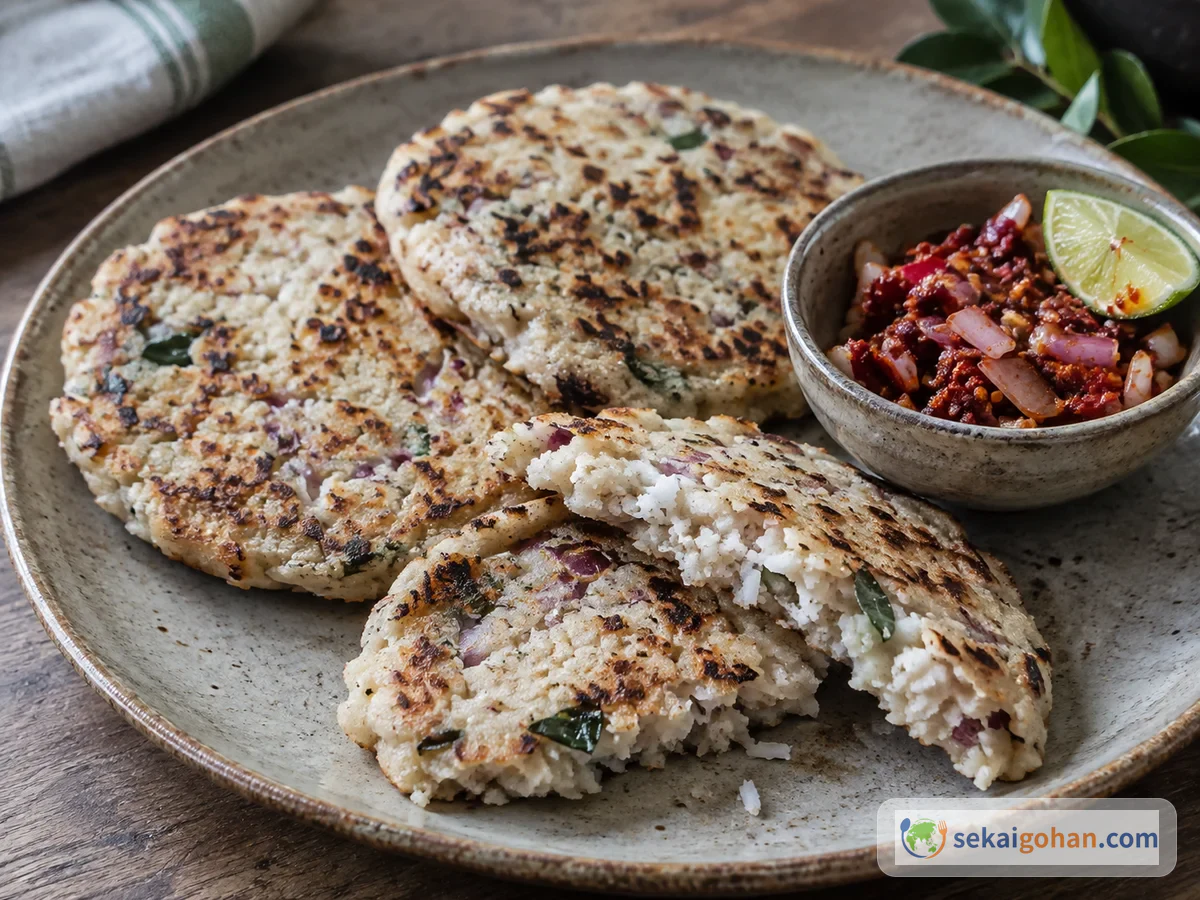
The cue for done is brown mottled spots on both sides, a dry edge, and no raw floury streak when you break through the center. If the center is still damp dough, lower the heat and flip every minute to cook it through.
If the surface blackens in about a minute, the heat is too high. Lower the heat before putting down the next dough. Cooking two at a time in four batches takes about 20–24 minutes, and one at a time takes longer.
6Let the steam out and serve
Move the cooked rounds to a rack and leave for 1–2 minutes, then plate once the steam has settled. Stacking them hot and sealing them makes the surface damp from steam.
Tear them while warm and eat with a little curry or lunu miris. They can be eaten after cooling a little, but the texture of the freshly cooked outside changes. For leftovers, follow the steps in "Storage and Reheating" below and do not leave them at room temperature to dry out for long.