Ingredients and steps on one page. Print it, or choose “Save as PDF” in the print dialog.
Sekai Gohan
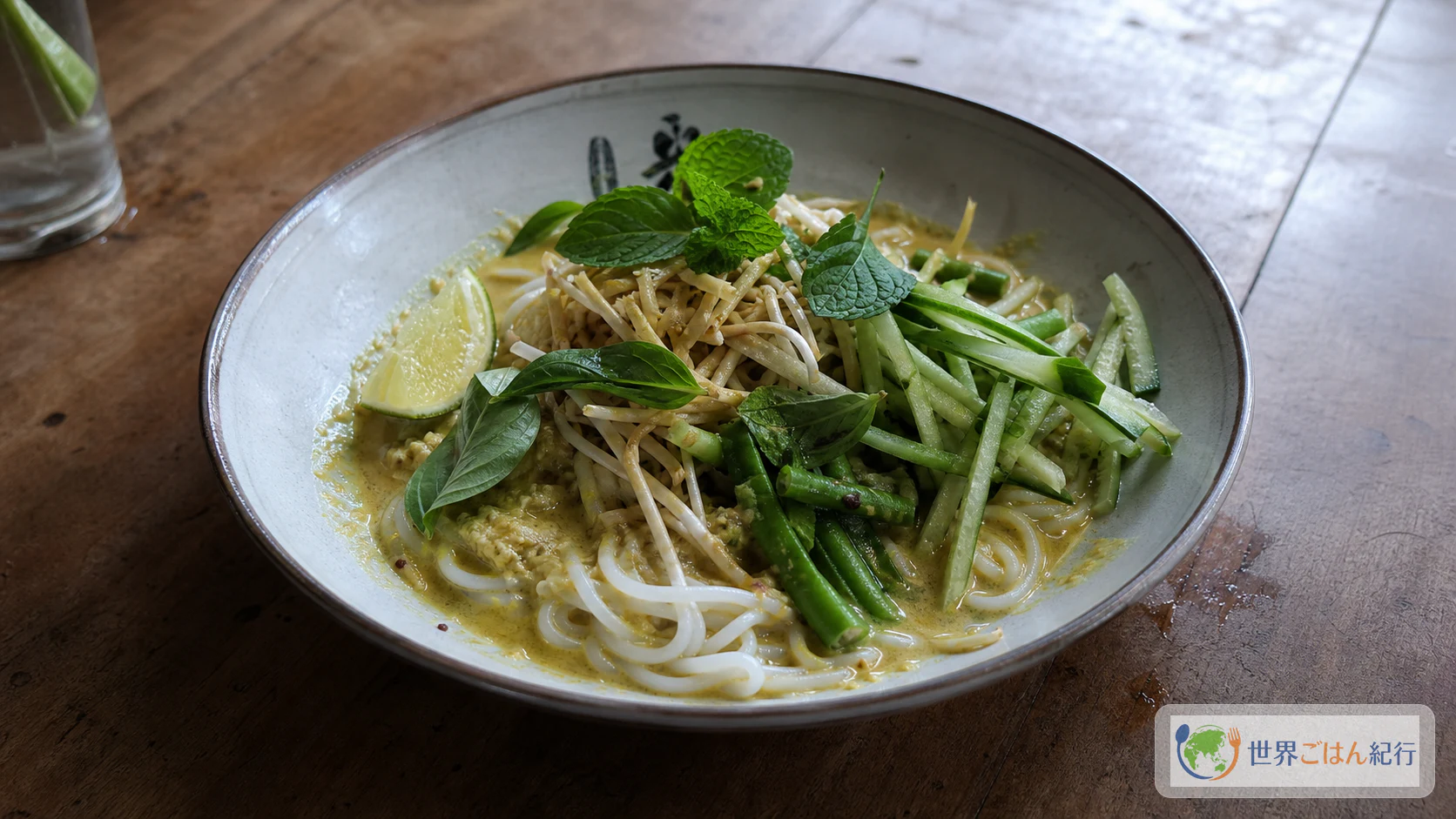
Num Banhchok: Cambodian Rice Noodles with Fish Soup and Fresh Herbs
Ingredients
Fish soup
| Ingredient | Amount | Substitutes & notes |
|---|---|---|
| Dried rice noodles | 11.5 oz (320 g) | Fine rice noodles. For thicker noodles, soften them longer |
| White fish fillet | 11.5 oz (320 g) | Cod, sea bream, sea bass, etc. Remove the bones |
| Water | 3¾ cups (900 ml) | Poach the fish in it, then use the broth for the soup |
| Coconut milk | ¾ cup (200 ml) | Too much makes it curry-like, so about half a can |
| Fish sauce | 1 1/2 tbsp | Part of the prahok substitute |
| Anchovy | 1 fillet, about 5 g | Chop finely. If you dislike it, leave it out and add 1 tsp fish sauce |
| Raw cane sugar | 1 tsp | Rounds the edges. Do not make it sweet |
| Salt | 1/3 tsp | Adjust at the end |
| Lemon juice | 2 tsp | A little at the end. Lime also works |
Kroeung-style paste
| Ingredient | Amount | Substitutes & notes |
|---|---|---|
| Lemongrass | 2 stalks, about 1.5 oz (40 g) of the white part | Frozen is fine. Remove the tough outer layers |
| Galangal | 20 g | If you have none, 15 g ginger, though the aroma is different |
| Fresh turmeric | 8 g | If you have none, 1 tsp turmeric powder |
| Kaffir lime leaves | 4 leaves | Remove the tough central rib. Without them, a little lime zest |
| Garlic | 2 cloves | Remove the germ |
| Shallots or red onion | 1.75 oz (50 g) | Onion is wetter, so fry it 1 minute longer |
| Neutral oil | 1 tbsp | For frying the paste |
Finishing vegetables
| Ingredient | Amount | Substitutes & notes |
|---|---|---|
| Cucumber | 1 | Cut into thin strips |
| Bean sprouts | 4 oz (120 g) | Rinse quickly and drain |
| Green beans | 2.75 oz (80 g) | Cut into 0.5 inches (1 cm) pieces and boil briefly |
| Cabbage or red onion | 2.75 oz (80 g) | A stand-in for banana blossom. Shred thin |
| Mint | a handful | The anchor of the aroma |
| Basil or shiso | a handful | Thai basil is closest |
| Lime or lemon | 1/2 | Cut into wedges |
Steps
1Chop the kroeung-style paste fine
12 min
Heat: none.
Remove the tough outer layers of the lemongrass and slice the white part into thin rounds. Chop the galangal, fresh turmeric, kaffir lime leaves, garlic, and shallots fine too. In a mortar, pound until coarse bits remain; in a food processor, run it in short pulses, scraping the sides partway. Stop at a yellow aromatic paste with a little fiber left, not a smooth curry-powder paste.
2Gently poach the fish
10 min
Heat: medium to low; target temperature 80–90°C.
Put 3¾ cups (900 ml) water, the white fish, 1 stalk of green lemongrass top if you have it, and 1 kaffir lime leaf in a pot. Warm over medium heat, and when small bubbles form on the sides, lower the heat. Do not boil hard; simmer about 7 minutes, until the center of the fish turns white and it breaks easily with chopsticks. Take out the fish and strain the broth for the soup.
3Combine the fish and the aromatics
8 min
Heat: none.
When the fish has cooled slightly, remove the skin and bones and flake the flesh coarsely. Chop 1 anchovy fillet and mix it with 1 tbsp fish sauce. Add the kroeung-style paste to half of the flaked fish and mix by pressing with a wooden spatula. Stopping while some pieces of fish remain gives the soup body and texture when it goes back in. Set aside the other half of the fish to add at the end.
4Simmer the fish soup
22 min
Heat: medium-low to low; keep it at a gentle bubble.
Put 1 tbsp neutral oil in the pot and warm it over medium-low heat. Add the fish-and-kroeung mixture and fry for 3 minutes without scorching. When the aroma rises and yellow oil seeps out at the bottom of the pot, pour in 3 cups (700 ml) of the strained fish broth a little at a time. Add ¾ cup (200 ml) coconut milk, 1/2 tbsp fish sauce, and 1 tsp raw cane sugar and simmer over low heat for 12 minutes. At the end return the fish you set aside and adjust with salt.
5Prepare the vegetables cold
12 min
Heat: high; only the green beans go into boiling water, for 60 seconds.
Cut the cucumber into thin strips and slice the cabbage or red onion thin. Rinse the bean sprouts and drain. Cut the green beans into 0.5 inches (1 cm) pieces, boil in boiling water for just 60 seconds, and plunge into cold water at once. Bring the water to a boil over high heat and stop when the color deepens. Pick the mint, basil, and shiso leaves and leave them large enough to tear by hand at the table.
6Soften and rinse the rice noodles
8 min
Heat: high; the water at a full boil.
Choose dried rice noodles 2–3 mm wide, or thin round ones, and boil them 30 seconds less than the package says. Bring the water to a boil over high heat and keep it at a small boil after the noodles go in. They are ready when the white core in the center is gone and they separate naturally when lifted with chopsticks. Drain in a colander, wash off the slime under running water, and drain well at the end. Because hot soup goes over them, the noodles can be at room temperature or slightly cool.
7Layer the noodles, vegetables, and soup
6 min
Heat: none.
Pile rice noodles in each bowl and arrange cucumber, bean sprouts, green beans, cabbage, and herbs alongside. Reheat the soup just before eating, stopping when it is barely bubbling at the sides of the pot. Ladle about 2 ladlefuls of soup per person over the center of the noodles and squeeze over a little lemon or lime. The noodles should be lightly coated and about 0.5 inches (1 cm) of liquid should pool at the bottom of the bowl. When eating, do not mix everything from the start; break into the soup-soaked noodles, cold vegetables, and herbs a little at a time.