Ingredients and steps on one page. Print it, or choose “Save as PDF” in the print dialog.
Sekai Gohan
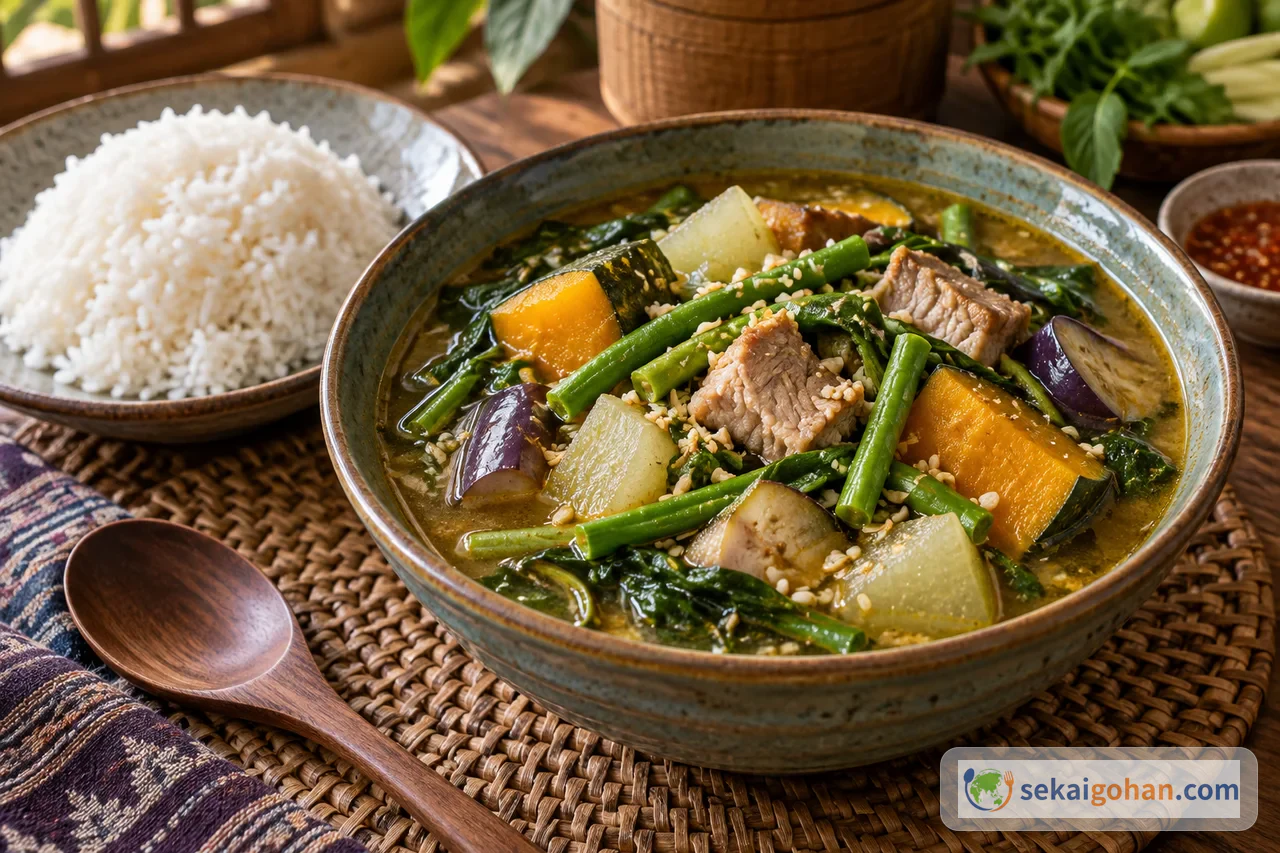
Samlor Korko: Cambodian Vegetable Stew with Toasted Rice and Prahok
Ingredients
Toasted rice and kroeung
| Ingredient | Amount | Substitutes and notes |
|---|---|---|
| Raw rice (jasmine or long-grain) | 1.5 oz (45 g) | Roast and crush coarsely into toasted rice powder. Short-grain rice works, but the aroma and grain are weaker |
| Lemongrass | 2 stalks (white part, about 1.25 oz (35 g)) | Frozen is fine. Remove the tough outer layers and slice thinly |
| Galangal | 15 g | 20 g of ginger can substitute, but it leans toward a sweet heat |
| Fresh turmeric | 10 g | 3 g of turmeric powder also works. The color is strong, so do not overdo it |
| Garlic | 3 cloves (about 15 g) | Remove the germ if it is large |
| Shallot or red onion | 2 oz (60 g) | If using onion, slice thinly before pounding |
| Makrut lime leaves | 2 leaves | Thaw if frozen. If you have none, 1 g of lemon zest makes up some of the aroma |
| Dried red chili | 1 (about 1 g) | Leave out for less heat. Removing the seeds makes it milder |
Meat and fermented seasoning
| Ingredient | Amount | Substitutes and notes |
|---|---|---|
| Pork shoulder or leg | 12.5 oz (350 g) | 1 inches (3 cm) cubes. Same amount for chicken thigh; for fish, shorten the simmering time |
| Prahok (fermented fish paste) | 15 g | If there are fish bones or large solids, dissolve in water and strain. See below for fish sauce as a substitute |
| Fish sauce | 2 tbsp (30 ml) | Add only 1.5 tbsp (20 ml) at first and taste at the end. Saltiness varies by product |
| Palm sugar or light brown sugar | 10 g | Not for sweetness; an amount that bridges the edges of the fermented fish and the vegetables |
| Rice bran oil or canola oil | 2 tbsp (30 ml) | Lets the kroeung open without scorching. Avoid strongly flavored oils |
| Water or light pork stock | 3¾ cups (900 ml) | For a soupier version, add 3.5 tbsp (50 ml) to ½ cup (100 ml). A rich stock hides the aroma of prahok |
| Salt | 0–2 g | Use only if needed after adding prahok and fish sauce |
Vegetables and rice
| Ingredient | Amount | Substitutes and notes |
|---|---|---|
| Green papaya | 5.5 oz (150 g) | 5.5 oz (150 g) of daikon can substitute. Peel and cut into 0.5 inches (1.5 cm) half-moons |
| Young jackfruit (canned in brine) | 3.5 oz (100 g) | Drain. If you have none, add 20 g more pumpkin and some mushrooms |
| Pumpkin | 6.5 oz (180 g) | 1 inches (3 cm) cubes with skin on. It breaks down easily, so cut it large |
| Eggplant | 5.5 oz (150 g) | Remove the stem and cut into 1 inches (3 cm) cubes. For round eggplant, even out the thickness |
| Pea eggplant | 1.5 oz (40 g) | 2 oz (60 g) of shimeji mushrooms or 1.75 oz (50 g) of green bell pepper can substitute. The texture changes |
| Green beans or long beans | 3.5 oz (100 g) | 1.5 inches (4 cm) lengths. Frozen green beans can be used without thawing |
| Moringa leaves | 1 oz (30 g) | 2 oz (60 g) of komatsuna or water spinach can substitute. Add at the end |
| Jasmine or white rice | 1.25 lb (600 g) cooked | For 4 servings. Keep it warm separately and serve alongside |
Steps
1Roast the rice and crush it coarsely
8 min
Medium heat. Spread 1.5 oz (45 g) of raw rice in a frying pan with no oil and keep it moving with a wooden spoon. In about 5 minutes the surface of the grains turns light brown and gives off a dry, toasty scent. Turn off the heat when a few grains pop up slightly, spread on a plate, and cool for 3 minutes. Crush in a mortar or a thick bag, not to a powder but to a coarseness that leaves grains of 1 to 2 mm. Leaving it white and powdery, or roasting it until black, ruins the aroma and bitterness of the pot.
2Pound the kroeung and bring the aromatics together
12 min
No heat is used; work at room temperature. Slice the white part of the lemongrass thinly, and cut the galangal and turmeric to 0.125 inch (2 mm) thick. Add the garlic, shallot, makrut lime leaves, and seeded chili, and pound in a mortar starting with the hard ingredients. Large pieces scorch easily in the oil of the pot, so take 10 to 12 minutes until it is a yellow paste with some fibers left that holds together when pressed with a finger and smells fragrant. If you use a food processor, add no water, pulse briefly, and scrape down the sides.
3Prepare the prahok and vegetables
15 min
No heat. Dissolve the prahok in ¼ cup (80 ml) of water, and if there are bones or large solids, strain through a fine strainer. Cut the green papaya into 0.5 inches (1.5 cm) pieces, the pumpkin and eggplant into 1 inches (3 cm), and the green beans into 1.5 inches (4 cm), and tear the young jackfruit into bite-size pieces. Wash the leafy greens and drain, and cut the pork last into 1 inches (3 cm) cubes. Setting the vegetables, meat, and leafy greens on separate plates keeps the order of adding them to the pot from getting mixed up.
4Fry the kroeung, prahok, and pork
10 min
Medium to medium-low heat. Warm 2 tbsp (30 ml) of oil in the pot and fry the kroeung for 2 to 3 minutes. When the paste has lost its moisture and yellow oil seeps out on the bottom of the pot, add the dissolved prahok. Fry 1 minute until fragrant, then add the pork and turn it for 5 to 6 minutes, until the pink on the surface is gone. If it threatens to scorch, lower the heat and add just 1 tbsp of water. Before moving to the simmer, heat the pork until the center reaches 167°F (75°C), for at least 1 minute.
5Simmer the hard vegetables first
22 min
Bring to a boil over medium heat, and lower to low once it boils. Pour in 3¾ cups (900 ml) of water or light stock and add the green papaya, young jackfruit, and pumpkin. Simmer 12 to 15 minutes at a heat where the surface of the pot trembles gently. If you are using daikon, cook it first until a chopstick goes a little way into the center. Add the eggplant and green beans and simmer 8 minutes, and move on when the corners of the pumpkin remain and the eggplant skin has turned a dull purple. Keeping it at a hard boil makes the pumpkin dissolve into the broth.
6Add the toasted rice and leafy greens
5 min
Low heat. Sprinkle in the 1.5 oz (45 g) of toasted rice a little at a time and trace the bottom of the pot with a wooden spoon. Simmer quietly for 3 to 5 minutes, and the broth turns cloudy white and thick enough to leave a thin coating on the back of a spoon. If it is too heavy, add 2 tbsp (30 ml) of boiling water at a time; if too thin, simmer 1 minute at a time and check. At the end add the moringa or komatsuna and turn off the heat after the 1 to 2 minutes it takes the leaves to wilt. Overcooking weakens both the aroma of the toasted rice and the green of the leaves.
7Adjust the seasoning and serve with rice
5 min
Low heat for adjustments, then turn it off. Add 1.5 tbsp (20 ml) of fish sauce and 10 g of sugar, stir, rest for 1 minute, and taste. If it lacks salt, add the fish sauce 1 tsp (5 ml) at a time; before adding sourness or heat, aim for a state where you taste in turn the fermented aroma of the prahok, the sweetness of the vegetables, and the toastiness of the rice. It is done when the broth does not run off into the rice and clings thinly to the surface of the ingredients. Put warm jasmine rice on a separate plate and ladle the ingredients and broth from the pot.