Ingredients and steps on one page. Print it, or choose “Save as PDF” in the print dialog.
Sekai Gohan
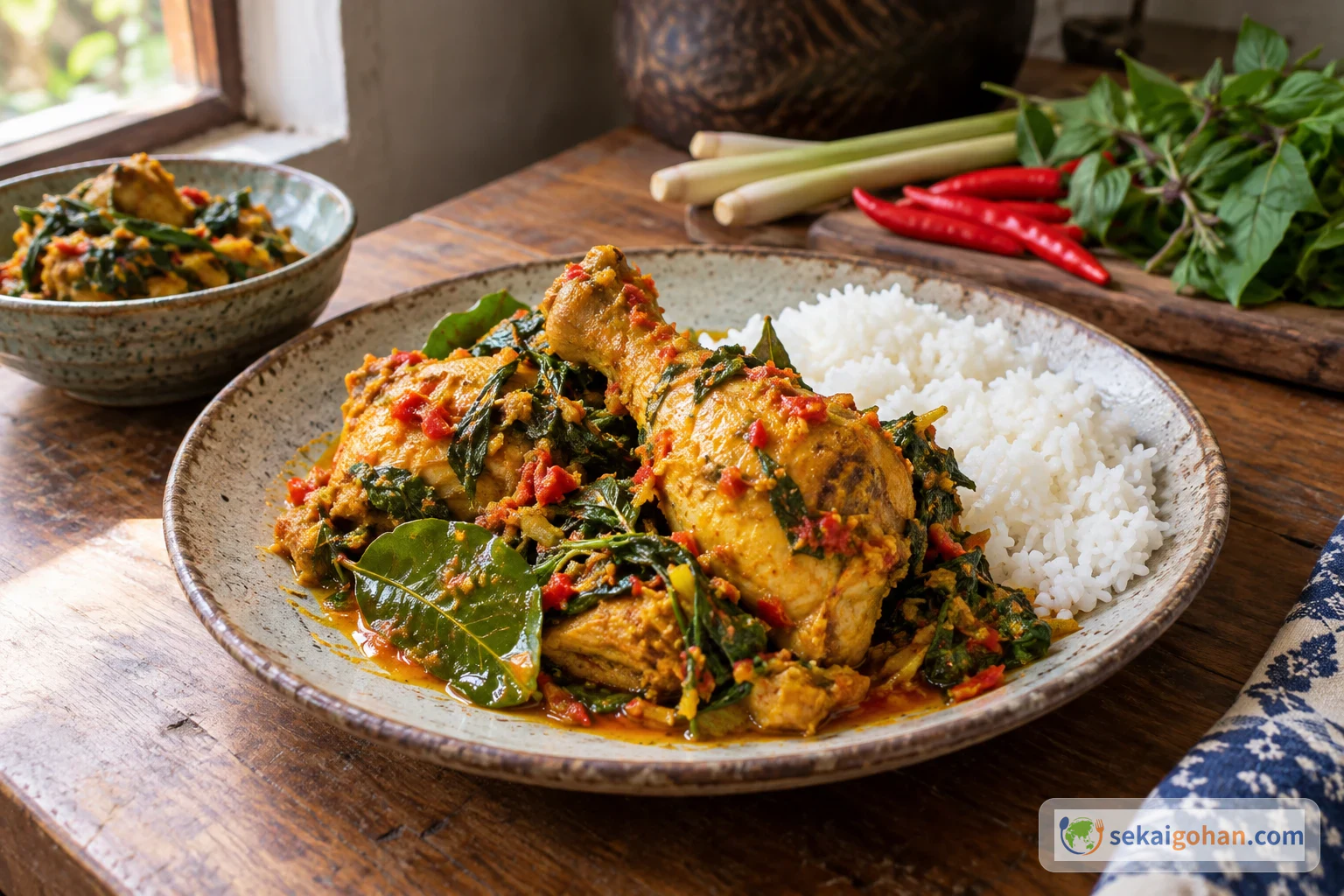
Ayam Woku: Manado-Style Herb Chicken Stew from North Sulawesi
Ingredients
Chicken and seasoning
| Ingredient | Amount | Substitutes & notes |
|---|---|---|
| Chicken thighs (bone-in) | 1.75 lb (800 g) (4 pieces) | 1.75 lb (800 g) if boneless. Evening out the thickness makes doneness easier to check |
| Lime juice | 1 tbsp (15 ml) | Lemon juice works. Separate the amount for seasoning from the amount for finishing |
| Salt | 4 g | For seasoning. Keep separate from the salt for finishing |
Aromatic paste
| Ingredient | Amount | Substitutes & notes |
|---|---|---|
| Large red chilies | 2 oz (60 g) (about 4) | The main source of color and aroma. Even when lowering the heat, don't leave out the whole amount |
| Bird's eye chilies | 8 g (4–5) | Reducing to 1–2 lowers the heat |
| Shallots | 2.75 oz (80 g) (about 8) | 1.75 oz (50 g) red onion plus 1 oz (30 g) onion also works |
| Garlic | 15 g (3 cloves) | An amount that doesn't overpower the aroma |
| Ginger | 20 g | Peel thinly |
| Fresh turmeric | 25 g | If hard to find, 2 tsp powder. Color and aroma will change |
| Candlenuts | 4 (about 20 g) | Use dry-toasted. Watch for tree nut allergy |
| Tomato | 4 oz (120 g) (1 medium) | A fully ripe red one. Supplies moisture and acidity |
Leaves, herbs, and cooking liquid
| Ingredient | Amount | Substitutes & notes |
|---|---|---|
| Makrut lime leaves | 6 | Fresh or frozen. For dried, follow the product label first and adjust by the strength of the aroma |
| Lemongrass | 2 stalks | Crush the base, and remove before eating |
| Pandan leaf | 1 | Leave out if you can't get it. The sweet leaf aroma will be weaker |
| Turmeric leaf | 1/2 leaf (optional) | Thinly shredded if you have it. Turmeric gives color without it |
| Oil | 3 tbsp (45 ml) | Neutral vegetable oil |
| Water | 1 cups (250 ml) | Adjust by up to 3.5 tbsp (50 ml) depending on the size of the chicken |
| Salt | 6 g | For stewing. Taste at the end and adjust |
| Sugar | 4 g (just under 1 tsp) | A small amount to round out the tomato's acidity |
| Green onions | 2 | Cut on the diagonal. Added at the end |
| Kemangi | 1 oz (30 g) | Lemon basil or Thai basil. The aroma differs from Italian basil |
| Lime juice | 1 tsp (5 ml) | Add after turning off the heat. Adjust the sourness to taste |
For serving
| Ingredient | Amount | Substitutes & notes |
|---|---|---|
| Cooked white rice | 1.25 lb (600 g) (4 servings) | Jasmine rice works. Choose a mild rice to receive the sauce |
Steps
1Season the chicken with lime and salt
10 min
Divide 1.75 lb (800 g) bone-in chicken thighs into 4 pieces of about 7 oz (200 g) each, the thickest part about 1 inches (3 cm), and pat dry with paper towels. Rub 1 tbsp (15 ml) lime juice and 4 g salt over everything, then rest for 10 minutes. Don't leave it at room temperature for long. Dry the surface now: a wet surface dilutes the paste when it goes into the pot. Wash the bowl and cutting board that touched raw meat right away.
2Grind the aromatic paste fine
10 min
Grind the red chilies, bird's eye chilies, shallots, garlic, ginger, turmeric, candlenuts, and tomato fine in a blender or mortar. Keep a thick paste that drops slowly off a spoon; don't make it fully liquid. If the blender struggles, don't add a lot of water at once. Let it run on the ingredients' own moisture. At the end, check that no candlenut grains remain.
3Fry the paste and leaves in oil
10 min
Put 3 tbsp (45 ml) oil in the pot and fry the paste over medium-low heat for 8 to 10 minutes. It's ready when the raw smell of chili and turmeric is gone and the color turns deep yellow, and the oil separates and rises along the sides of the pot. Add the lemongrass, makrut lime leaves, pandan, and turmeric leaf if using. Fry about 4 more minutes to pass the aroma into the oil. Keep the heat low and scrape the bottom with a wooden spoon. Scorching over high heat leaves a bitterness you can't remove.
4Add the chicken and water and simmer
30 min
Add the chicken and coat it with paste for 2 to 3 minutes, until the surface changes color. Add 1 cups (250 ml) water, 6 g salt, and 4 g sugar. When it comes to a boil, lower to a gentle medium simmer. With the lid slightly ajar, simmer 25 to 30 minutes, cooking through to the bone. Check that the thickest part reaches an internal temperature of 167°F (75°C) or higher and stays there for 1 minute or more. Without a thermometer, check that the meat near the bone is white and no red juice comes out. When it is white to the bone and the sauce clings to the chicken, it is done stewing. If the liquid reduces too fast, add 3.5 tbsp (50 ml) hot water at a time and lower the heat before it scorches.
5Adjust the sauce with tomato and green onions
7 min
When the chicken is cooked through, add 4 oz (120 g) diced tomato and 2 green onions. Take off the lid and reduce 5 to 7 minutes to a thickness that leaves a thin coat on the back of a spoon. If it is runny, raise the heat a little; if it sticks to the bottom of the pot, add 20 ml to 2 tbsp (30 ml) hot water. Taste here for the tomato's acidity, the salt, and the sugar. Don't add heat afterward.
6Finish with kemangi and lime
5 min
Lower the heat, add 1 oz (30 g) kemangi, and stir for just 1 minute. Turn off the heat when the leaves have reduced in volume but stayed bright green, and the sauce clings thickly to the chicken. Kemangi goes in for only the last minute. Remove the makrut lime leaves, lemongrass, and pandan before eating. Add 1 tsp (5 ml) lime juice after turning off the heat so the aroma and sourness don't escape. Serve the chicken and sauce over white rice, and rest it 5 minutes before eating.