Ingredients and steps on one page. Print it, or choose “Save as PDF” in the print dialog.
Sekai Gohan
Buntil: Javanese Leaf Parcels Simmered in Coconut Sauce
Steps
1Blanch the leaves
8 min
Bring water to a boil over high heat, then 1 to 2 minutes over medium heat.
Bring 1.5 quarts (1.5 L) water to a boil in a large pot and add 1 tsp salt. Shave the cabbage core thin with a knife, add the leaves one at a time and boil 1 minute over medium heat. Take out the kale after 30 seconds to 1 minute. You are looking for a deeper leaf color and leaves that bend softly without breaking when flexed by finger. Spread in a colander to cool, and press the surface dry with paper towel. If the leaves are too wet, the filling slips after wrapping.
2Make the coconut filling
10 min
6 minutes over medium-low heat.
Put 1 tsp oil in a skillet and stir-fry 2 oz (60 g) red onion, 12 g garlic and the red chili, all minced to 0.25 inch (5 mm) or smaller, over medium-low heat for 3 minutes. When the onion turns translucent and the raw smell of the garlic is gone, add the dried shrimp (soaked and chopped to 0.25 inch (5 mm)), the chopped dried anchovies, komatsuna chopped to 0.5 inches (1 cm), grated coconut, finely chopped makrut lime leaf, raw cane sugar and salt. Mix for another 3 minutes and turn off the heat when the coconut has absorbed the oil and the umami of the dried fish and holds together lightly when squeezed but does not seep liquid.
3Wrap the filling in the leaves
10 min
Work on the counter with the heat off for 10 minutes.
Spread one blanched cabbage leaf and lay half a kale leaf in the center. Put about 3 tbsp filling, fold the near edge over, fold the left and right edges inward, and roll toward the far edge. Make the parcel about 1 inch (3 cm) thick, a size that holds together in one hand. If a leaf is small, overlap two a little. For parcels that come undone easily, tie kitchen string loosely around once or fasten the end with a toothpick. Tie tightly and the leaf tears when steamed.
4Steam the parcels to set the shape
15 min
Build steam over high heat, then 12 minutes over medium heat.
Arrange the parcels seam side down in a steamer. When the water boils well and steam rises, cover and steam 12 minutes over medium heat. You are looking for leaves that are deep green and soft, parcels where the filling doesn't flow when lightly pressed with chopsticks, and a glossy surface. Move them to a plate after steaming and discard the liquid that collects. Setting the shape here makes the next stage of simmering in sauce easier.
5Make the coconut sauce
8 min
5 minutes over medium-low heat, then low heat once it bubbles.
Put 1 1/2 tbsp oil in a pot and stir-fry 2.75 oz (80 g) red onion, the garlic, ginger, turmeric, red chili and bruised lemongrass over medium-low heat for 5 minutes. When the onion is soft, the oil has turned yellow and the ginger is fragrant, add 1¾ cups (400 ml) coconut milk, ¾ cup (180 ml) water, the makrut lime leaves, salt and raw cane sugar. When the edge of the pot starts bubbling, lower to low heat. A hard boil makes the coconut oil separate easily.
6Simmer the parcels in the sauce
15 min
12 to 15 minutes over low heat.
Add the steamed parcels to the sauce and spoon sauce over them. Simmer 12 to 15 minutes over low heat. The heat is right when small bubbles keep rising at the edge of the pot. Turn the parcels over only once midway. It is enough when the liquid has reduced a little, the sauce is down to about 70% of its original volume, and dragging a wooden spoon across the pot bottom leaves a trail for a moment. Moving the parcels around too much tears the leaves.
7Rest and serve
5 min
Rest for 5 minutes with the heat off.
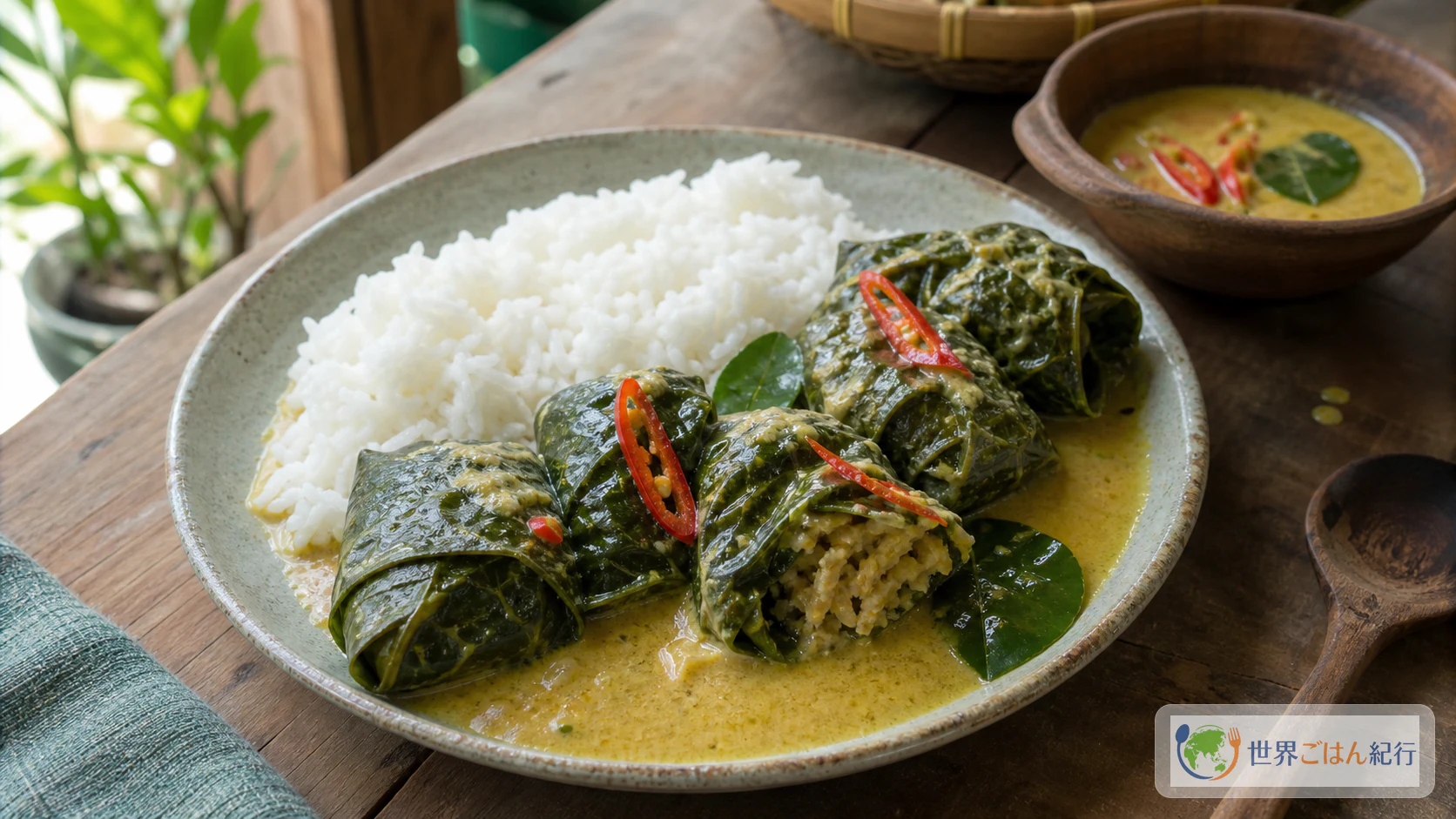
Turn off the heat, slide the lid ajar and let it sit 5 minutes. During the rest the sauce returns to the surface of the leaves and the filling settles when you open a parcel. Put white rice in a bowl, place 2 buntil per person and spoon 2 to 3 tbsp sauce over. Break open each parcel only about 1 inch (2 cm) to show the filling, and serve with cucumber or sambal. It is easier to taste the coconut's sweetness when the steam has settled a little rather than piping hot.