Ingredients and steps on one page. Print it, or choose “Save as PDF” in the print dialog.
Sekai Gohan
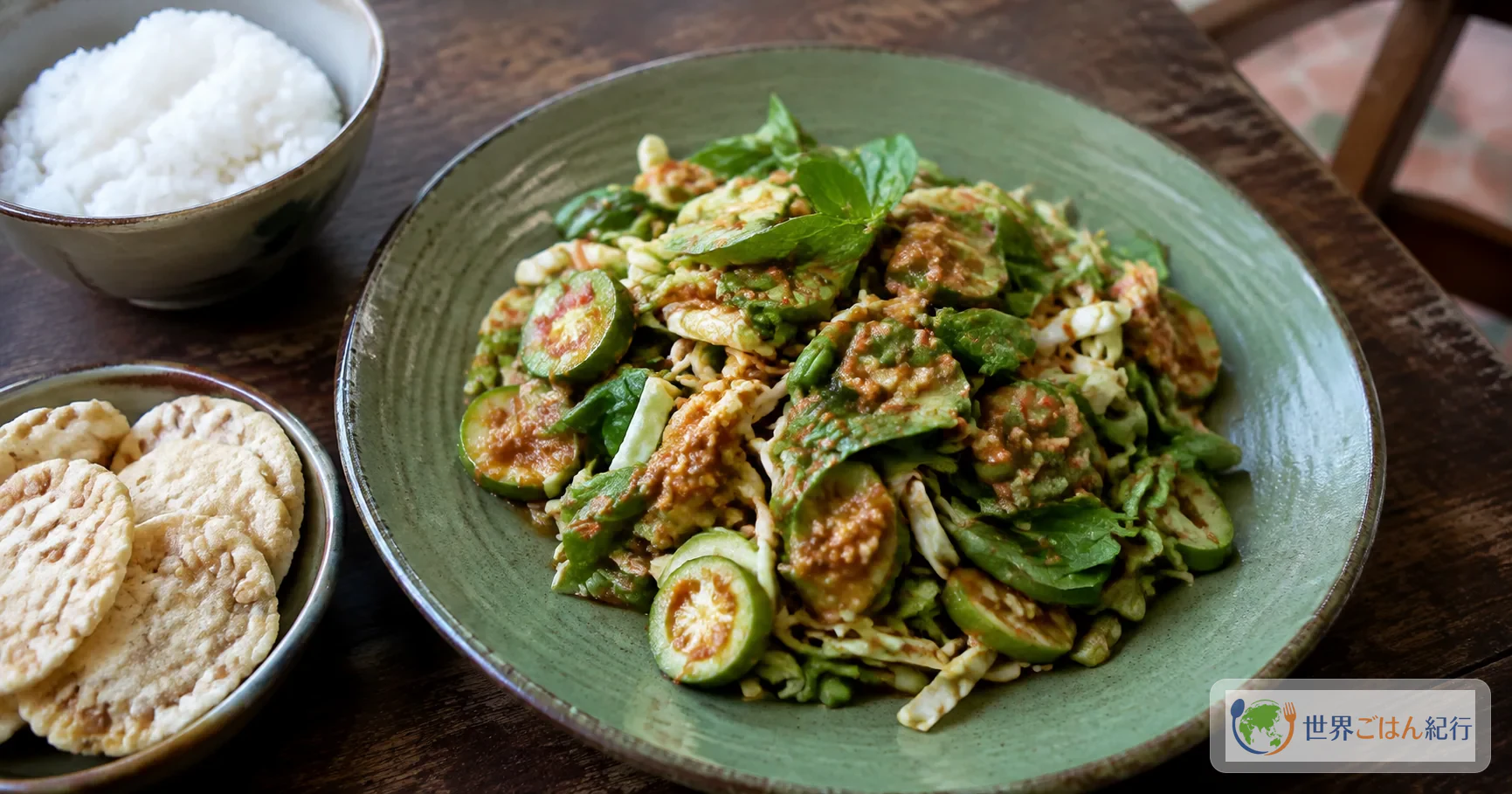
Karedok: West Java's Raw Vegetable Salad with Peanut Sauce
Ingredients
Raw vegetables
| Ingredient | Amount | Substitutes & notes |
|---|---|---|
| Cucumber | 1, about 4 oz (120 g) | Half-moon slices 0.125 inch (2–3 mm) thick. If the seeds are large and watery, remove a little of the center |
| Cabbage | 6.5 oz (180 g) | Shredded 0.125 inch (3 mm) wide. Mixing in purple cabbage adds color but changes the sauce's color |
| Green beans | 4 oz (120 g) | The same amount of long beans if you have them. Cut diagonally into 1.5 inches (4 cm) for a clean bite |
| Bean sprouts | 5.5 oz (150 g) | Remove the roots and any damaged ones. If you avoid raw ones, boil briefly and cool |
| Small eggplant | 2, about 5.5 oz (160 g) | Stand-in for the local small green eggplant. Slice 0.125 inch (2–3 mm) thin |
| Kemangi (lemon basil) | 15 g | Substitute sweet basil, and add 2–3 shiso leaves for depth of aroma |
Peanut sauce
| Ingredient | Amount | Substitutes & notes |
|---|---|---|
| Unsalted roasted peanuts | 5.5 oz (150 g) | Skin-on is fine. Unsalted makes it easier to adjust the saltiness at the end |
| Garlic | 1 clove (about 5 g) | Remove the green core. If raw garlic is too harsh, halve it |
| Red chili | 1 (about 5 g) | Remove the seeds for less heat. Add heat close to the local variety separately |
| Kencur | 10 g | If you have none, 8 g ginger. The aroma won't be the same, so make it up with a little lime |
| Dried shrimp powder (substitute for terasi) | 3 g (1/2 tsp) | If you have terasi, use the same amount, toasted first. Omit if avoiding crustaceans |
| Palm sugar or dark brown sugar | 25 g | Chop it if in a block. Dark brown sugar is richer; start with 20 g and watch the sweetness |
| Tamarind paste | 15 g | 1 tbsp if tamarind water. If you have none, start with 2 tsp (10 ml) rice vinegar; the flavor will differ |
| Lime juice | 1 tbsp (15 ml) | Lemon juice also works. Add last to keep the aroma |
| Warm water | ¼ cup (80 ml) | About 40°C–50°C (up to 122°F). Add 1 tsp (5 ml) at a time and stop when you see the consistency |
| Salt | 4 g (2/3 tsp) | Adjust at the end, since it varies with the saltiness of dried shrimp or terasi |
To serve
| Ingredient | Amount | Substitutes & notes |
|---|---|---|
| Warm rice | 1.25 lb (600 g) | 5.5 oz (150 g) per person. It soaks up the sauce, so let a little steam off freshly cooked rice |
| Krupuk or emping | 20 g | Shrimp crackers or melinjo crackers. Check labeling for crustaceans and wheat; they can be left out |
| Fried onions | 15 g | A finishing touch for texture. The structure of raw vegetables and sauce holds without them |
Steps
1Wash the vegetables under running water and get them dry
8 min
Wash your hands with soap for about 20 seconds, then wash the cucumber, cabbage, green beans, small eggplant, bean sprouts and basil one by one under running water. Don't apply produce wash or soap directly, and remove damaged parts and any discolored bean sprouts. Spread the washed vegetables in a clean strainer and press the surface water off with paper towels. Go on when no water pools at the bottom of the bowl and they don't feel slimy to the touch. If someone avoids raw sprouts, set them aside separately at this stage.
2Cut the vegetables to an even thickness and length
10 min
Cut the cucumber and small eggplant into half-moons 0.125 inch (2–3 mm) thick, the cabbage 0.125 inch (3 mm) wide, and the green beans diagonally into 1.5 inches (4 cm). If the bean sprouts are long, remove the tails, and tear the basil leaves into large pieces. Don't push the cut vegetables into one bowl; spread them by kind on strainers or plates. The signs that they can take the sauce are that no water is coming out of the cut faces, and that a green bean bent with your fingers just flexes and doesn't crush.
3Crush the aromatics and make the peanuts coarse
6 min
In a mortar, put the chili, garlic, kencur, dried shrimp powder, salt and chopped palm sugar and crush to a red, moist paste. Add half of the peanuts, press with the pestle to leave up to 0.125 inch (1–2 mm) pieces, then add the rest and crush to the same coarseness. If only dry powder collects at the bottom, add just 1 tsp warm water and wipe the sides. Pinch it between your fingers; if there are no lumps of aromatics and you can see pieces of peanut, stop without working it until the oil separates.
4Loosen the sauce with sourness and warm water
4 min
Add the tamarind paste, lime juice and warm water to the mortar, and turn from the bottom with a wooden spatula. Don't put in all the water at the start; add it in 3–4 portions of 1.5 tbsp (20 ml). When a spoonful dropped back falls in a thick line and the mark closes slowly in about 2 seconds, the sauce is evenly thick and the right density to cling to vegetables. If stiff, add 1 tsp (5 ml) warm water; if loose, add 10 g crushed peanuts. Decide the sourness and saltiness here, and confirm that the lime isn't the only sharp note.
5Toss only what you will eat, just before
2 min
Put half the cut vegetables in a large bowl, add half the sauce, and fold from the bottom 8–10 times. Pressing makes water come out of the cucumber and bean sprouts, so lift and turn with long chopsticks or a large spoon. It is done when the sauce thinly coats the white of the cabbage, the edges of the green beans are still visible, and the bean sprouts keep their snap when bitten. Add the rest of the sauce a little at a time only if the flavor is short, and serve at once with rice, krupuk and emping.