Ingredients and steps on one page. Print it, or choose “Save as PDF” in the print dialog.
Sekai Gohan
Nasi Uduk: Jakarta's Fragrant Coconut Rice
Ingredients
The nasi uduk itself
| Ingredient | Amount | How to choose |
|---|---|---|
| Jasmine rice | 2 cups (Japanese rice-cooker cups), about 300 g | If you have none, short-grain rice. Reduce the water a little for short-grain |
| Canned coconut milk | 250 ml | Canned, for cooking. Don't use coconut beverage |
| Water | 260 ml | Start from 230 ml for short-grain rice |
| Lemongrass | 1 stalk | Crush the base with the back of a knife. 1 tsp if dried |
| Pandan leaf | 1 leaf | Frozen is fine. Omit if you have none |
| Salam leaf | 2 | If you have none, 1 bay leaf to supply only the direction of the aroma |
| Salt | 2/3 tsp | Adjust according to the saltiness of the accompaniments |
Accompaniments
| Ingredient | Amount | How to choose |
|---|---|---|
| Eggs | 2 | Made into thin omelets and cut in strips |
| Cucumber | 1 | Thin diagonal slices |
| Tempeh | 5.5 oz (150 g) | If you have none, cut thick fried tofu thin and pan-fry it |
| Kecap manis | 1 tbsp | For sweet-savory stir-fried tempeh. Soy sauce and brown sugar can substitute |
| Sambal | 2 tbsp | On a separate plate if you want to divide the heat |
| Fried onions | 4 tbsp | If making your own, see the step below |
| Peanuts | 1.5 oz (40 g) | Unsalted, dry-roasted. Optional |
If making your own fried onions
| Ingredient | Amount | How to choose |
|---|---|---|
| Onion or red onion | 1, about 6.5 oz (180 g) | Cut as thin as you can |
| Rice flour or potato starch | 2 tsp | A light dusting makes it crisp |
| Rice bran oil or vegetable oil | ½ cup (150 ml) | Shallow-fry in a small pot |
| Salt | A pinch | Sprinkle on once fried |
Steps
1Rinse the rice and drain it
5 min
Put 2 cups jasmine rice in a bowl and rinse twice, changing the water. Don't scrub as hard as short-grain rice; swish lightly with your fingers. Drain in a strainer and let it sit for 10 minutes, until the surface of the grains is wet but no water drips. If using short-grain rice, rinse three times and wash off a little more of the surface starch, and it's less likely to turn heavy even with coconut milk.
2Combine the coconut and herbs
4 min
In a heavy pot, put the rice, 1 cup (250 ml) coconut milk, 1 cup (260 ml) water and 2/3 tsp salt. At this stage the liquid should be thin, running freely so that no line remains when you pull a wooden spoon through it. Bruise the base of the lemongrass with the back of a knife, tie the pandan, and set them on the rice with the salam leaves. Don't turn on the heat yet. Stir once from the bottom with a wooden spoon, until a thin white film spreads over the surface of the rice. It's ready when the rice has settled flat and the herbs sit half submerged in the liquid.
3Bring to a boil over medium heat, then cook over low heat
5 min over medium heat + 14 min over low heat
Put the pot over medium heat, and when the edges start to bubble in about 5 minutes, turn over the bottom once with a wooden spoon. Later in the cooking, the liquid should be at the stage where, when you pull the spoon through, no white liquid lingers long on the bottom of the pot and it returns quickly between the grains. As soon as it boils, lower to low heat and cook for 14 minutes with the lid slightly ajar. Stirring hard partway splits the grains, so trace the bottom gently only if you smell something about to scorch. The guide is the liquid dropping to the level of the rice and several small holes opening on the surface. When scooped with the spoon, the rice is still a little firm, but no thick white liquid remains.
4Cover, steam and fluff the rice
10 min
Turn off the heat, close the lid tightly and steam for 10 minutes. When steaming is done, take out the lemongrass, pandan and salam leaves and turn the rice from the bottom in big strokes with a paddle. It's a success if the grains are glossy and no white liquid remains on the bottom of the pot. Pick up one grain; you're aiming for soft with no core and the shape of the grain still intact. If liquid is still visible, take off the lid and add 2 more minutes over low heat, then steam again for 5 minutes.
5Make fried onions
8 min over medium-low heat
Slice the onion as thin as possible along the grain and dust lightly with rice flour. Warm oil in a small pot over medium-low heat to about 160°C (320°F) and add the onion. For the first 4 minutes the moisture cooks off and large bubbles form. When the bubbles become fine and the edges of the onion turn pale gold, lift it out before the color deepens. The color keeps progressing from residual heat, so don't wait in the pot for the ideal brown.
6Plate it
3 min (no heat)
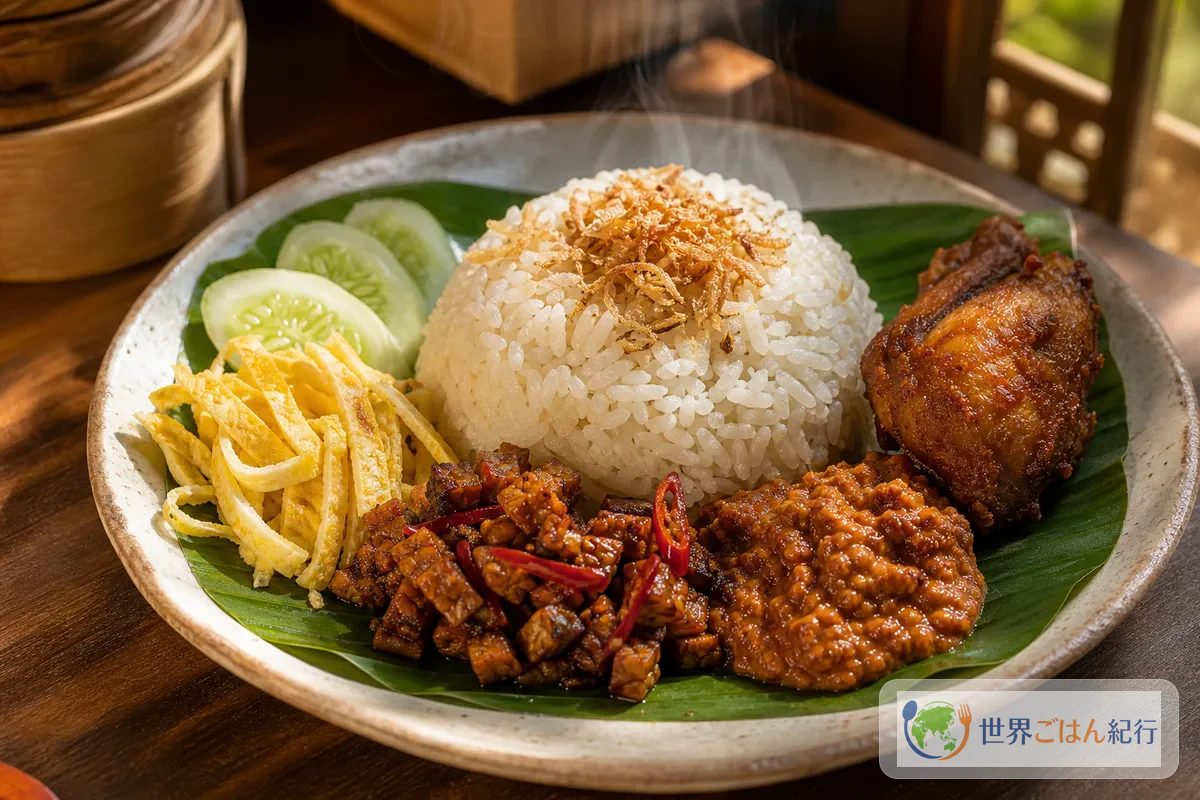
No heat is used. Lightly wet a rice bowl, pack in the nasi uduk loosely and turn it out onto a plate. Top with fried onions and arrange around it the cucumber, omelet strips, sambal, tempeh and peanuts. Only if the rice has gone cold, warm it for 30 seconds in a 600 W microwave before plating, just until steam returns. Served warm, the aroma of coconut and lemongrass is at its best. When eating, mix in the sambal little by little, and let the sweet tempeh and egg catch the heat.