Ingredients and steps on one page. Print it, or choose “Save as PDF” in the print dialog.
Sekai Gohan
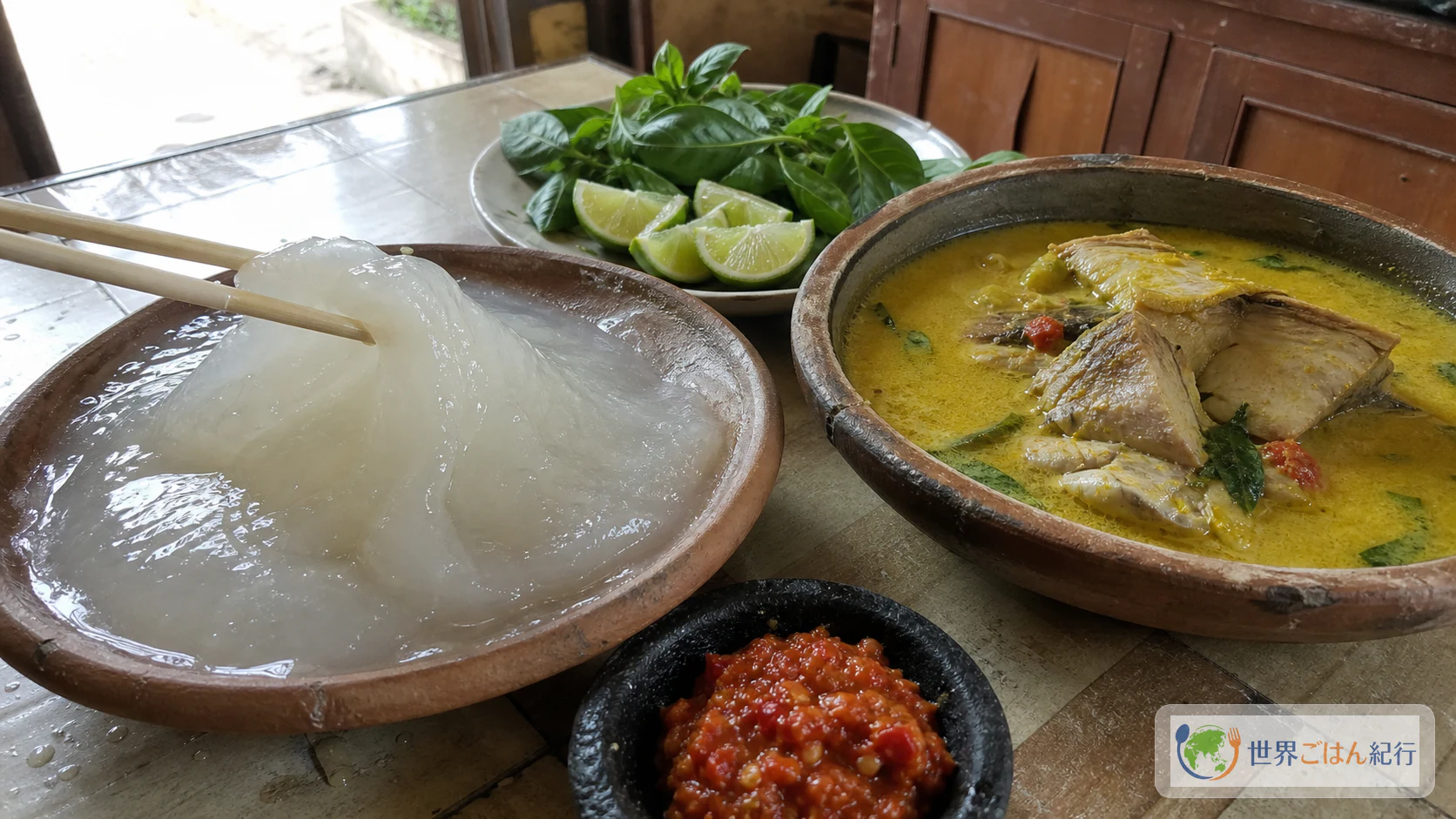
Papeda: Sago Porridge from Maluku and Papua with Yellow Fish Soup
Ingredients
Papeda
| Ingredient | Amount | Substitutes & notes |
|---|---|---|
| Sago starch | 4 oz (120 g) | If you can't get it, 4 oz (120 g) tapioca starch |
| Water | 1.25 quarts (1.1 L) | 1 cups (250 ml) for dissolving the starch, 3½ cups (850 ml) for cooking |
| Salt | 1/2 tsp | Lightly seasons the porridge |
| Light brown sugar | 1/2 tsp | Optional. Rounds off the edge of the starch |
Fish kuah kuning
| Ingredient | Amount | Substitutes & notes |
|---|---|---|
| Cooking-grade white fish, swordfish or yellowfin tuna | 1 lb (450 g) | 1 inches (3 cm) cubes. If bone-in, cut larger |
| Lime juice | 1 tbsp | Lemon juice works. To season the fish |
| Salt | 1/2 tsp | To season the fish |
| Vegetable oil | 2 tbsp | To fry the spice paste |
| Shallots | 2.75 oz (80 g) | 2 oz (60 g) red onion can stand in |
| Garlic | 20 g | About 4 cloves |
| Candlenuts | 20 g | 20 g cashews can stand in |
| Turmeric | 8 g | 1 inches (2 cm) if fresh, 1 tsp if ground |
| Ginger | 12 g | Sliced |
| Red chili | 1 | Remove the seeds for less heat |
| Lemongrass | 2 stalks | Bruise the bottom 4 inches (10 cm). 2 tsp if dried |
| Makrut lime leaves | 4 leaves | Frozen is fine. Omit if none |
| Bay leaf | 1 | Stands in for local daun salam |
| Water | 3 cups (700 ml) | Don't boil hard once the fish is in |
| Tomatoes | 2 | Cut in wedges. Acidity and looks |
| Scallions | 2 | 1.5 inches (4 cm) lengths |
| Lemon basil, or shiso | 8 leaves | Stands in for kemangi. The aroma differs, but it works as a way out |
| Light brown sugar | 1 tsp | Rounds off the edges of the soup |
| Salt | 1 tsp | Adjust at the end |
| Lime juice | 1 tbsp | To finish. Don't boil off the acidity |
Steps
1Loosen the sago in water
5 min
No heat is used.
Add 1 cups (250 ml) water, 1/2 tsp salt and 1/2 tsp sugar to 4 oz (120 g) sago starch and mix with a whisk until no white grains show. The starch settles at the bottom easily, so scrape the bottom once with a spatula. It is ready when it is a smooth, milk-like liquid and no lumps remain that you can feel when you press them with a finger.
2Make the yellow spice paste
8 min
No heat is used.
Make a coarse paste of 2.75 oz (80 g) shallots, 20 g garlic, 20 g candlenuts, 8 g turmeric, 12 g ginger and 1 red chili in a mortar or food processor. Don't make it fully liquid; stop while some fine grains remain. It is enough when the yellow is even and no large pieces of onion remain.
3Fry the spice paste
7 min
Put 2 tbsp oil in a pot over medium-low heat, and add the spice paste, 2 bruised lemongrass stalks, 4 makrut lime leaves and 1 bay leaf. Fry, stroking the bottom of the pot with a wooden spoon, for 5–7 minutes over medium-low heat. When the first raw smell has gone, the edge of the oil bleeds yellow and the lemongrass aroma rises, it is time to add water. Move on before any burnt brown shows.
4Simmer the fish in the yellow soup
12 min
Bring 3 cups (700 ml) water, 1 tsp sugar and 1 tsp salt to a boil over medium heat. Coat 1 lb (450 g) fish with 1 tbsp lime juice and 1/2 tsp salt and leave 10 minutes, pat lightly dry, and add to the pot. Lower to medium-low and keep it at a gentle shimmer on the surface for 8 minutes. Just before the center of the fish turns white and the flesh begins to flake, add the tomatoes and scallions and warm 2 more minutes. Bring it to a boil over medium heat, then keep it at a simmer over medium-low once the fish is in.
5Pour the sago liquid into boiling water
4 min
Boil 3½ cups (850 ml) water in a separate pot, then lower from medium-high to medium. Pour in the sago liquid from step 1 in a thin stream. As you pour, stir in one direction with a wooden spoon so the white liquid doesn't collect on the bottom. After about 30 seconds, when the edges turn translucent, the trail of the spoon doesn't fill with white liquid right away, and the whole thing starts to connect smoothly like a loose kudzu pudding, lower the heat to medium-low. Keep it at small steady bubbles on the bottom of the pot, between medium-high and medium.
6Stir until clear and stretchy
8 min
Keep stirring in big strokes from the bottom for 5 minutes over medium-low heat. As long as cloudy white parts remain, the starch isn't cooked yet. When everything has gone a grayish translucent and lifting the spoon pulls the porridge into a thick ribbon, lower the heat and stir another 2–3 minutes over low heat. If white lumps show at the bottom, don't turn off the heat; press the lumps flat and stir them in.
7Wind it up and join it with the soup
3 min
Turn off the heat and keep the soup hot. With two chopsticks or a wooden spoon, wind up the papeda. Put it on a plate and ladle the yellow fish soup beside it. At the end add 1 tbsp lime juice to the soup and scatter lemon basil or shiso. Papeda turns heavy as it cools, so wind it up just before it goes to the table. Set sambal and krupuk on separate dishes so each person adjusts heat and texture.