Ingredients and steps on one page. Print it, or choose “Save as PDF” in the print dialog.
Sekai Gohan
Sayur Asem: Indonesian Tamarind Vegetable Soup
Ingredients
Broth and firm vegetables (go in first)
| Ingredient | Amount | Substitutes & notes |
|---|---|---|
| Water | 900 ml | About 3 3/4 cups. If using vegetable stock, cut back on the salt |
| Corn | 1 ear | Cut into 4 rounds. About 200 g if using frozen |
| Chayote | 1 (about 250 g) | Substitute 1 zucchini or 250 g daikon |
| Raw unsalted peanuts | 40 g | Unsalted in-shell peanuts, shelled, also work. Salted peanuts throw off the seasoning |
Vegetables added later
| Ingredient | Amount | Substitutes & notes |
|---|---|---|
| Green beans | 3.5 oz (100 g) | Texture close to Indonesian yardlong beans. Trim and cut into 2 inches (5 cm) pieces |
| Eggplant | 1 (about 5.5 oz (150 g)) | Cut into chunky wedges. Added in the second half so it doesn't fall apart |
Aromatic paste
| Ingredient | Amount | Substitutes & notes |
|---|---|---|
| Red onion | 2 oz (60 g) | Or 1/3 yellow onion |
| Garlic | 2 cloves | Peeled |
| Red chili | 1 | Seed it for less heat. Use 2 for a spicier pot |
| Macadamia nuts | 2 | Stand-in for candlenuts. Can be omitted |
| Ginger | 1 knob (about 10 g) | Use half for a lighter aroma |
| Bay leaf | 1 | Smells different from Indonesian salam leaf, so use it as a supporting note |
| Neutral oil, such as rice bran oil | 1 tbsp | For frying the aromatic paste |
Sourness and finishing
| Ingredient | Amount | Substitutes & notes |
|---|---|---|
| Tamarind paste | 25 g | Dissolve 20 g first, then add 5 g at a time to taste |
| Palm sugar or brown sugar | 15 g | Light brown cane sugar also works. Softens the edge of the sourness |
| Salt | 1 tsp (about 6 g) | Reduce to match your stock and side dishes |
Steps
1Cut the vegetables and dissolve the tamarind
5 min
Cut the corn into 4 pieces, peel the chayote and cut it into 2 cm (3/4 in) cubes, and cut the eggplant into large wedges. Cut the green beans into 5 cm (2 in) lengths. In a small bowl, combine 20 g tamarind paste with 60 ml (1/4 cup) water, mash it with a spoon to dissolve, and strain out any seeds or fibers. A thin brown liquid with the pulp dissolved is what you want. Turning the paste into a liquid first keeps the sourness from landing unevenly, as it would if you dropped thick paste straight into the pot.
2Coarsely pound the aromatics
5 min
Put the red onion, garlic, red chili, macadamia nuts and ginger in a mortar and pound until no large pieces remain. It doesn't need to be completely smooth. Leaving the chili seeds in makes the paste hotter, so remove them first if you want it milder. If you're not using a mortar, mince everything finely with a knife and move on to the next step.
3Fry the aromatic paste
5 min
Heat the oil in a pot over medium heat and add the aromatic paste. Spread it with a wooden spatula and fry for 4–5 minutes, until the red onion has given up its moisture and the oil smells fragrant. It doesn't need to turn dark brown. If the chili looks like it might scorch, lower the heat and just let the aroma move into the oil.
4Simmer the firm vegetables first
20 min
Add the 3¾ cups (900 ml) water, corn, chayote, peanuts, bay leaf, brown sugar and half the salt. When it boils, reduce to medium-low, set the lid slightly ajar and simmer for 18–20 minutes. When a bamboo skewer slides into the corn cob and a split peanut has no raw hardness left in the center, it's time to add the remaining vegetables. If the broth keeps boiling hard, the chayote's edges will break down, so keep it at a gentle shimmer.
5Add the green vegetables
5 min
Add the green beans (cut into 2 inches (5 cm) pieces) and the eggplant wedges and return the heat to medium. Simmer for about 5 minutes, until the eggplant has soaked up some broth and the beans have gone from bright green to a slightly deeper green. Beans added at the start get too soft, so keep to this order if you want them to stay crisp.
6Set the sourness with tamarind
3 min
Lower the heat and pour in the dissolved, strained tamarind liquid. Give the pot one big stir, heat for 1–2 minutes, then taste. When the liquid has blended through the pot and no dark streaks of tamarind remain on the surface, it's evenly mixed. If it isn't sour enough, dissolve the remaining 5 g in a little water and add it; if the sourness is too forward, add water 1 tbsp at a time and brown sugar a pinch at a time. Finally, add the rest of the salt little by little. When sweetness follows the sourness, and the heat of the aromatic paste follows that, it's balanced.
7Rest and serve
2 min
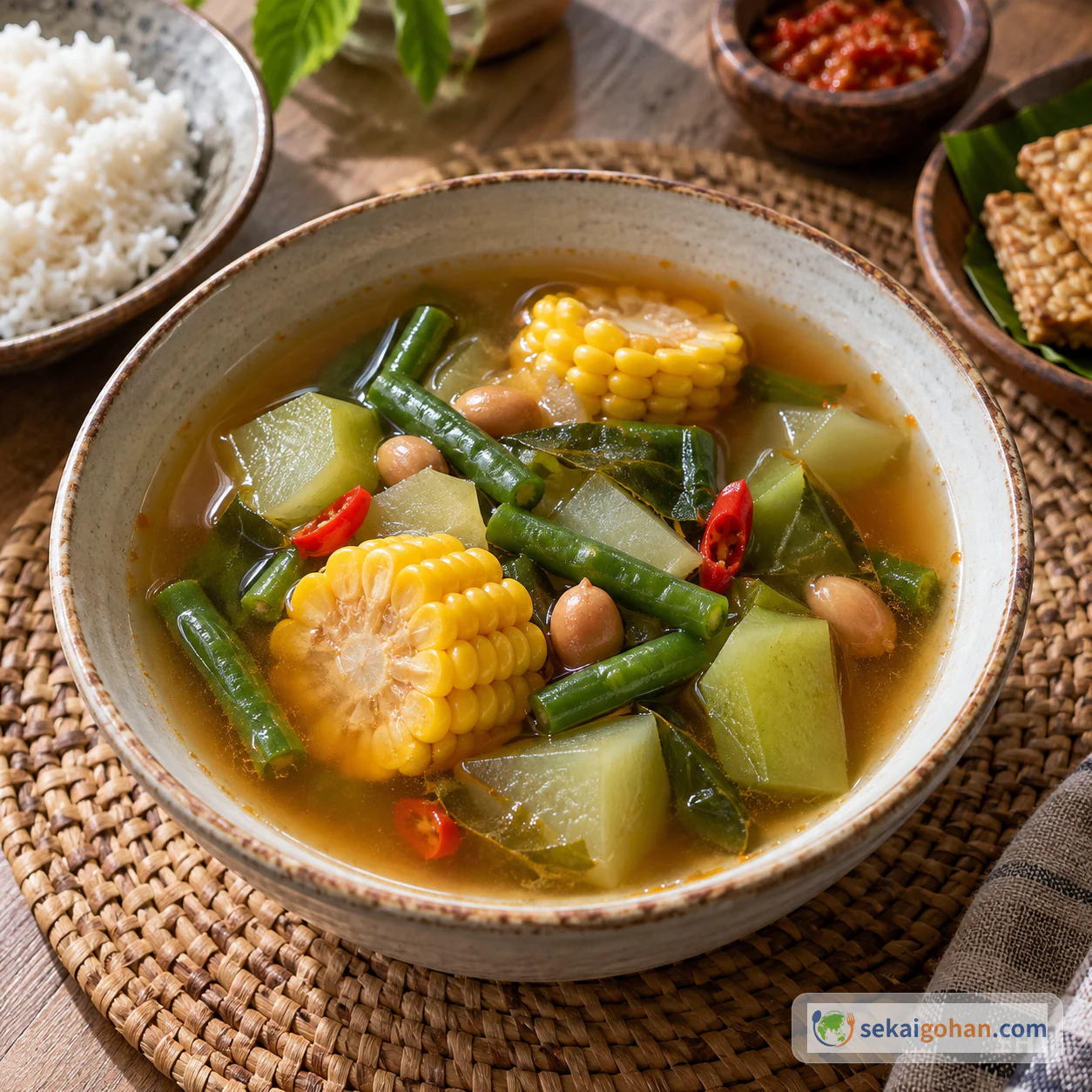
Turn off the heat, let it rest for 2–3 minutes and remove the bay leaf. It's ready to serve when the vegetables still hold their edges, the aroma of the broth has settled, the oil on the surface has broken into fine droplets and the streaks of sourness are gone. Divide the corn, chayote, green beans, eggplant and peanuts evenly among bowls and ladle the broth over. Serve white rice on a separate plate and offer sambal for anyone who wants heat. Resting instead of boiling it further lets the sourness blend through the whole broth.