Ingredients and steps on one page. Print it, or choose “Save as PDF” in the print dialog.
Sekai Gohan
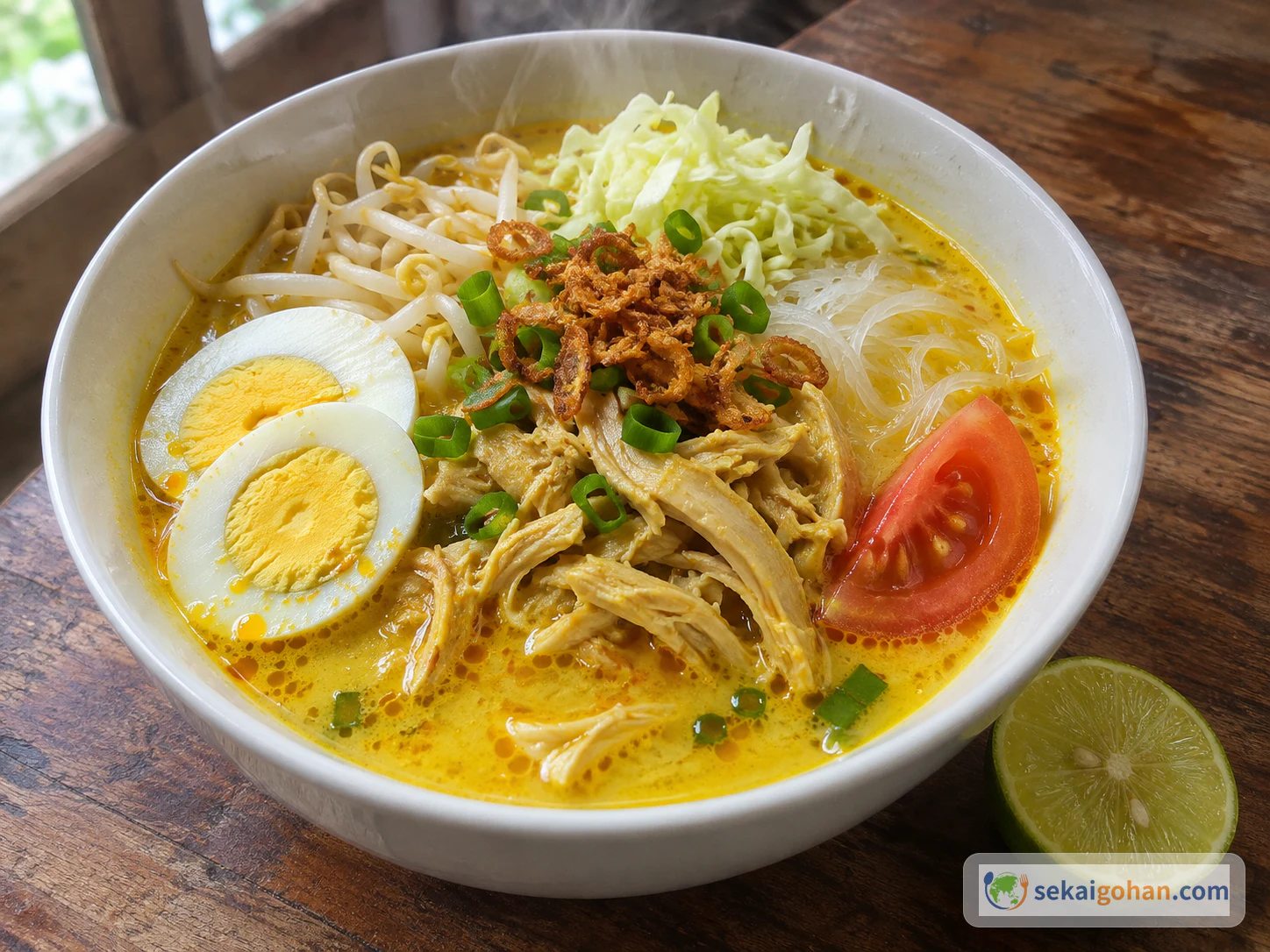
Soto Medan: North Sumatran Coconut Milk Chicken Soup
Ingredients
Chicken and broth
| Ingredient | Amount | Role |
|---|---|---|
| Young chicken (ayam kampung muda) | 1 bird, 1¾ lb (800 g), cut into 4 pieces | The meat, shredded into every bowl |
| Neutral vegetable oil (minyak sayur) | 3 tbsp | Frying the spice paste |
| Green cardamom pods (kapulaga) | 5 | The warm, floral core of the aroma |
| Star anise (bunga lawang) | 2 | Sweet, anise-like depth |
| Salam leaves (daun salam) | 2 | Green, woodsy note |
| Kaffir lime leaves (daun jeruk purut) | 2 | Citrus-peel scent that sharpens the broth |
| Lemongrass (serai) | 1 stalk, bruised | Fresh lift underneath |
| Thin coconut milk (santan sedang) | 4¼ cups (1 L) | The body of the broth, for the long simmer |
| Thick coconut milk (santan kental) | 2 cups (500 ml) | Richness added at the end |
Spice paste (bumbu halus)
| Ingredient | Amount | Role |
|---|---|---|
| Shallots (bawang merah) | 10 | Sweetness |
| Garlic (bawang putih) | 6 cloves | Aromatic base |
| Candlenuts (kemiri) | 2 | Body and richness |
| Ground cumin (jintan) | 1 tsp | The signature Medan aroma |
| Fresh mature turmeric (kunyit tua) | 1¼-inch (3 cm) piece | Yellow colour and earthy scent |
| Fresh ginger (jahe) | ¾-inch (2 cm) piece | Warm heat |
| Black peppercorns (merica butiran) | 1 tsp | Sharp edge |
| Salt (garam) | 2 tsp, plus more to taste | Seasoning for the whole pot |
Fillings (isian)
| Ingredient | Amount | Role |
|---|---|---|
| Mung bean sprouts (tauge) | 3½ oz (100 g) | Crunch |
| Potato (kentang) | 1 | Substance; fried, then cut |
| Oil for frying the potato | as needed | Frying |
| Mung bean glass noodles (suun) | 1¾ oz (50 g) | Slippery, silky strands |
| Cabbage (kol) | 3 leaves | Sweetness and volume |
| Eggs (telur ayam) | 2, hard-boiled | Sliced over the bowls |
| Red tomato (tomat merah) | 1 | Freshness and acidity |
To finish (pelengkap)
| Ingredient | Amount | Role |
|---|---|---|
| Scallion (daun bawang), thinly sliced | 2 tbsp | Fresh green aroma |
| Fried shallots (bawang merah goreng) | 3 tbsp | Toasty crunch |
| Small limes (jeruk limau) | 2 | Acidity, squeezed into each bowl |
| Potato perkedel (perkedel kentang) | as needed | Fried potato patties on the side |
| Emping crackers (emping goreng) | as needed | Bitter-nutty melinjo crackers on the side |
Steps
1Grind the spice paste
Peel the shallots, garlic, turmeric and ginger. Put them in a mortar or small food processor with the candlenuts, cumin, peppercorns and all 2 tsp salt. Pound or blend until smooth, scraping down the sides as you go. The paste is ready when no chunks of shallot or candlenut remain and it looks bright orange-yellow and evenly creamy.
2Prepare the vegetables and noodles
Put the bean sprouts in a colander, pour boiling water over them and drain well. Soak the glass noodles following the pack and cut them into easy lengths. Wash the cabbage, tomato, scallion and limes well under running water (scrub the lime skin before cutting). Shred the cabbage finely and cut the tomato into wedges. The vegetables are ready when the sprouts have lost their raw sheen but still snap, and no water pools under them.
3Boil the eggs and fry the potato
Hard-boil the eggs and peel them. Heat oil in a small pan and fry the potato until golden outside and tender through, then lift it out to drain and cut it into pieces. Frying keeps the potato in shape in the hot broth; boiled potato breaks apart in the bowl. The potato is done when a skewer slides through with no resistance and the outside is crisp.
Hot oilDry the potato well before it goes into the oil and lower it in gently to avoid splatters. Keep the handle turned in and never leave the oil unattended.
4Parboil the chicken
Rinse the chicken pieces and pat them dry. Bring a pot of water to a boil, enough to cover the chicken, then add the chicken and lower the heat. Cook until the chicken is half-done, then lift it out and keep the water in the pot. A hard boil tears the skin and clouds the water. The chicken is ready when the surface has turned opaque all over; it is only half-cooked and finishes in the coconut milk.
Raw chickenWash the board, knife, hands and anything else that touched raw chicken with hot soapy water before handling the fillings, which are eaten without further cooking.
5Fry the spice paste
Heat the 3 tbsp oil in a wide pan over medium-low heat. Add the spice paste and spread it across the pan, stirring often. Keep frying as its water cooks off and it thickens. It is done when the oil has turned yellow-red and separates around the paste, and the raw garlic smell has gone.
Fry the paste all the wayUnderfried paste leaves the broth langu, a raw, green taste that coconut milk cannot hide. Raw turmeric in particular lingers. Go by smell: when only a warm, sweet spice aroma rises from the pan, the paste is ready.
6Add the whole spices
Bruise the lemongrass with the back of a knife. Add the cardamom, star anise, kaffir lime leaves, salam leaves and lemongrass to the paste and turn them through it. Keep frying until the cardamom pods swell and the citrus scent of the leaves rises. Then scrape everything into the pot of chicken water; the pan should be nearly clean, with the oil carried into the pot.
7Simmer the chicken in thin coconut milk
Return the chicken to the pot and pour in the thin coconut milk. Keep the heat low, so the surface only trembles and small bubbles form at the edges. Stir from the bottom now and then so the coconut milk does not catch. The chicken is done when a skewer passes through the thickest part of the thigh with no resistance and the meat pulls away from the bone; at the thickest part it reads 167°F (75°C) and holds there for at least 1 minute.
Cook chicken throughCook the chicken until the centre reaches 167°F (75°C) for at least 1 minute. If the skewer meets resistance or the meat clings to the bone, keep simmering on low heat and check again.
8Finish with thick coconut milk
Bring the thick coconut milk to room temperature before it goes in; cold coconut milk added to the hot pot splits more easily. Keep the heat low, pour it in and stir as the broth comes up to a boil. Once it boils, turn off the heat within a minute or two. Taste and add salt to taste. The broth is ready when it is opaque, silky and evenly yellow, with small islands of spice oil and no white flecks.
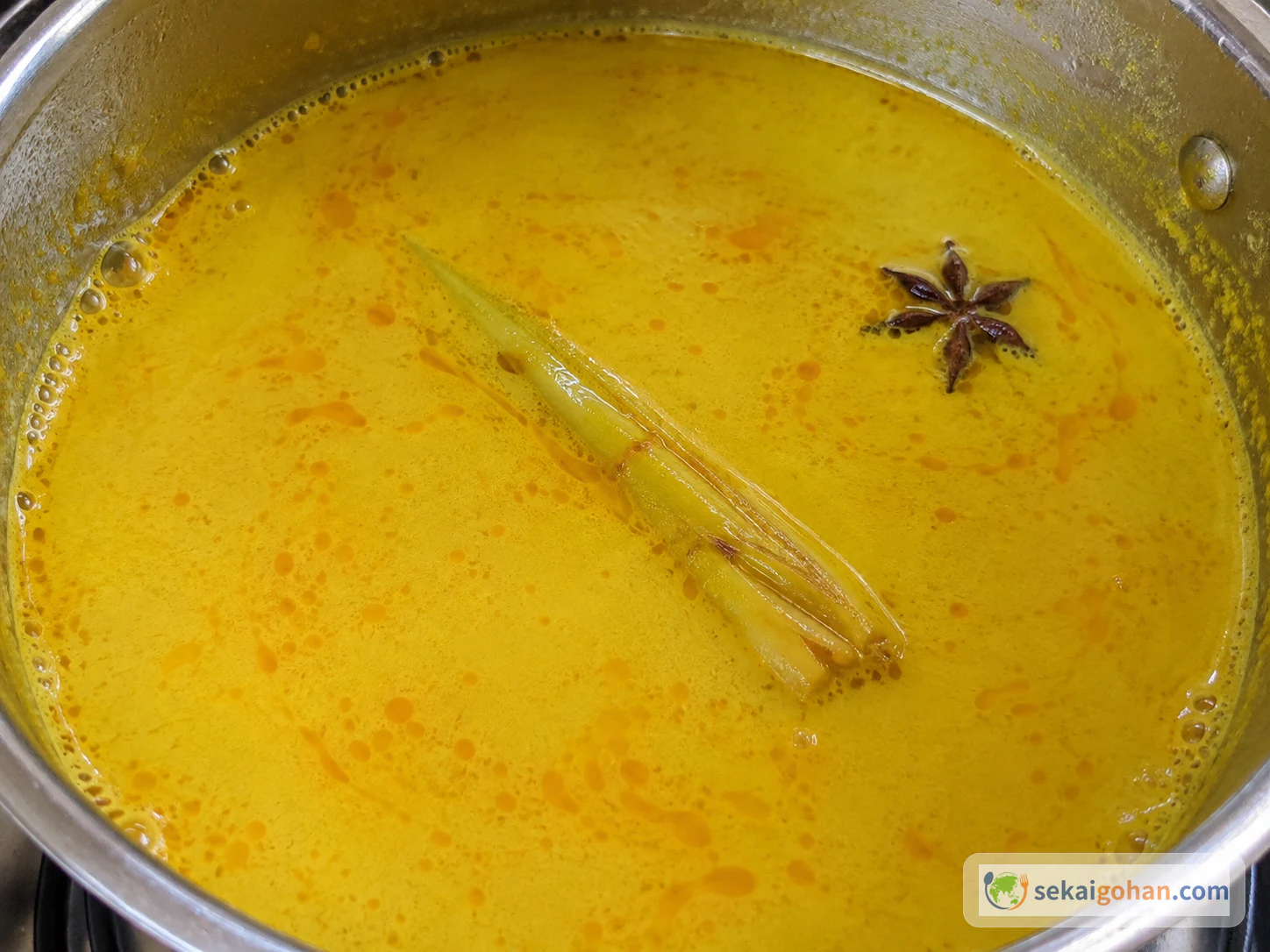
Smooth and glossy with orange oil droplets means the coconut milk has held together Low heat keeps the broth smoothCoconut milk that boils hard for long separates into grainy curds and clear fat. Keep the flame low, stir from the bottom, and turn off the heat soon after the thick coconut milk boils.
9Shred the chicken
Lift the chicken out of the pot onto a plate. Hold each piece with a fork and pull the meat into coarse shreds by hand or with a second fork. Keep the broth covered so it stays hot while you work. The shreds are ready when they are bite-size, pale yellow at the edges and still moist.
10Build the bowls
Divide the bean sprouts, glass noodles and cabbage among eight bowls. Add the fried potato pieces and tomato wedges, then pile the shredded chicken on top. Keep each portion modest so the broth has room. The bowls are ready when each holds every filling in a small, even layer, with the chicken on top.
Drain everythingWater clinging to the sprouts or cabbage dilutes the broth in the bowl and dulls it. Shake the colander hard and let the vegetables sit a minute before they go into the bowls.
11Add the egg and pour the broth
Slice the eggs thinly and lay two or three slices in each bowl. Bring the broth back to hot over low heat if it has cooled. Ladle it gently into each bowl, pouring over the side rather than straight onto the chicken. Stop when the broth lifts the fillings slightly but the chicken and egg still show above it, with steam rising off the bowl.
12Finish and serve
Scatter fried shallots and sliced scallion over each bowl. Cut the limes and set them beside the bowls. Put the perkedel and emping on separate plates, with white rice or ketupat and sambal. Serve while the steam is still rising, and squeeze the lime in just before eating.