Ingredients and steps on one page. Print it, or choose “Save as PDF” in the print dialog.
Sekai Gohan
Khao Piak Sen: Laos's Hand-Cut Rice Noodle Soup
Ingredients
Hand-cut noodles
| Ingredient | Amount | Substitutes & notes |
|---|---|---|
| Rice flour | 7 oz (200 g) | Rice flour sold for baking also works |
| Tapioca starch | 3.5 oz (100 g) | 2.75 oz (80 g) potato starch can substitute (slightly less chew) |
| Salt | 1/4 tsp | — |
| Boiling water | ¾ cup (200 ml) | Used to bring the dough together |
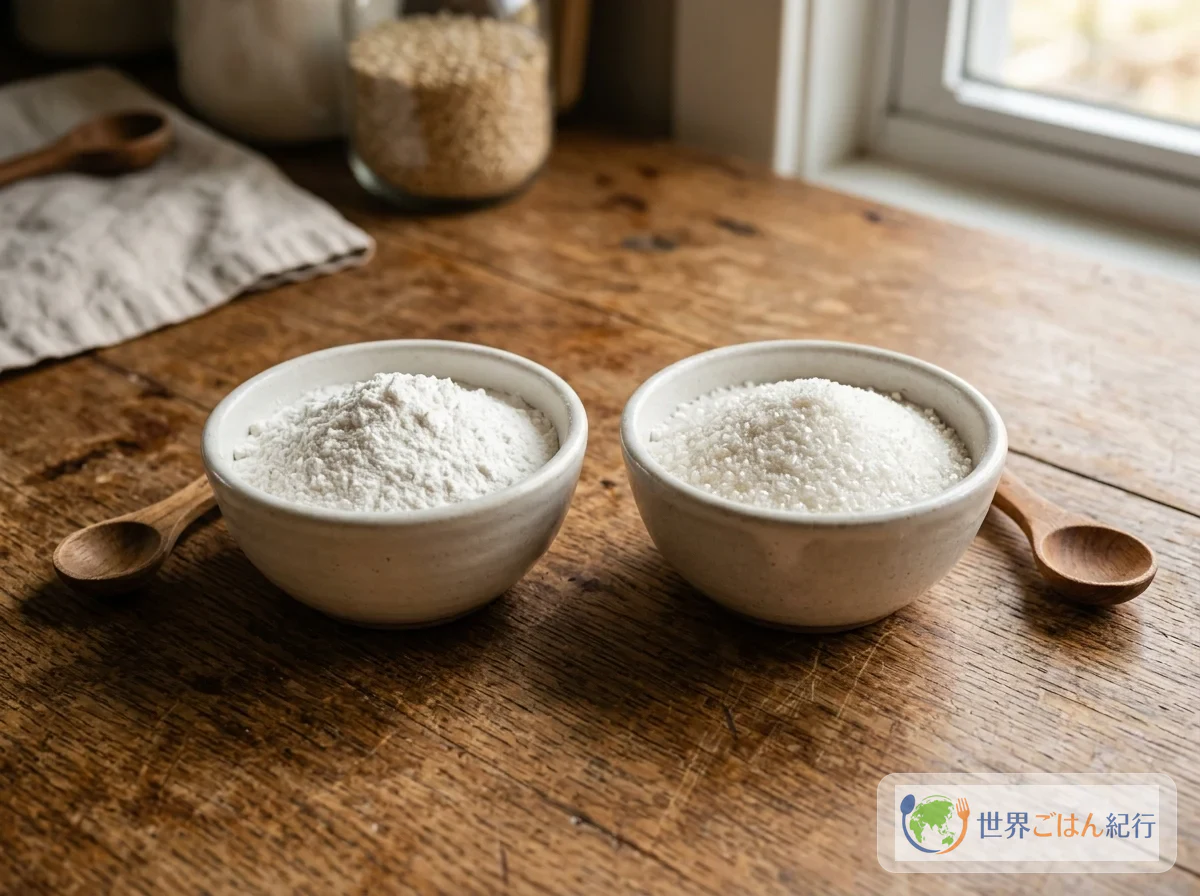
Rice flour gives structure; tapioca starch gives chew. The ratio of the two creates the distinctive texture of khao piak sen. More tapioca makes the noodles more translucent and chewier. Less makes them break more easily but gives a smoother, slippery bite. 2:1 (rice flour to tapioca starch) is the traditional balance.
This dish contains chicken. The condiments include fish (fish sauce). If you have a fish allergy, replace the fish sauce with light soy sauce. The noodles are made from rice flour and tapioca starch with no wheat, so the dish is gluten-free (also with potato starch in place of tapioca). Check that your fish sauce and soy sauce are gluten-free if that matters to you.
Soup (chicken broth)
| Ingredient | Amount | Substitutes & notes |
|---|---|---|
| Chicken thighs (bone-in) | 1.25 lb (600 g) | 8 drumettes also work |
| Water | 2 quarts (2 L) | — |
| Lemongrass | 2 stalks | Bruise the base before using |
| Galangal | 3 slices | 2 slices of ginger can substitute |
| Garlic | 4 cloves (crushed) | — |
| Fish sauce | 3 tbsp | Adjust to taste |
| Salt | 1 tsp | — |
| White pepper | 1/2 tsp | — |
Toppings and garnishes
| Ingredient | Amount | Notes |
|---|---|---|
| Cilantro | as needed | Chopped |
| Dill | as needed | A herb characteristic of Lao cooking |
| Scallions | 3 | Sliced thin |
| Garlic (for frying) | 6 cloves | Sliced thin and fried |
| Limes | 2 | Cut into wedges |
| Chili flakes | as needed | To taste |
| Bean sprouts | 3.5 oz (100 g) | Served raw |
Steps
1Make the noodle dough
10 min
Put 7 oz (200 g) rice flour, 3.5 oz (100 g) tapioca starch, and 1/4 tsp salt in a large bowl and stir for about 30 seconds until the color is even. Add ¾ cup (200 ml) boiling water in 3–4 portions, stirring from the bottom in circles with chopsticks. At first it will be crumbly. When the dry white patches are gone and the mixture holds together when squeezed, bring it together with your hands.
Careful of the heat, and knead the dough about 5 minutes. Press with the heel of your hand and fold, over and over, until the surface cracks disappear and the dough springs back slowly when pressed, a little firmer than an earlobe. Shape it into a flat disk about 1 inches (3 cm) thick, wrap it tightly in plastic wrap so it doesn't dry out, and rest it 20 minutes.
If the dough cracksIf the dough is dry and cracks, it needs more water. Add boiling water 1 tsp at a time. If it is sticky, sprinkle in a little rice flour and knead again. Absorption differs by brand and type of tapioca starch, so adjust the water as needed.
2Cut the noodles
15 min
On a surface dusted with rice flour, roll the rested dough to 0.25 inch (5 mm) thick. If you don't have a rolling pin, a wine bottle or a plastic wrap tube will do.
Roll the dough up loosely from the near edge and cut it into 0.5 inches (1 cm) widths with a knife. Shake the noodles loose and toss with dusting flour so they don't stick. The noodles can be uneven. Lao hand-cut noodles are supposed to vary in thickness.
3Make the chicken broth
40 min
Put 2 quarts (2 L) water in a pot with the bone-in chicken thighs, the lemongrass (bruise the base with the flat of a knife until fragrant), galangal, and coarsely crushed garlic, and bring to a boil over high heat. Don't mash the garlic into a paste; cracking it until it smells is enough. When it boils, carefully skim the white scum with a ladle, turn the heat down low so the surface barely trembles, cover, and simmer 30 minutes. A hard boil clouds the soup, so keep it at a few small bubbles.
When a skewer pushed into the chicken releases clear juices, it is cooked. Remove the chicken, let it cool slightly, take the meat off the bones and shred it along the grain into 0.5–1 inches (1–2 cm) pieces. Large chunks are hard to eat, so keep them to a size you can scoop with a spoon. Also remove the lemongrass and galangal.
Season the broth with 3 tbsp fish sauce, 1 tsp salt, and white pepper.
4Simmer the noodles in the broth
5 min
Bring the broth back to a boil and put the hand-cut noodles directly into it. This is the defining feature of khao piak sen: you don't boil the noodles in a separate pot, you simmer them right in the broth.
The tapioca in the noodles dissolves and gives the soup a natural body, the heart of the dish. Cook over medium heat for 3–5 minutes, until the noodles turn translucent and chewy. Overcooked noodles dissolve, so check the texture and turn off the heat.
5Fry the garlic
3 min
Put 3 tbsp neutral oil in a small skillet and fry 6 cloves of thinly sliced garlic slowly over low heat. Remove it right away when it turns golden. It keeps darkening from residual heat, so pulling it out a little early is the trick. Save the garlic oil too.
6Assemble
3 min
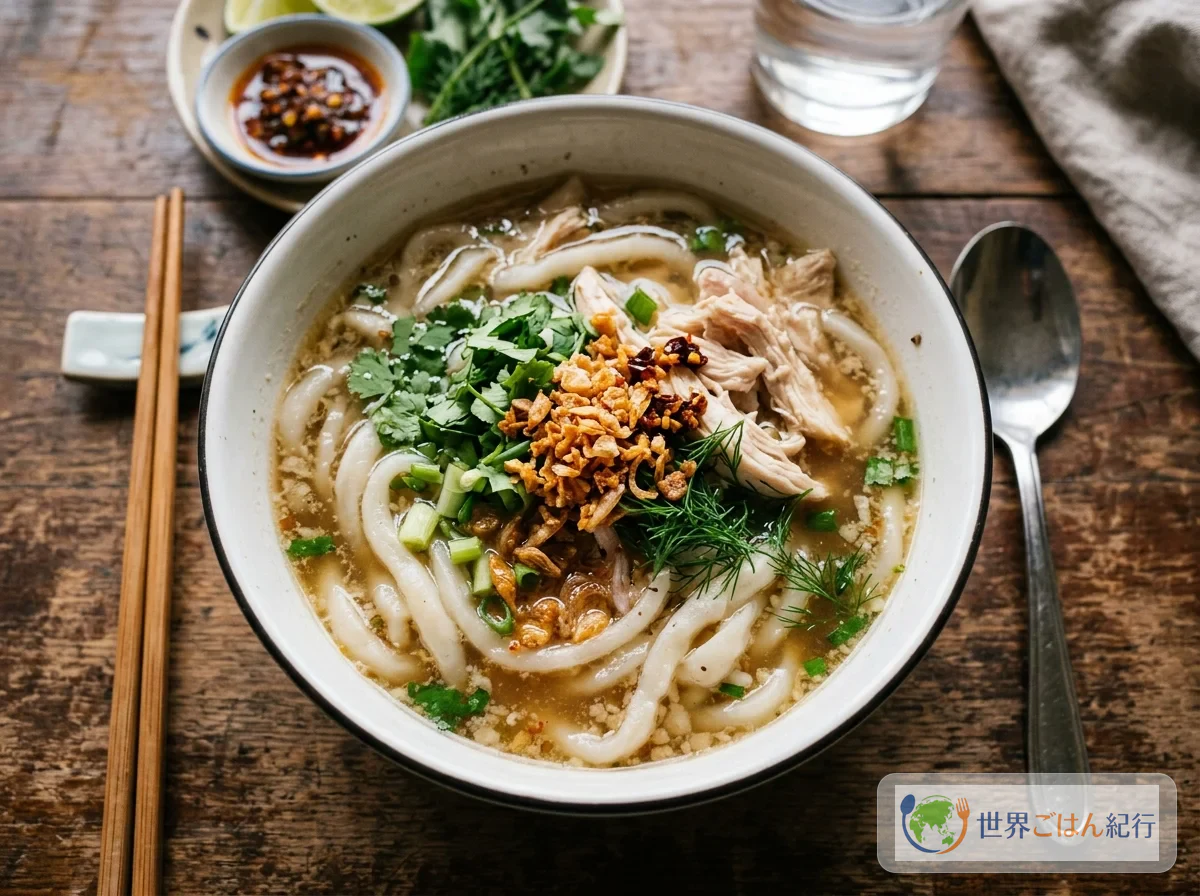
Reheat the soup and noodles over low heat until steaming, ladle generously into bowls, and top with the shredded chicken. The noodles should be plump and the soup should still have body. Drizzle with the fried garlic and garlic oil and scatter cilantro, dill, and scallions. Serve lime, bean sprouts, and chili flakes on a separate plate.
To eat, squeeze in lime for acidity and enjoy the crisp bean sprouts.