Ingredients and steps on one page. Print it, or choose “Save as PDF” in the print dialog.
Sekai Gohan
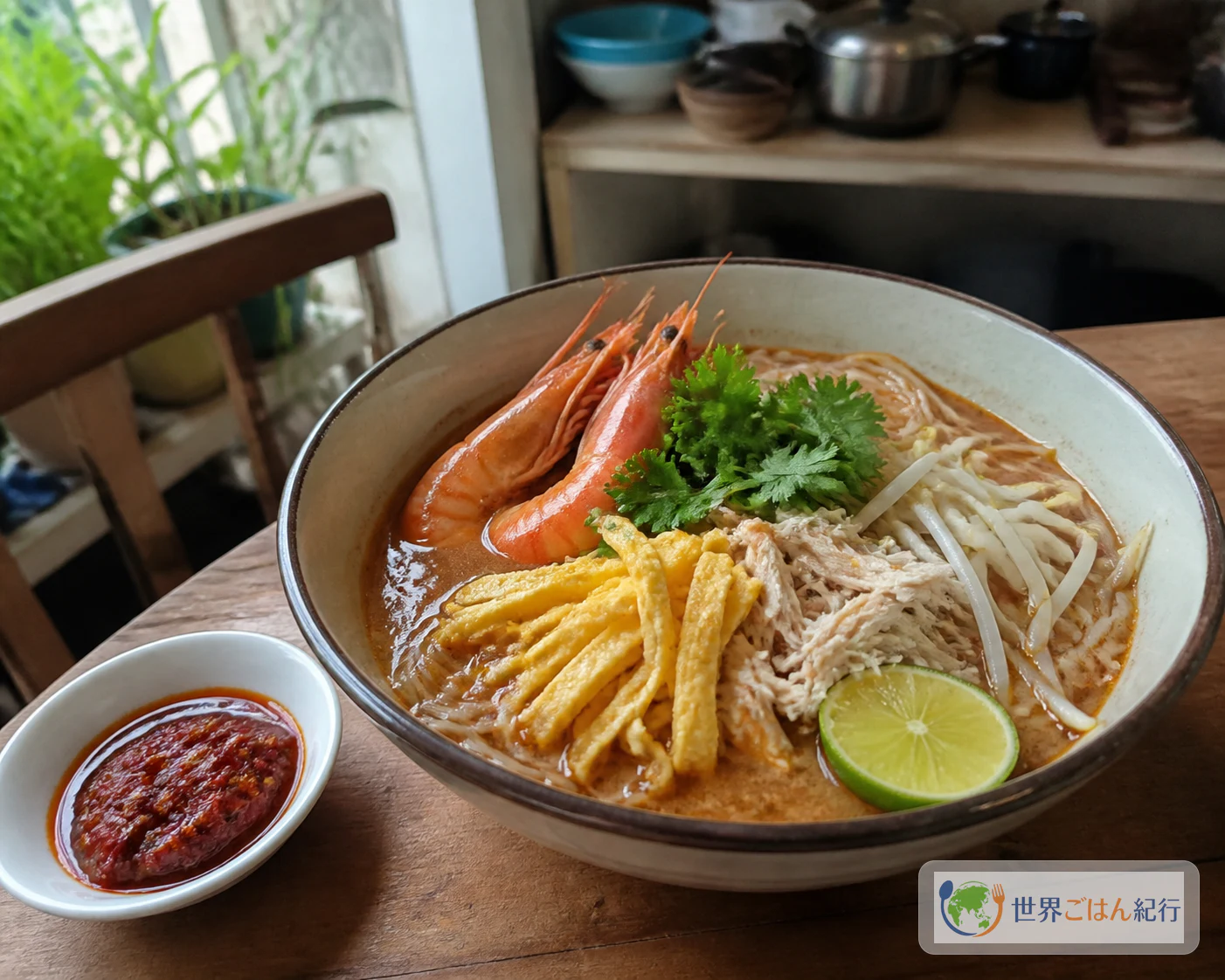
Sarawak Laksa: Borneo's Breakfast Noodle Soup with Shrimp Stock and Rempah
Ingredients
Stock and noodles
| Ingredient | Amount | Substitutes & notes |
|---|---|---|
| Boneless chicken thigh | 300 g | Breast works too, but it dries out if overcooked |
| Raw shell-on shrimp | 250 g | Head-on shrimp give a sweeter stock. Keep the shells |
| Water | 1.5 L | For the stock (about 6 1/3 cups). Reduce to about 1.2 L |
| Dried rice noodles | 240 g | Bee hoon or thin rice vermicelli. Wheat noodles give a different texture |
| Coconut milk (unsweetened, regular) | 250 ml | About 1 cup. With coconut cream, use 200 ml. Don't use drinking coconut milk or sweetened products |
| Bean sprouts | 160 g | Blanch for just 30 seconds |
| Eggs | 2 | Beat with 1 g salt and cook into thin omelets |
| Cucumber | 1/2 (about 80 g) | Optional, but a refreshing break from the rich soup |
| Cilantro | 20 g | Vietnamese coriander, or 20 g green onions |
| Limes | 2 | Calamansi is closer to the original. Lemon also works |
| Sambal (chili paste) | To taste | Serve at the table to add as you like. Store-bought sambal oelek is fine |
Rempah (spice paste)
| Ingredient | Amount | Substitutes & notes |
|---|---|---|
| Dried red chiles | 10 g | Soak in lukewarm water for 15 minutes. Remove the seeds for less heat |
| Fresh red chiles | 2 (about 1 oz (30 g)) | Can be omitted; increase the dried chiles to 14 g |
| Red onion or shallots | 2.75 oz (80 g) | If using yellow onion, slice it thinly |
| Garlic | 3 cloves (about 15 g) | Peeled |
| Ginger | 20 g | Without galangal, increase to 1 oz (30 g), though the aroma becomes milder |
| Galangal | 20 g | Use frozen slices if you can find them. Ginger alone doesn't give the same aroma |
| Lemongrass | 2 stalks (white part, about 3 inches (8 cm)) | If dried, follow the amount on the package |
| Tamarind paste | 1 oz (30 g) | For concentrated paste, start at 20 g and taste for sourness |
| Coriander seeds | 10 g | If ground, 2 1/2 tsp |
| Cumin seeds | 4 g | If ground, 1 1/2 tsp |
| Belacan (fermented shrimp paste) | 5 g | Without it, the fermented shrimp savoriness is weaker. Check the ingredient label |
| Macadamia nuts | 1 oz (30 g) | Stand-in for the candlenuts used locally. Cashews also work |
| Palm sugar or dark brown sugar | 10 g | Rounds out the sweetness. With white sugar, start at 8 g |
| Vegetable oil | 2 tbsp (30 ml) | About 2 tbsp, for frying the paste |
| Water | 2–3 tbsp | Only for blending the rempah. Too much lengthens the frying time |
| Salt | 5 g | Adjust at the end, taking the stock and shrimp into account |
Steps
1Make the stock with chicken and shrimp shells
30 min
Put 1.5 L water and 300 g chicken thigh in a pot over medium heat. Just before it boils, lower the heat and simmer for 20 minutes, skimming off the foam. When the thickest part of the chicken reaches at least 74°C (165°F), take it out, let it cool slightly, and shred it along the grain. Add the shrimp shells and heads to the remaining liquid, simmer over low heat for 8 minutes, and strain once it smells fragrant. Keeping it at a rolling boil draws bitterness from the shells, so hold the heat where small bubbles line the edge of the pot.
2Prepare the dry spices and chiles
15 min
Put 10 g coriander seeds and 4 g cumin seeds in a dry skillet and toast over medium heat for about 2 minutes. When a toasty smell rises and the seeds darken slightly, turn off the heat. Soak 10 g dried red chiles in lukewarm water for 15 minutes and pat them dry. When the seeds are dry and free-flowing and the soaked chiles bend easily between your fingers, they're ready for the paste. Hot spices put straight into a sealed container will absorb moisture, so spread them on a plate to cool.
3Cook off the moisture and bring out the red oil
20 min
Heat 2 tbsp (30 ml) vegetable oil in a deep pot over medium-low heat. Add the paste and fry for 15–20 minutes, scraping the bottom of the pot with a wooden spatula. At first it sounds wet; when the sound becomes finer, red oil seeps out at the edges and the raw smell of the onion and lemongrass is gone, move on. If dark brown bits stick to the bottom, turn off the heat and loosen them with 1 tbsp of the stock. The bitterness of black, burnt paste can't be undone, so if it gets that far, make the paste again.
4Combine the stock and coconut milk
20 min
Add 1.25 quarts (1.2 L) of the strained stock to the fried rempah. Heat over medium until just below a boil, then simmer over low heat for 10 minutes to carry the paste's aroma into the stock. Add 1 cup (250 ml) coconut milk, 10 g palm sugar and 5 g salt, and warm for 5 minutes at a heat where small bubbles line the edge of the pot. A hard boil makes the oil and liquid separate easily, so turn off the heat while the soup is steaming. Aim for a taste where the shrimp savoriness comes first, then the sourness, and finally the heat.
5Finish the noodles and toppings separately
15 min
Following the package directions, cook 8.5 oz (240 g) dried rice noodles in boiling water for 8–10 minutes, then rinse under running water to remove the surface starch. Drain once the noodles separate into individual strands and are no longer slippery. Blanch 5.5 oz (160 g) bean sprouts in the same water for just 30 seconds. Peel the shrimp and cook them in a portion of the reheated soup for 2–3 minutes, until the flesh turns white and opaque. Beat 2 eggs with 1 g salt, cook into thin omelets, stack them and cut into strips 0.125 inch (3 mm) wide. Shrimp left simmering in the pot turn tough, so take them out as soon as they're cooked.
6Pour the soup over the noodles and add the toppings
5 min
Keep the soup warm over low heat, with small bubbles lining the edge of the pot. Divide the rice noodles among 4 bowls and top with chicken, shrimp, bean sprouts, cucumber, omelet strips and cilantro, in that order. Pour about 1¼ cups (300 ml) of steaming soup into each bowl from beside the toppings, and finish with a wedge of lime. Squeezing lime into the pot from the start makes it hard to even out the sourness across 4 servings. Set sambal out in a separate dish so each person can add heat. It's done when the bowl is steaming, the soup is reddish brown, and a little of the spiced oil shows between the noodles.