Ingredients and steps on one page. Print it, or choose “Save as PDF” in the print dialog.
Sekai Gohan
Nasi Ayam: Malay-Style Chicken Rice with Fried Glazed Thighs
Ingredients
Chicken and paste
| Ingredient | Amount | Role |
|---|---|---|
| Ginger | 2-inch (5 cm) piece | Core aroma of the paste |
| Garlic | 4 cloves | Depth |
| Red onions | 2 large | Sweetness, moisture and body for the paste |
| Bone-in chicken thighs | 4 (about 2⅔ lb / 1.2 kg) | The main event |
| Water for poaching | 2 quarts (2 L) | Cooks the chicken and becomes the stock |
Glaze
| Ingredient | Amount | Role |
|---|---|---|
| Oyster sauce | 1 tbsp + 1 tsp (20 ml) | Salt and savoriness |
| Light soy sauce (Chinese-style) | 2 tbsp + 2 tsp (40 ml) | Salt and color |
| Kecap manis (sweet soy sauce, kicap manis) | 1 tbsp + 1 tsp (20 ml) | Sweetness, shine and frying color |
| Honey | 2 tbsp + 2 tsp (40 ml) | Gloss and browning |
| Sesame oil | 1 tbsp + 1 tsp (20 ml) | Aroma |
| Black pepper | to taste | Edge |
Fragrant rice
| Ingredient | Amount | Role |
|---|---|---|
| Long-grain rice (jasmine) | 14 oz (400 g) | The rice itself |
| Poaching stock | 2 cups + 1 tbsp (500 ml) | Cooking liquid and flavor |
| Ginger, minced | 1 tbsp + 1 tsp (20 ml) | Aroma |
| Salt | 1 tsp (5 ml) | Seasoning base |
| Pandan leaf | 1 | Sweet, grassy fragrance |
Spiced soup
| Ingredient | Amount | Role |
|---|---|---|
| Poaching stock | 4¼ cups (1 L) | Broth |
| Soup spice bag (sup bunjut, rempah sup) | 1 bag | The soup's warm spice backbone |
| Red shallot, thinly sliced | 1 | Sweetness |
| Salt and black pepper | to taste | Seasoning |
| Coriander leaves | a little | Fresh finish |
Soy dip
| Ingredient | Amount | Role |
|---|---|---|
| Poaching stock | 1½ cups + 1 tbsp (375 ml) | Base |
| Kecap manis | ¼ cup (60 ml) | Sweet-salty body |
| Leftover glaze from the chicken | all that remains | Extra savoriness (boiled hard, or left out) |
Sambal chili cuka (vinegared chili sauce, about 2 cups / 500 ml)
| Ingredient | Amount | Role |
|---|---|---|
| Long red chilies | 10 | Heat and color |
| Chicken stock (or poaching stock) | ½ cup (125 ml) | Loosens the sauce |
| Sugar | 2 tbsp + 2 tsp (40 ml) | Rounds off the heat |
| Apple cider vinegar | ⅓ cup (80 ml) | Sourness |
| Salt | 1 tsp (5 ml) | Seasoning |
To serve and fry
| Ingredient | Amount | Role |
|---|---|---|
| Cucumber, sliced on the diagonal | 1 | Cool, crisp contrast |
| Oil for frying | as needed | Crisps and colors the skin |
Steps
1Blend the paste and coat the chicken
Blend the ginger, garlic and red onions in a blender or food processor until completely smooth; the ginger can go in with its skin on. Pat the thighs dry with paper towels. Rub the paste over every surface, cover, and refrigerate for at least 30 minutes. The paste carries no salt, so its only job is to press aroma against the meat. It is right when it looks creamy with no fibers left and clings to the skin in a thick, even coat.
2Poach the thighs gently
Bring the poaching water to a boil in a deep pot, slide in the thighs with their paste, and turn the heat right down. Poach for about 15 minutes with only small bubbles at the edge of the pot, then push the thermometer into the thickest part beside the bone. Keep poaching until it reads 167°F (75°C), and hold it there for at least 1 more minute. The chicken is ready when the reading holds and the meat at the bone has turned white.
3Rest the chicken and strain the stock
Lift the thighs onto a rack and let them rest for about 10 minutes, then pat the skin dry with paper towels. Leave them whole; uncut, they keep their juices and fry quickly. Strain the stock through a fine sieve into a jug and measure it. Move on when the skin feels dry to the touch and the stock in the jug is free of scum and bits of paste.
4Glaze the chicken for 20 minutes
Stir the oyster sauce, light soy, kecap manis, honey, sesame oil and black pepper together in a shallow dish. Turn the thighs in it until every side is coated, then leave them for 20 minutes. Lift the chicken out and scrape all the leftover glaze into a small bowl for the soy dip. The sugar in this glaze is what browns the skin fast in the oil. The chicken is ready when its surface looks brown and glossy and a little glaze pools at the bottom of the dish.
5Cook the fragrant rice
Rinse the rice and leave it to drain in a sieve. Put it in the rice cooker with the stock, minced ginger, salt and pandan leaf, and cook on the normal setting. When it finishes, let it stand for 5 minutes, then fluff it with large, gentle strokes. Long-grain rice drinks fast, and any extra liquid breaks the grains. The rice is right when the grains stand separate and nothing has stuck to the bottom of the pot.
6Make the spiced soup
Put the stock, spice bag and sliced shallot in a saucepan and bring it to a boil. Lower the heat and simmer for about 5 minutes. Lift the bag out as soon as the soup smells warm and spicy; left in too long, it turns the broth astringent. Season with salt and pepper, turn off the heat and scatter coriander over the top. The soup is ready when it smells of cinnamon and star anise and the shallot has softened.
7Boil the soy dip
Combine the stock, kecap manis and leftover glaze in a small saucepan. That glaze has been on the chicken, so bring the pan to a full rolling boil and keep it boiling for at least 5 minutes. If you would rather not use it, leave the glaze out and boil the stock with kecap manis alone. Taste and add a splash more stock if it is too salty. The dip is ready when it is dark and glossy and tastes sweet first, salty after.
8Blend the sambal chili cuka
Pull the seeds from some of the chilies if you want less heat, then put them in the blender with the stock, sugar, vinegar and salt. Blend until smooth. Taste and adjust the heat, sweetness and sourness until no one of them shouts over the others. Pour it into a clean jar with a tight lid. It is ready when it has thickened slightly and the vinegar no longer hits first.
9Fry the glazed thighs
Pour oil into a wok or deep pot, leaving at least 2 inches (5 cm) below the rim, and clip the thermometer to the side. Heat the oil to 340–345°F (170–175°C). Lower in 2 or 3 thighs at a time and fry for 5 to 7 minutes, turning them so both sides color. The thighs are done frying when the skin is deep golden brown and the bubbles around them are fine and steady.
10Drain and check the center
Lift the thighs onto a rack lined with paper towels and let the oil drip off. Check the thickest part beside the bone again; it must read 167°F (75°C). If it falls short, finish it in a 355°F (180°C) oven until it gets there. Let the oil come back to temperature before the next batch goes in. Each thigh is done when the skin crackles, the meat springs back when pressed, and the center reads 167°F (75°C).
11Plate and serve
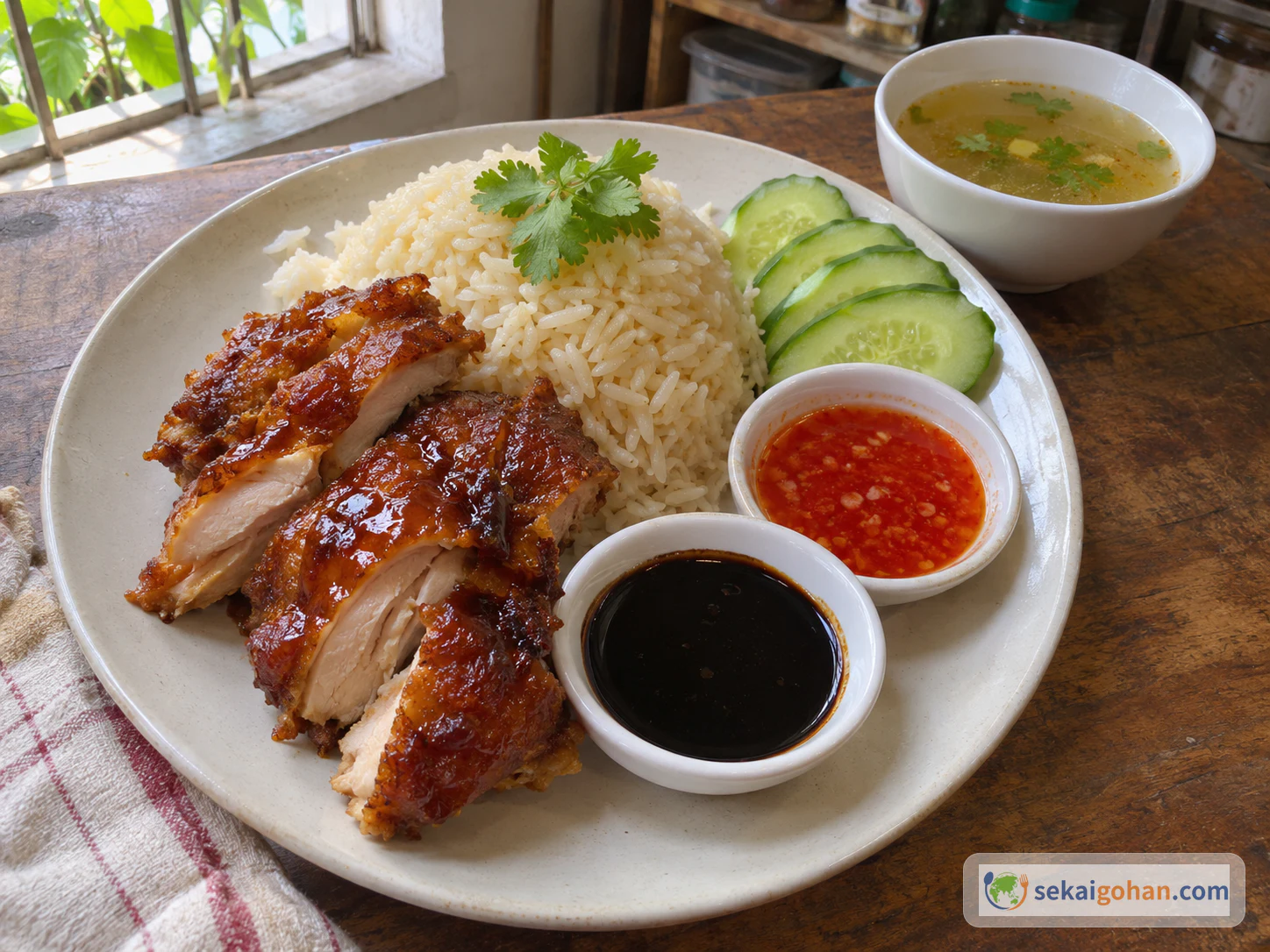
Spoon a mound of rice onto each plate and set a thigh beside it with a fan of cucumber. Pour the soy dip and sambal into small dishes, and ladle the soup into bowls. Everyone dips the chicken a little at a time rather than pouring the sauces over the plate, so the two never blur together. The table is ready when every place has rice, chicken and cucumber, with both sauces and a bowl of soup within reach.