Ingredients and steps on one page. Print it, or choose “Save as PDF” in the print dialog.
Sekai Gohan
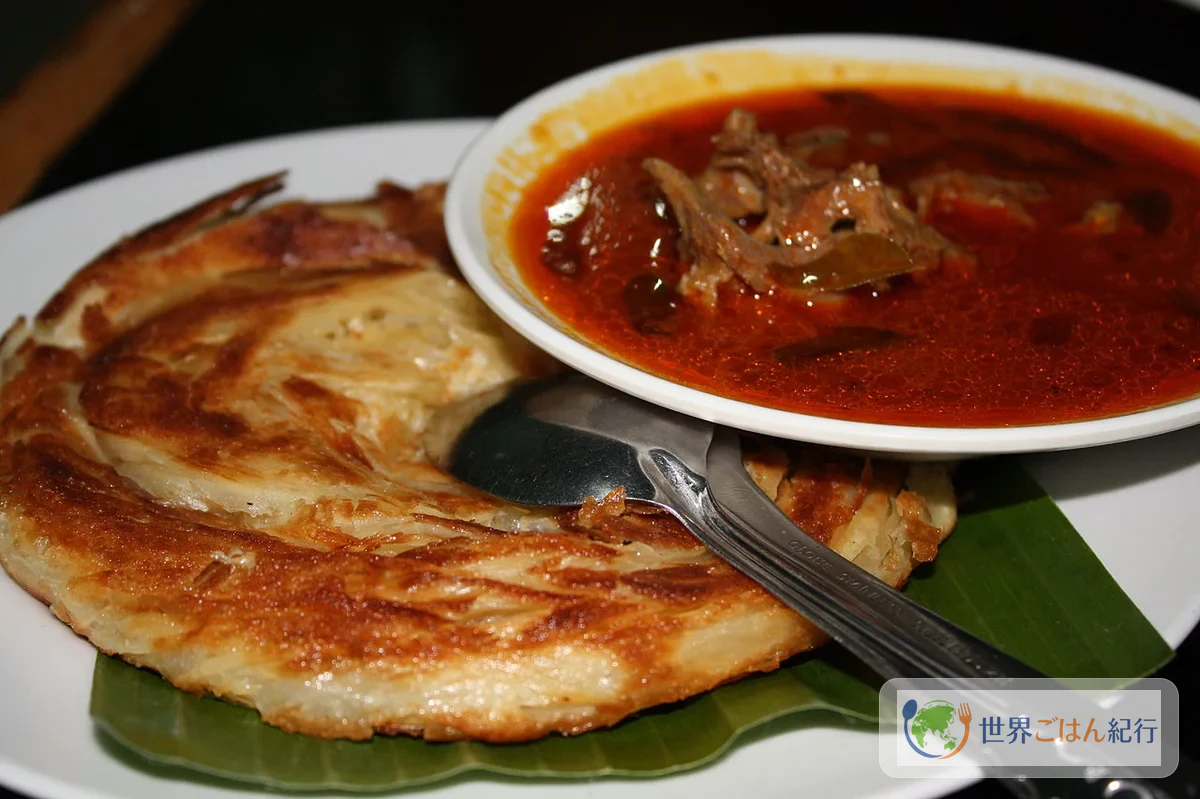
Roti Canai: Malaysia's Flaky Flatbread with Dal Curry
Ingredients
Roti dough
| Ingredient | Amount | Substitutes & notes |
|---|---|---|
| Bread flour | 300 g | All-purpose flour works. The more gluten, the easier it stretches |
| Water (lukewarm) | 180 ml | 35–40°C (95–104°F). Adjust to the season |
| Ghee (clarified butter) | 4 and 2/3 tbsp | 2 tbsp for the dough, 4 tsp for brushing and 4 tsp for cooking. Melted unsalted butter works as a substitute |
| Sweetened condensed milk | 1 tbsp | Optional. Adds a faint sweetness and softness to the dough |
| Salt | 1 tsp | None |
| Neutral oil (for resting the dough) | 4 tbsp | Brushed on the dough's surface to prevent drying |
Dal curry (accompaniment)
| Ingredient | Amount | Substitutes & notes |
|---|---|---|
| Lentils (red or yellow) | 5.5 oz (150 g) | Red lentils break down faster |
| Onion | 1 (finely chopped) | None |
| Tomato | 1 (roughly chopped) | 3.5 oz (100 g) canned chopped tomatoes works |
| Garlic | 2 cloves (finely chopped) | None |
| Ginger | 1 knob (grated) | None |
| Turmeric | 1 tsp | None |
| Ground cumin | 1 tsp | None |
| Chili powder | 1/2 tsp | Adjust for heat |
| Coconut milk | ½ cup (100 ml) | Optional, but adds an authentic taste |
| Neutral oil | 2 tbsp | None |
| Salt | 1 tsp | Adjust to taste |
| Water | 2 cups (500 ml) | None |
Steps
1Knead the dough
10 min
Put 10.5 oz (300 g) bread flour and 1 tsp salt in a large bowl and mix well. Make a well in the center and pour in ¾ cup (180 ml) lukewarm water, 2 tbsp melted ghee and 1 tbsp condensed milk. Mix roughly with chopsticks or a spoon, then knead firmly by hand for 5 minutes. It's ready when the dough is smooth and pulls away from the bowl's sides.
Guide: if the dough springs back when pressed with a finger, enough gluten has formed. If it's sticky, add flour 1 tsp at a time. If it's too stiff, add lukewarm water 1 tsp at a time.
2Divide the dough and rest it
at least 2 hours
Divide the dough into 4 equal pieces and shape each into a ball. No heat here; the goal is a smooth, taut surface. Pour 4 tbsp oil into a deep container and arrange the dough balls so they sit in the oil. Cover with plastic wrap and rest at room temperature for at least 2 hours. During this rest the gluten relaxes and the dough becomes remarkably easy to stretch.
Making it the day before is bestProfessional mamak cooks prepare the dough the night before and let it rest overnight. Dough rested for 12–24 hours stretches far more easily than dough rested for 2 hours, and the layers come out cleaner. If you want freshly cooked roti for breakfast, make the dough the night before and refrigerate it. Bring it back to room temperature 30 minutes before using.
3Stretch the dough thin
3 min per piece
This is the highlight of making roti canai. Spread a thin layer of oil on the work surface (no dusting flour; use oil). Take out a dough ball and press it flat with your palm.
Pinch the edge of the dough with both hands and slowly pull it outward. Once you're used to it, you can toss it into the air and spin it like a mamak cook, letting centrifugal force thin it out. The goal is thin enough to see through to the other side. Don't worry if a few holes appear, or if it isn't a perfect circle.
4Fold the dough
2 min per piece
Spread 1 tsp ghee over the surface of the thin dough. Fold the left and right sides toward the center to make a long, narrow strip. Then roll the strip up into a spiral from the near end to the far end, and press lightly from above to flatten it into a disc.
This cycle of "stretch, brush with ghee, fold, roll" is what produces the many thin layers of roti canai. Make the finished spiral about 6–7 cm in diameter, soft enough that the layers shift slightly with ghee when pressed. Then stretch it lightly once more to a circle 18–20 cm across (don't make it too thin or the layers will collapse, so this time keep it thicker).
5Cook on the griddle
4 min per piece
Preheat a skillet (cast iron if possible) over medium heat for 2 minutes. Brush it with 1 tsp ghee and lay the shaped dough in the pan. Cook 2 minutes over medium heat, until the bottom is golden, then flip and cook another 2 minutes.
Doneness guide: mottled patches of golden and brown are ideal. If some areas remain evenly white the heat is too low; if the whole surface is dark brown the heat is too high.
6"Clap" the roti to finish
30 sec
Take the roti off the heat when it is golden on the surface and clap it between both hands for about 30 seconds. If the layers fluff open, you've succeeded. This "clapping" step is the biggest secret of roti canai. Clapping separates the inner layers and creates the crisp, airy texture. Without it the layers stay stuck together and you end up with a plain thin bread.
7Simmer the lentils
20 min
Rinse 5.5 oz (150 g) lentils lightly in water and put them in a pot with 2 cups (500 ml) water. Add 1 tsp turmeric and simmer over medium heat for 20 minutes. The ideal is lentils that are soft and about half broken down. Turn off the heat and leave them in the pot.
8Fry the aromatics
5 min
Put 2 tbsp oil in a separate pot and heat over medium heat. If you have them, add 5 curry leaves (or 2 bay leaves if not); they will crackle (watch for splatter). Add the garlic and ginger and fry for 1 minute, then add the chopped onion and fry for 3 minutes, until translucent.
9Add the tomato and spices
5 min
Add 1 tsp ground cumin and 1/2 tsp chili powder and fry for 30 seconds, then add the chopped tomato. Cook over medium heat for 3 minutes, until the tomato breaks down and softens and the sauce thickens lightly.
10Combine with the lentils
10 min
Add the cooked lentils with their cooking liquid to the spice pot and pour in ½ cup (100 ml) coconut milk. Simmer over low heat for 10 minutes and season with 1 tsp salt. The ideal consistency is a thick soup. If it's too thin, simmer to reduce; if too thick, add hot water.