Ingredients and steps on one page. Print it, or choose “Save as PDF” in the print dialog.
Sekai Gohan
Sambal Udang: Malaysian Prawns in Tamarind Sambal
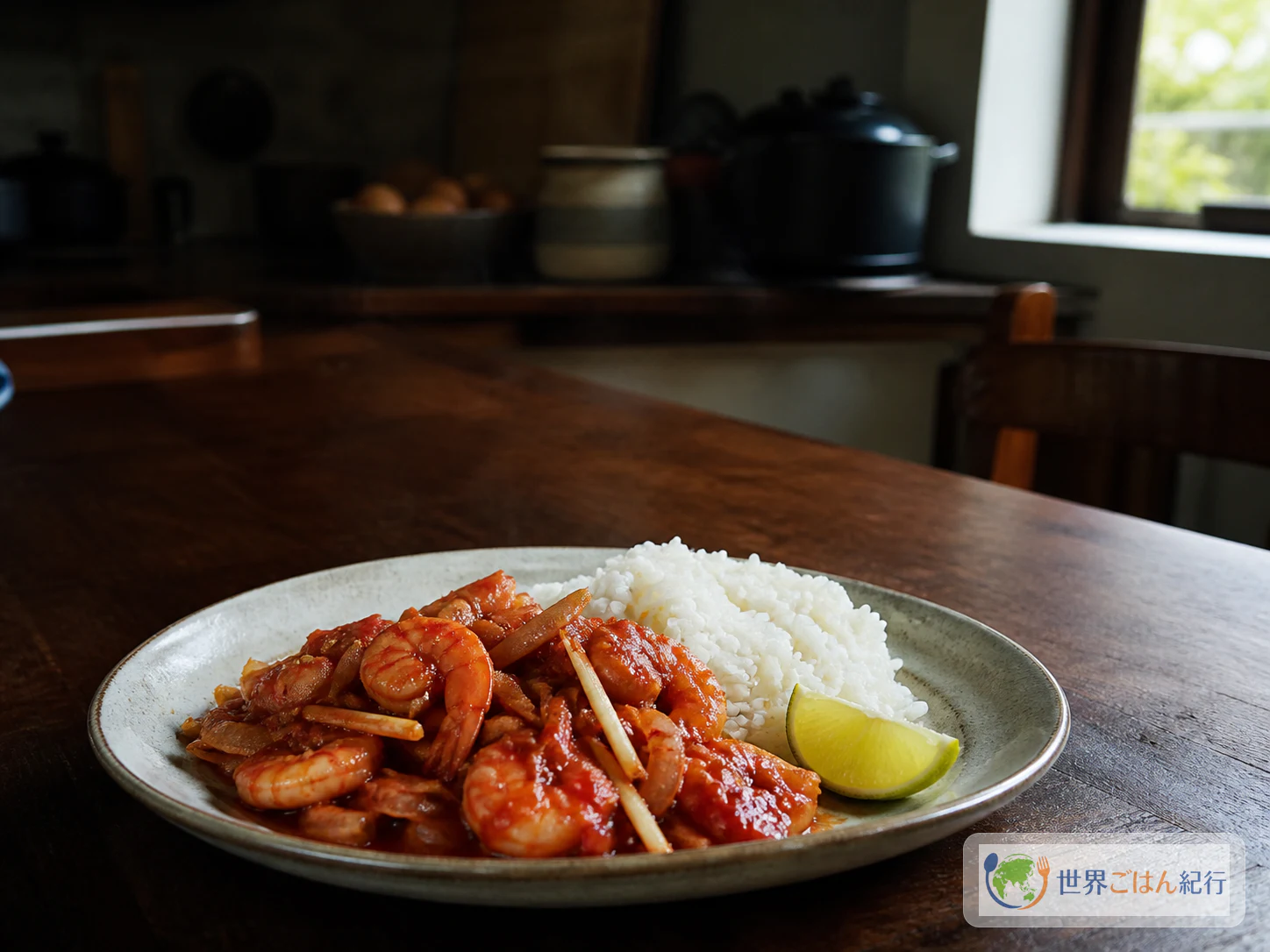
Ingredients
| Ingredient | Amount | Substitutes & notes |
|---|---|---|
| Raw peeled prawns (for cooking) | 14 oz (400g) | 1 lb (450g) if shell-on. Devein them, and remove the shells during the process |
| Salt | 2g | For preparing the prawns |
| Dried red chilies | 10g | Remove about half the seeds. 6g to reduce the heat |
| Fresh red chili | 1 (about 10g) | If you don't have one, add 2g more dried red chili |
| Shallots or red onion | 4 oz (120g) | If using onion, slice thinly, then chop |
| Garlic | 15g | About 3 cloves. Remove the germ if there is one |
| Ginger | 15g | Peel thinly |
| Lemongrass | 1 stalk | Use the white part at the base, 4 inches (10 cm) |
| Dried shrimp | 8g | Rinse briefly and pat dry. Not the same as fermented shrimp paste |
| Vegetable oil | 3 tbsp (45ml) | For frying the paste. With too little oil it burns easily |
| Tamarind paste | 15g | If a seeded block, 20g softened in hot water and strained |
| Hot water | ¼ cup (80ml) | To dissolve the tamarind |
| Raw cane sugar or dark brown sugar | 15g | The same amount of palm sugar |
| Fish sauce | 2.5 tsp (12ml) | Start with 1.5 tsp (8ml) and check the saltiness |
| Water | 3.5 tbsp (50ml) | For adjusting if the sauce gets too thick |
| Jasmine rice or warm rice | 4 servings | A long-grain rice that takes up the dish's aroma lightly suits it |
| Cucumber | 1 | Thin diagonal slices. A rest from the heat |
| Lime | 1 | Cut into wedges and serve just before eating |
Steps
1Soften the chilies and tamarind
10 min
Remove the stems from 10g dried red chilies, and for less heat remove about half the seeds. Put them in ½ cup (150ml) hot water and leave for 10 minutes; when they bend without snapping and the skins are soft, transfer to a sieve. Add ¼ cup (80ml) hot water to 15g tamarind paste, leave for 5 minutes, and dissolve with a spoon. If using a seeded block, strain it through a tea strainer because fibers remain. Rinse the surface of 8g dried shrimp quickly under running water and press off the moisture with a paper towel.
2Make a coarse aromatic paste
8 min
Dry-roast the dried shrimp in a small skillet over low heat for 1 minute 30 seconds to 2 minutes, until fragrant. Transfer to a plate before it burns, and cut the shallots, garlic, ginger, lemongrass, fresh red chili and softened dried red chilies into pieces of about 1 inch (2 cm). Into a stone mortar, put the dried shrimp, garlic and ginger first and crush; when the aroma comes out, add the rest. Add only 1 tablespoon of water, and stop at a red paste that still has 1–2 mm (up to 0.125 inch) grains. In a food processor, pulse about 8 times of 1 second each, and stop the blade before it turns liquid.
3Fry the paste in oil
10–12 min
Put 3 tbsp (45ml) vegetable oil in a deep skillet or wok and warm it over medium-low heat. When fine bubbles come up around the tip of a wooden spatula put in the oil, add the paste, and for the first 3 minutes stir while scraping the bottom of the pan. After that lower the heat to low and fry for 7–9 minutes. Move on when the red turns a little darker, the raw smell of the onion is gone, and red oil seeps out at the edges of the paste. Also check that when you move the wooden spatula, the paste is not a runny liquid but a heavy, cohesive paste that slowly flows back. If it looks about to stick to the bottom, add water 2 tsp (10ml) at a time to prevent burning. Adding a lot of water at once turns the frying step into a simmering step.
4Cook down the tamarind liquid
10 min
Add the tamarind liquid, raw cane sugar, half the fish sauce and 3.5 tbsp (50ml) water. Pouring all at once into the center of a hot pan makes the oil spatter, so add it from the edge of the pan, catching it with the wooden spatula. Warm over medium heat for 2 minutes until fine bubbles form at the edge, then lower to low heat and cook for 6–8 minutes. The guide is a consistency where, when you pull the spatula across the bottom of the pan, a trail through the red sauce stays for about 2 seconds and then slowly closes. If it is watery, cook down 2 minutes more; if too thick, add water 2 tsp (10ml) at a time. If the sourness is lacking, turn off the heat and add the tamarind liquid 1 tsp (5ml) at a time; if the saltiness is lacking, add the remaining fish sauce little by little.
5Cook the prawns briefly
5–6 min
Sprinkle the peeled prawns with 2g salt, leave for 5 minutes, and wipe off the water that comes out. Return the sauce to medium-low heat and arrange the prawns so they don't overlap. Cook 2 minutes on one side, then turn and cook 1–2 minutes, spooning the sauce over them with the wooden spatula. When the flesh has changed from gray to opaque white and the back curls into a loose C, check that the center of the thickest prawn has reached 63°C (145°F). For shell-on prawns, allow about 1 more minute until the shell turns red, but turn off the heat before they curl tightly and the flesh shrinks. Serve on a plate with cucumber, lime and warm rice.