Ingredients and steps on one page. Print it, or choose “Save as PDF” in the print dialog.
Sekai Gohan
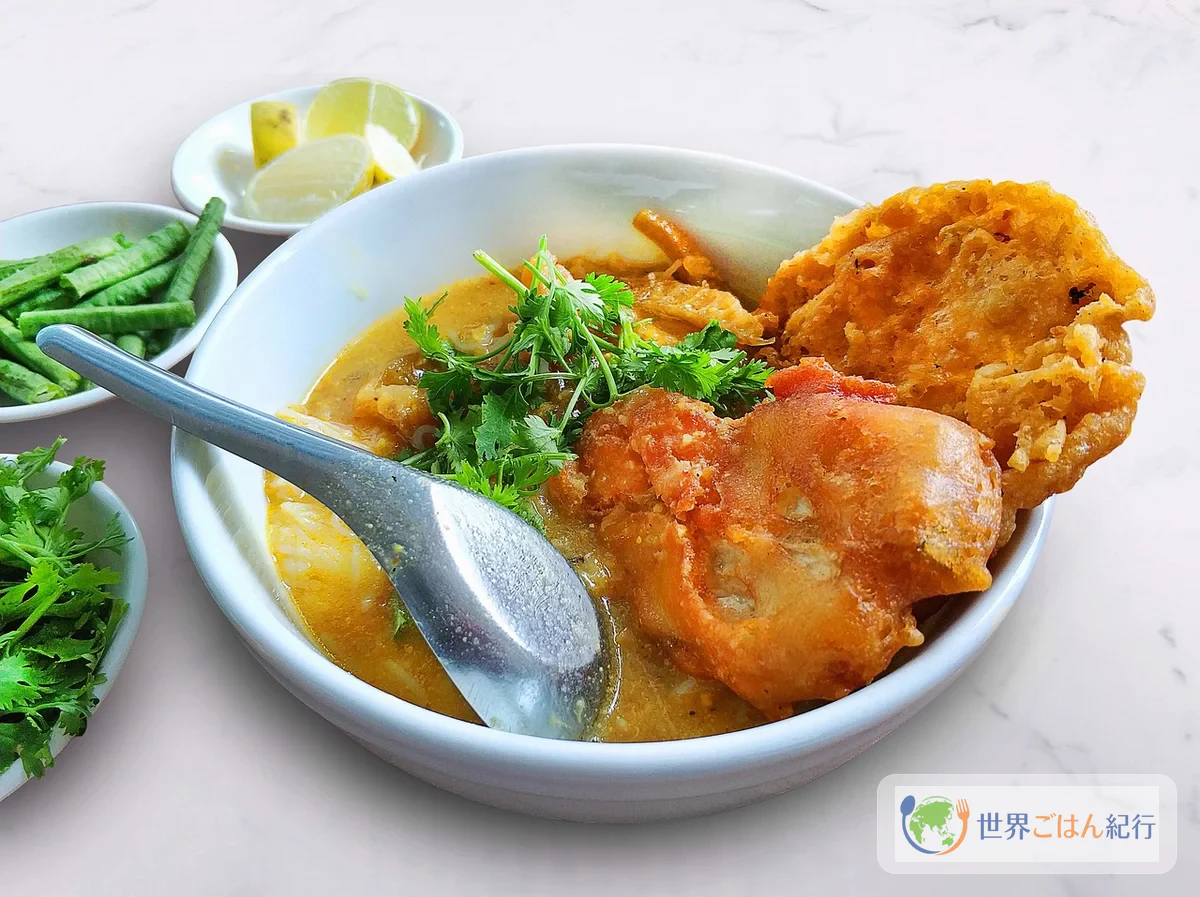
Mohinga: Burmese Catfish and Rice Noodle Soup
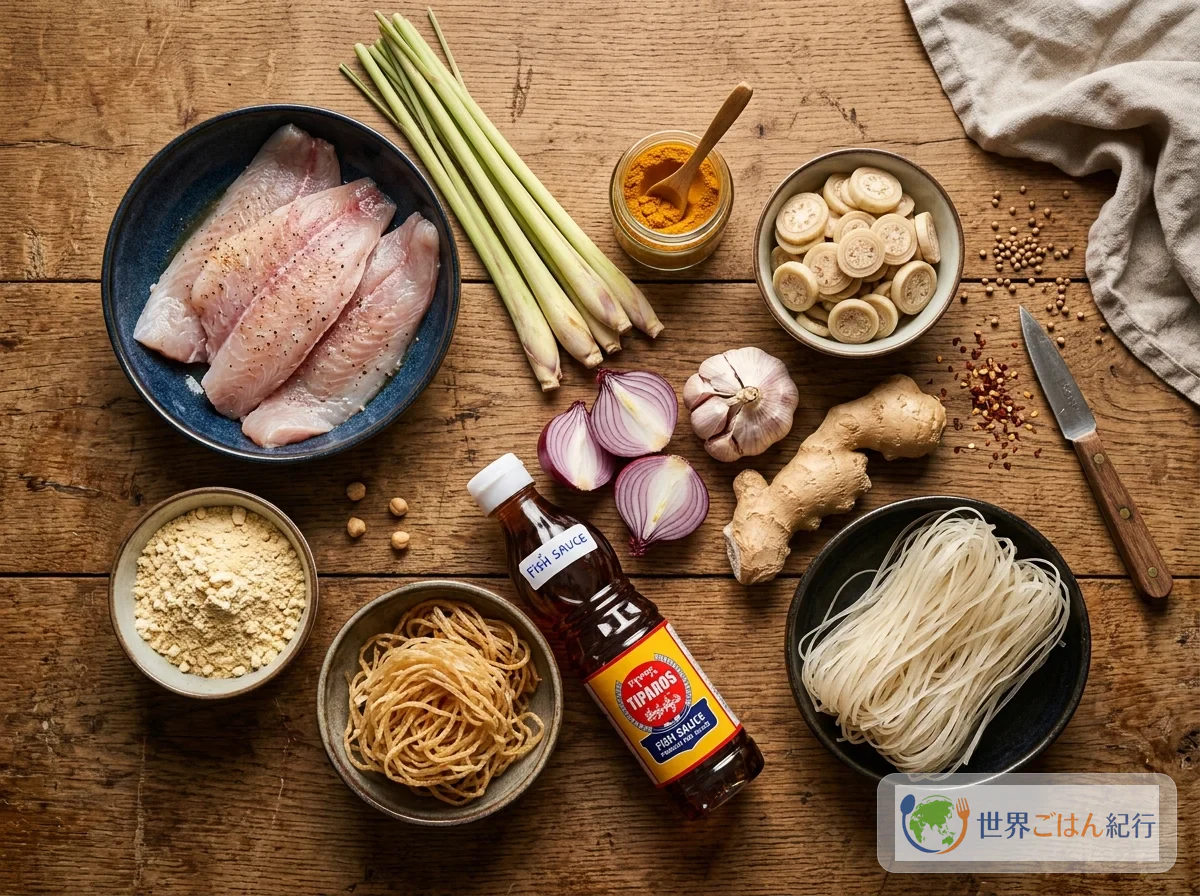
Ingredients
Soup
| Ingredient | Amount | Substitutes & notes |
|---|---|---|
| Catfish (fillets) | 400 g | Catfish is the most authentic. If you can't find it, use sea bream or sea bass |
| Water | 1.5 L | For poaching the fish; it becomes the soup base (about 6 1/3 cups) |
| Lemongrass | 3 stalks (bruised and tied) | 2 tbsp if dried |
| Ground turmeric | 2 tsp | Key to the color and flavor |
| Fish sauce | 3 tbsp | In Myanmar, fish sauce or fermented fish paste (ngapi) is used |
| Onion | 2, finely chopped | — |
| Garlic | 6 cloves, finely chopped | — |
| Ginger | 3 cm, grated | About a 1 1/4-inch piece |
| Chickpea flour (besan) | 4 tbsp | Thickens the soup. No substitute |
| Rice flour | 2 tbsp | Extra thickening. Optional |
| Banana stem | 150 g, thinly sliced | Skip it if you can't find it. Adds texture |
| Paprika | 1 tsp | Helps the color |
| Vegetable oil | 3 tbsp | — |
| Salt | 1 tsp | Adjust to taste |
The chickpea flour that gives mohinga its signature body is sold at Indian grocery stores and online. It is the same flour used for Indian pakoras, so look for "besan" or "gram flour." Cornstarch or wheat flour won't work as a substitute, because the nutty, toasty aroma of chickpea flour is at the heart of mohinga's flavor.
Noodles
| Ingredient | Amount | Substitutes & notes |
|---|---|---|
| Rice noodles (thin rice vermicelli) | 14 oz (400 g) | In Myanmar, mont di (round rice noodles) are used |
Toppings
| Ingredient | Amount | Notes |
|---|---|---|
| Boiled eggs | 4 | Halved |
| Fried tofu | 4 pieces | Cut into bite-size pieces |
| Cilantro | To taste | Chopped |
| Limes | 2 | Cut into wedges |
| Chili flakes | To taste | Optional |
| Fried garlic chips | To taste | For a crunchy accent |
Banana stem is a traditional mohinga ingredient. It adds a crisp bite and a faint sweetness to the soup. It can be hard to find outside Southeast Asia, but thinly sliced lotus root gets you close on texture. Soak the sliced lotus root to remove bitterness, then add it to the soup for a similar crunch. The flavor is different, but it does the same job texturally.
Steps
1Poach the fish
Put 1.5 quarts (1.5 L) water, the lemongrass and 1 tsp of the turmeric in a pot and bring to a boil over high heat. Add the catfish and poach over low heat for 15 minutes. Keep the water at a gentle shiver; the fish is cooked when the center turns opaque white and the flesh starts to flake. Don't discard the poaching liquid: it is your stock.
2Flake the fish
Lift out the fish once it is cooked through. Let it cool for about 3 minutes, then remove the bones and skin and flake the flesh. Keep the poaching liquid warm enough to steam. Fine flakes blend into the soup more easily; if you leave some pieces larger, run your fingertips over them to make sure no bones slip through.
3Sauté the aromatics
Heat the oil in a separate pot and sauté the onion, garlic and ginger over medium heat for 5–6 minutes. Once the onions are golden and everything has softened, add the remaining turmeric and the paprika and cook for 1 minute. The spices turn bitter if they scorch, so move on to the stock as soon as they smell fragrant.
4Thicken the soup
Add the poaching liquid, the flaked fish and the fish sauce. Mix the chickpea flour with a little water first, then pour it in in a thin stream, stirring constantly with a wooden spoon, and simmer over low heat for 20 minutes. You've got it when the soup lightly coats the spoon, the raw-flour taste is gone and the broth has a gentle body.
5Pour over the noodles and finish
Over low heat, season with salt, add the banana stem or lotus root and simmer for 5 minutes. Stop when the lotus root turns translucent but still has a slight bite. Put the rice noodles, cooked separately and rinsed in water, into bowls, ladle the hot soup over them, and top with boiled eggs and cilantro.