Ingredients and steps on one page. Print it, or choose “Save as PDF” in the print dialog.
Sekai Gohan
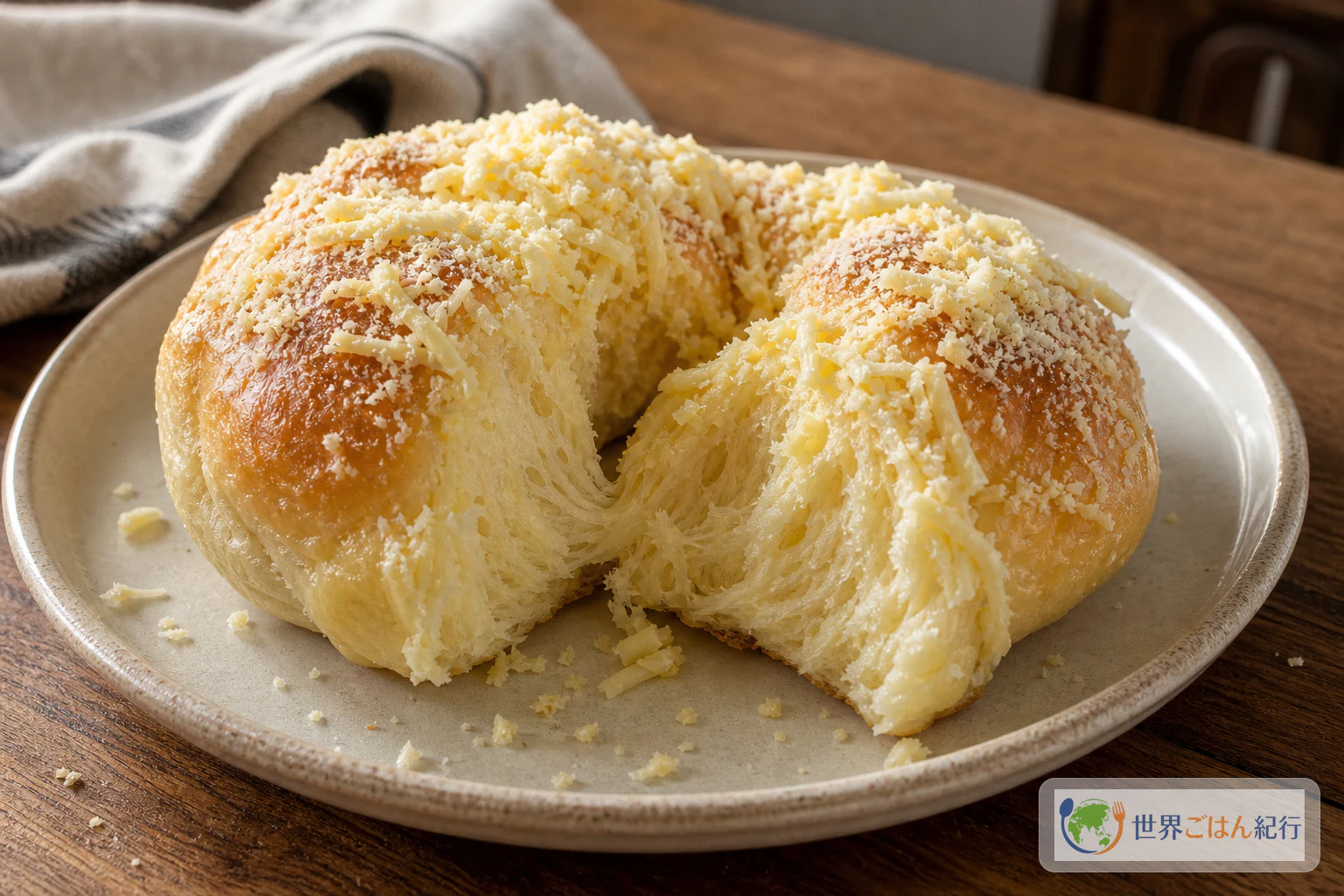
Ensaymada: Filipino Sweet Bread with Butter, Sugar and Cheese
Ingredients
Dough
| Ingredient | Amount | Role |
|---|---|---|
| Bread flour | 380 g | The dough's structure. Flours absorb water differently; if the dough is sticky, hold back 10 ml of the milk |
| Cake flour | 70 g | Adds softness. You can use all bread flour |
| Instant dry yeast | 7 g | Use fresh yeast; this is a sugary dough |
| Milk | 190 ml | Warm to 35–38°C (95–100°F) |
| Sugar | 80 g | 70 g for the dough, 10 g to activate the yeast |
| Eggs | 2, 100 g without shells | Bring to room temperature |
| Egg yolk | 1, 18 g | Makes the dough moister |
| Salt | 7 g | Balances the sweetness and the cheese's saltiness |
| Unsalted butter | 90 g | Cut into 1 cm cubes; soft enough to press with a finger |
| Bread flour for dusting | 15 g | Only for shaping. Don't overdo it |
Filling and topping
| Ingredient | Amount | How it's used |
|---|---|---|
| Unsalted butter | 1.75 oz (50 g) | Spread thinly on the dough when shaping |
| Beaten egg | 25 g | Mixed with 2 tsp milk and brushed on just before baking |
| Milk | 2 tsp | Thins the egg wash |
| Unsalted butter | 2.5 oz (70 g) | For the topping. Softened at room temperature |
| Powdered sugar | 1.5 oz (45 g) | Beaten into the butter for a light cream |
| Granulated sugar | 20 g | Sprinkled thinly on top |
| Edam, aged Gouda or cheddar | 4 oz (120 g) | Finely grated. About 12 g per bun |
| Salt | A pinch, 0.5 g | Mixed into the topping butter |
This recipe contains wheat, eggs and dairy. Swapping the butter for margarine makes a lighter bun, but the aroma changes a lot. Hard cheese you can grate finely works better than cubes of processed cheese. Queso de bola is ideal if you can get it, but Edam or aged Gouda is plenty for a first batch.
What you can substitute, and what you shouldn't
| Ingredient | Possible substitute | What changes |
|---|---|---|
| Bread flour and cake flour | 450 g all-purpose or medium-strength bread flour | Comes together easily, with a little more bite |
| Milk | 190 ml unsweetened soy milk | Less dairy aroma and lighter browning |
| Unsalted butter | Salted butter | Reduce the salt in the dough to 5 g |
| Queso de bola | Edam, aged Gouda, cheddar | Less of the original aroma, but the sweet-salty balance stays |
| Ring molds | Muffin pans, foil cups, or no mold | Without molds the buns spread, but that's fine for a home version |
Steps
1Activate the yeast in milk
10 min
Warm 190 ml milk to 35–38°C (95–100°F) in a small saucepan or the microwave: about 1 minute to 1 minute 30 seconds over low heat, or 40–50 seconds at 600 W. In a bowl, stir together the milk, 10 g sugar and 7 g instant dry yeast and let stand for 10 minutes. Move on when fine bubbles form, the whole mixture looks smoothly cloudy and a faint yeasty smell mixes with the milk. Yeast weakens above 45°C (113°F), so if it feels hot, always let it cool first.
2Combine the flour and eggs, add the butter and knead
20 min
In a large bowl, mix 380 g bread flour, 70 g cake flour, the remaining 70 g sugar and 7 g salt. Make a well in the center, add the yeasted milk, 2 eggs and 1 egg yolk, and mix with a bench scraper or wooden spoon until no dry flour remains. Turn it out onto the counter and knead for 8 minutes; once the dough starts to come together, add the 90 g unsalted butter in three additions. It will be sticky at first, but keep pushing it out with the heel of your hand and folding it back, and after about 12 minutes the surface turns smooth. Aim for a dough temperature of 26–28°C (79–82°F).
3First rise until nearly doubled
60–75 min
Shape the dough into a ball and put it in a lightly oiled bowl. Cover with plastic wrap or a damp towel so it doesn't dry out, and let it rise at 28–30°C (82–86°F) for 60–75 minutes. In a cool winter kitchen, a turned-off oven with a cup of hot water inside keeps the temperature steady. When the dough is plump and smooth and a floured finger poked into it leaves a hole that springs back slowly, it's ready to shape. If the hole springs back right away, give it 15 more minutes; if the dough deflates, it's overproofed.
4Roll out, spread with butter and coil
30 min
Dust the counter lightly with flour and divide the dough into 10 pieces, about 3.25 oz (90 g) each. Round them, rest for 10 minutes, then roll each one into a rectangle about 7 inches × 3.5 inches (18 cm × 9 cm). Divide the 1.75 oz (50 g) filling butter into 10 portions and spread 5 g thinly on each rectangle. Roll up loosely from the long side into a rope about 10 inches (25 cm) long, then coil it, tucking the end underneath. If you roll it tight, the center pops up during the second rise, so leave enough slack to slip a finger in.
5Second rise, then brush with egg wash just before baking
45–60 min
Arrange the coiled dough on a sheet pan lined with parchment. If using ring molds or muffin pans, butter the insides thinly. Let rise at about 30°C (86°F) for 45–60 minutes, until the buns are puffy, 1.5 times their size, and a light press leaves a mark that springs back slowly. Stop before the surface dries and cracks. Preheat the oven to 180°C (350°F) during the last 20 minutes of rising. Just before baking, brush thinly with an egg wash of 25 g beaten egg and 2 tsp milk.
6Bake at 350°F (180°C) and check the center temperature
14–18 min
Bake on the middle rack of the oven preheated to 180°C (350°F) for 14 minutes. At 10 minutes, turn the pan around once to even out the color. They're done when the tops are pale gold, the sides don't show too much raw-looking white, and the center reads 93°C (200°F) or higher. If the color is too pale, give them 2 more minutes. Unmold, transfer to a rack and cool for 15 minutes. Topping butter spread while they're hot will just melt off, so wait until they're cool enough to hold.
7Finish with butter, sugar and cheese
10 min
Beat the 2.5 oz (70 g) unsalted butter for the topping with a whisk until soft, then mix in 1.5 oz (45 g) powdered sugar and 0.5 g salt. Spread about 10 g thinly on each cooled ensaymada, then top with 2 g granulated sugar and 12 g grated cheese. Don't press the cheese down; just scatter it lightly. If you're eating them right away, let them sit for 10 minutes after topping so the butter settles into the surface. For buns you'll eat the next day, keep the butter and cheese separate and finish just before eating so the aroma stays fresh.