Ingredients and steps on one page. Print it, or choose “Save as PDF” in the print dialog.
Sekai Gohan
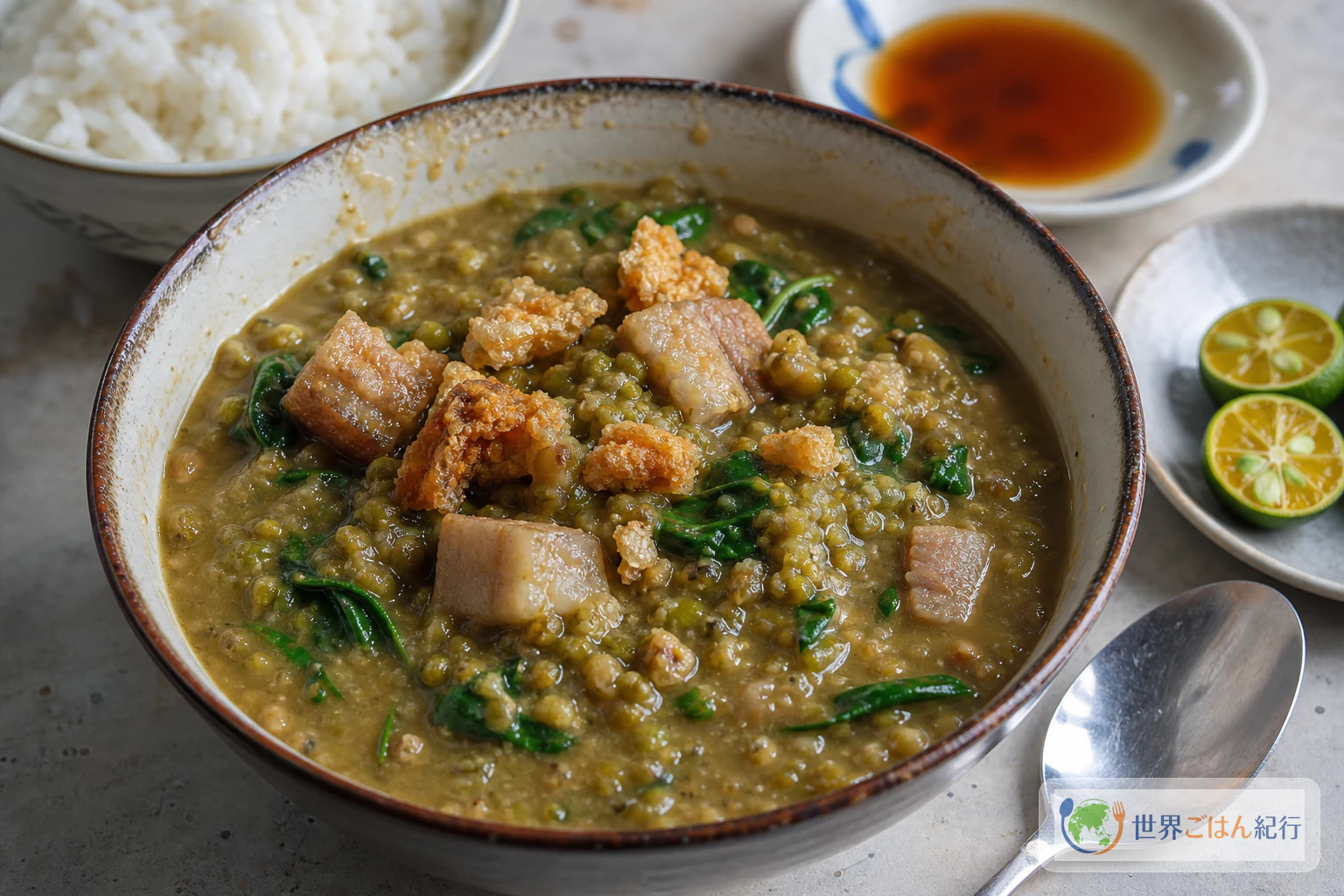
Monggo in English: Ginisang Munggo (Mung Bean Soup) Recipe
Ingredients
Beans and broth
| Ingredient | Amount | Role |
|---|---|---|
| Dried mung beans | 8 oz (220 g) | Rinse before use. Pick out broken beans and small stones |
| Water, for cooking the beans | 1.25 quarts (1.2 L) | Add up to ¾ cup (200 ml) more during cooking |
| Vegetable oil | 1 tbsp | For sautéing the aromatics and pork |
| Pork belly, in one piece | 5.5 oz (160 g) | 0.5 inches (1.5 cm) cubes. If using thin slices, cut 4 oz (120 g) into strips |
| Garlic | 4 cloves, 20 g | Coarsely chopped |
| Onion | 1/2, 4 oz (120 g) | 0.5 inches (1 cm) dice |
| Tomatoes | 2, 8 oz (220 g) | Roughly chopped. Fully ripe is best |
| Patis | 1 1/2 tbsp | 1 tbsp in the pot; adjust with the rest at the table |
| Salt | 1/2 tsp | Adjust at the end; treat this as the maximum |
| Black pepper | 1/3 tsp | For a finishing aroma |
Greens and the table
| Ingredient | Amount | Substitutes & notes |
|---|---|---|
| Malunggay leaves | 1.5 oz (40 g) | If unavailable, use the substitutes below |
| Spinach | 4 oz (120 g) | Substitute for malunggay. Use together with the komatsuna. Roughly chopped |
| Komatsuna (Japanese mustard spinach) | 3.5 oz (100 g) | Substitute for malunggay. Combined with the spinach, it keeps the green flavor steady |
| Chicharon | 1.5 oz (40 g) | Crush at the table. If unavailable, 1 oz (30 g) crisp bacon |
| Calamansi or sudachi | 2, for juice | Squeeze at the table |
| Hot cooked rice | 4 bowls | Slightly firm rice suits it best |
| Red chile | 1 | Thinly sliced. Only for those who want heat |
Steps
1Rinse and sort the mung beans
15 min
No heat needed. Put 8 oz (220 g) dried mung beans in a bowl, cover generously with water and swirl gently by hand. When the water turns slightly cloudy, drain in a sieve; repeat twice. Remove small stones, beans that have turned black, and broken, powdery beans. If you have time, soak them in water for 10 minutes and drain. A long soak isn't necessary, but a short soak helps the beans cook more evenly.
2Sauté the pork and aromatics
10 min
Heat 1 tbsp vegetable oil in a pot over medium heat and spread out 5.5 oz (160 g) pork belly. Sauté for 4 minutes, until the surface of the meat turns from white to lightly browned and about 2 tsp of fat has rendered. Add the garlic and onion and sauté for 3 minutes, still over medium heat. When the edges of the onion turn translucent and a thin brown layer of flavor sticks to the bottom of the pot, add the tomatoes. Sauté 3 more minutes, until the tomatoes break down a little and their red juice spreads across the bottom of the pot.
3Simmer the mung beans gently until soft
30 min
Add the rinsed mung beans and 1.25 quarts (1.2 L) water to the pot and bring to a boil over high heat. When it boils, skim off the foam once and turn the heat to low. Set the lid slightly ajar and simmer for 25 to 30 minutes at a heat where small bubbles rise steadily from the edges of the pot. If the liquid looks like it's dropping below the beans, add water ½ cup (100 ml) at a time. You're aiming for about half the beans split, with centers that mash white and soft when pressed with a wooden spoon.
4Mash some of the beans and season with patis
8 min
Turn the heat to medium-low. Press the beans against the side of the pot with a wooden spoon about 10 times, mashing only 30% of them. Don't turn everything into paste; stop while whole beans remain. Add 1 tbsp patis and 1/3 tsp black pepper and simmer for 5 minutes at a gentle bubble. Taste, and if it's bland, add salt 1/4 tsp at a time, up to a maximum of 1/2 tsp. Boiling hard over high heat after adding fish sauce makes the aroma heavy, so keep it at medium-low.
5Add the greens briefly and finish
5 min
Turn the heat to low. Add 1.5 oz (40 g) malunggay, or 4 oz (120 g) spinach and 3.5 oz (100 g) komatsuna, and turn them over from the bottom with a wooden spoon. Once the leaves sink and turn deep green, turn off the heat after 2 minutes. The right consistency is when a line drawn across the bottom with a wooden spoon holds for about 1 second before the thick beans close back over it. Don't add all the chicharon to the pot; coarsely crush half and stir it in. Scatter the rest on at the table so it stays crunchy. If you simmer the greens for long, their flavor seeps too far into the beans and their color dulls.
6Serve with rice and fish sauce on the side
3 min
No heat needed. Ladle the monggo into bowls and serve hot rice, the rest of the chicharon, calamansi or sudachi, patis and red chile separately. In the bowl, the thick beans should spread slowly, with the beans still whole; the easiest consistency to eat is one where, poured over rice, the liquid doesn't run off ahead of the beans. Don't finish the saltiness completely in the pot; letting everyone add fish sauce and sourness at the table keeps the sweetness of the beans. If you're saving some for the next day, store it separately without the chicharon mixed in.