Ingredients and steps on one page. Print it, or choose “Save as PDF” in the print dialog.
Sekai Gohan
Sinigang na Baboy: The Philippines' Beloved Tamarind Sour Soup
Ingredients
Main ingredients
| Ingredient | Amount | Substitutes & notes |
|---|---|---|
| Pork spare ribs | 1.25 lb (600 g) | 1 lb (500 g) pork belly in one piece also works. Bone-in meat is the key to flavor |
| Tamarind paste | 3 tbsp | 3 umeboshi (Japanese pickled plums) + 2 tbsp lemon juice can substitute |
| Tomatoes | 3, cut into wedges | The base for sourness and savory depth |
| Onion | 1, cut into wedges | — |
| Daikon radish | 7 oz (200 g), cut into 0.5 inches (1 cm) half-moons | — |
| Eggplants | 2, cut into chunks | — |
| Green beans | 3.5 oz (100 g), cut into 2 inches (5 cm) lengths | — |
| Water spinach (kangkong) | 1 bunch (7 oz (200 g)) | Spinach can substitute |
| Long green chiles (siling haba) | 2 | Long, slender green chiles with moderate heat, much milder than the small siling labuyo. 3 shishito peppers can substitute |
Asian grocers, especially Thai and Filipino ones, sell Thai tamarind paste (also labeled tamarind concentrate); search for "tamarind paste" online as well. If you can't find it, 3 umeboshi (pitted and chopped) + 2 tbsp lemon juice reproduces the sourness. The character of the sourness is different, but it works.
Seasonings
| Ingredient | Amount | Substitutes & notes |
|---|---|---|
| Fish sauce (nam pla) | 2 tbsp | Patis (Filipino fish sauce) is best. Thai fish sauce is perfectly fine if you don't have it |
| Salt | 1 tsp | Adjust as you taste |
| Black pepper | 1/2 tsp | — |
| Water | 1.5 quarts (1.5 L) | — |
Steps
1Prepare the pork
10 min
Rinse the pork spare ribs under running water. Put 1.5 quarts (1.5 L) of water in a pot over the heat. When it boils, add the pork. Scum appears right away; skim it carefully for the first 3 minutes. This step gives you a clear soup without off-flavors.
Why bone-in meat mattersMuch of sinigang's savory depth comes from the bones, so bone-in spare ribs are best. You can make it with boneless pork belly, but the depth of flavor changes. If using boneless meat, add 1 tsp chicken bouillon powder.
2Prepare the tamarind paste
5 min
Dissolve 3 tbsp tamarind paste in ½ cup (100 ml) lukewarm water. Mix well so no lumps remain. If you use fresh tamarind, remove the pulp from the shells, soak it in lukewarm water for 10 minutes, and knead it with your fingers to dissolve the pulp. Strain out the seeds and fibers before using.
3Simmer the pork
25 min
Once you've finished skimming, add the tomato wedges and onion. Simmer over medium heat for 25 minutes, until the tomatoes have completely broken down. It's done when chopsticks slide easily into the pork and a fork goes in without resistance. It's normal for the soup to turn cloudy; it's a sign that collagen is dissolving from the bones.
The role of the tomatoesIn sinigang, tomatoes are a "seasoning," not a "filling." Ideally they break down completely and melt into the soup. Cut the tomatoes large, and once they soften, mash them with a wooden spoon. The savory depth of the tomatoes becomes the base of the soup.
4Add the root vegetables and the sourness
15 min
Add the daikon half-moons and eggplant chunks to the pot. Add the dissolved tamarind paste and 2 tbsp fish sauce. Cover and cook over medium heat for 10 minutes (15 minutes including tasting and adjusting). The daikon is ready when a bamboo skewer slides in easily.
Taste it at this point. If it isn't sour enough, add more tamarind paste; if it isn't salty enough, add more fish sauce. In sinigang, sourness is the star and saltiness plays support. At first it's fine if it seems almost too sour. Eaten with rice, it becomes just right.
5Add the leafy greens and finish
5 min
Add the green beans and cook 2 minutes. Add the water spinach stems and cook 1 minute. Finally, add the water spinach leaves and the green chiles. Cover for 1 minute, then turn off the heat. Residual heat is enough for the water spinach. The point is to keep its crisp texture.
If you don't have water spinach (kangkong)Kangkong can be hard to find in regular supermarkets. Spinach is the best substitute; komatsuna (Japanese mustard spinach) also works. Spinach cooks very quickly, though, so add it at the very last moment; 10 seconds is enough. Filipino families also sometimes use moringa leaves (malunggay) or bok choy when kangkong is out of season.
6Serve
2 min
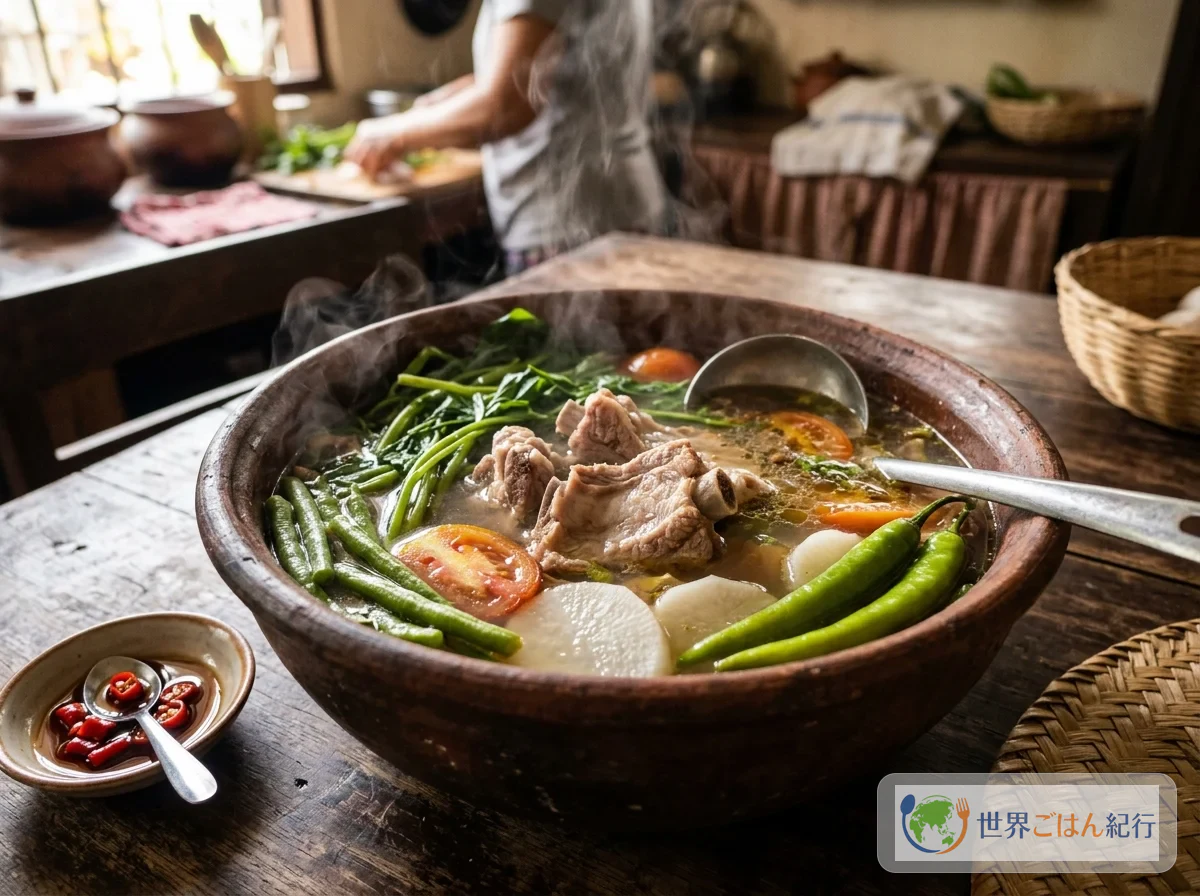
In a deep soup bowl, place the pork in the center, the softened daikon and eggplant around it, and the water spinach on top. Pour in hot soup until the ingredients are about half covered, and set the green chiles on top to release their aroma. Serve white rice on a separate plate. The Filipino way is to scoop up the clear, sour soup with a spoon and pour it over the rice a little at a time as you eat.