Ingredients and steps on one page. Print it, or choose “Save as PDF” in the print dialog.
Sekai Gohan
Gaeng Hang Le: Northern Thai Pork Curry with Ginger and Tamarind
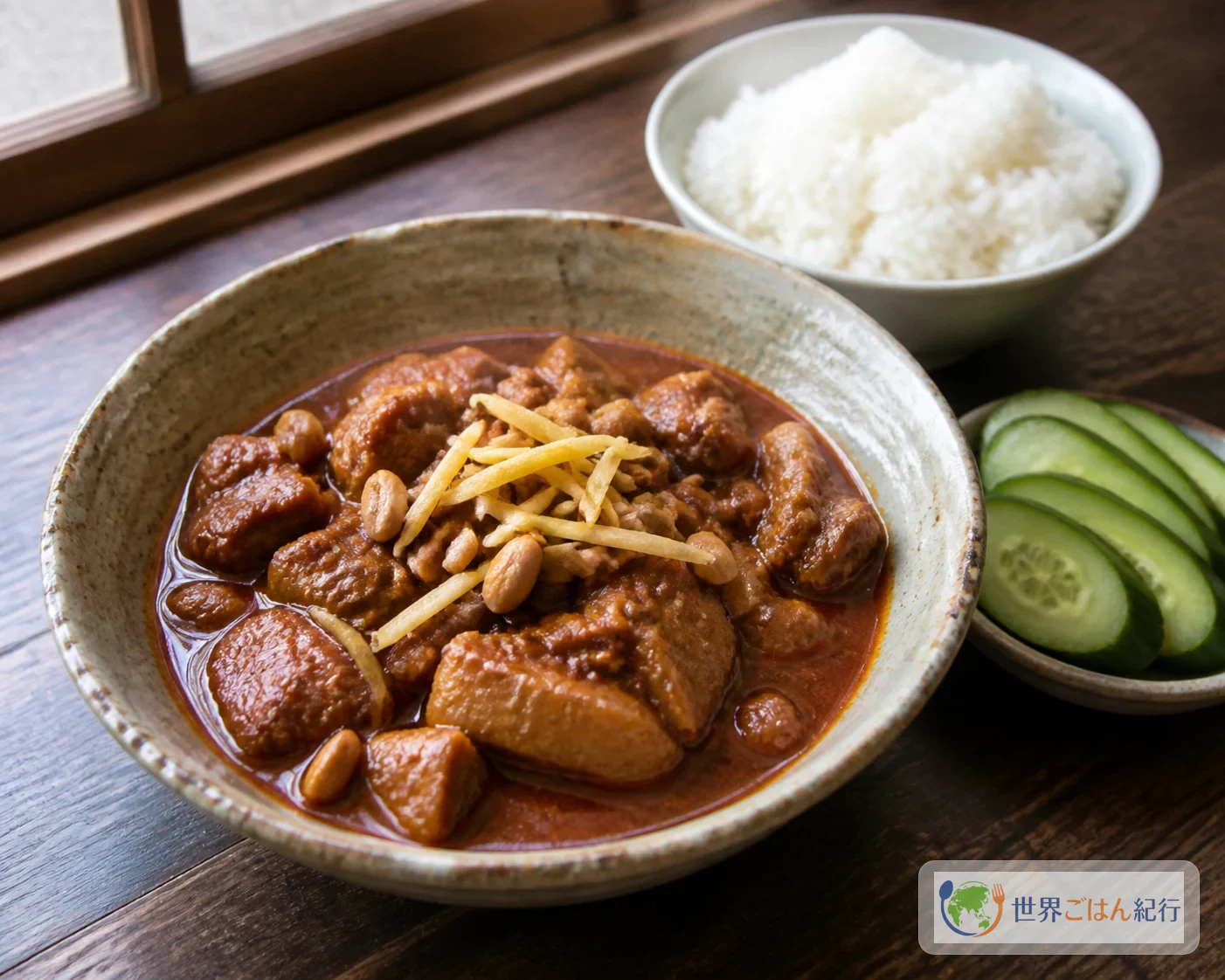
Ingredients
| Ingredient | Amount | Substitutes & notes |
|---|---|---|
| Pork shoulder | 1.25 lb (600 g) | 1 inches (3 cm) cubes. With lean pork leg, extend the simmer by 15 minutes |
| Pork belly | 10.5 oz (300 g) | 1 inches (3 cm) cubes. If you dislike fat, replace with 10.5 oz (300 g) shoulder |
| Dried long chilies | 10 g | Remove the seeds for a milder heat |
| Dried small chilies | 2 g | Adds heat. If omitted, use 12 g long chilies |
| Cumin seeds | 4 g | 2 tsp. Do not use ground cumin; it burns easily |
| Coriander seeds | 4 g | 2 tsp. If you have none, mix in 3 g ground coriander at the end |
| Fenugreek seeds | 1 g | 1/2 tsp. Do not increase; it turns bitter |
| Black peppercorns | 2 g | 2.5 g coarsely ground black pepper also works |
| Cinnamon stick | 1/2 stick | 1 inches (3 cm) long. If using powder, add a little at a time at the end |
| Cloves | 3 | Without them the sweet aroma is lighter |
| Cardamom | 2 pods | Crack the pods before use |
| Turmeric powder | 4 g | 2 tsp. If fresh, finely chop 10 g |
| Garlic | 1.25 oz (35 g) | Peeled |
| Red onion | 2.75 oz (80 g) | 2 oz (60 g) if using shallots |
| Lemongrass | 1 oz (30 g) | Only the tender base, cut into 0.25 inch (5 mm) widths |
| Galangal | 15 g | If you have none, add 10 g ginger and increase black pepper by 1 g |
| Kapi (fermented shrimp paste) | 10 g | With a shrimp allergy, replace with 10 g mixed miso |
| Salt | 5 g | Adjust at the end, considering the saltiness of the kapi and soy sauce |
| Pineapple | 1.75 oz (50 g) | Finely chopped. Optional; without it, the meat seasoning is less sweet |
| Water | 3 cups (700 ml) | Almost enough to submerge the meat. If short, add 3.5 tbsp (50 ml) at a time |
| Ginger | 2.75 oz (80 g) | Cut into 0.125 inch (2 mm) shreds. Set half aside for the finish |
| Sweet-pickled garlic | 1.5 oz (40 g) | Substitute fermented garlic or sweet-pickled rakkyo |
| Pickling liquid | ¼ cup (60 ml) | The liquid from the sweet pickle. With rakkyo, add 1 tsp (5 ml) rice vinegar |
| Tamarind paste | 1.5 oz (45 g) | Use 1 oz (30 g) first, then add the rest 5 g at a time, tasting |
| Palm sugar | 1 oz (30 g) | 1 oz (30 g) brown sugar or unrefined cane sugar |
| Light soy sauce | 1 tbsp (15 ml) | 2.5 tsp (12 ml) if using regular soy sauce. Adjust the salt at the end |
| Roasted peanuts | 1 oz (30 g) | Unsalted. Half is simmered, half is used for serving |
| Rice or jasmine rice | 10.5 oz (300 g) | Dry weight. If sticky rice, steam 10.5 oz (300 g) |
| Cucumber | 1 | 0.5 inches (1 cm) diagonal slices. Served to refresh the palate |
Steps
1Dry-toast the spices
Put the cumin seeds, coriander seeds, fenugreek, black peppercorns, cinnamon, cloves, and cardamom in a heavy skillet without oil and toast over medium-low heat for 6–8 minutes. Shake the pan from time to time, and turn off the heat when the aroma rises and the surface of the cinnamon dries slightly. Toasting until black makes the bitterness of the fenugreek stronger, so use the aroma, not the color, as your guide.
2Crush the chilies and aromatics
Soak the dried chilies in boiling water for 20 minutes, and when soft, squeeze out the water. Cut the lemongrass into 0.25 inch (5 mm) widths, slice the galangal thinly, coarsely chop the garlic and red onion, and put them in a mortar with the salt, turmeric, soaked chilies, toasted spices, and kapi. Crush for about 15 minutes into a red-brown paste with a few grains remaining. With a food processor, add no water and stop twice along the way to scrape down the sides.
3Marinate the pork in the refrigerator
Cut the pork shoulder and pork belly into 1 inches (3 cm) cubes and rub in the paste, the pineapple, and half of the dry-toasted spices. Put in an airtight container and rest in the refrigerator for 60 minutes, then take it out 20 minutes before you start cooking. When the paste coats the surface of the meat evenly and almost no liquid is left at the bottom, the seasoning has taken. Do not leave it long at room temperature; on a hot day, keep it chilled until just before it goes in the pot.
4Brown the pork in its own fat
Heat a heavy pot over medium heat for 2 minutes, and without adding oil, arrange the pork so the pieces do not overlap. For the first 8–10 minutes, do not move it too much; cook until the fat of the pork belly melts and the shoulder develops a deep brown color on its surface. If the paste at the bottom of the pot seems about to burn, add just 2 tbsp (30 ml) water and scrape up the brown film with a wooden spatula. When the aroma turns sweet and you see red fat around the meat, go on to the next step.
5Add water and simmer gently
Add 3 cups (700 ml) water and bring to a boil once over high heat. When large bubbles form, reduce to low heat, set the lid slightly ajar, and simmer for 90–110 minutes. Keep the surface barely bubbling, and when the liquid has fallen to half or less, add boiling water 3.5 tbsp (50 ml) at a time. When a bamboo skewer goes into a 1 inches (3 cm) cube of shoulder without resistance and the fat can be cut with chopsticks, that is the signal to add the sourness.
6Finish with ginger and sourness
Add the shredded ginger, sweet-pickled garlic, pickling liquid, the remaining spices, peanuts, palm sugar, and light soy sauce, and simmer over low heat for 15–20 minutes. Dissolve 1 oz (30 g) tamarind in 2 tbsp (30 ml) water before adding, simmer for 2 minutes, and taste. It is done when the sauce thinly coats the back of a spoon and none of the sourness, sweetness, or saltiness stands out alone. Add the remaining tamarind 5 g at a time, and serve with warm rice or sticky rice and cucumber.