Ingredients and steps on one page. Print it, or choose “Save as PDF” in the print dialog.
Sekai Gohan
Khanom Krok: Thai Street-Stall Coconut Rice Cakes
Ingredients
Ingredients
| Ingredient | Amount | Substitutes & notes |
|---|---|---|
| Rice flour (regular or for baking) | 4 oz (120g) | Sift once if the grain is coarse |
| Tapioca flour | 1 oz (30g) | 1 oz (30 g) glutinous rice flour also works. Tapioca flour makes the edge lighter |
| Cooked jasmine rice | 1.5 oz (40g) | Ordinary cooked white rice also works. Use it cooled |
| Unsweetened desiccated coconut | 1 oz (30g) | If you don't have it, omit and add 10 g rice flour |
| Water | ¾ cup (180ml) | Up to 2 tsp (10 ml) more depending on the thickness of the batter |
| Sugar | 10g | If using palm sugar, finely shave the same amount |
| Salt | 2g | For the base batter |
Ingredients
| Ingredient | Amount | Substitutes & notes |
|---|---|---|
| Unsweetened coconut milk | 1¾ cups (400ml) | Shake the can well before opening |
| Sugar | 1.5 oz (45g) | If using raw cane sugar, start with 1.5 oz (40 g) |
| Salt | 2g | Don't omit; it tightens the sweetness |
| Scallion | 20g | Thinly sliced. Omit for a sweet finish |
| Corn | 1.75 oz (50g) | Pat dry; halve the kernels if large |
| Rice bran oil or neutral oil | 10g | For greasing the hollows |
Steps
1Make the batter and rest it, and prepare the toppings
Blend 1.5 oz (40 g) of cooked rice, 1 oz (30 g) of unsweetened desiccated coconut and ¾ cup (180 ml) of water for 30 to 40 seconds, until no grains of rice show and a white liquid with a few fine coconut bits remains. Pour it into a bowl, add 4 oz (120 g) of rice flour, 1 oz (30 g) of tapioca flour, 10 g of sugar and 2 g of salt, and whisk for 1 minute. No heat is needed. Keep whisking until no streaks of flour remain and the batter is a little looser than pancake batter.
Cover the bowl with plastic wrap and rest it at room temperature for 20 minutes. As it rests, the rice flour absorbs water and loses its floury taste. After resting, stir 5 times from the bottom with a big stroke. Lift the whisk: a streak should stay on the surface for about 2 seconds. If the batter is heavy, add water 1 teaspoon at a time. If it is loose, add rice flour 1 teaspoon at a time. The batter settles easily, so stir from the bottom again just before pouring.
In another bowl, stir 1¾ cups (400 ml) of coconut milk, 1.5 oz (45 g) of sugar and 2 g of salt for 2 minutes, until no sugar grains remain and the topping batter is smooth. No heat is needed. Thinly slice 20 g of scallion. Pat 1.75 oz (50 g) of corn dry: wet toppings thin the topping batter before it sets, so press canned or frozen corn between paper towels.
2Warm the hollows and grease them
Warm the khanom krok pan or takoyaki pan over medium heat for 5 minutes. Drop a drop of water in a hollow; if it makes a small sound and disappears right away, start cooking. If the water vanishes instantly and smokes, the heat is too high, so lower it to medium-low. Use paper towels to spread a thin film of oil in each hollow. It is ready when oil does not pool and the surface looks dry with a thin shine.
3Pour in a small amount of base batter
Stir the base batter from the bottom until smooth. Pour about two-thirds of each hollow for a dedicated pan, or about one-third for a takoyaki pan: 1 tablespoon for a dedicated pan, or 2 teaspoons to 1 tablespoon for a takoyaki pan. Keep the heat at medium. As soon as the edge of the base begins to set thin, layer about 2 teaspoons of topping batter on top. Too little base makes the edge thin, and too much makes the center heavy. Treat the first two as test pieces and adjust the amount.
4Add the toppings and cover
While the surface of the topping batter is still liquid, add a small amount of scallion or corn. Cover and cook over medium-low heat for 5 minutes. After 2 minutes, lift the lid a little and look for fine bubbles at the edge. If there are no bubbles and only the surface is dry, the heat is too low. When the surface has set thinly, the edge is taking on color and the center trembles like water, keep the lid closed and cook a little longer.
5Set the edge and take them out
Remove the lid and cook 2 to 4 minutes more over low heat. They are done when the edge is golden, the surface springs back when pressed with the tip of a spoon, and only the center sways slowly. If the center ripples like liquid, cook 1 minute longer at a time. Cooking them until completely firm makes them heavy once cool. With a dedicated pan, run a round spoon around the edge. With a takoyaki pan, use a bamboo skewer or small spoon, and scoop from underneath.
6Put them together while hot and eat
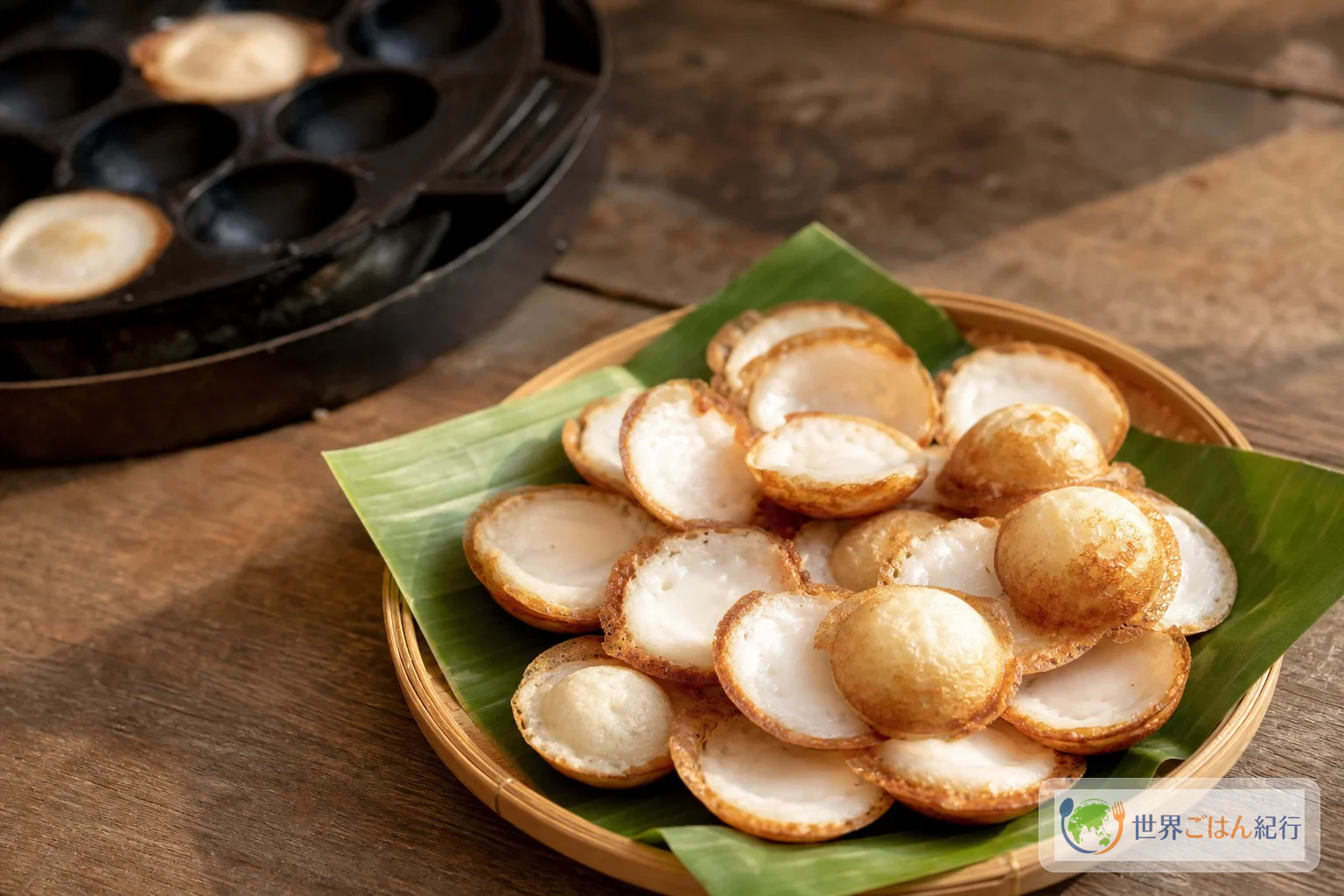
Press two removed half-spheres together and plate them like round sweets. A banana leaf adds aroma just by laying it down, but a flat plate works fine. The edges start to soften about 5 minutes after cooking, so take the first plate to the table right away. The centers are hot, so split them in half for children before serving.