Ingredients and steps on one page. Print it, or choose “Save as PDF” in the print dialog.
Sekai Gohan
Khao Kluk Kapi: Thai Shrimp-Paste Rice with Sweet Pork
Ingredients
Kapi rice
| Ingredient | Amount | Role & how to choose |
|---|---|---|
| Cooked and cooled jasmine rice | 1.25 lb (600 g) | Long grains that fry well once chilled. Day-old rice is fine |
| Kapi (fermented shrimp paste) | 2 tbsp (about 1 oz / 30 g) | The core of the saltiness. Strength varies by product, so add more only later |
| Garlic | 10 small cloves, or 2 large | Rounds out kapi's aroma when fried |
| Dried shrimp | 10 g | Savoriness and toastiness. Chop finely or use powdered |
| Water | 3 tbsp | Loosens the kapi so it coats the rice evenly |
| Sugar | 1 tsp | Softens kapi's salty edge a little |
| Vegetable oil | 2 tbsp | For frying the kapi and loosening the rice |
Sweet pork and side toppings
| Ingredient | Amount | Role & substitutes |
|---|---|---|
| Pork shoulder, or thinly sliced pork belly | 300 g | The star of moo waan. Cut into 1.5 cm (5/8 in) wide pieces |
| Small shallots (Thai red shallots or regular) | 6 | Add aroma to the sweet sauce. Thinly sliced |
| Palm sugar | 25 g | Molasses-like aroma. Light brown sugar also works |
| Fish sauce | 1 tbsp | Seasons the pork. It reduces, so adjust only at the end |
| Dark soy sauce | 1 tsp | Color and a faint sweet aroma. 1/2 tsp tamari also works |
| Water | 120 ml | Softens the pork first, then turns into a glaze (about 1/2 cup) |
| Eggs | 2 | Cooked into a thin omelet and cut into strips |
| Dried shrimp | 20 g | Dry-toasted until fragrant. Prepare separately from the kapi-rice portion |
| Green mango | 100–120 g | Firm and sour. If unavailable, use a Granny Smith apple |
| Green beans, or yard-long beans | 60 g | Cut into 5 mm pieces. For Thai long beans, cut into 5 cm lengths |
| Cucumber | 1/2 | Juiciness and crunch. Cut into thin strips or batons |
| Red onion | 2 | Raw bite. Slice thinly; don't soak too long in water |
| Lime | 1 | Squeeze just before eating. Lemon works, though the aroma changes |
| Fresh chiles | 1–3 | Each diner adjusts the heat |
Steps
1Braise the sweet pork, then glaze it at the end
20 min
Cut 10.5 oz (300 g) pork into 0.5 inches (1.5 cm) wide pieces and put them in a pot with ½ cup (120 ml) water, 25 g palm sugar, 1 tbsp fish sauce and 1 tsp dark soy sauce. Bring to a boil over medium heat; when the bubbles get large, lower to medium-low and simmer 8 minutes.
Add the 6 small shallots and simmer another 7–10 minutes so the pork cooks through to the center. Stop when the sauce has reduced to the point where it slowly runs across the bottom of the pot and the pork surface is glossy brown. If the pork is still pink in the center but the sauce has reduced, add 3.5 tbsp (50 ml) water and keep cooking. To keep the sweetness from turning burnt, run a wooden spatula across the bottom of the pot for the last 2 minutes.
2Pound the kapi, garlic and dried shrimp together
5 min
Put 2 tbsp kapi, the garlic roughly chopped into 2–3 mm (up to 0.125 inch) pieces, and 10 g dried shrimp in a mortar and pound until the coarse bits are nearly gone. Add 3 tbsp water a little at a time to make a paste that falls from a spoon in an unbroken stream. If the kapi is in a hard lump, let it sit 5 minutes before adding water; it will be easier to mash.
This step uses no heat. The smell is strong, so run the range hood, and wash any tools the kapi touched with detergent promptly. It doesn't need to be perfectly smooth; small bits of garlic are fine. If your kapi is dark, don't increase the amount; check the saltiness once the rice is fried.
3Prepare the egg and every topping separately
15 min
Beat 2 eggs and set a lightly oiled frying pan over medium-low heat. Pour in a thin layer of egg, flip just before the top dries and cook 30 seconds, then cut into thin strips. Take it out before the yellow deepens too much so it doesn't compete with the sourness of the other toppings.
Dry-toast the 20 g dried shrimp over medium heat without oil for 1 minute, and remove once fragrant. Put the green mango, red onion, beans and cucumber each on their own plate. Choose a green mango that feels hard when you cut it and whose juice isn't sweet. If you can only find ripe mango, cut a Granny Smith apple into strips and use a little more lime.
4Fry the kapi, then break up the cold rice over high heat
7 min
Warm a wok or large skillet over medium heat for 30 seconds, then add 2 tbsp oil. Add the kapi paste and 1 tsp sugar and fry for 1–2 minutes. When the color deepens slightly and the smell shifts from a sharp saltiness toward toasted shrimp, add the 1.25 lb (600 g) cooled rice.
Turn the heat up and, without mashing the rice with the spatula, flip it from the bottom of the pan for 3–4 minutes. It's done when the steam dies down, the grains separate one by one, and the rice turns a light golden brown. If the rice clumps, spread it out and wait 30 seconds before turning. If you smell scorching, don't scrape the bottom; move only the rice on top into another bowl.
If the kapi aroma feels too strong, don't add more kapi here. Adding 50–100 g (up to 3.5 oz) more rice and serving extra cucumber and green mango keeps the flavor balance intact.
5Mound it in the center and add sourness at the table
5 min
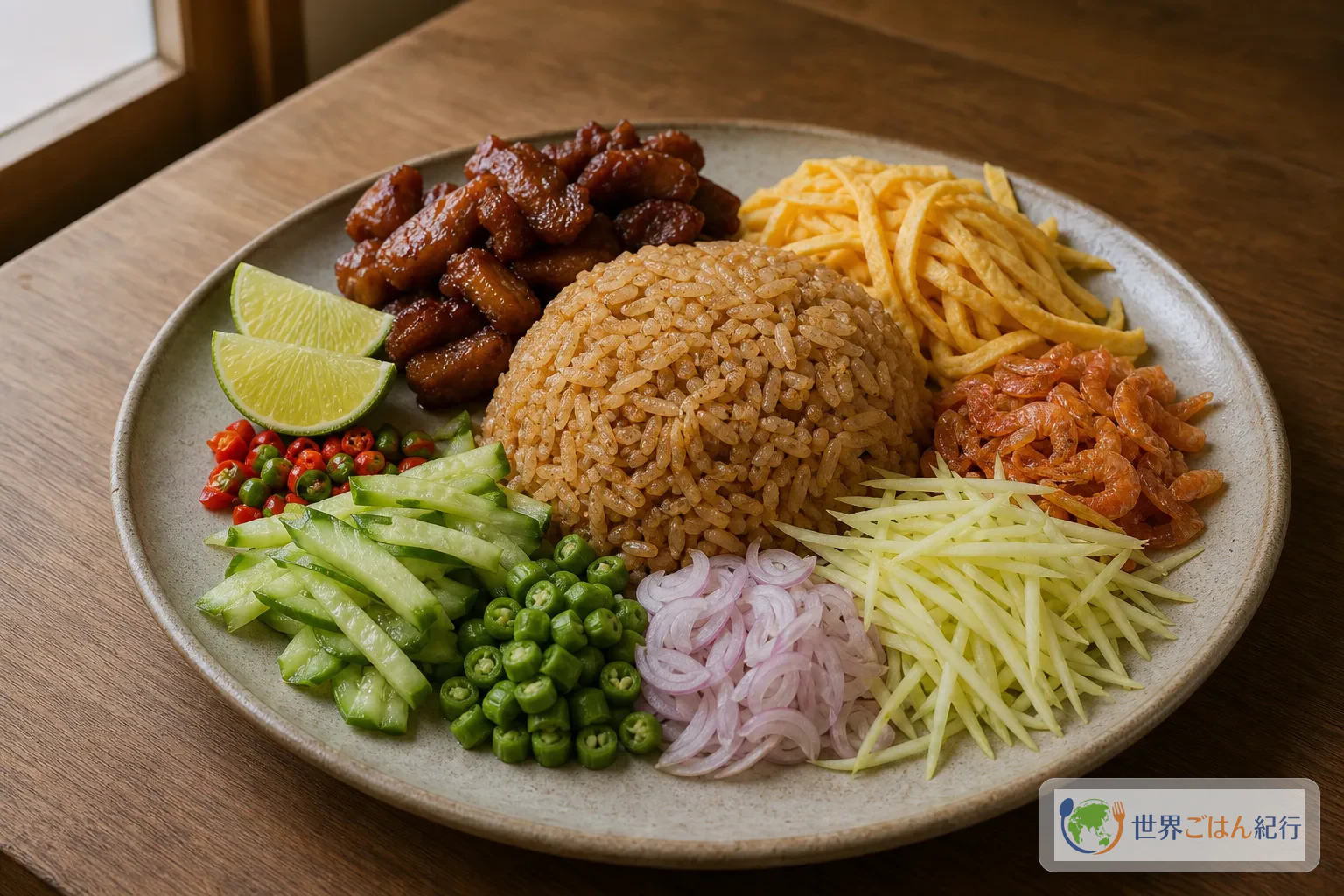
Mound the kapi rice in the center of a plate and arrange the moo waan, egg, dried shrimp, green mango, red onion, beans, cucumber and chiles separately around it. Don't squeeze the lime yet; leave it within each diner's reach.
Taste the first bite with rice alone to check the salt. Then add a little sweet pork, and on the third bite add green mango and lime. Rather than mixing everything from the start, you find where kapi's aroma is strong and where the vegetables lighten it. If toppings are left over, go ahead and mix it all at the end. Being able to build the flavor on the plate is what makes this dish complete.