Ingredients and steps on one page. Print it, or choose “Save as PDF” in the print dialog.
Sekai Gohan
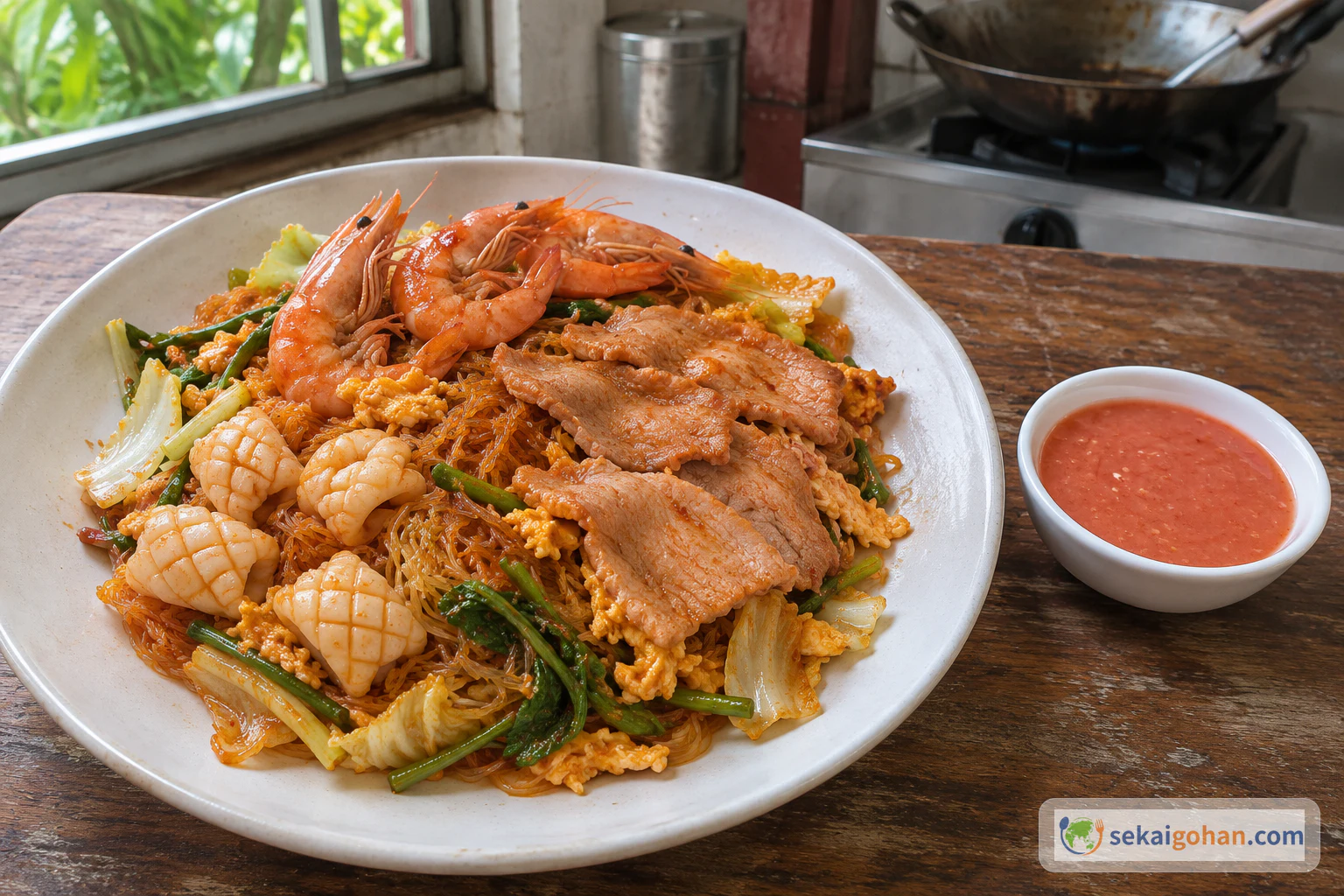
Thai Suki: Bangkok Wok-Fried Glass Noodles in Fermented Bean Curd Sauce
Ingredients
Suki sauce (no cooking)
| Ingredient | Amount | Role |
|---|---|---|
| Sriracha chili sauce (ซอสพริกศรีราชา) | 7 oz (200 g) | The base, with heat and sweetness |
| Thai pickled garlic cloves (เนื้อกระเทียมดอง) | 2 oz (60 g) | Sweet-sour depth |
| Pickled garlic brine, from the same jar (น้ำกระเทียมดอง) | 1 oz (30 g) | Acidity and salt |
| Fresh garlic (กระเทียมจีน) | 1 oz (30 g) | Raw bite and aroma |
| Coriander roots (รากผักชี) | 5 roots | The aromatic core |
| Red jinda chilies (พริกแดงจินดา) | 10 chilies | Heat and red colour |
| Sugar | 1 oz (30 g) | The backbone of the sweetness |
| Fine salt | ¼ tsp | Balances the salt |
| Distilled vinegar | ¾ oz (20 g) | Sourness |
| Thai white soy sauce (ซีอิ๊วขาว) | ¾ oz (20 g) | Salt and savour |
| MSG (ผงชูรส) | 1 tsp | Extra savour, optional |
| Red fermented bean curd (เต้าหู้ยี้) | ¾ oz (20 g) | The heart of the sauce |
| Fermented bean curd brine | 1 tbsp | Salt and fermented aroma |
| Toasted sesame oil | 2 tsp | Fragrance |
| Toasted white sesame seeds | 1–2 tbsp | Nutty crunch, stirred in whole |
Pork marinade
| Ingredient | Amount | Role |
|---|---|---|
| Pork loin, thinly sliced (หมูสันนอก) | 1 lb 2 oz (500 g) | The main meat, stays tender in the wok |
| Water | 3 tbsp | Carries the baking soda into the meat |
| Baking soda | ½ tsp | Tenderizes the meat |
| Sugar | 1 tsp | Light sweetness |
| Oyster sauce | 2 tbsp | Salt and savour |
| Egg | 1 | Binds and enriches the coating |
| Ground white pepper | ½ tsp | Aroma |
| Green-cap seasoning sauce, usually Maggi (ซอสฝาเขียว) | 1 tbsp | Concentrated savour |
| Thai white soy sauce (ซีอิ๊วขาว) | 1 tbsp | Salt |
| Tapioca starch (แป้งมัน) | 1 tbsp | Coats the meat and holds in its juices |
For one plate
| Ingredient | Amount | Role |
|---|---|---|
| Vegetable oil | 2–3 tbsp | For the wok |
| Garlic, chopped | 1 tbsp | The first aroma in the pan |
| Marinated pork | 4 pieces | Meat |
| Shrimp | 3 | Seafood sweetness |
| Squid | 4–5 pieces | Bite |
| Egg | 1 | Ties everything together |
| Napa cabbage (ผักกาดขาว) | 1 handful | Sweetness and juice |
| Chinese celery (ขึ้นฉ่าย) | 1 handful | Sharp herbal aroma |
| Water spinach (ผักบุ้ง) | 1 handful | Green crunch |
| Fresh glass noodles (วุ้นเส้นสด) | 1 handful | The noodle at the centre |
| Stock (water with a chicken stock cube) | as needed | Loosens the noodles |
| Suki sauce | 2½ tbsp | Seasons the whole plate |
Steps
1Prepare the vegetables and seafood
Cut the napa cabbage into chunks, and the Chinese celery and water spinach into short lengths you can pick up with chopsticks. Devein the shrimp and cut the squid into bite-size pieces. If your glass noodles are fresh, separate them loosely by hand. Group everything for one plate on a tray. You are ready when each plate's pork, seafood, egg, vegetables, noodles, stock and sauce are within reach of the stove.
2Marinate the pork
Put the water and baking soda in a bowl, add the pork, and knead it with your hands until the water is fully absorbed and the bowl looks dry. Add the sugar, oyster sauce, egg, white pepper, green-cap sauce, white soy sauce and tapioca starch, and mix until every slice is coated. Cover and refrigerate for at least 2 hours. The pork is ready when the surface looks glossy and the egg and starch have formed a thin film over each slice.
Measure the baking soda exactlyBaking soda relaxes the meat fibres, and the starch and egg seal the juices in when the pork hits the wok. Keep it to ½ tsp for 1 lb 2 oz (500 g) of pork. Any more and the meat smells of soap.
3Blend the sauce
Put every sauce ingredient except the sesame seeds into a blender. Blend until smooth. Stir in the toasted sesame seeds by hand so they stay whole. The sauce is done when it is smooth and salmon-pink to reddish-brown. It is never cooked, so the raw garlic and chili stay sharp and bright.
4Heat the wok and fry the garlic
Heat the wok over high heat until it is very hot, then add 2–3 tbsp vegetable oil. Wait for fine ripples on the surface of the oil and a faint wisp of smoke. A cooler pan makes the meat release water and stew instead of fry. Add 1 tbsp chopped garlic and stir until it smells fragrant. Move on just before it turns pale gold, because burnt garlic turns the whole plate bitter.
Hot oilThe oil is near smoking. Keep the handle turned in, add ingredients from the near side so splashes go away from you, and keep a lid nearby.
5Stir-fry the pork
Add 4 pieces of marinated pork and separate them as they fry. Turn them so the egg and starch coating sets on both sides. The pork is done when it has turned opaque white with lightly browned edges and is cooked through to the centre. No liquid should pool in the bottom of the wok.
Cook meat and seafood throughCook the pork and seafood until the centre reaches 167°F (75°C) for at least 1 minute. Wash any knife and board used for raw meat or fish, then pour boiling water over them before using them again.
6Add the shrimp and squid
Add the 3 shrimp and 4–5 pieces of squid to the pork. Toss them over high heat so they cook fast and stay juicy. The shrimp are ready when the shells are bright red and the flesh is opaque. The squid is ready when it curls up, turns opaque white and firms up.
7Crack in the egg
Crack 1 egg straight into the middle of the wok. Break the yolk lightly and fold it through the meat in two or three wide strokes. Then move on to the vegetables. The egg is right when the white has mostly set into soft curds and the yolk is still glossy. It finishes cooking with the vegetables and noodles and ends up clinging to everything on the plate.
8Wilt the vegetables
Add a handful each of napa cabbage, Chinese celery and water spinach. Toss them quickly over high heat so they wilt without giving off water. Take them off before they go limp and wet. They are ready when the cabbage cores turn translucent and the leaves have just collapsed and turned glossy.
9Add the noodles, stock and sauce
Add a handful of glass noodles, a splash of stock and 2½ tbsp suki sauce. Toss hard over high heat until the sauce coats everything evenly. Add less stock for a drier plate and more for a moister one. The plate is done when the noodles look clearer and feel springy and soft, and the bottom of the wok is almost dry.
Noodles last, sauce with themThe noodles drink up liquid fast. Added any earlier, they turn into a sticky clump. Added last with the sauce, they take on its colour and flavour in a few tosses and stay as separate strands.
10Plate and start the next one
Tip everything onto a plate and spoon a little extra sauce into a small saucer on the side. Serve at once, while the noodles are still glossy. Wipe out the wok and go back to step 4 for the next plate. A good plate has noodles, meat, seafood, egg and greens evenly mixed through, and no liquid collects on the plate.