Ingredients and steps on one page. Print it, or choose “Save as PDF” in the print dialog.
Sekai Gohan
Bánh Bò Nướng: Vietnamese Baked Honeycomb Cake with Coconut and Pandan (Bánh bò)
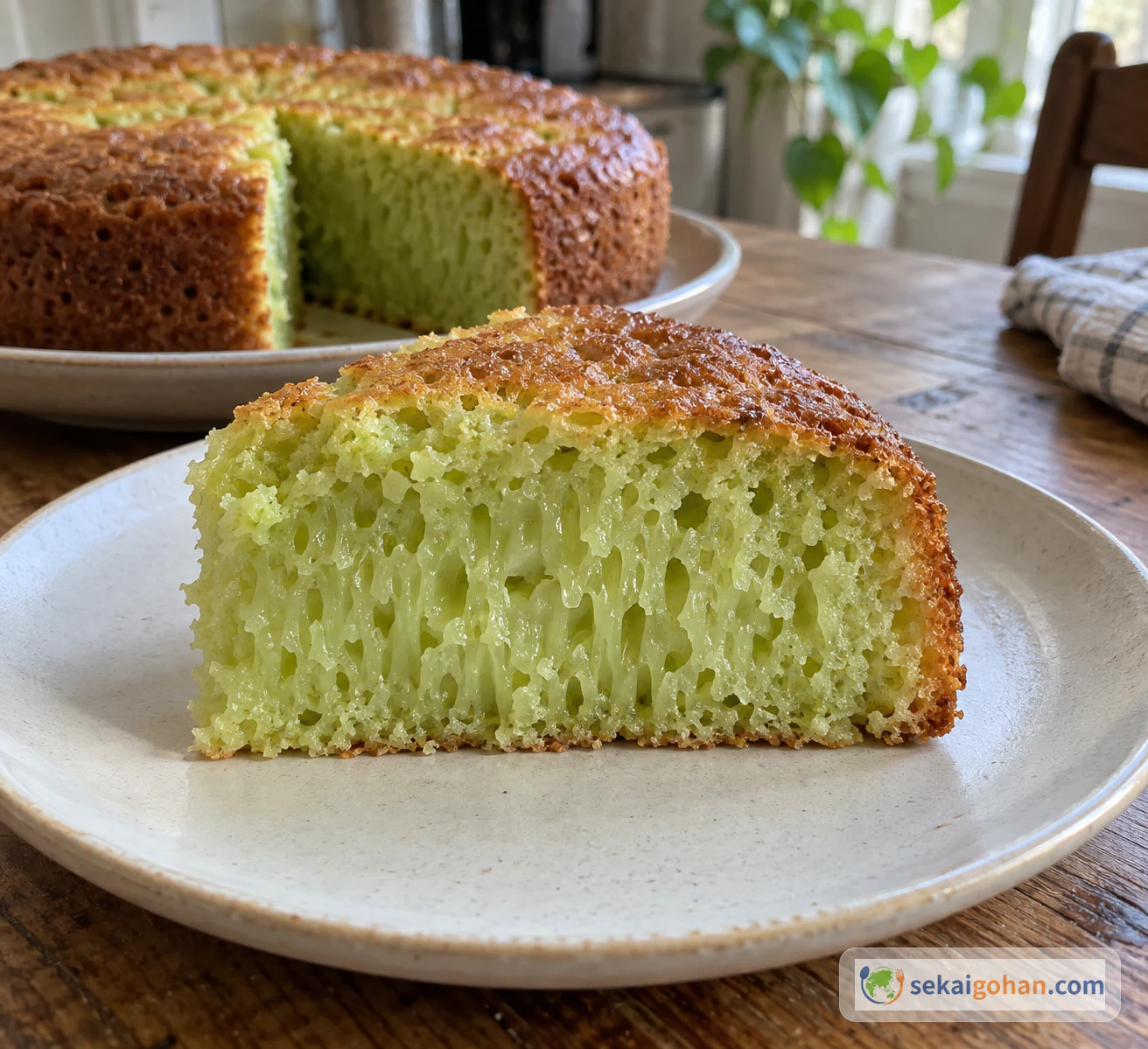
Ingredients
| Ingredient | Amount | Role |
|---|---|---|
| Coconut milk | 1 cups (250ml) | The liquid base and coconut flavor. Not coconut cream |
| Caster sugar | 5.5 oz (150g) | Sweetness; dissolved into the warm coconut milk |
| Pandan aroma paste | 1/2 tsp (using a 5ml Australian teaspoon) | Aroma and pale green color |
| Salt | 1/2 tsp | Seasons the coconut liquid |
| Vegetable oil (for the batter) | 1 tbsp (Australian tbsp, 20ml) | Stirred into the warm coconut liquid |
| Large eggs | 5 | Mixed in without whipping |
| Tapioca flour | 5.5 oz (160g) | The main structure and the springy, chewy bite |
| Rice flour | 10g | A small amount alongside the tapioca flour |
| Cream of tartar | 2 tsp | Leavening, used together with the bicarbonate of soda |
| Bicarbonate of soda | 1 tsp | Leavening, used together with the cream of tartar |
| Vegetable oil (for the tin) | Enough to coat the base and sides thinly | Greasing the tin; separate from the 1.5 tbsp (20ml) in the batter |
Steps
1Oil the tin and heat it in the oven
Brush the base and sides of the 8 inches (20cm) non-stick-free round tin with a thin coat of vegetable oil. Put the empty, oiled tin into the oven and preheat to 400°F (200°C) conventional, or 350°F (180°C) if your oven is fan-forced.
2Warm the coconut milk with the sugar, pandan and salt
In a heatproof container, combine the 1 cups (250ml) coconut milk, 5.5 oz (150g) caster sugar, 1/2 tsp pandan aroma paste and 1/2 tsp salt. Microwave on high for 1 minute. Add the 1.5 tbsp (20ml) vegetable oil and stir until the sugar has dissolved.
3Mix the eggs and flours without whipping, then add the coconut liquid
Crack the 5 eggs into a large bowl and break the yolks with the tip of the whisk. Sift in the 5.5 oz (160g) tapioca flour, 10g rice flour, 2 tsp cream of tartar and 1 tsp bicarbonate of soda, and mix until smooth without whipping. Then pour in the coconut liquid and mix to combine.
This is not a whipped-egg cake, so keep the whisk low in the bowl rather than beating air in. A little natural foam on the surface is fine.
4Strain the batter, whisk again and pour into the hot tin
Strain all of the batter through a fine-mesh sieve into a clean bowl. Scrape off the batter clinging to the underside of the sieve and add it to the bowl so none is lost, then whisk again briefly. Set the sieve and whisk aside.
Take the hot tin out of the oven with oven mitts and pour the batter in from the bowl.
Once the batter is in, drop the tin onto the bench a few times from about 2 inches (5cm) high to release large air bubbles.
5Bake until the surface springs back
Bake at 400°F (200°C) conventional (350°F (180°C) fan-forced) for 35 minutes, or until the surface springs back when pressed lightly. Use oven mitts when checking. Don't borrow the temperatures or times from other bánh bò recipes; they go with different formulas.
6Invert in the tin and cool completely
As soon as it comes out of the oven, turn the cake upside down, still in its tin, onto a wire rack and leave it to cool completely. Go by touch: wait until the tin and cake are fully cool before unmolding.
When it is cool, run a knife around the edge, then ease the base away from the tin bit by bit with your fingers. If the cake drops out of the tin by itself, turn it right side up straight away so the holes are not squashed.