Ingredients and steps on one page. Print it, or choose “Save as PDF” in the print dialog.
Sekai Gohan
Bánh Cuốn Recipe: Hanoi's Thin Steamed Rice Rolls
Ingredients
Batter
| Ingredient | Amount | Role and substitutes |
|---|---|---|
| Rice flour | 3.5 oz (100 g) | The star. Use baking-grade or fine-textured flour |
| Tapioca starch | 1.25 oz (35 g) | Adds suppleness to the sheet. 1 oz (30 g) potato starch also works |
| Cornstarch | 1.25 oz (35 g) | Helps spread the sheet thin. Without it the sheet is a little thicker |
| Salt | 2 g | Seasons the batter |
| Water | 2¼ cups (550 ml) | Start by mixing with 2 cups (500 ml) and add more as you see the consistency |
| Neutral oil such as rice bran oil | 1 tbsp (15 ml) | Adds slip to the batter |
Pork filling
| Ingredient | Amount | Preparation |
|---|---|---|
| Ground pork | 8 oz (220 g) | About 8 parts lean to 2 parts fat holds the filling together |
| Dried wood-ear mushrooms | 8 g | Soak 20–30 minutes in lukewarm water and chop finely |
| Dried shiitake | 2 | Soak, remove the stems and chop into 0.125 inch (3 mm) dice |
| Onion or shallot | 2 oz (60 g) | Finely chopped |
| Fish sauce | 2 tsp (10 ml) | Seasons the filling. Salt can also adjust it |
| Black pepper | 0.5 g | For aroma |
| Rice bran oil | 2 tsp (10 ml) | For sautéing |
Fish-sauce dip and accompaniments
| Ingredient | Amount | Substitutes & notes |
|---|---|---|
| Water | ½ cup (100 ml) | Lukewarm. Dissolve the sugar in it |
| Vietnamese fish sauce nước mắm | 2 tbsp (30 ml) | If unavailable, start with 1.5 tbsp (25 ml) of another fish sauce and adjust |
| Lime juice | 2 tbsp (30 ml) | Lemon juice is fine |
| Sugar | 20 g | The base of the sweet-sour balance |
| Rice vinegar | 2 tsp (10 ml) | Rounds the flavor. May be omitted |
| Garlic | 1 clove | Finely chopped |
| Red chili | 1/2 | Omit if you dislike heat |
| Fried shallots | 20 g | Fried onions also work |
| Cilantro, mint, cucumber | to taste each | Add just before eating |
Steps
1Mix the batter and let it rest
30–45 min
Combine the rice flour, tapioca starch, cornstarch and salt in a bowl. Add 2 cups (500 ml) water in about 3 parts, mixing with a whisk and crushing any lumps. Add 1 tbsp (15 ml) oil, then add the rest of the water. Cover with plastic wrap and rest for at least 30 minutes.
After resting, the batter settles and the bottom gets heavy. Right before use, and before every sheet, stir it up from the bottom. The cue is a consistency where a line made by dripping from the scoop disappears in about 2 seconds. If the line stays, add 2 tsp (10 ml) water; if it is so thin the sheet tears like a net, add 1 tsp rice flour at a time.
2Make the pork filling
10–12 min
Soak and chop the wood-ear and shiitake, and chop the onion into 0.125 inch (3 mm) dice. Put rice bran oil in a frying pan over medium heat and sauté the onion for 2 minutes. Add the ground pork, break it up with a wooden spatula and cook for 1 minute, then add the mushrooms, fish sauce and black pepper.
Cook 2–3 more minutes until the pork has lost its red and no liquid remains on the bottom of the pan. Check that the center has reached at least 160°F (71°C), spread it on a tray and cool. Putting hot filling on a sheet makes the steam tear it easily.
3Make the fish-sauce dip
5 min
Dissolve 20 g sugar in ½ cup (100 ml) lukewarm water, then add the lime juice, rice vinegar and fish sauce. Mix in the garlic and chili and check the sweetness, sourness and saltiness. It is fine if the filling tastes slightly strong when eaten alone; eating the sheet and herbs together brings the flavor together.
The dip lets the garlic aroma blend if left about 10 minutes after making. If you want to share the heat among the family, add the chili last.
4Prepare the frying pan
2–3 min
Heat an 8 inch (20 cm) nonstick frying pan over medium-low heat and wipe a thin coat of oil with a paper towel. Set a flat plate or cutting board beside it for moving the sheets, and brush a very thin layer of oil on its surface. If the pan is too hot, the batter sets the moment you pour it and thick spots form before it can swirl.
A little batter dropped in should not sizzle loudly but spread white over a few seconds; that is the right temperature. If it is loud and the edge dries at once, lower the heat and wait 30 seconds.
5Steam the sheet
1 min 30 sec–2 min per sheet
Stir the batter from the bottom and scoop 40–45 ml with a ladle. Lift the pan slightly off the heat, pour into the center, and immediately turn your wrist to spread it to 18–20 cm in diameter. Cover and steam 50–60 seconds over medium-low heat.
The stirred batter should be smooth with no lumps, thin, and one where the pour marks vanish at once. When you lift the lid, go on if the surface is translucent, fine bubbles are visible and the edge has begun to leave the pan. If the center is white and powdery, add 20 seconds. If the edge dries and shrinks, the heat is too high or there is too little batter.
6Move the sheet and roll in the filling
30–40 sec per sheet
Turn off the heat and run a thin spatula around the edge. Rather than lifting with the spatula, slide the edge of the sheet onto the plate and flip the rest over with your wrist, which tears less. Put a little less than 1 tbsp of filling just before the center, fold in both ends, and roll from the near side.
The sheet starts to dry the moment it lands on the plate, so portion the filling out first. The finished state is a sheet that is still warm and smooth, with no cracks when rolled and no filling juice leaking out. Even if the first sheet tears, use less filling and adjust from the second and it will be fine. If the sheet sticks to the plate, there was too little oil on the plate or the cooking was too short.
7Plate and eat at once
5 min
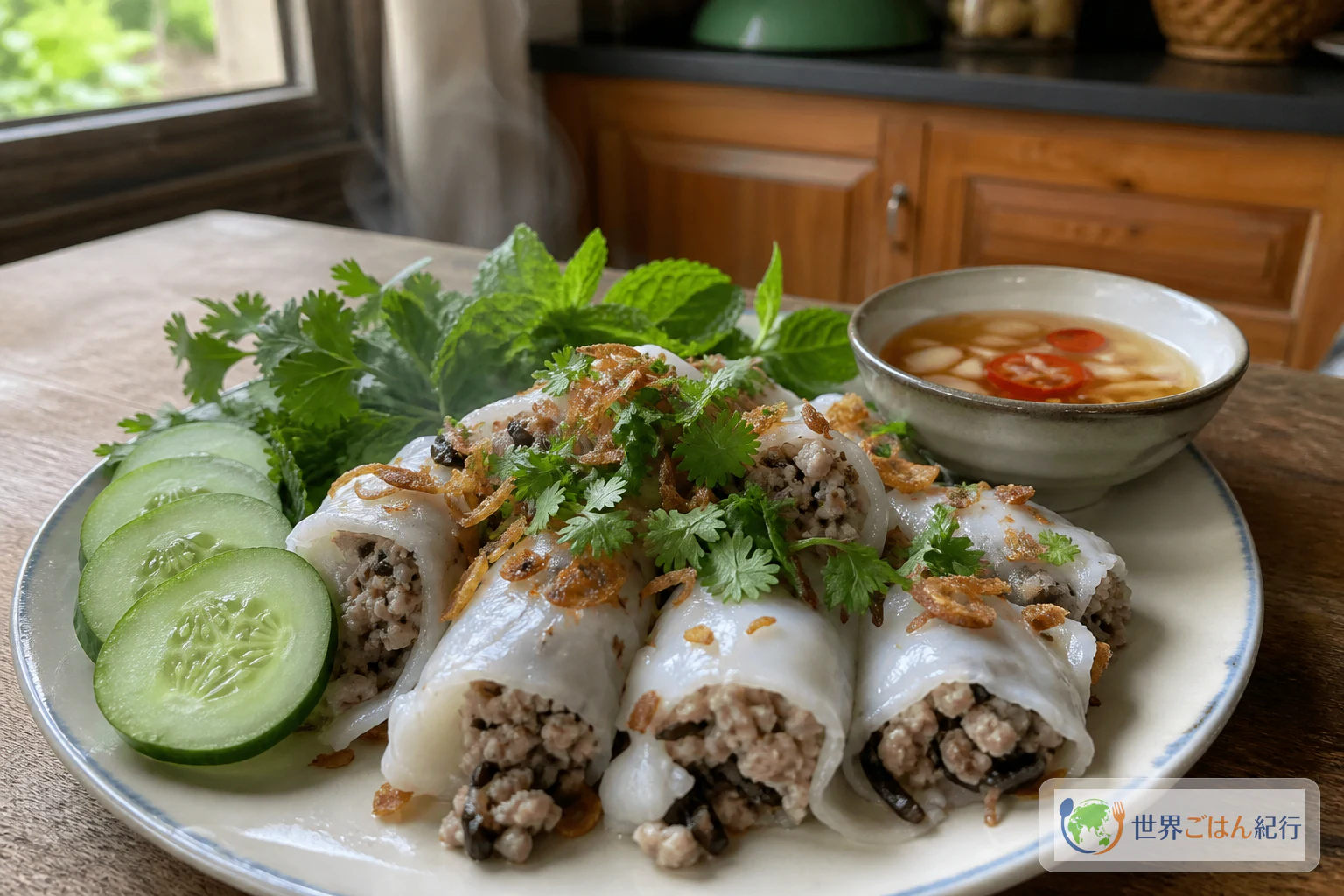
Heat: plate with the heat off. Arrange the rolled bánh cuốn on a plate and add fried shallots, cilantro, mint and cucumber. The finished state is a sheet that is warm, with the dip and herbs added before the surface dries. Put the fish-sauce dip in a separate small dish and dip the edge of each roll. If you have Vietnamese pork sausage chả lụa, add it in thin slices; it is fine without.
The longer steamed sheets sit, the more the surface dries and overlapping parts stick. Carry finished rolls to the table as they are done and keep them warm until just before combining with dip and herbs.