Ingredients and steps on one page. Print it, or choose “Save as PDF” in the print dialog.
Sekai Gohan
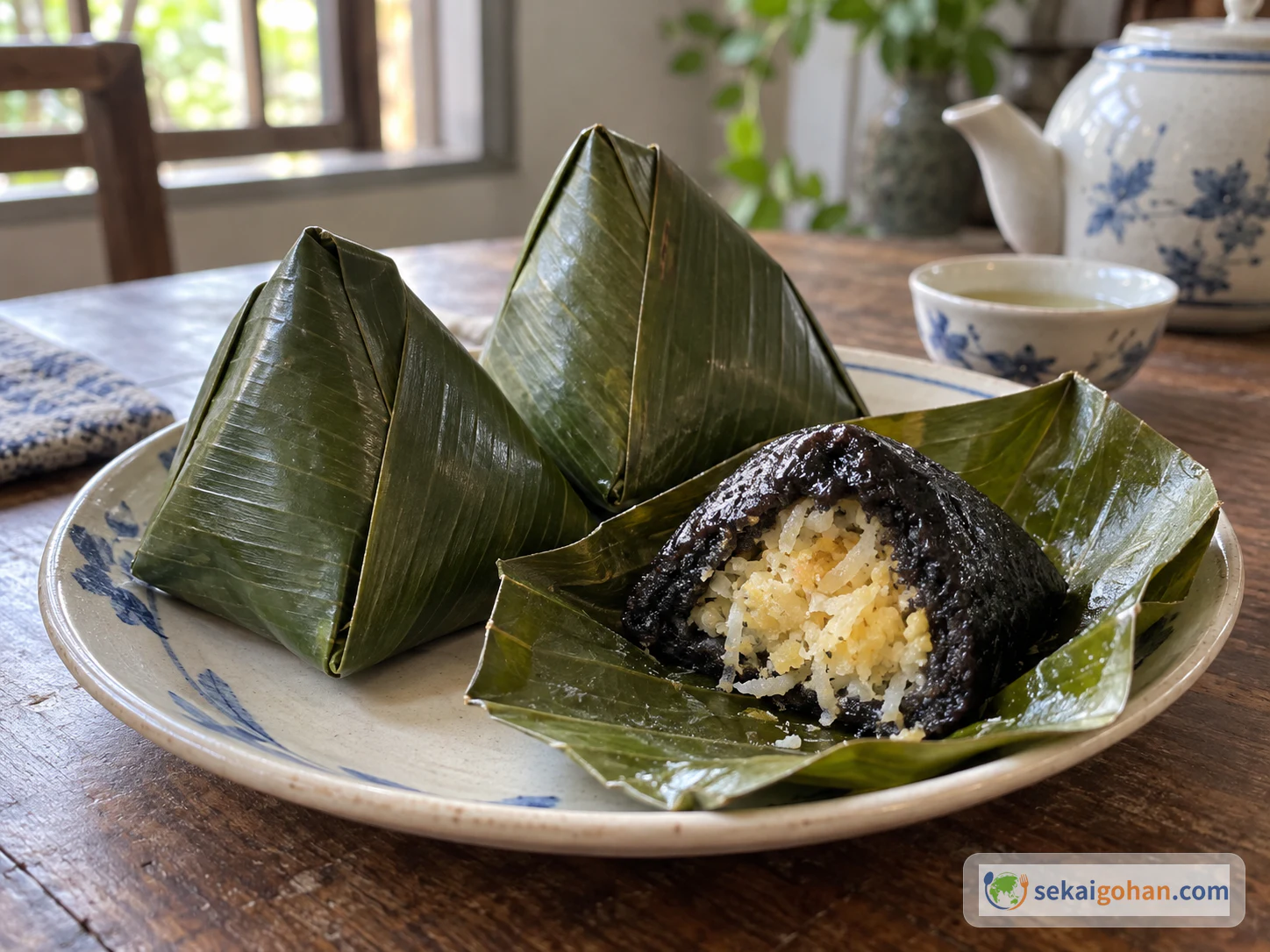
Bánh Ít Lá Gai: Bình Định's Dark Ramie-Leaf Sweet Wrapped in Banana Leaf (Bánh ít)
Ingredients
| Ingredient | Amount | Role |
|---|---|---|
| Fresh ramie leaves (lá gai tươi) | 1 lb (500 g) | Shell: gives the dark color and leafy aroma |
| Glutinous rice flour (bột nếp) | 1 lb (500 g) | Shell: the chewy, stretchy body |
| Granulated sugar (đường cát), for the shell | 5.5 oz (150 g) | Shell: sweetness |
| Granulated sugar (đường cát), for the filling | 5.5 oz (150 g) | Filling: sweetness |
| Hulled split mung beans (đậu xanh cà vỏ) | 7 oz (200 g) | Filling: the smooth base |
| Finely shredded mature coconut flesh (dừa khô nạo sợi nhỏ) | 7 oz (200 g) | Filling: texture and richness, mixed in after cooling |
| Banana leaves (lá chuối) | as needed | Wrapper: softened and cut into squares |
| Neutral cooking oil (dầu ăn) | a little | Brushed thinly on the inside of the leaves only |
| Water | as needed | For washing and boiling the leaves, soaking and cooking the beans, and loosening the bean paste if it is too dry |
Steps
1Sort and clean the ramie leaves
Choose large leaves that are neither very young nor very old. Wash them well, then remove the firm stems and the thick central ribs.
2Boil the leaves and blend them into a paste
Boil the cleaned leaves in water for 10–15 minutes until soft, then drain them in a colander.
Chop the drained leaves finely, then blend them into a smooth, thick paste.
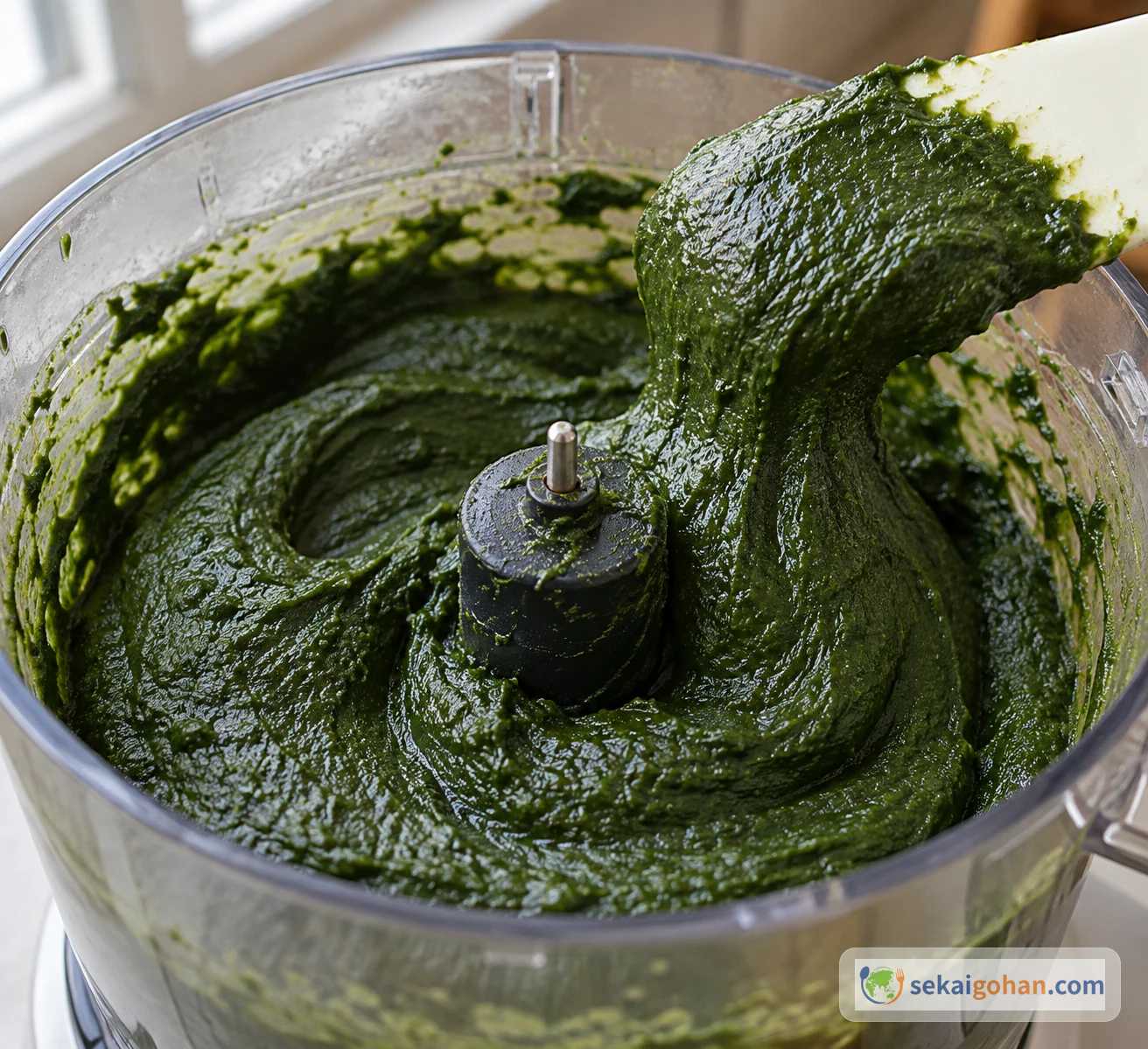
The paste should be smooth, with no coarse leaf pieces left 3Knead the shell dough and let it rest
Put 1 lb (500 g) glutinous rice flour, 5.5 oz (150 g) sugar for the shell and the leaf paste in a large bowl. Knead until the dough is even, supple and no longer sticks to your hands. Let it rest for about 30 minutes.
4Soak and cook the mung beans
Wash 7 oz (200 g) hulled split mung beans and soak them in water for about 4 hours. Drain, then cook them until completely soft, so a bean crushes easily between your fingers.
5Make the filling
Blend the cooked beans with 5.5 oz (150 g) sugar for the filling until smooth. If the mixture is too dry to blend, add water a little at a time. Move it to a pan and stir over low heat until it dries out, with no watery streaks left on the bottom of the pan and the paste holding together. Turn off the heat and let the paste cool. Once it has cooled, mix in 7 oz (200 g) shredded mature coconut flesh.
When the filling has cooled, divide the dough and the filling into equal portions, one portion of dough for each portion of filling, and roll the filling into balls.
6Fill the shells
Flatten a portion of dough into a round in your palm, with an even thickness all around. Place a ball of filling in the center, draw the edges up around it, pinch the seam closed so no filling shows, and roll it gently into a ball.
7Soften the banana leaves and wrap into towers
Wash the banana leaves, pass them briefly over a flame or warm them until they turn soft and pliable, and cut them into squares. Brush the inside of each square thinly with oil. Wrap each filled cake in a square of leaf, folding it into a cone or a tapered pyramid.
8Steam
Bring water to a boil under the steamer until steam is rising, set the wrapped cakes on the rack and cover. Steam for about 30 minutes, keeping the steamer from running dry. The cakes are ready when the leaves have softened, the whole parcel is hot through and the dough has set into a cohesive shell. Open the hot leaves carefully, away from your face, to avoid the steam.