Ingredients and steps on one page. Print it, or choose “Save as PDF” in the print dialog.
Sekai Gohan
Bún Riêu Cua: Vietnamese Crab and Tomato Rice Noodle Soup
Ingredients
Riêu mixture
| Ingredient | Amount | Role & substitutes |
|---|---|---|
| Canned crab or crab paste | 9 oz (250 g) | With tomalley; use the juice too. For paddy crab, see the branch below |
| Ground pork | 9 oz (250 g) | Ground chicken works, but the riêu will be lighter |
| Eggs | 2 (about 3.5 oz/100 g) | Binds the mixture. If allergic to eggs, see the tofu version |
| Dried shrimp | 15 g | Soak in ¼ cup (80 ml) water and chop finely |
| Dried shrimp (for adjusting) | 5 g | Add if the mixture is loose or you skip mắm tôm. Optional |
| Shallots or leek | 1.5 oz (40 g) | Finely chopped. 1.75 oz (50 g) onion also works |
| Mắm tôm | 1 tsp | Vietnamese fermented shrimp paste. Start with 1 tsp the first time |
| Fish sauce | 1 tsp | Adjust for the saltiness of the canned crab |
| Black pepper | 0.5 g | Coarsely ground |
| Salt | 1 g | Adjust for the salt in the crab and fish sauce |
Tomato broth
| Ingredient | Amount | Role & substitutes |
|---|---|---|
| Pork bones or chicken carcass | 1 lb (500 g) | 1 lb (500 g) chicken drumettes also work. For a plant-based version, see below |
| Water | 2.5 quarts (2.4 L) | Add boiling water if it reduces too much |
| Tomatoes | 1.25 lb (600 g; 4 medium) | Using 2 ripe and 2 firmer ones makes it easier to control how they break down |
| Dried-shrimp soaking liquid | all | If there's grit, use only the clear top |
| Fish sauce | 1 1/2 tbsp | Sets the saltiness of the broth |
| Sugar | 2 tsp | Rounds off the tomatoes' acidity |
| Rice vinegar | 1 tbsp | Stands in for Vietnamese giấm bỗng |
| Mắm tôm | 1 tsp | Dissolve 1/2 tsp first and taste |
| Salt | 1/2 tsp | Adjust at the end |
Red oil, noodles, toppings and herbs
| Ingredient | Amount | Role & substitutes |
|---|---|---|
| Rice bran oil | 3 tbsp | For the red oil. Any neutral oil works |
| Annatto seeds | 2 tsp | Without them, add color with 2 tsp paprika |
| Fried tofu or thick deep-fried tofu | 10.5 oz (300 g) | 1 inches (2 cm) cubes. Thin tofu pouches give a flimsier texture |
| Thick dried rice noodles | 11.5 oz (320 g) | Without fresh bún, use round rice noodles about 2–3 mm thick (thick rice vermicelli) |
| Scallions | 1.75 oz (50 g) | Thinly sliced |
| Cilantro | 1 oz (30 g) | If you dislike it, use mitsuba or another mild herb |
| Shiso leaves | 8 | Stand-in for Vietnamese herbs, cut into thin strips |
| Mint | 20 g | Serve a little at a time at the table |
| Bean sprouts | 5.5 oz (160 g) | Rinsed and drained |
| Cabbage | 4 oz (120 g) | Stand-in for banana blossom. Finely shredded |
| Lime or lemon | 1 | Adds sourness at the table |
| Chile | 1 | Sliced into rings. Serve on the side, not in the pot |
Steps
1Make the pork-bone stock with dried shrimp
Put the pork bones in a pot, cover with water and set over high heat. When it has boiled for 5 minutes, discard the water and rinse the bones and pot under running water. Add 2.5 quarts (2.4 L) water, the bones, the dried-shrimp soaking liquid, half the rehydrated shrimp and 1/2 tsp salt; bring to a boil over medium heat, then turn to low. Simmer for 45 minutes with small bubbles rising steadily; move on when the bones no longer smell sharp and the stock is faintly cloudy white. A rolling boil emulsifies fat and protein and clouds the stock, so leave the lid slightly ajar.
2Make the crab and pork riêu
In a bowl, combine the canned crab meat and juice, ground pork, 2 eggs, the remaining rehydrated shrimp, 20 g shallots finely chopped (2–3 mm), 1 tsp mắm tôm, 1 tsp fish sauce, black pepper and salt. Mix with a spatula for 2 minutes without overworking it, so bits of meat remain visible. If it's watery, hold back some of the crab juice and add it 1 tbsp at a time. Let the mixture rest for 10 minutes; it's ready when a spoonful holds a small mound about 1.5 inches (4 cm) across and 1 inches (2 cm) high with no water pooling on the surface. If it runs, don't add more egg; add 5 g chopped dried shrimp and wait 5 minutes.
3Make the red tomato-annatto oil
Peel 2 tomatoes by blanching and chop coarsely; cut the other 2 into 8 wedges each. Put 3 tbsp rice bran oil and 2 tsp annatto seeds in a small pot and warm over low heat for 3 minutes. When the oil turns orange, scoop out the seeds with a strainer, add 20 g shallots and sauté for 1 minute. Add the peeled tomatoes and cook for 6 minutes, crushing them with a wooden spatula; turn off the heat when the oil and tomatoes no longer separate, the tomatoes collapse under a spoon, and the sauce is red-orange and about as thick as ketchup. Without annatto seeds, skip them and add paprika at the end. Burnt seeds turn bitter, so remove them before the oil turns brown.
Annatto adds red color and a mild, earthy aroma rather than chile heat. If you don't cook Vietnamese food often, check the package size and ingredients before buying, and consider whether you'll use it for coloring other stews too. Check whether it's whole seeds or powder. With whole seeds, you can infuse the oil and then remove them, so no powder is left in the soup.
4Combine into tomato broth and season
Remove the bones from the stock and add the red tomato sauce and tomato wedges. Bring to a boil over medium heat, then lower the heat and simmer for 10 minutes. When the tomatoes are soft, their edges rounded, the surface gently trembling and the wedges still holding their shape, add 1 1/2 tbsp fish sauce, 2 tsp sugar, 1 tbsp rice vinegar and 1/2 tsp mắm tôm. Taste a sip: it's right when sourness comes first, the savoriness of crab and dried shrimp lingers after, and the saltiness is easy to swallow. If it's weak, add fish sauce 1/2 tsp at a time; if it isn't sour enough, add rice vinegar 1 tsp at a time. Add 1 more tsp sugar only if the tomatoes lack sweetness.
You don't need to finish the flavor at this point. The riêu and fried tofu round out the broth, and as the noodles absorb liquid the salt seems a little weaker. Keep the broth slightly strong on its own so it won't taste flat in the bowl.
5Gently float the riêu
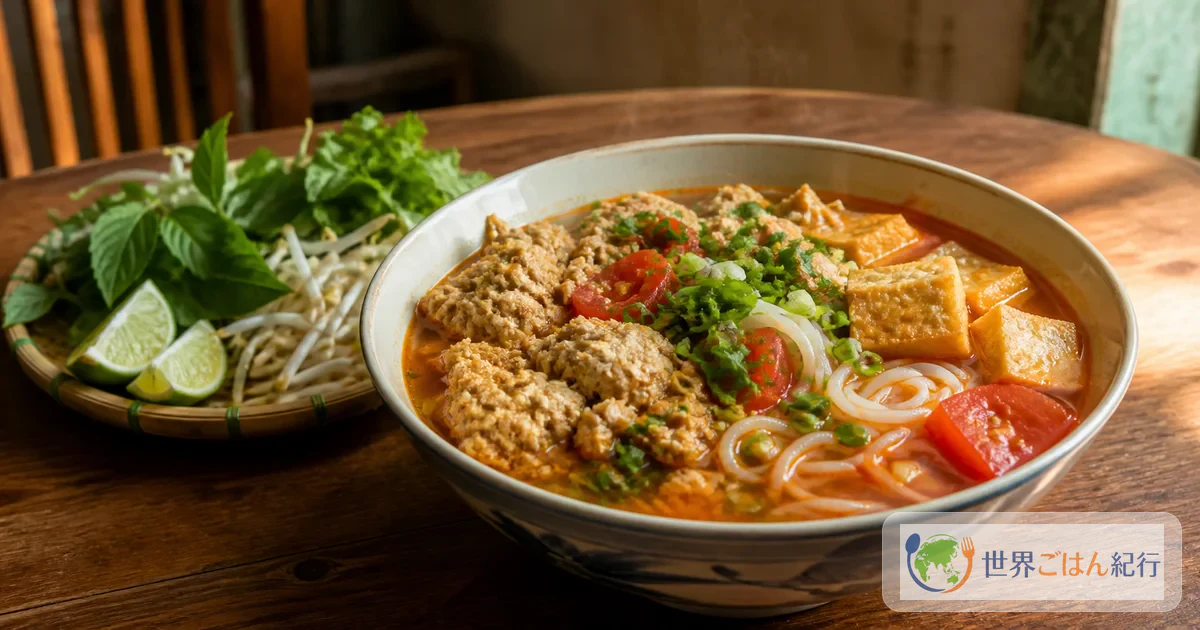
When the surface of the broth is just below a boil, 80–90°C (176–194°F), scoop the riêu mixture 1 tbsp at a time and slide it quietly in from the edge of the pot. Once it's all in, don't stir with chopsticks or a ladle; wait 7–8 minutes on low heat. It's set when the surface has turned pale and firm, the mounds hold together, lift off the bottom and float, spring back when pressed lightly with the back of a ladle, and keep their roughly 4 cm (1 1/2 in) shape. Add the fried tofu between the floating riêu and heat for 3 more minutes.
Large scoops take longer to set through and break apart from the impact of dropping them in. Divide the mixture into small mounds spaced a little apart and they'll be the right size to ladle into bowls. If the broth is boiling, turn off the heat, wait 1 minute and add the mixture after the bubbles subside. If the riêu breaks up, you can still eat it as fine crab in the broth. Don't try to make up for it by adding more mixture; return the pot to low heat and set the rest a little at a time.
6Cook the rice noodles and assemble the bowls
In a separate pot, bring plenty of water to a boil over medium heat and cook 11.5 oz (320 g) dried rice noodles 1 minute less than the package directs. Keep the water at a steady simmer; drain when the noodles turn translucent with a faint white core at the center, rinse under running water to remove surface starch, then dip into boiling water for 10 seconds to rewarm. Put 2.75 oz (80 g) noodles in each bowl and top with riêu, fried tofu, tomato wedges, scallions and cilantro. Pour the hot broth over the toppings, and serve bean sprouts, cabbage, shiso, mint, lime and chile on a separate plate. Taste the first bite plain, then add herbs and lime from the second bite on to change the crab and tomato flavors.