Ingredients and steps on one page. Print it, or choose “Save as PDF” in the print dialog.
Sekai Gohan
Cao Lầu: Hoi An's Dry Rice Noodles with Five-Spice Pork
Ingredients
Pork and aromatic marinade
| Ingredient | Amount | Substitutes & notes |
|---|---|---|
| Pork shoulder (in one piece) | 1.25 lb (600 g) | Pork leg works, but shoulder is better for keeping the meat moist after braising |
| Lemongrass | 5 stalks (about 1.75 oz (50 g) trimmed) | Use the white part. 1.75 oz (50 g) if using frozen chopped lemongrass |
| Garlic | 20 g | Crush before chopping to bring out the aroma |
| Fresh turmeric | 2 tbsp grated (about 1 oz (30 g)) | If you can't find it, 2 tsp turmeric powder |
| Five-spice powder | 1 tbsp | Start with this amount even if you want a stronger aroma, and adjust later |
| Soy sauce | 3 tbsp (45 ml) | 3 tbsp. Brands differ in saltiness, so decide on adding more at the end |
| Fish sauce (nuoc mam or nam pla) | 2 tbsp (30 ml) | If you don't like seafood, switch to the soy-sauce version described below |
| Honey | 2 tbsp (30 ml) | 2 tbsp. Or 25 g sugar dissolved in a little water |
| Red chile | 1 | Remove the seeds or leave it out for less heat |
| Black pepper | 1 g | Coarsely ground. Used on the surface of the pork |
| Salt | 2 g | Check the saltiness of the marinade; sometimes you add none after braising |
Noodles and herbs
| Ingredient | Amount | Substitutes & notes |
|---|---|---|
| Thick dried rice noodles | 14 oz (400 g) | Prefer thick flat noodles. If you can't find them, thick udon for 4 |
| Bean sprouts | 7 oz (200 g) | Remove the root tails so they tangle with the noodles in the bowl |
| Green leaf or red leaf lettuce | 7 oz (200 g) | Wash, dry well and tear into bite-size pieces |
| Herbs such as mint, Thai basil and cilantro | 1.75 oz (50 g) in total | You can mix in shiso, mitsuba or basil, but the aroma changes |
| Scallions | 1 oz (30 g) | Sliced into thin rounds. Used as part of the herbs |
| Lime | 1 | Cut into wedges. Lemon works but the aroma is lighter |
| Chili sauce | 20 g | Serve it in the bowls of people who want heat. Don't mix it in beforehand |
Braise and fried wrappers
| Ingredient | Amount | Substitutes & notes |
|---|---|---|
| Water | 2 cups (500 ml) | Enough to come about halfway up the pork. Add 3.5 tbsp (50 ml) at a time if it runs short |
| Vegetable oil for browning | 1 tbsp (15 ml) | For searing the pork. Use an oil without a strong aroma |
| Wonton wrappers | 8 | Cut into 0.5 inches (1 cm) squares and fry. A stand-in for the local fried noodles or cao lầu crisps |
| Oil for deep-frying | 1¼ cups (300 ml) | Enough for the wrappers to float in a small pot. Strain after use and keep for other fried food |
Steps
1Crush the aromatic marinade coarsely
10 min
No heat is used. Finely chop 1.75 oz (50 g) of the white part of the lemongrass, 20 g garlic, 1 oz (30 g) fresh turmeric and 1 red chile, and crush them in a mortar into a paste with some texture left. Add 3 tbsp (45 ml) soy sauce, 2 tbsp (30 ml) fish sauce, 2 tbsp (30 ml) honey, 1 tbsp five-spice powder, the black pepper and the salt, and stir from the bottom.
Leaving the lemongrass fibers about 1–2 mm rather than making a smooth liquid keeps pockets of aroma when the pork braises. If it's hard to crush, add only 1 tsp of water. If you dilute it with too much water, it is hard to bring the marinade back to the thickness you want to coat the pork with. You are done when the marinade is yellow and the honey is not sitting at the bottom.
2Marinate the pork in the refrigerator
1 hour
Cut 1.25 lb (600 g) pork shoulder into 5–6 cm cubes and put them in a heavy bag or shallow container with the aromatic marinade. Turn to coat everything evenly, cover, and refrigerate for at least 1 hour. If you have time, leave it overnight, but no longer than 12 hours.
It is ready when the surface has changed from yellow to a reddish brown and the marinade clings to the corners of the meat. When the aroma of the marinade rises and the surface is an even reddish brown, marinating is done. At room temperature only the surface warms up, so refrigerate even for a short marinade. Don't discard the marinade left in the bag after you take out the pork; it is fully cooked together with the water in the next braising step.
3Brown the surface, then braise over low heat
50–60 min
Put 1 tbsp vegetable oil in a heavy skillet or a deep pot and heat over medium heat. Take the pork out of the container, lightly wipe off the surface marinade and add it to the oil. Turn the pieces over 5–6 minutes, giving the meat alone a thin browning on four sides. If the surface looks about to turn black, lower the heat to medium-low and push the meat to one side before it scorches.
Add the remaining marinade and 2 cups (500 ml) water and scrape the bottom of the pot with a wooden spatula. Bring to a full boil once, lower to low heat, cover and simmer for 45–60 minutes. Keep the heat low enough that the surface doesn't bubble hard and just quivers gently, and turn the meat only once during cooking. Turn off the heat when the liquid has reduced to about half and a bamboo skewer slides into the center of the meat without resistance. The surface of the meat should start to come apart.
If it is still tough, add 3.5 tbsp (50 ml) water, put the lid back and extend by 10 minutes at a time. Boiling off only the liquid over high heat leaves the outside of the pork tight, so check tenderness first.
4Fry the wonton wrappers for crunch
10 min
Cut 8 wonton wrappers into 0.5 inches (1 cm) squares and heat the frying oil in a small pot to 170–180°C. Add the wrappers a few at a time and fry for 60–90 seconds, until the edges are golden brown and the bubbles are finer. Lift them onto a rack to drain and don't stack them until fully cool.
If you don't have a thermometer, drop in one corner of a wrapper: the right temperature is when it immediately produces fine bubbles. If hardly any bubbles appear the oil is too low and the crisps come out limp. On the other hand, if they turn dark brown in about 30 seconds they will taste bitter, so lower the heat before frying the next batch. Even if you use local fried noodles, keep them away from moisture until just before eating.
5Boil the noodles and bean sprouts and adjust the braising liquid
15 min
Take the pork out of the pot and rest it for 5 minutes, then warm only the braising liquid over low heat. If there is a lot of fat on the surface, skim a little with a spoon and reduce until the trail of a wooden spatula stays visible for a moment. You need about ¾ cup (200 ml) for 4 servings, enough for 2–3 tablespoons per bowl.
In a separate pot, boil the thick rice noodles according to the package. For dried noodles with no instructions, boil in boiling water for 7–10 minutes and check by tasting one strand until no hard core remains in the center. If you use udon, follow the package and don't overheat it so the surface turns mushy. Add 7 oz (200 g) bean sprouts 1 minute before the noodles are done, and cook them in the same water.
Lift the noodles and sprouts into a colander and drain lightly while still steaming. Rinsing with water for a long time makes the sauce on the surface cling less, so rinse briefly only if the noodles stick together. Slice the pork thinly, about 0.25 inch (5 mm) thick, and taste the braising liquid. If it is too salty, add water 1 tbsp at a time and warm it for just 30 seconds.
6Layer the greens, noodles and pork
5 min
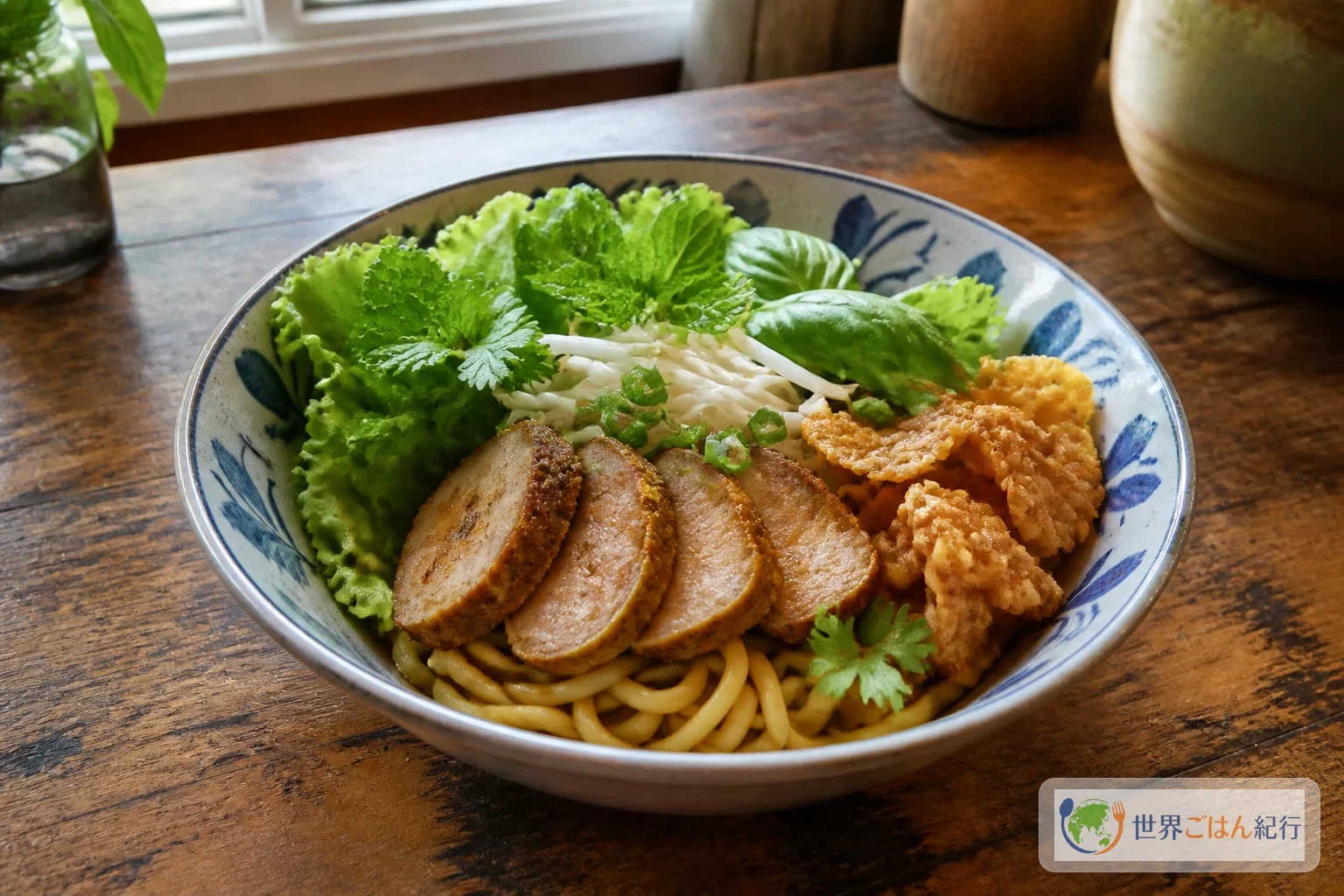
Spread the leaf lettuce in the bowls and add the warm noodles and bean sprouts. Arrange about 5–6 slices of pork per person and spoon over only 2–3 tablespoons of braising liquid. Top with herbs such as mint and cilantro, scallions and the fried wonton crisps, and serve with lime and chili sauce.
If liquid runs all the way around when you tilt the bowl, you've added too much. In that case move the noodles to another bowl and reduce the remaining liquid in a small pot for only 2–3 minutes. Lift noodles, pork, herbs and crisp pieces together with chopsticks and squeeze lime just before eating, and the sweet-and-salty braising liquid is followed by sourness and green fragrance.