Ingredients and steps on one page. Print it, or choose “Save as PDF” in the print dialog.
Sekai Gohan
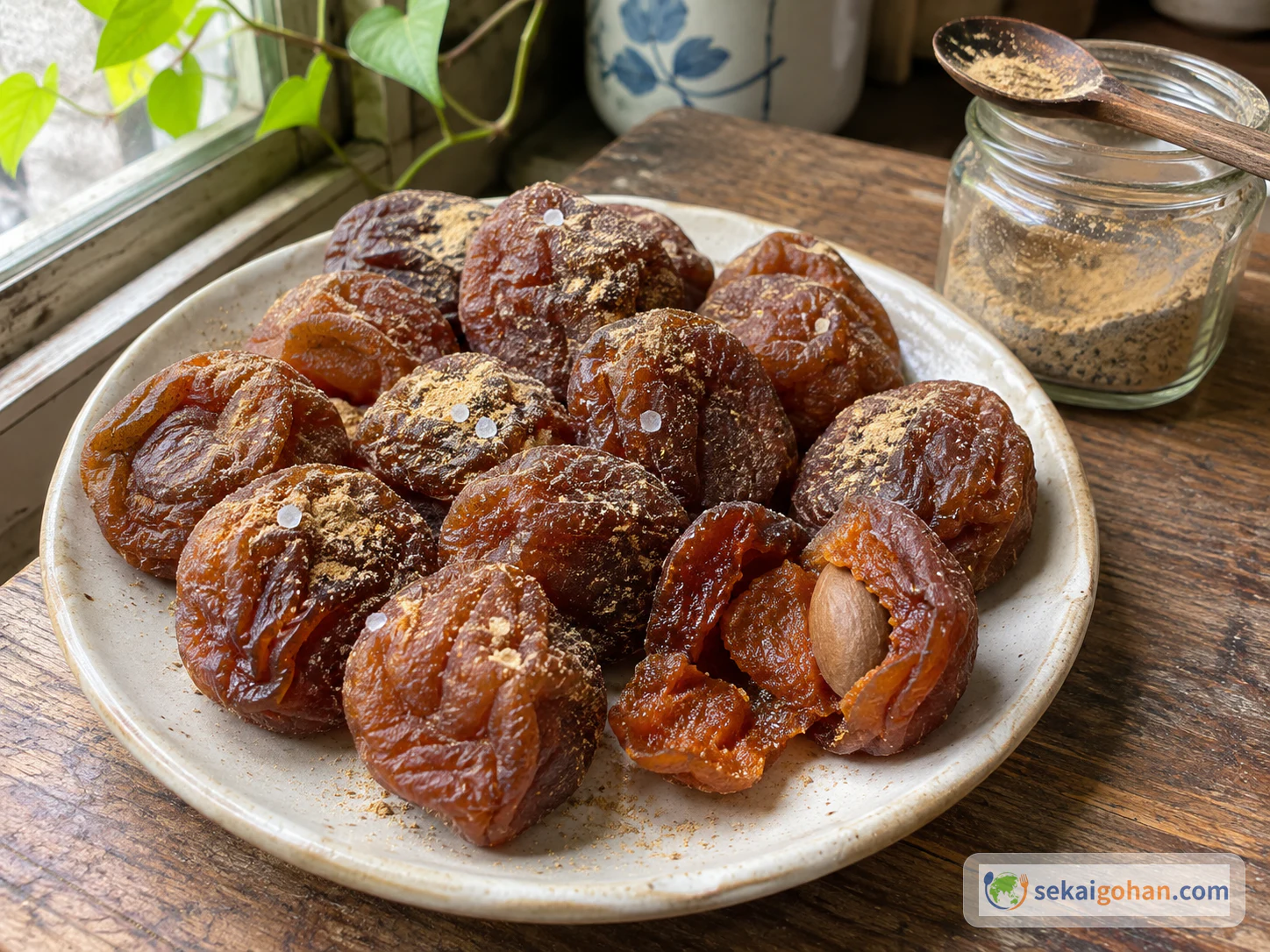
Ô Mai: Hanoi Preserved Ume with Ginger and Licorice
Ingredients
| Ingredient | Amount | Role |
|---|---|---|
| Green ume (mơ), firm and unripe | 2.2 lb (1 kg) | The sour body of the sweet; takes up brine and syrup |
| Salt, for the brine | 2½ oz (70 g) | Draws water out of the fruit |
| Water, for the brine | as needed, to cover the fruit | Dissolves the salt |
| White granulated sugar | 14 oz (400 g) | The syrup itself; gloss and keeping |
| Fresh ginger | 10½ oz (300 g) | Juice flavors the syrup; pulp coats the fruit at the end |
| Licorice root powder (cam thảo) | 1¾ oz (50 g) | Final dusting; sweetness and a long aftertaste |
| Salt, for finishing | a little | A salty edge on the surface |
Steps
1Wash and score the ume
Wash the ume under running water, then wipe each one completely dry. With a bamboo skewer or the tip of a thin knife, make shallow cuts all over the skin of every fruit. Cut just through the skin and keep the fruit whole and round. These slits let the brine and syrup in; without them, the skin dries hard and shrunken. Every fruit should show fine slits on all sides, with no cracks into the flesh.
2Brine in the refrigerator for 2 days
Wash the jar and let it dry completely; a wipe with food-grade ethanol helps. Dissolve 2½ oz (70 g) salt in water, put the ume in the jar and pour in enough brine to cover them. Cover the mouth with a lid or clean cloth and keep the jar in the refrigerator at 50°F (10°C) or below for 2 days. Never leave it at warm room temperature, because a long soak in warm weather ferments and grows mold. After 2 days the fruit has softened slightly and the brine looks faintly cloudy; foam, a sour smell or mold mean the batch goes in the trash and you start again.
3Rinse the fruit and split the ginger
Lift the ume out of the brine, rinse them in fresh water and set them in a colander over a bowl. Keep the liquid that drips into the bowl. Peel the ginger, grate it or blend it, and squeeze it through gauze or a fine sieve into juice and pulp. The juice goes into the syrup; the pulp waits for the end, so it adds flavor without adding water. You have a small bowlful of pale golden juice and pulp squeezed as dry as you can get it.
4Cook the syrup until sticky
Put the drained liquid from the bowl, the 14 oz (400 g) sugar and the ginger juice into the saucepan over low heat. If there is too little liquid to melt the sugar, add a splash of water, about 3½ tbsp (50 ml). Stir until the sugar has fully dissolved and keep the heat low so the syrup does not scorch. It is ready when a wooden spoon lifted out trails a slow, sticky ribbon.
5Coat the fruit, then add the ginger pulp
Add the ume to the syrup and shake the pan to roll them through it instead of stirring; hard stirring breaks the fruit. Keep shaking over low heat until the fruit turns translucent and a light honey amber. Then add the ginger pulp, stir for 1 to 2 minutes and turn off the heat. Longer cooking drives off the ginger aroma. Stop when the ginger is spread through the pan and almost no loose syrup is left.
6Dry at 195°F (90°C)
Spread the fruit on the lined tray so no pieces touch. Dry in the oven at 195°F (90°C) until dry, checking by touch. Low, slow heat keeps the fruit from going hard and leaves it chewy. An oven whose lowest setting is 212°F (100°C) cannot hold this condition and gives a different result. The fruit is done when the surface no longer sticks to your finger and the flesh still springs back slightly when pressed.
7Dust with salt and licorice
Put the dried fruit in a shallow bowl with a little salt and the 1¾ oz (50 g) licorice powder. Toss with dry hands, never damp ones, until every piece carries a thin coat. Shake off the excess powder back into the bowl. The surface should look matte and lightly dusted, dry to the touch and not sticky.