Ingredients and steps on one page. Print it, or choose “Save as PDF” in the print dialog.
Sekai Gohan
Xôi Đậu Phộng: Vietnamese Peanut Sticky Rice in the Rice Cooker
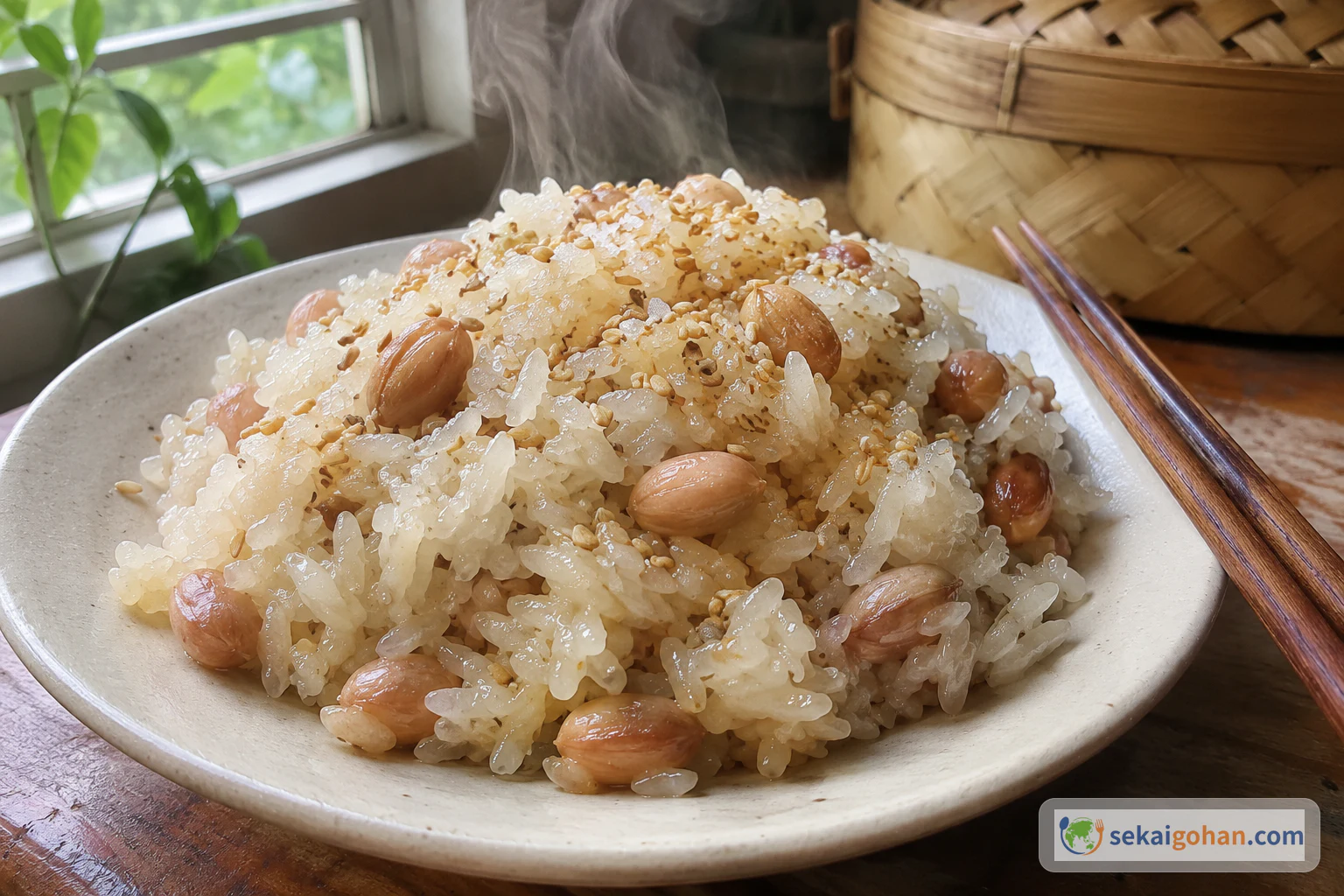
Ingredients
| Ingredient | Amount | Role |
|---|---|---|
| Glutinous rice (gạo nếp) | 1 lb 2 oz (500 g) | The body of the dish; chewy, sticky grains |
| Raw shelled peanuts (lạc / đậu phộng) | 7 oz (200 g) | Nutty flavor, a soft bite and richness |
| Salt (muối) | ½ tsp | Seasons the rice through to the center |
| Chicken fat (mỡ gà) or cooking oil | 1 tbsp | Coats the grains for gloss and a smooth mouthfeel; helps prevent sticking |
| Pandan leaves (lá dứa) | a few | Lines the pot; perfumes the rice and keeps the bottom from catching |
| Water | to just the surface of the rice | Cooking liquid |
Steps
1Wash and soak the rice
Put the glutinous rice in a large bowl and cover it with cold water. Swish the grains gently with loose fingers and pour off the cloudy water; scrubbing hard cracks them. Cover with fresh water and soak for 1 hour, then rinse under cold running water and tip into a colander to drain. Press a grain between two fingers: it should crush easily. If it still feels hard, return it to the water and soak longer.
2Boil the peanuts
While the rice soaks, rinse the peanuts and put them in a small saucepan with plenty of water. Bring to a boil and cook for 25 to 30 minutes; peanuts soaked overnight get there sooner. Bite one in half. When it is soft right to the center, drain the peanuts in a colander. If the middle is still firm, keep boiling and test again.
3Season the rice and peanuts
Put the drained rice and peanuts in a wide bowl. Add the salt and the chicken fat or oil. Turn everything together with a spatula, lifting from the bottom, so the fat spreads over every grain. Stop when the grains look lightly glossy but still separate, with the peanuts scattered evenly through the rice.
4Line the cooker with pandan
Lay a few pandan leaves flat across the bottom of the rice cooker's inner pot. If you have none, line the bottom with a sheet of aluminum foil. Tip the rice and peanut mixture on top and level it gently with the paddle. The base is ready when the leaves are covered and the surface lies flat.
5Add water to the surface of the rice
Pour water slowly down the side of the pot so the rice is not disturbed. Stop as soon as the water reaches the surface of the rice. Judge it by eye; there is no cup measure for this step. You should see the grains through a thin film of water, with no deep pool above them.
6Cook once, then turn the rice
Close the lid and run the cooker on its normal cook setting. When it switches to keep-warm, open the lid, keeping your face clear of the steam. Turn the rice gently from the bottom with the paddle, bringing the lower layer up to the top. The rice will look uneven, drier and firmer on top, softer near the leaves. Stop once top and bottom are evenly mixed and close the lid quickly.
7Cook a second time and rest
Start a second cook cycle. When the cooker switches to keep-warm again, leave the lid closed for about 15 minutes. Cooking times differ from one machine to the next, so judge by the rice. Open the lid and loosen it with the paddle. It is done when the grains are glossy and translucent, a scoop lifts as one sticky clump, and the peanuts are whole and soft.
8Plate and season at the table
Scoop the rice onto plates while it is still hot, leaving the pandan leaves behind in the pot. Sprinkle sesame salt over each portion. Add slices of pork roll or a spoonful of pork floss alongside if you like. Serve while steam still rises from the plate.