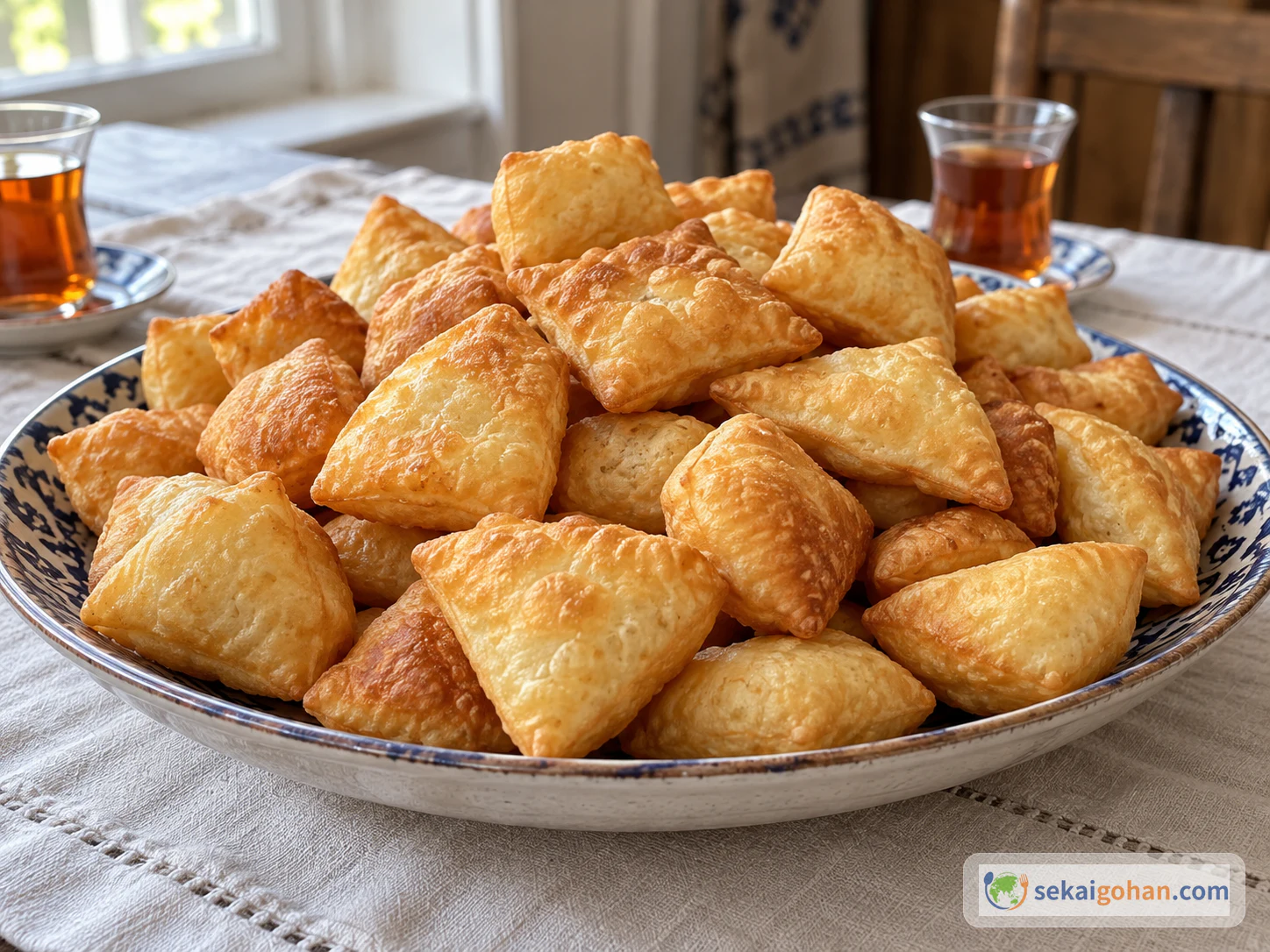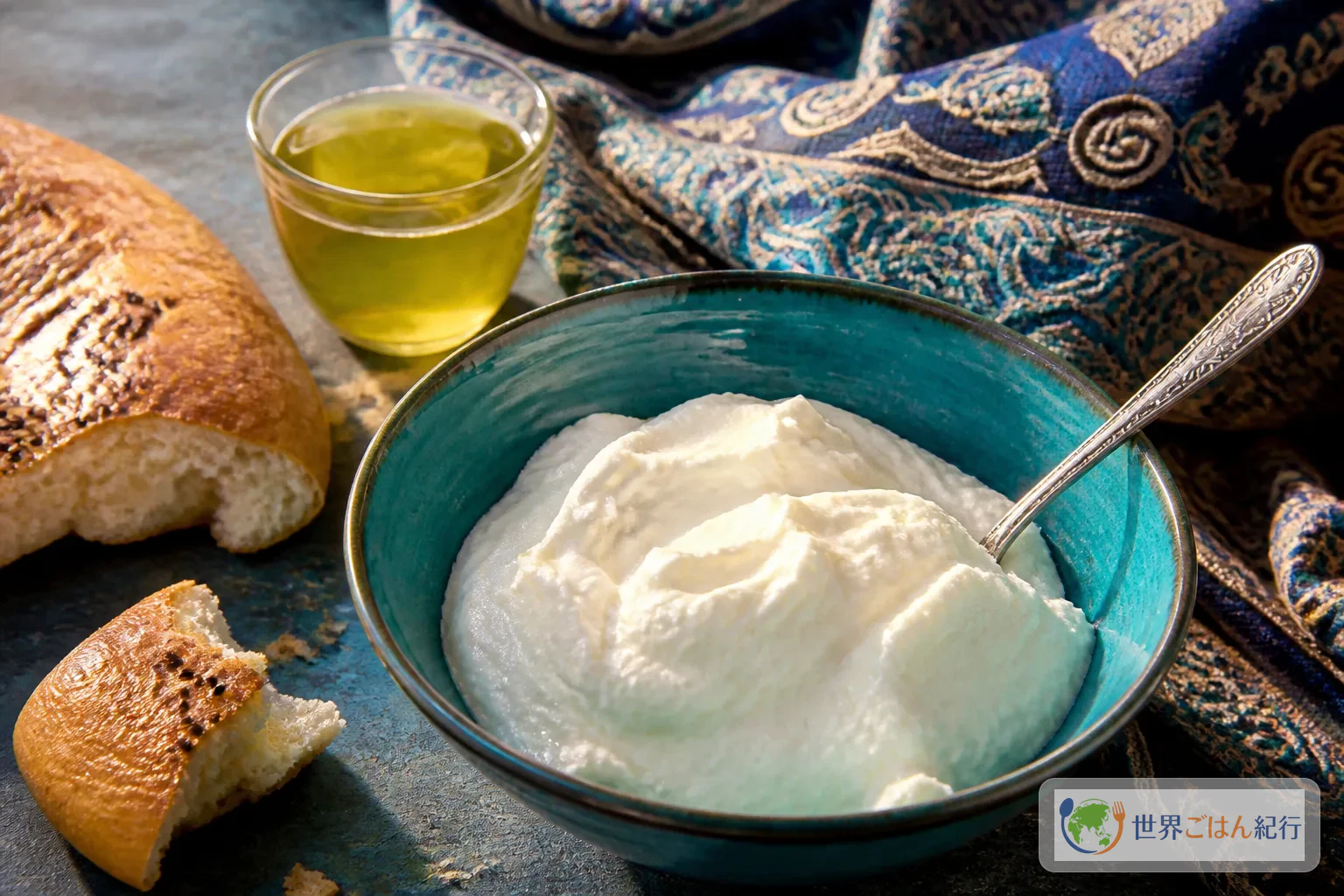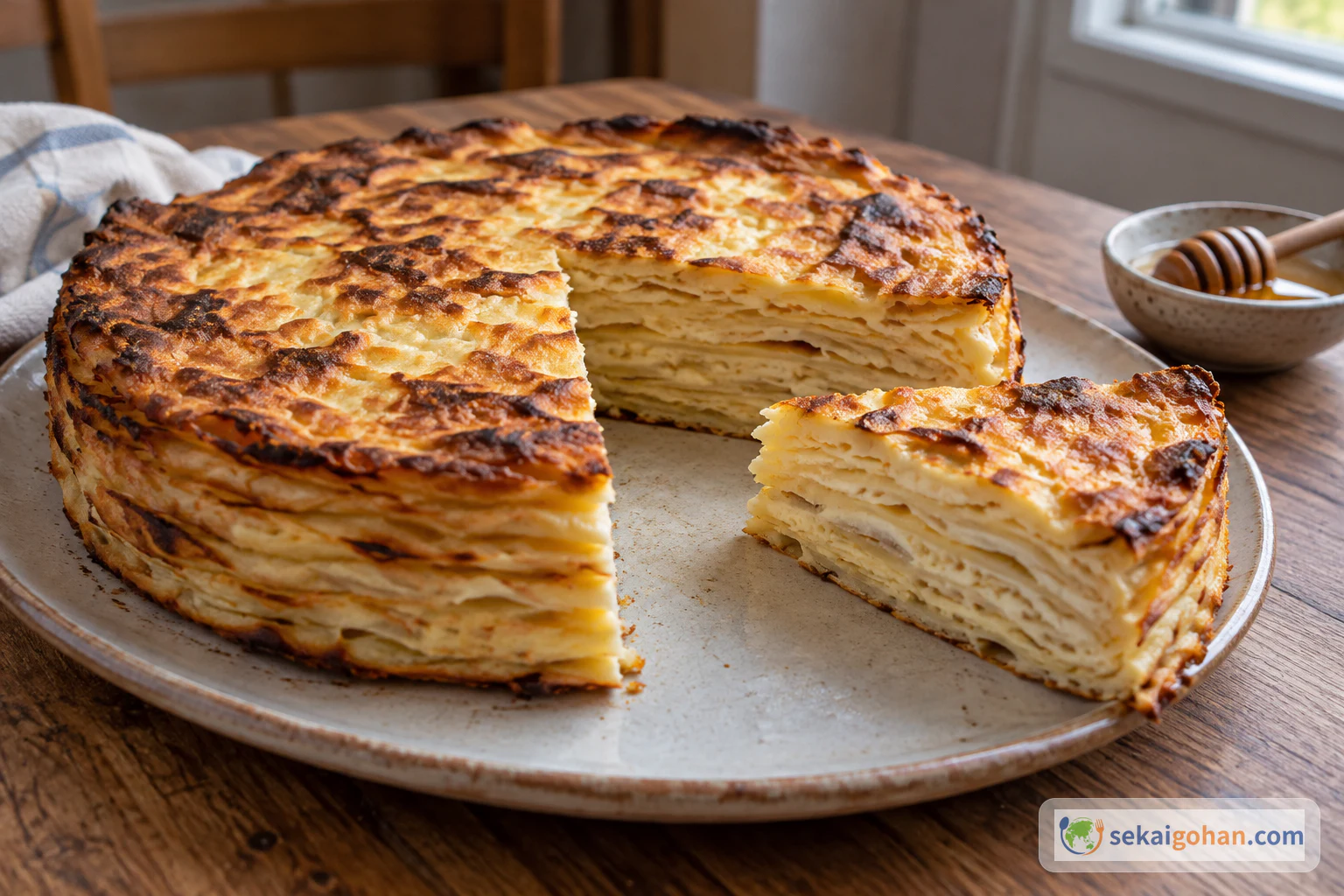
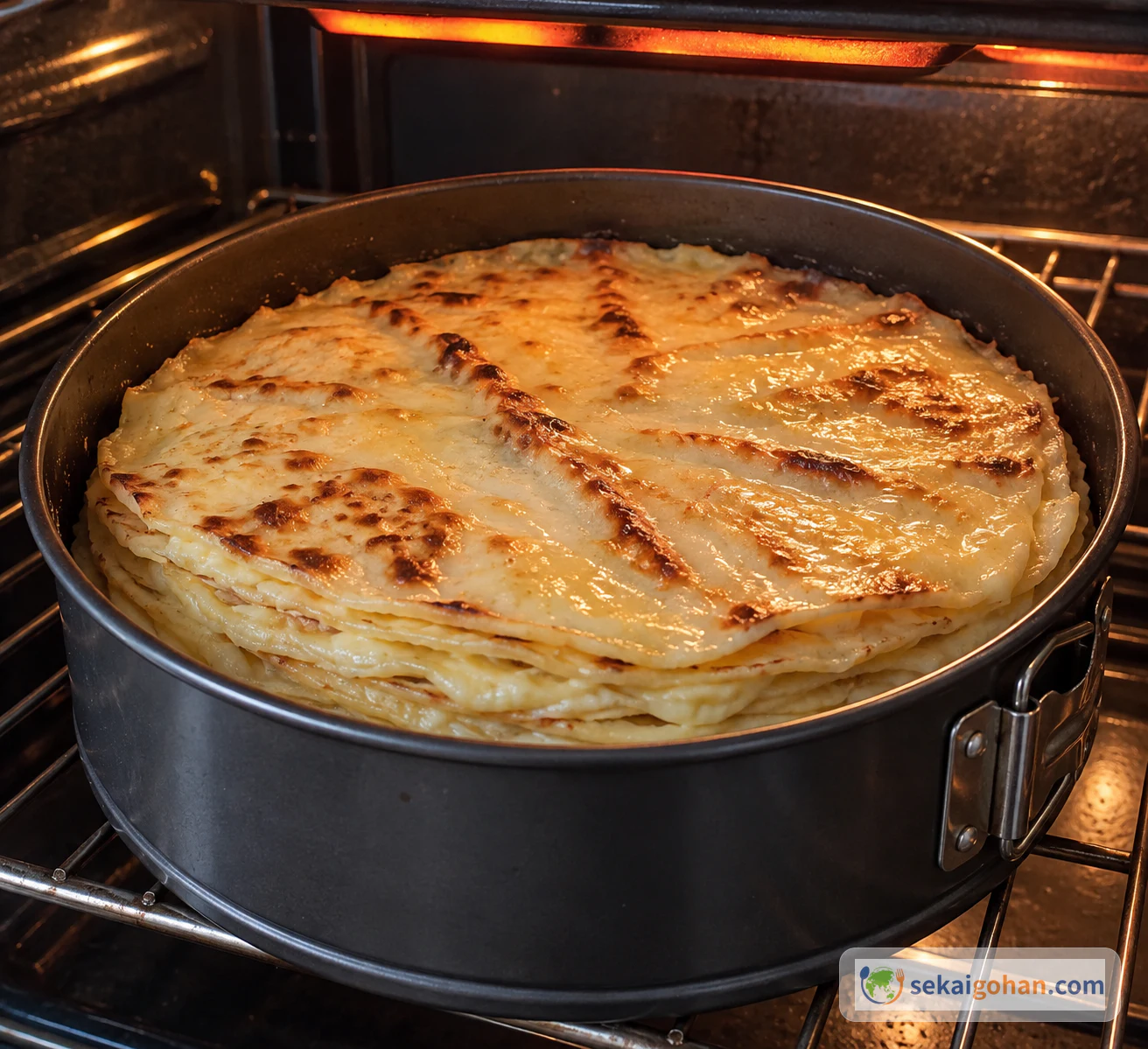
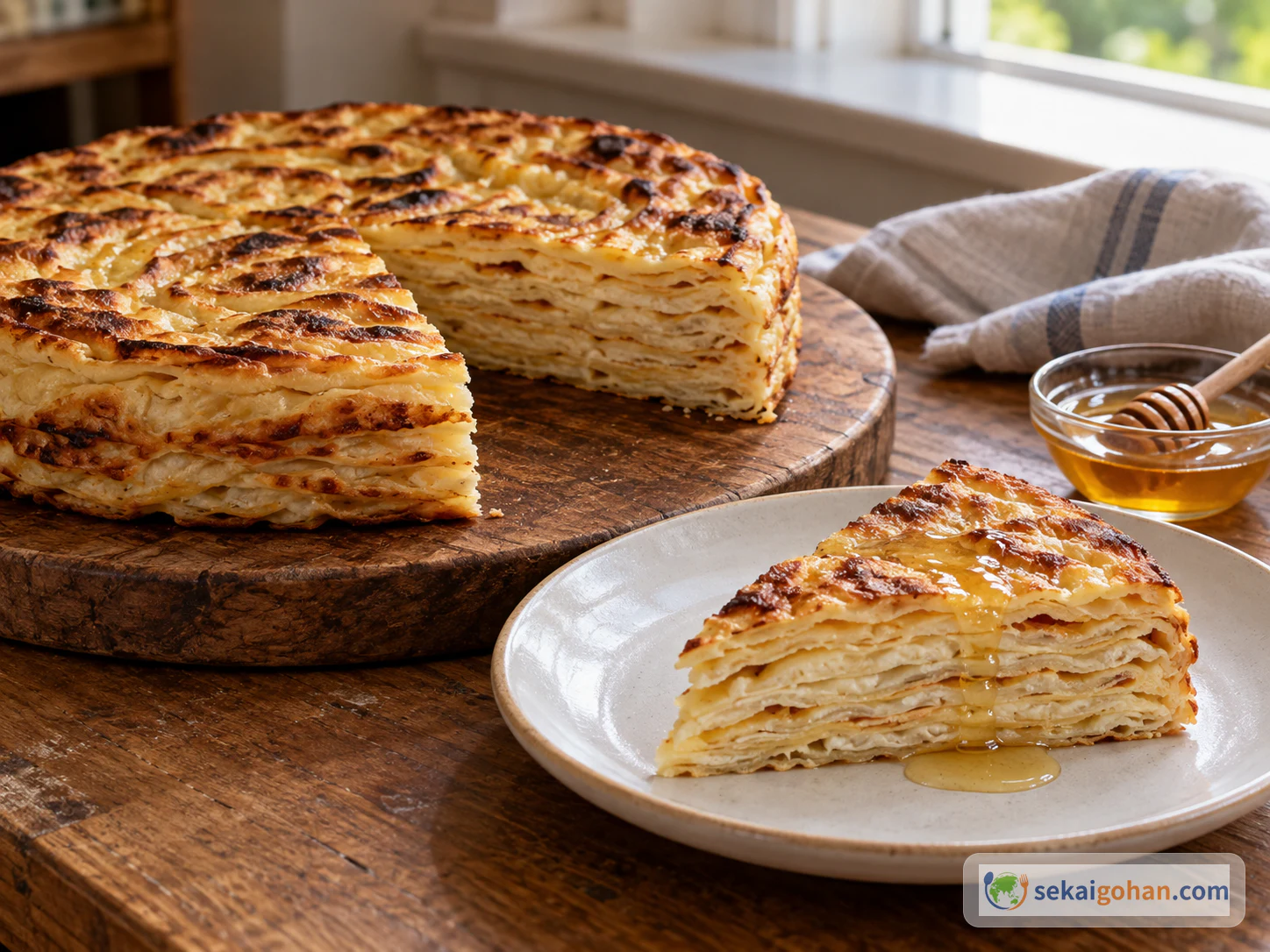
Flija goes together one thin layer at a time. A pale batter is spread in a round pan, heat from above sets it and browns it, and a little cream goes over the top before the next layer goes on. You repeat that until the batter and cream run out, and the finished cake shows its stripes when you cut it. It's a dish of northeastern Albania and Kosovo, rich with butter and tangy dairy, and it rewards patience at every layer far more than speed.
Flija in Albania and Kosovo
Flija is a bake of pancake-thin layers stacked with cream or fat between them. It belongs to the northeast of Albania, in the Kukës district and the areas around it, and it's made in villages and towns alike. It's also a specialty of Kosovo's south economic region, and the dish is closely tied to Kosovo and to a long preparation shared among several people. For more of the country's cooking, see our Albania page.
Flija is made for holidays, including Eid, Summer Day (March 14) and Midwinter Day (January 28), as well as for family celebrations, gatherings of remembrance and to honor friends. It takes 2–3 hours to make. People call it "the pride of mountain cuisine," and it turns up wherever there's hospitality to offer: family reunions, holidays, Sundays in the mountains and community cultural events.
The dish is written Fli, Flia or Flija. All three refer to the same layered bake. It is not the same as tavë kosi, a different Albanian dish of meat and rice baked with a yogurt-egg mixture.
The Saç and the Home Broiler
In the mountain villages, the heat comes from a saçi (also called a sach), a metal dome covered in embers, set over a sanxhak, a low tripod. The embers bake each layer from above, one after another, and baking with a peka improves the result.
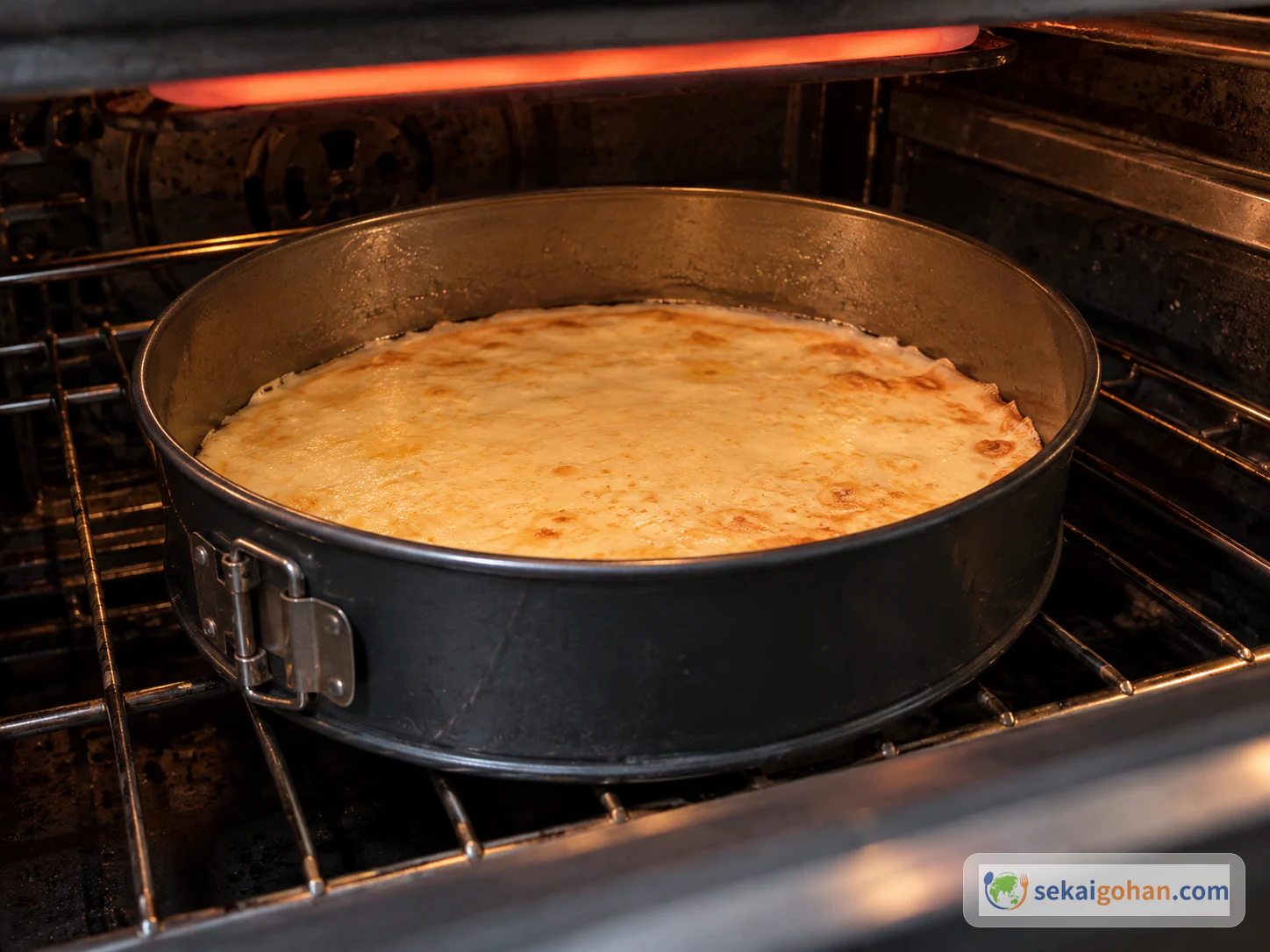
At home, an oven broiler does the same job. It heats from above, so each new layer can set and brown right in the pan. This version is made in a 10-inch (about 25 cm) springform pan with an egg-and-milk batter and a layer of sour cream, plain kefir and melted butter. It makes one cake; cut it to suit your table.
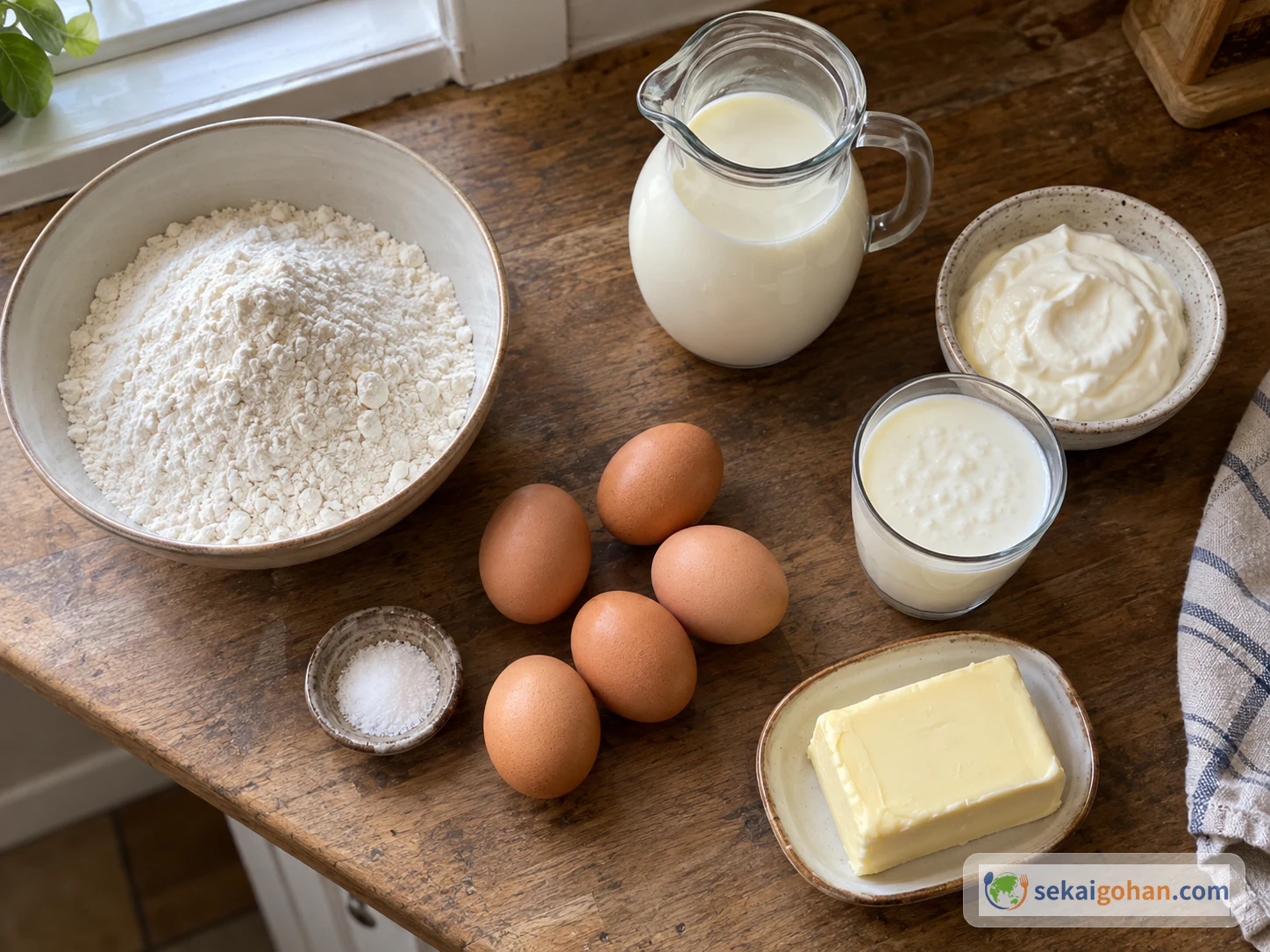
Ingredients for One 10-Inch Flija
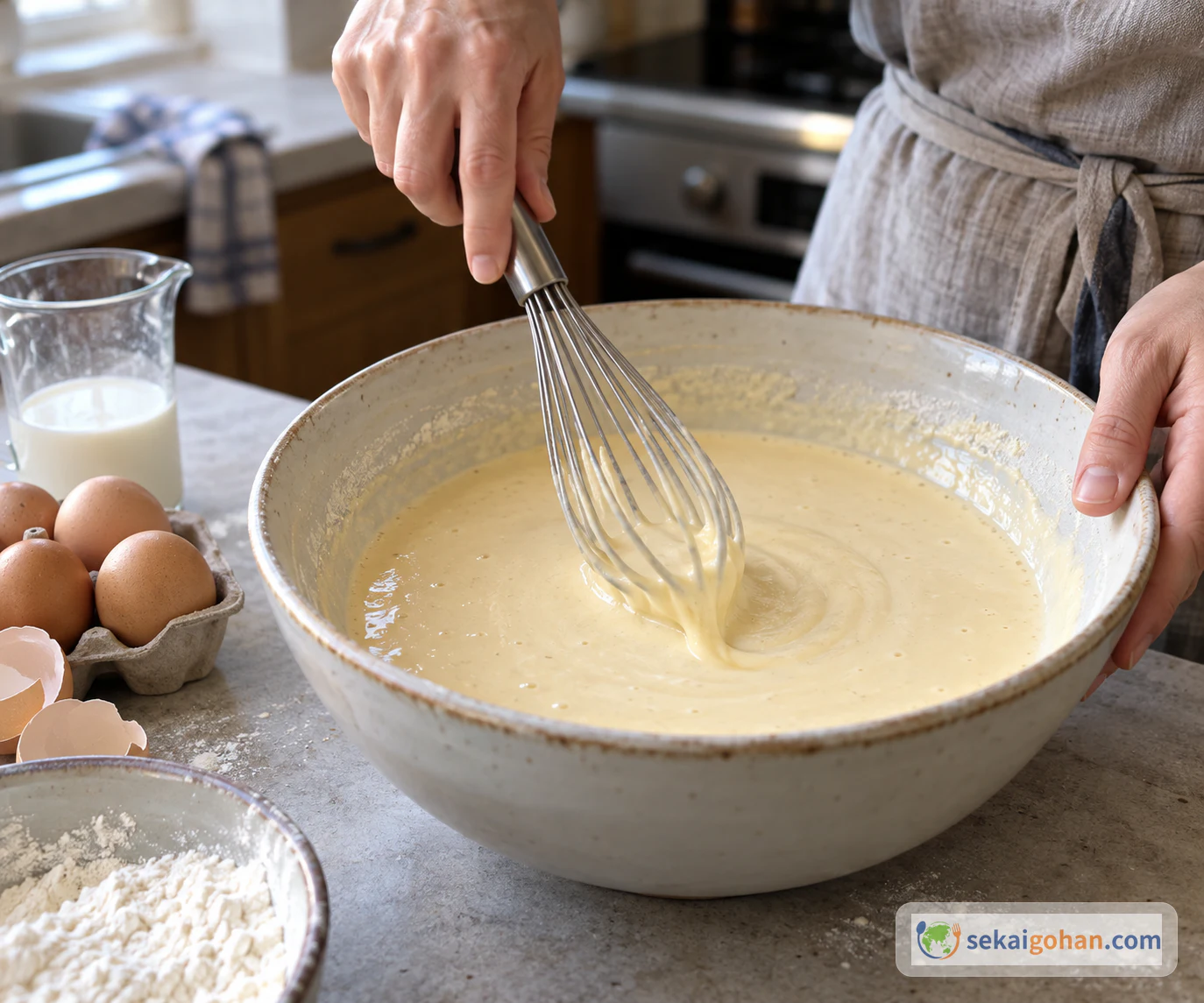
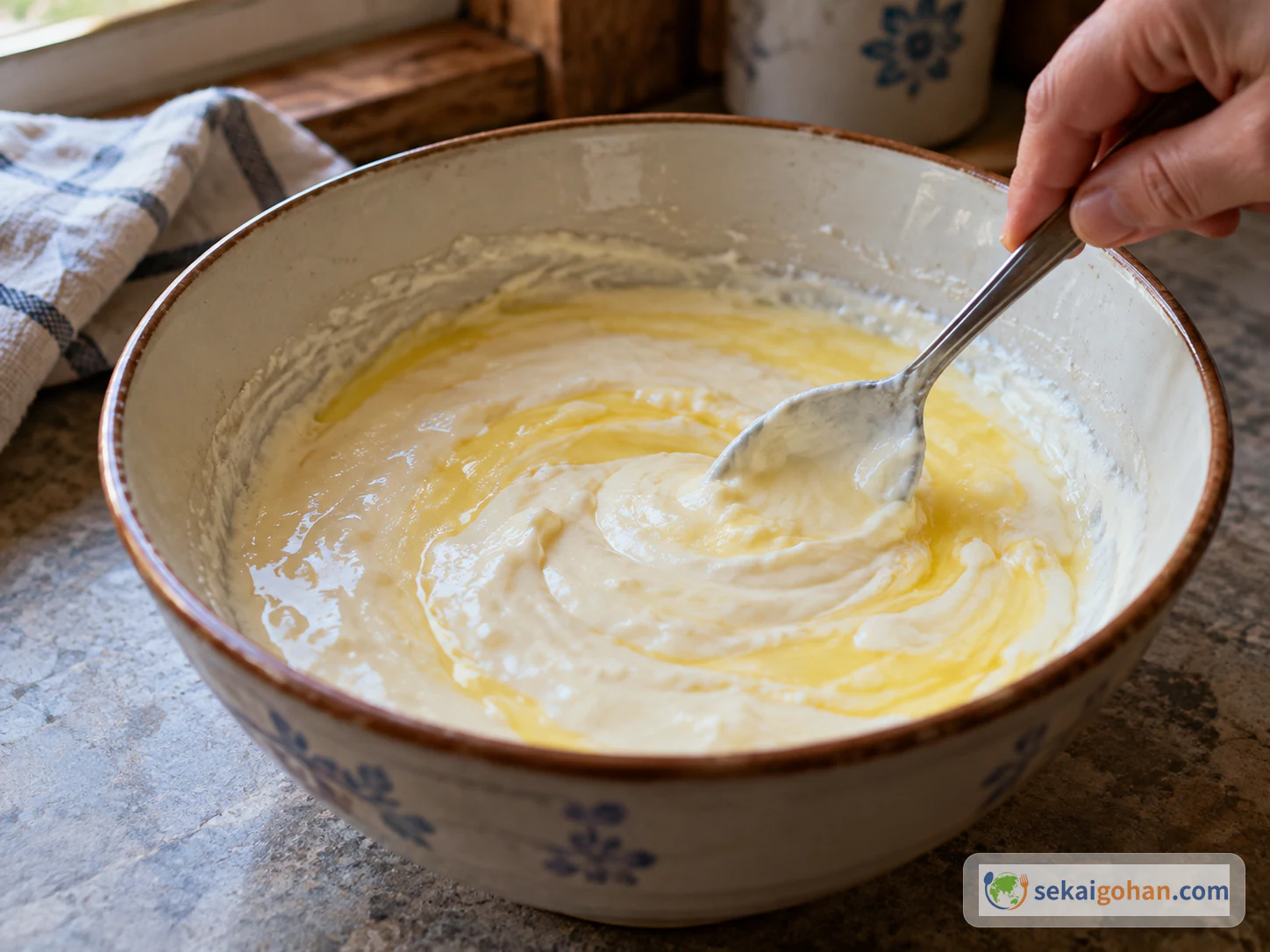
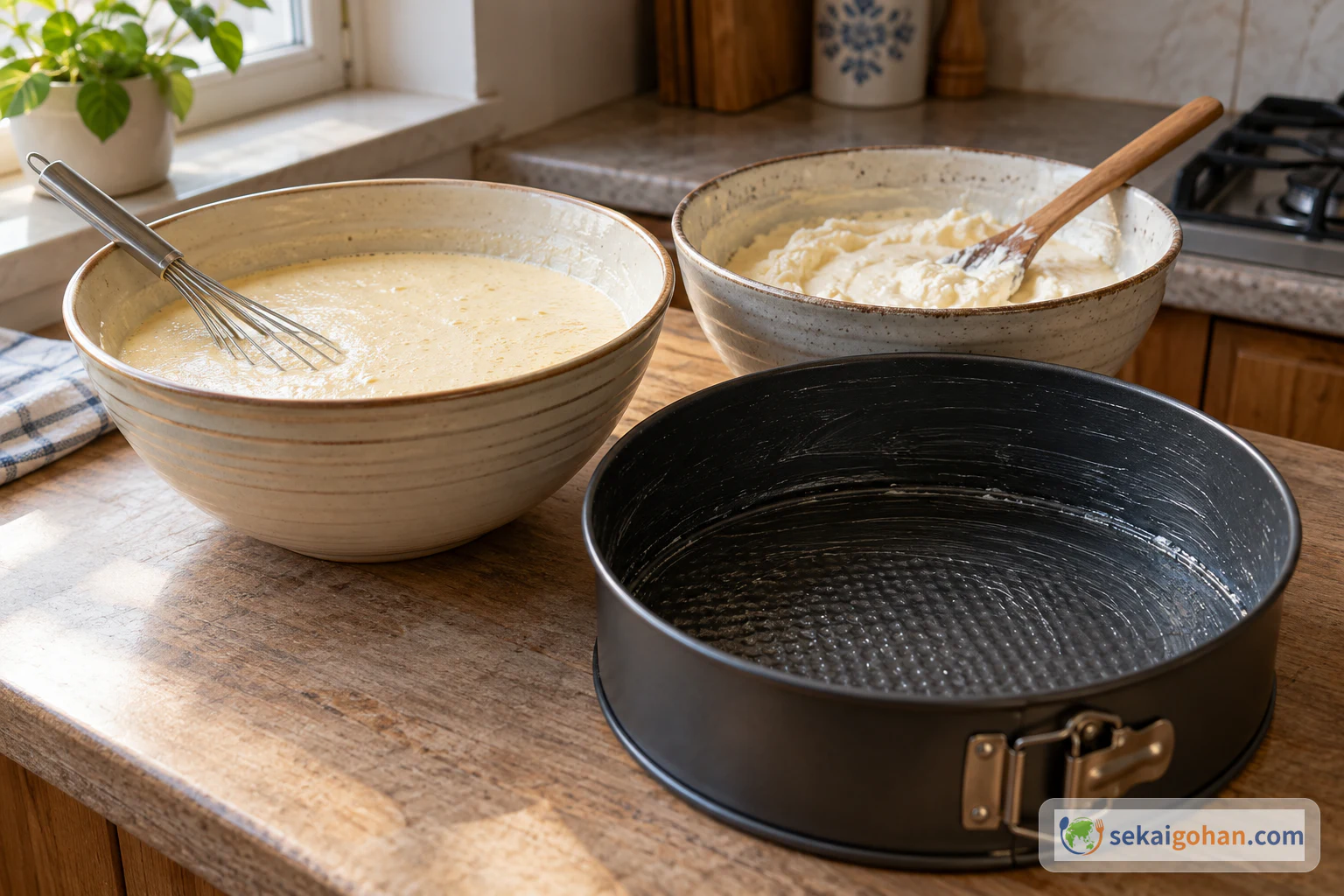
The batter and the dairy layer are mixed in separate bowls and rested before baking.
This recipe contains wheat (gluten), eggs and milk. If you are cooking for someone with allergies, also watch for cross-contact with these ingredients during preparation.
Choosing Ingredients for Flija
Kefir. Use plain, unsweetened kefir. Plain yogurt can stand in if you can't find it, but expect a different tang and thickness, so treat the result as a variation.
Milk. The range is there because flours absorb liquid differently. Add milk until the batter reaches the right consistency rather than to use up a fixed amount.
Honey or jam. These are optional and go on the table, not into the layers.
Equipment
- 10-inch (about 25 cm) springform pan. Check the manufacturer's label to confirm it can go under a broiler.
- Oven with a broiler
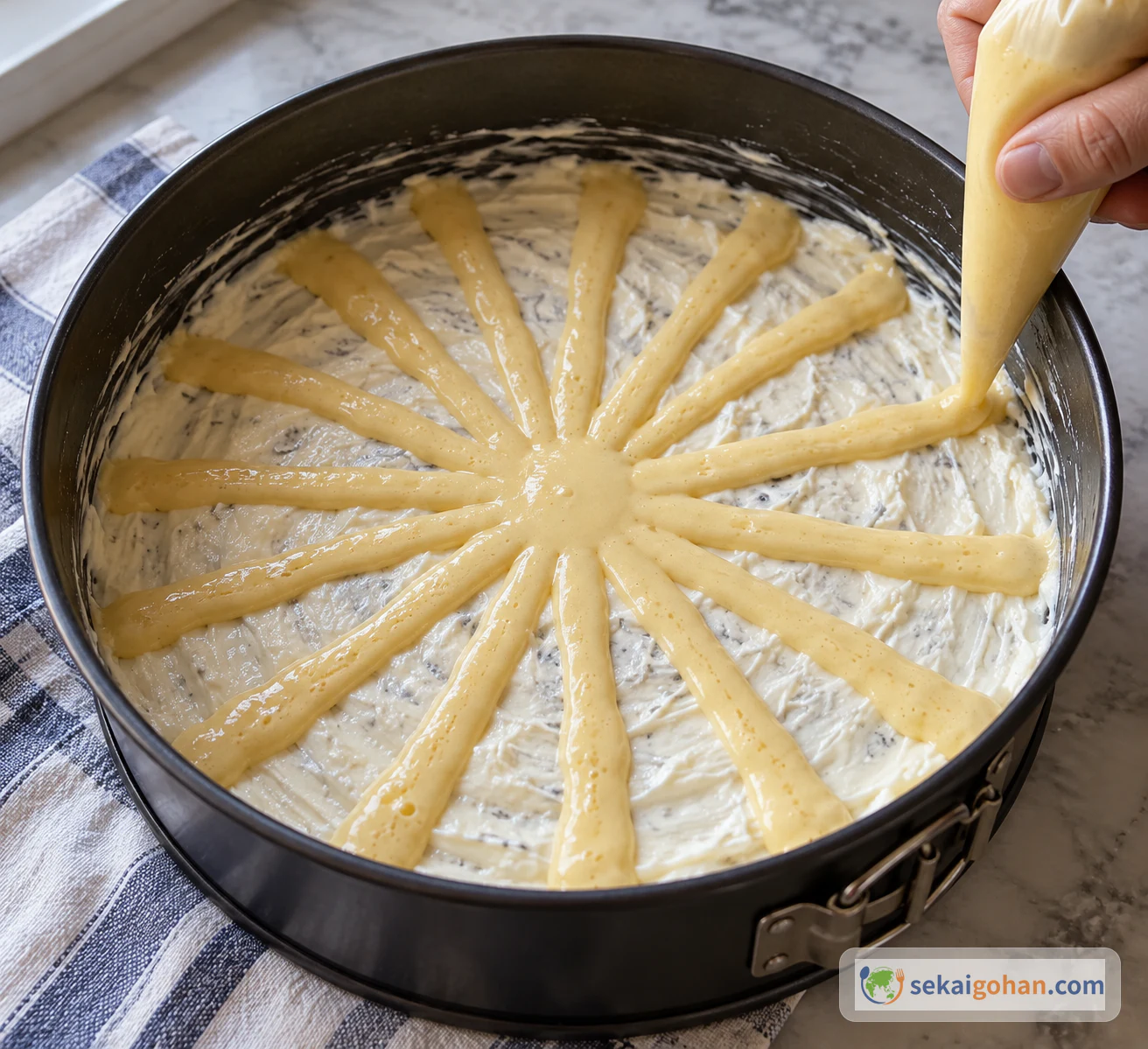
- Piping bag or squeeze bottle for the batter
- Two large mixing bowls
- Whisk
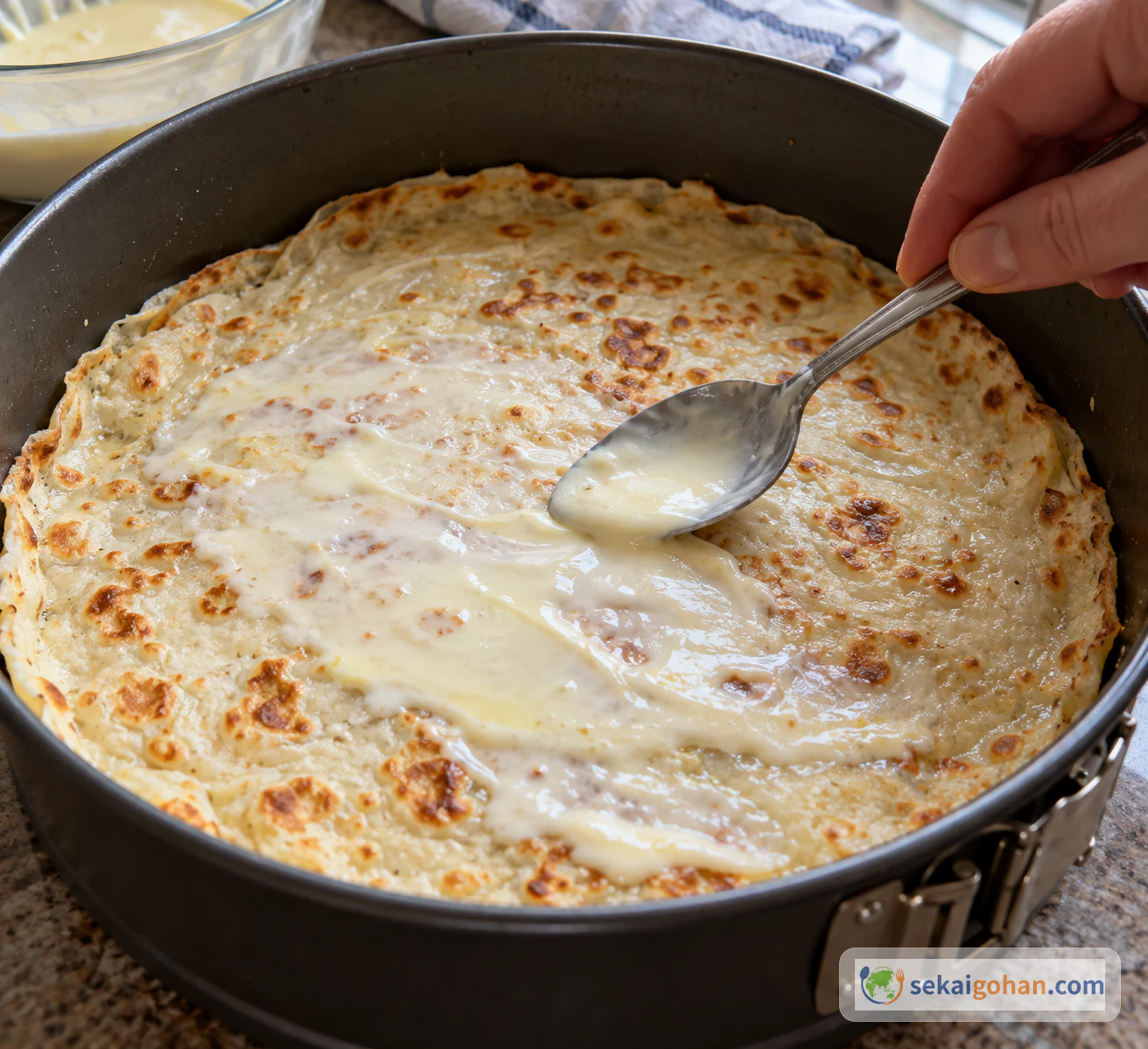
- Spoon for spreading the dairy layer
Method: Building the Layers Under the Broiler
Each layer is ready when it is set and lightly browned. The first layer gives you a time to start from. After that, check every layer by eye.
Troubleshooting Flija Layers
Every layer should be thin, set and browned before the next one goes on, with only a light coat of cream between them. Most problems come from batter thickness or from rushing a layer out from under the broiler.
| Problem | Likely cause | What to do |
|---|---|---|
| The batter won't pour or pipe smoothly | Not enough milk for your flour | Add the remaining milk a little at a time until it sits between crepe and pancake batter |
| The batter spreads too thin and runs | Too much milk went in at once | Next time, start at 3 1/4 cups and add the rest gradually after resting |
| A layer is pale or soft in the middle | Taken out from under the broiler too soon | Return it until it is set and the surface has browned before adding the next layer |
| The top scorches | Broilers vary in strength | Watch every layer instead of repeating the first layer's 2–4 minutes, and pull it out as soon as it browns |
| Gaps open up between the rays | Lines piped far apart | Fill the spaces with the dairy mixture before the next round of batter |
Serving, Variations and Allergy Notes
Flija is meant to be cut and eaten warm. Serve it with cream, sour cream or fresh butter, or with honey or jam on the side. In south Kosovo, kaymak, cheese, yogurt or honey go on the table.
The bake is long, so it helps to share the work, the way it's traditionally done. One person pipes the batter while the other spreads the cream, and the rhythm keeps moving.
Recipes vary from family to family. Two other versions are worth knowing:
| Variation | What changes |
|---|---|
| Water-flour-salt batter | A flour, warm water and salt batter alternates with a mixture of eggs, fat and milk. It is a separate formula, not an adjustment to this one |
| Strained-yogurt version | A family recipe uses flour, salt, water, strained yogurt and butter or olive oil. Build at least 12 layers and let it rest 15 minutes after baking |
This recipe contains wheat (gluten), eggs and milk.
Frequently Asked Questions
Do I need a special pan for flija?
Traditionally, flija is baked under a saç, a metal dome heated with embers and set over a low tripod. At home, a broiler and a 10-inch springform pan work well. Check that your pan is labeled safe for use under a broiler.
Can I make it without eggs?
Not by simply leaving them out. The water-flour-salt version is a different formula, and it still alternates with a separate mixture that contains eggs.
Why is the cream layer spread so thin?
Each new layer of batter has to set and brown under the broiler. A thin coat of the dairy mixture lets the next layer cook through, and the next round of cream fills the gaps between the batter rays.