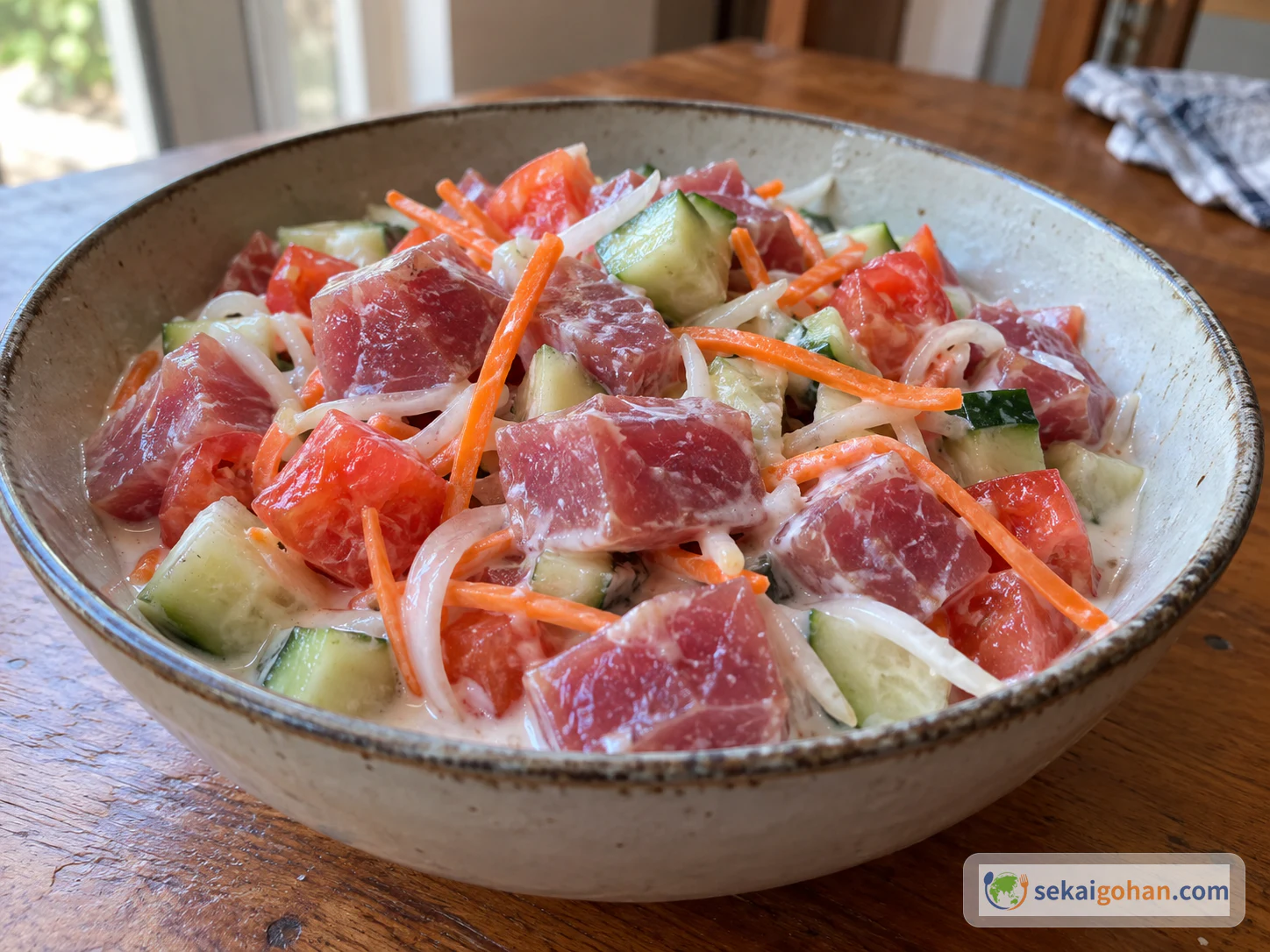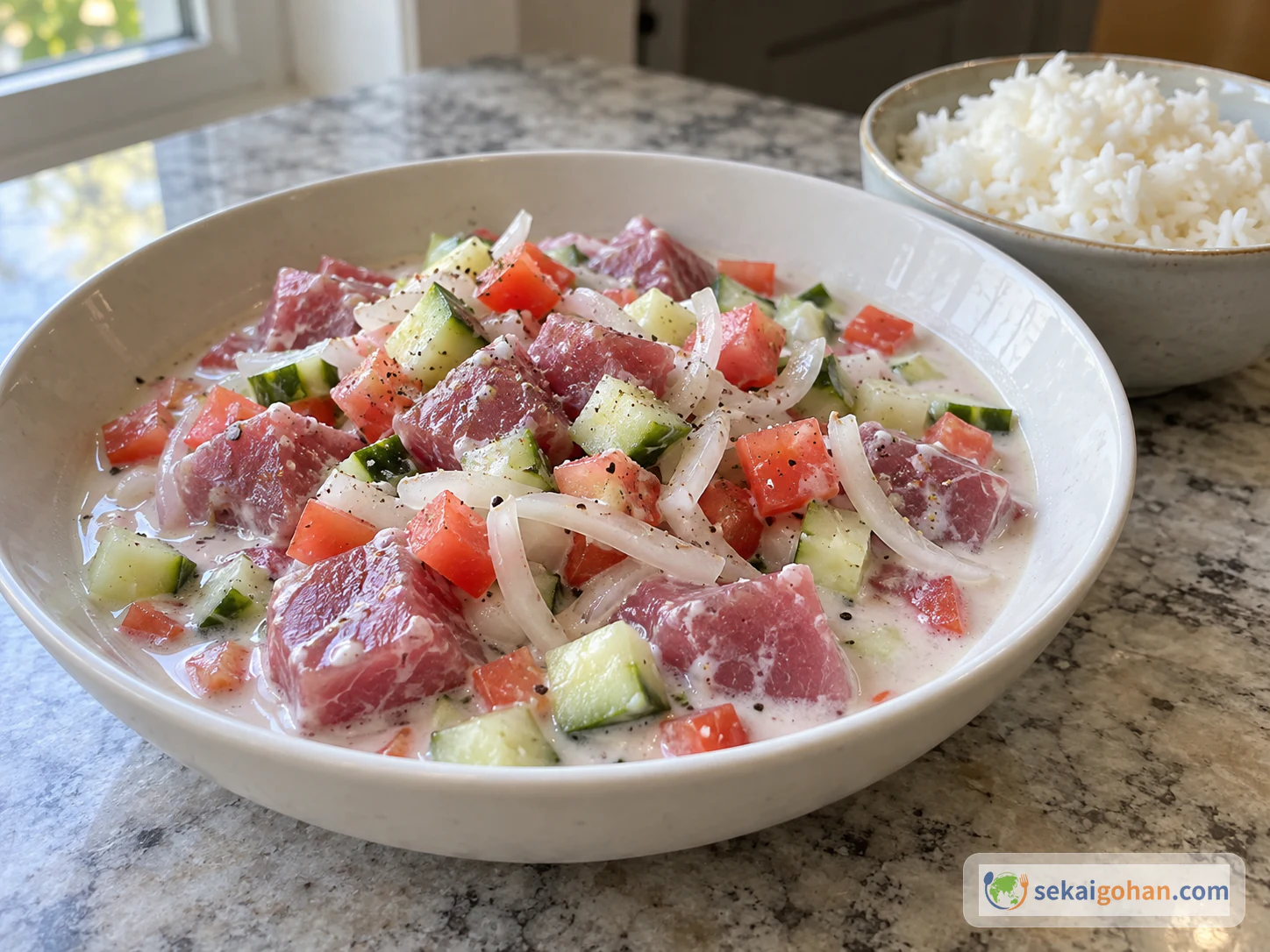
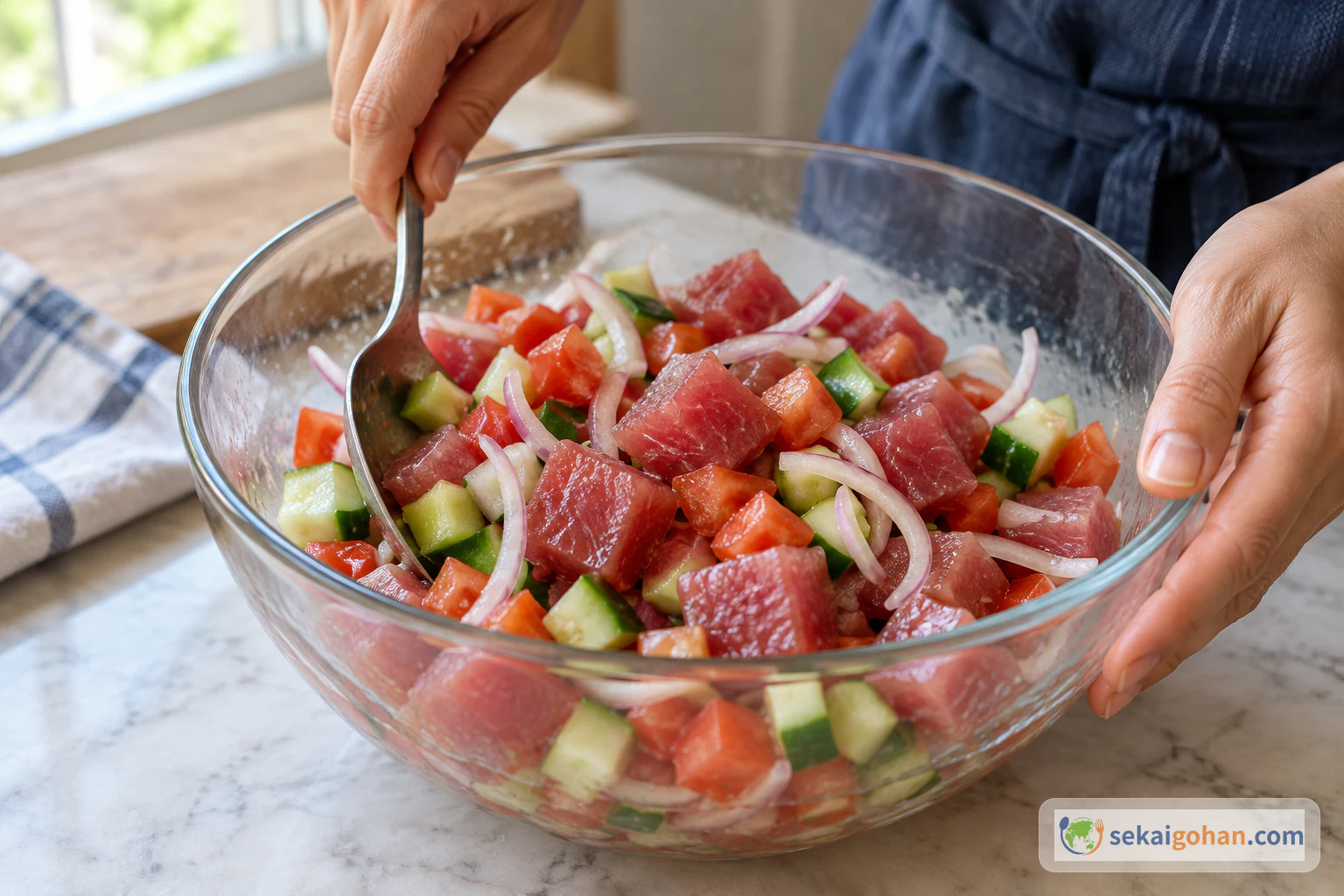
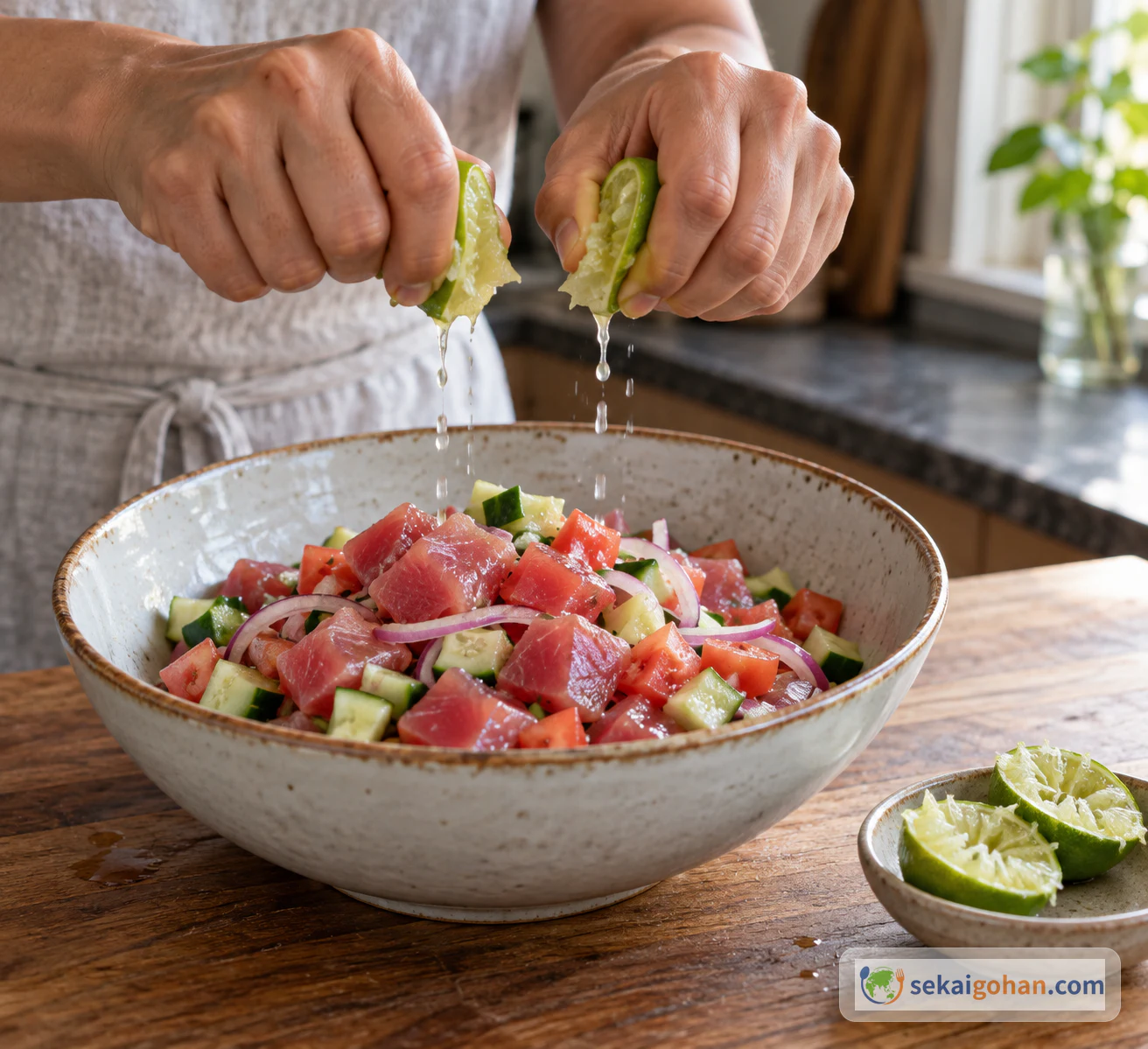
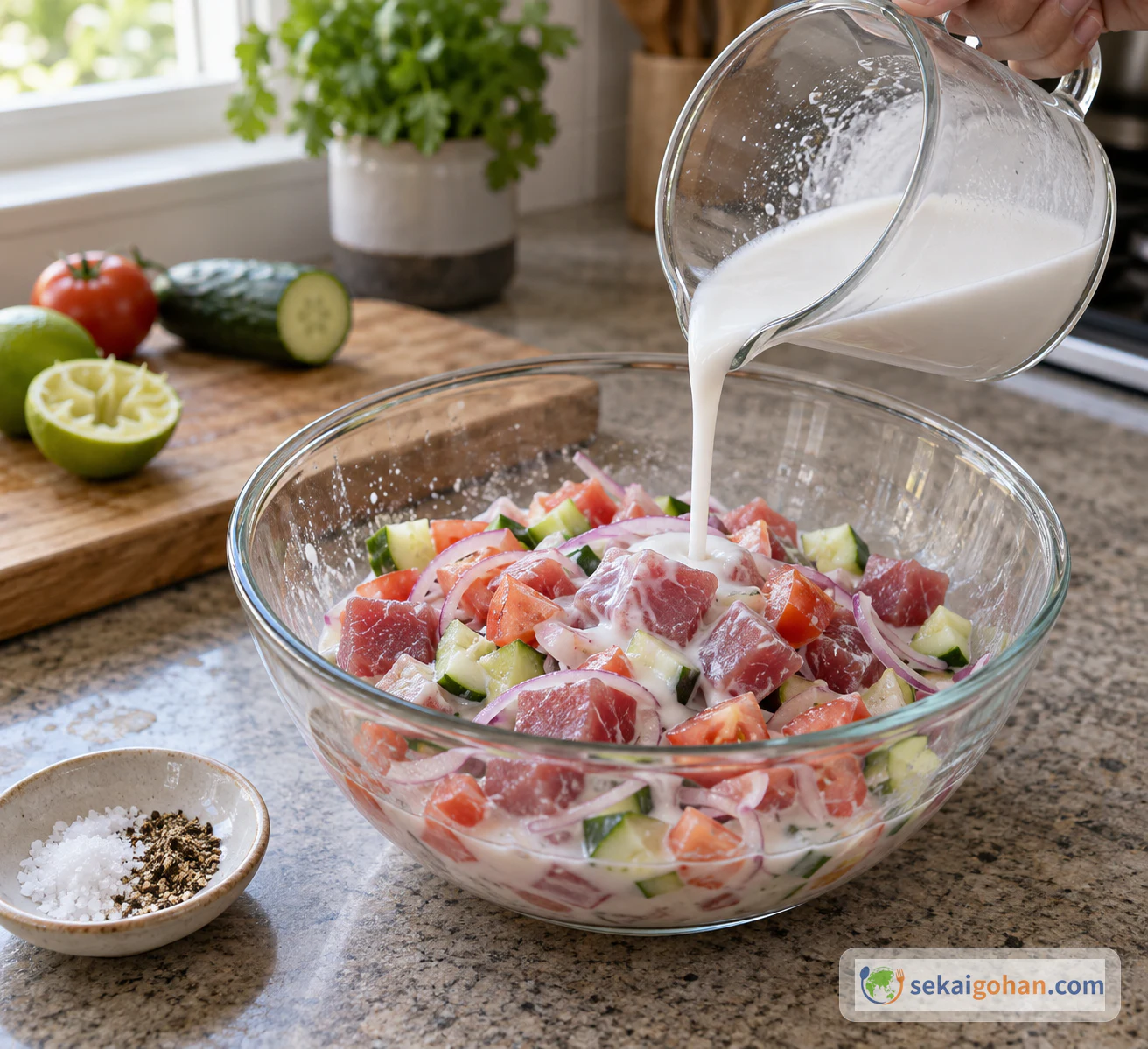
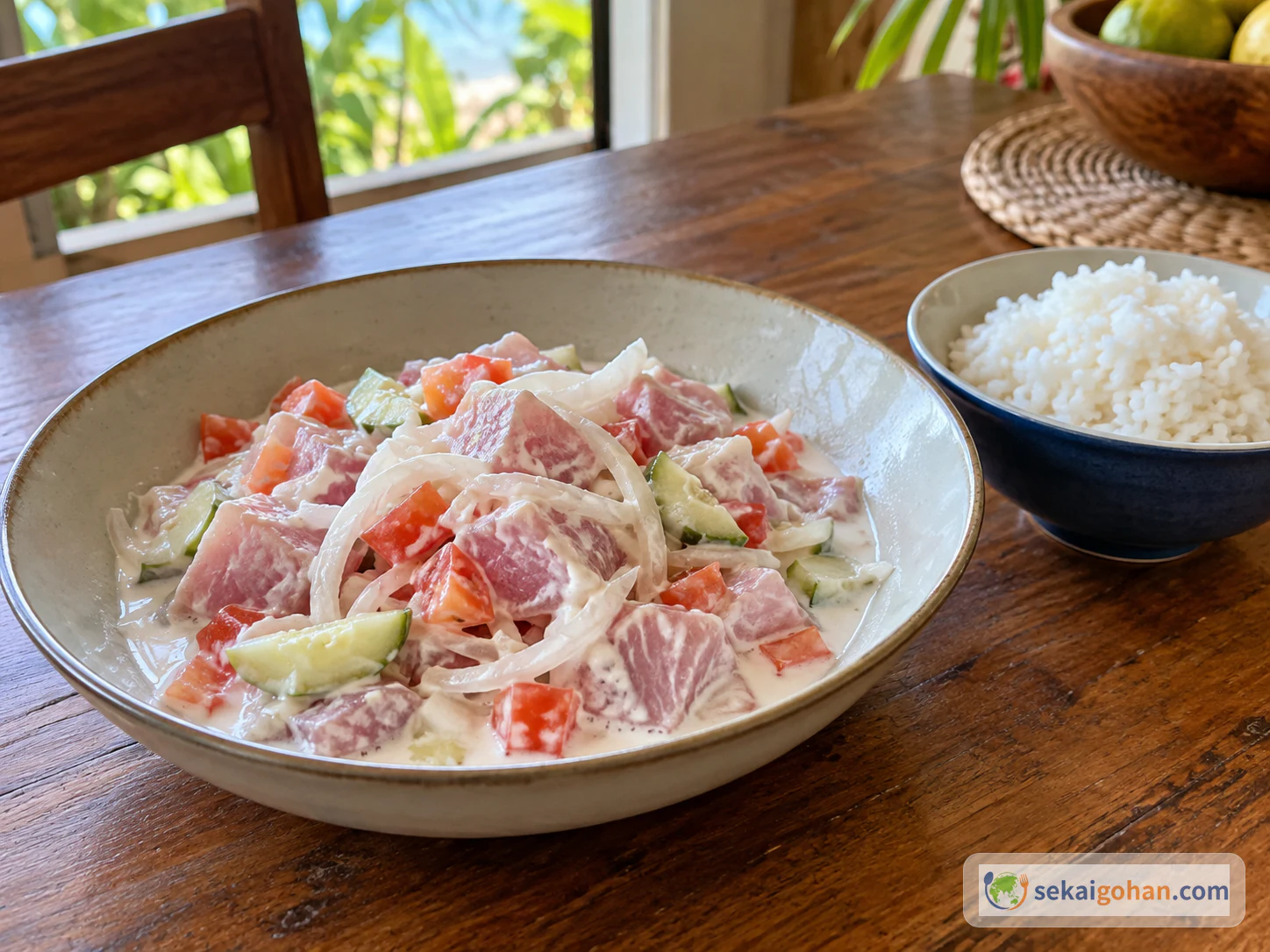
Cold red tuna, sharp lime and round, mellow coconut milk, tossed with tomato, cucumber and onion: that's the whole bowl, and it's hard to stop eating. Poisson cru comes from French Polynesia, where people eat it at lunch, at dinner and sometimes before breakfast. The lime brightens the fish, and the coconut milk softens it and pulls the flavors together. It's quick to make, but it all depends on the fish, so start there.
Poisson Cru in French Polynesia
The full name, poisson cru au lait de coco, means raw fish with coconut milk. In Tahitian it's i'a ota ha'ari. The coconut milk works as a dressing here, not as a liquid for cooking the fish. Fiji's kokoda is a close Pacific relative, but it's a separate dish from a different place.
Poisson cru shows up all over the islands. Restaurants serve it as a light meal, a starter or a main dish. At a tama'ara'a, or feast, it comes out before the dishes from the ahima'a, and you'll also find it at Sunday ma'a Tahiti meals and at roulottes, the food trucks where locals and visitors eat side by side. For more from these islands, visit our French Polynesia page.
Make one decision before you pick up a knife: can you get fish that's suitable for eating raw, and should everyone at your table eat it that way?
Ingredients: Serves 6
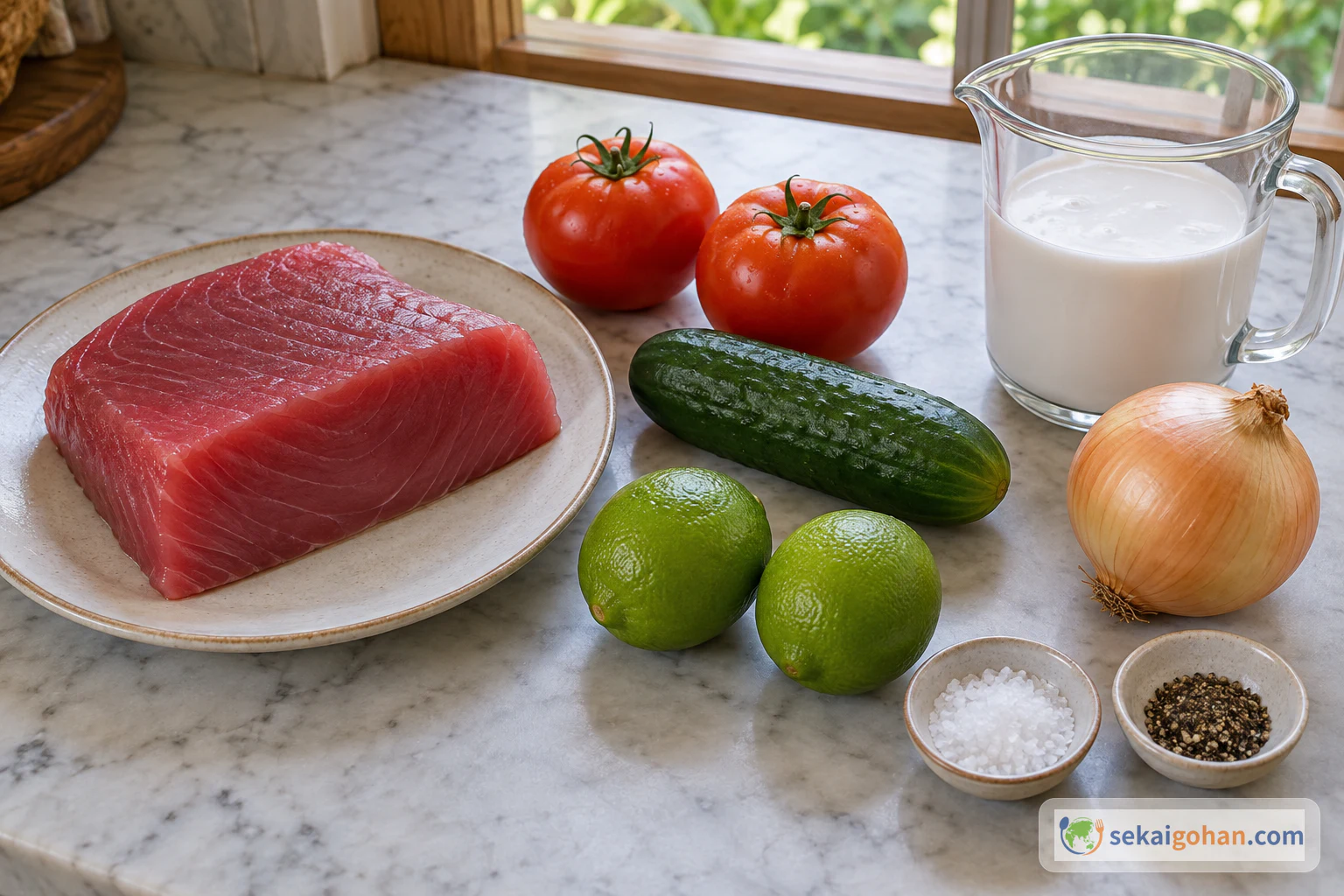
Use only red tuna labeled "for raw eating" or "sashimi" that the seller also confirms is meant to be eaten raw. Do not use fish sold for cooking, or offcuts of unclear purpose. This dish contains fish and coconut, so check the labels if anyone at the table has an allergy.
Equipment
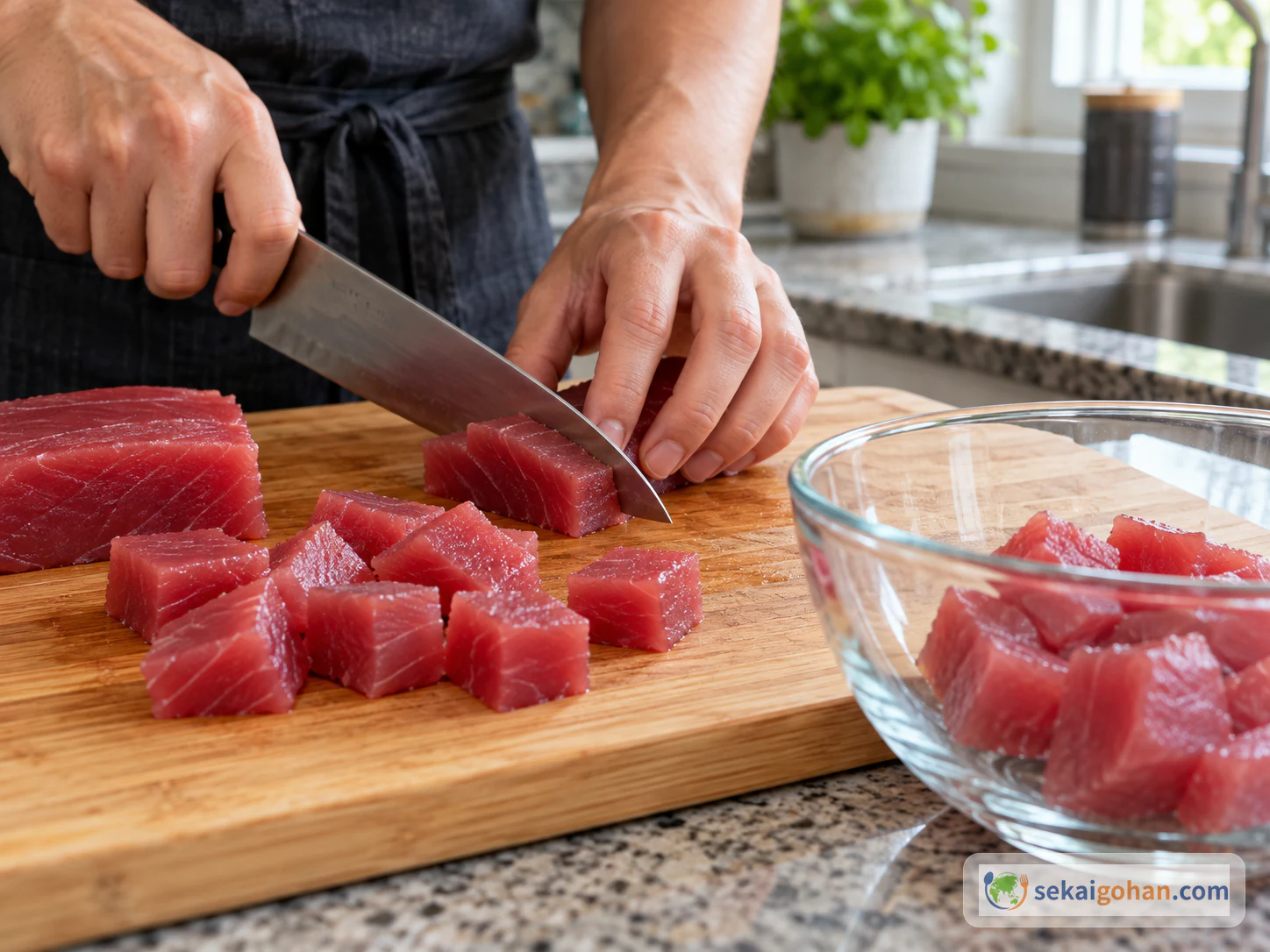
- Cutting board and knife used only for the raw fish
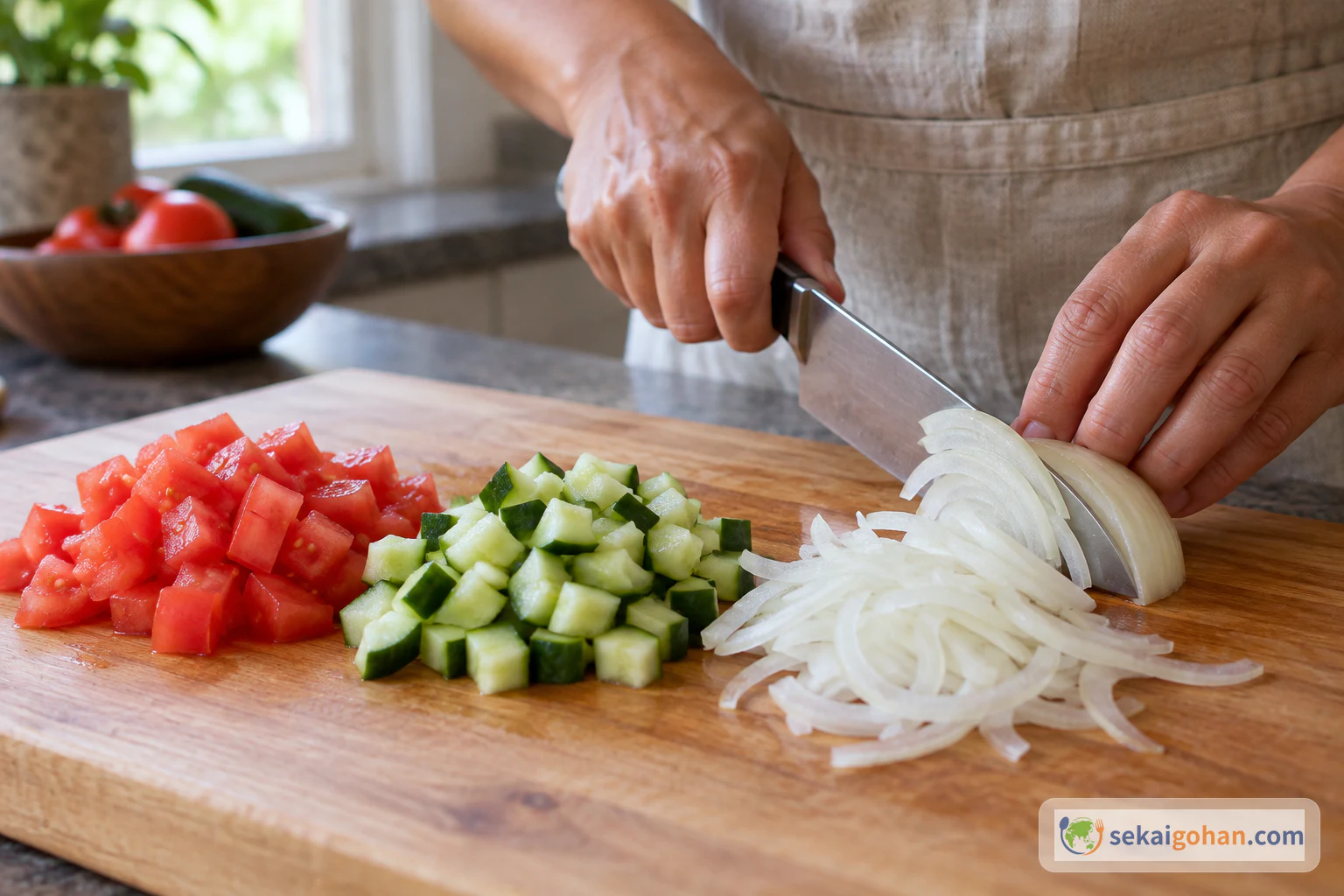
- A separate clean cutting board and knife for the vegetables
- Clean bowl for the raw fish, large enough to mix everything
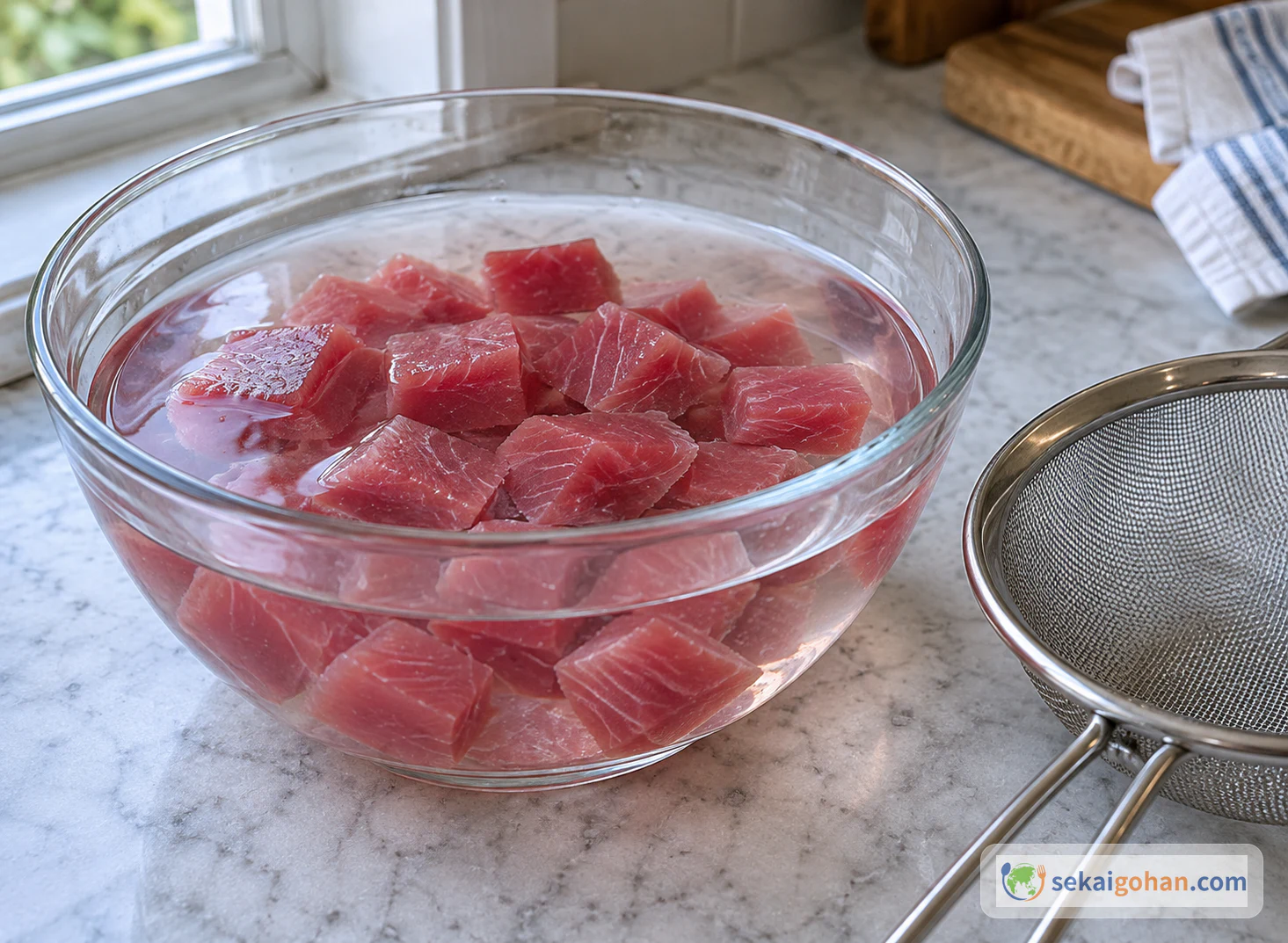
- Bowl for the salted water
- Fine strainer for draining the fish
Choosing the Fish, Coconut Milk and Limes
Fish. Go by the label and the seller's advice, not by how the fish looks. Labeling rules differ from country to country, so ask if the wording is unclear. If you still aren't sure about eating it raw, cook the fish thoroughly and make the cooked version described in the safety section below.
Coconut milk. Buy plain, unsweetened coconut milk in a can or carton and skip sweetened or flavored coconut drinks. Thickness varies by brand, and it changes both the taste and how well the dressing clings to the fish.
Limes. Lemon works if you can't find limes, though the acidity and aroma will be different.
Cucumber. If small cucumbers are hard to find, an ordinary cucumber from your local store does the job. If your onion is very sharp, you can rinse the slices in water first.
Method: Keep the Fish Cold and Combine It Gently
Put each batch of raw fish back in the refrigerator whenever it is not being worked on, and keep the finished bowl cold until it reaches the table.
Raw-Fish Safety and Troubleshooting
The tuna is never cooked. Lime juice and salted water do not make it safe, even if the fish changes color. Use only fish labeled for raw eating and keep it cold. Anyone who is pregnant, young children, older adults and people with weakened immune systems should avoid raw or undercooked seafood.
Lime and parasites
Lime changes the texture and color of the fish. It doesn't cook it, and it doesn't control parasites. Anisakis can occur in seafood, including tuna, and lime juice and salted water don't kill the larvae. Neither do ordinary vinegar treatment, salting, soy sauce or wasabi.
For food businesses, the freezing guideline is -20°C for at least 24 hours. A home freezer may not get the same result, so don't count on it. Freezing kills parasites, but it doesn't kill all harmful germs.
At home, buy fish labeled for raw eating, check it by eye for larvae and remove any you find. Choose fresh fish, gut whole fish soon after buying, and don't eat the guts raw.
Keeping it cold and clean
Put the fish in the refrigerator as soon as you get home, and use seafood within 2 days of purchase. Your refrigerator should be clean and at 40°F (about 4°C) or below. Keep the fish cold until just before you use it, chill the mixed dish right away, and finish it at that meal.
Keep raw fish and its germs away from cooked and ready-to-eat foods. Use separate boards, knives and bowls for the raw fish. Wash your hands with soap and warm water for at least 20 seconds, and wash your tools with soap and hot water.
Who should avoid the raw version
People who are pregnant, children (including babies and toddlers), older adults and people with weakened immune systems should avoid raw or undercooked seafood. For them, make a separate plate: cook the fish thoroughly, cool it, and toss it with the same vegetables, lime and coconut milk. The heating standard for food businesses is 158°F (70°C) or higher, or 1 minute at 140°F (60°C). The texture will be different from the raw dish.
Troubleshooting
| What happened | What to look at | What to do |
|---|---|---|
| The fish turned pale after the lime went in | Color says nothing about safety | Keep handling it cold, and don't treat the fish as cooked |
| You are unsure the fish can be eaten raw | The label and the seller's advice | Don't serve it raw. Cook it thoroughly for the separate cooked plate |
| The tuna pieces broke up | Mixing too hard | Stop stirring and fold gently from now on |
| The flavor seems flat | Salt and pepper | Add a little at a time and taste between additions |
| The dish tastes sweet | Sweetened coconut drink | Next time use plain, unsweetened coconut milk |
| The onion is too sharp | A strong onion | Next time rinse the slices in water first |
| There is some left over | This dish is not for keeping | Serve smaller batches from the cold bowl, and don't plan on leftovers |
Serving and Variations
Serve poisson cru with rice. Taro, cassava and breadfruit go well with it too.
Once you've made the basic bowl, try changing it up. None of the extras have fixed amounts, so add a little at a time and taste.
| Variation | What changes | Note |
|---|---|---|
| Other fish | Mahi-mahi or barracuda in place of tuna | Check with the seller that the fish is suitable for raw eating |
| Grated ginger | A small amount added | Add a little at a time |
| Chili | Added to your taste | Adjust the heat to suit the table |
| Plated version | Fish sliced thinly and arranged on a plate, coconut milk poured over, vegetables placed around it | Same idea, different presentation |
| Poisson cru à la chinoise | Rice vinegar, carrot, tomato, cucumber, onion and ginger, sometimes with sugar | A separate version of its own |
Frequently Asked Questions
Is poisson cru the same as Fijian kokoda?
No. They're related Pacific dishes that share fish, citrus and coconut, but they come from different countries and have different names and recipes.
If the lime turns the fish white, is it safe?
No. The change you see from the lime isn't cooking, and it isn't parasite control. Lime juice doesn't kill anisakis larvae.
Can I make it with fish other than tuna?
Yes, mahi-mahi and barracuda both work. Whatever fish you pick, check the raw-eating label and ask the seller first. Never use fish sold for cooking in a raw dish.
How long does it keep?
It doesn't keep, so don't make it ahead. Eat it cold right after chilling, and don't leave it at room temperature.