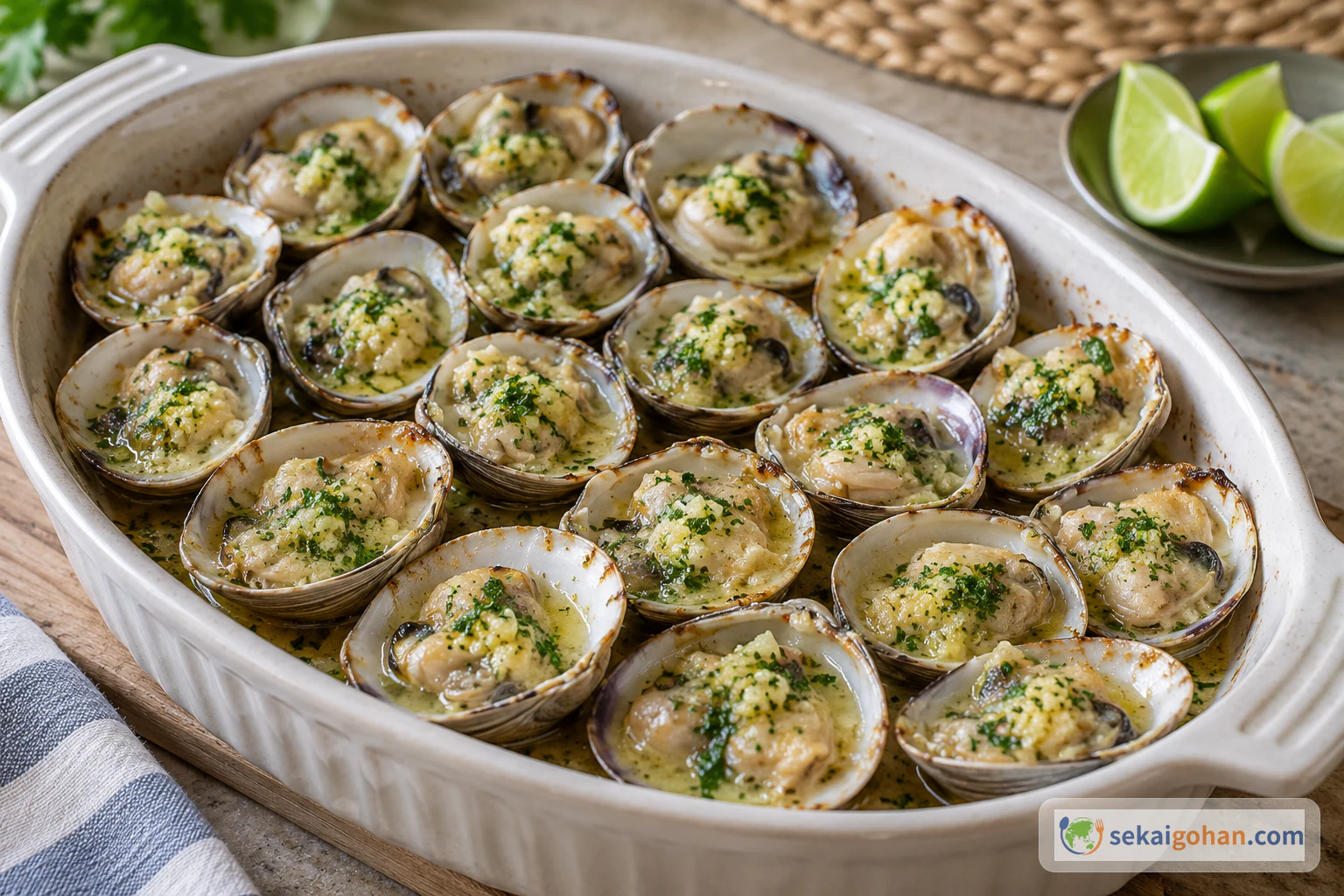
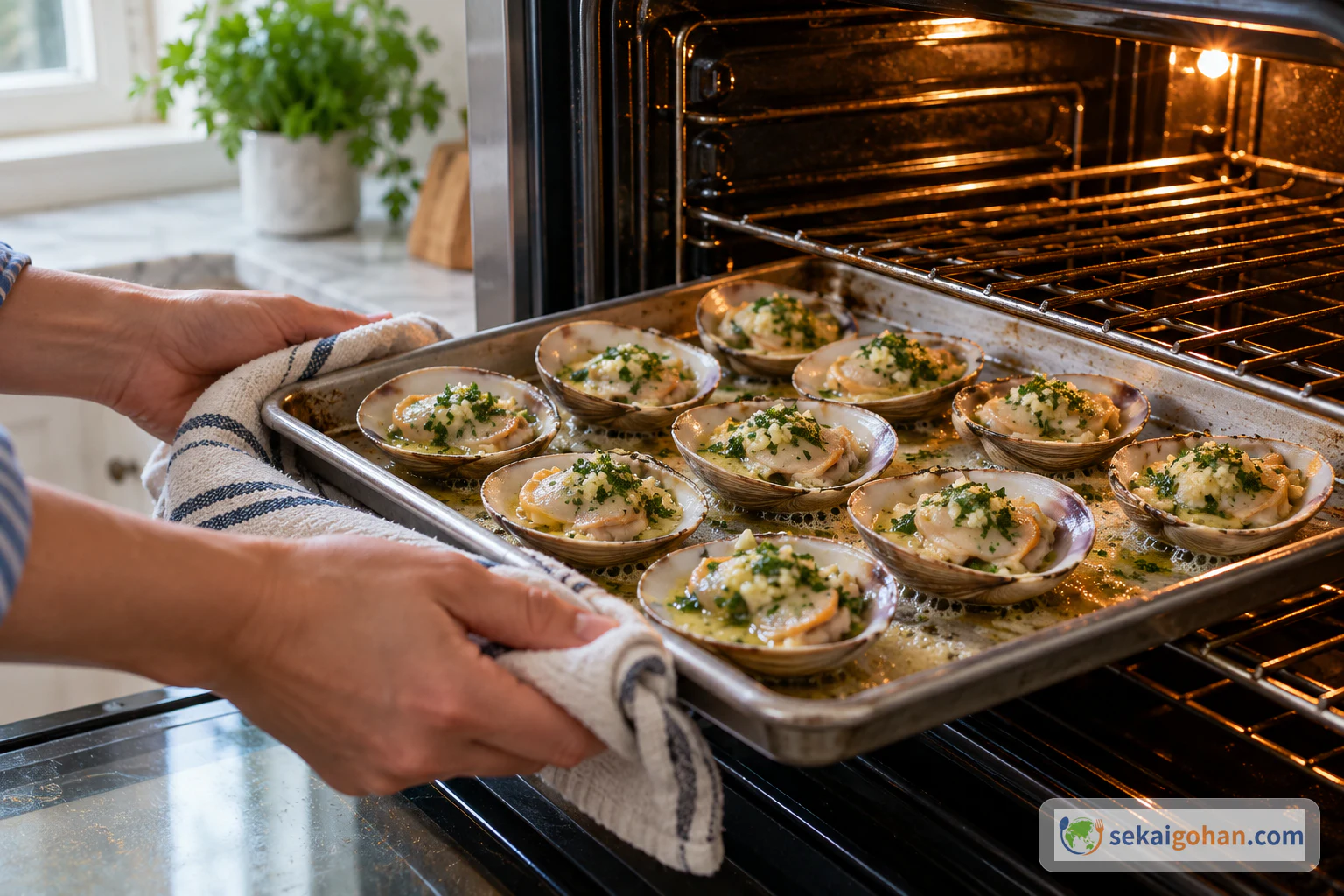
When the tide goes out around the islands of Wallis and Futuna, the reef flats are left shallow and open, and people head out across them looking for shellfish. Some of what they bring home becomes palourdes farcies: clams opened, filled with soft butter, garlic and fresh parsley, and baked until the butter bubbles. The clam's own salt and savor come first, and the garlic-parsley butter carries them.
Palourdes Farcies in Wallis and Futuna
Gathering shellfish at low tide is called fagota. Women often work the reef together with children, searching for palourdes (clams) and grisettes, and it can take hours. Back at the table, stuffed clams are a well-loved local food, alongside grisettes cooked in coconut milk.
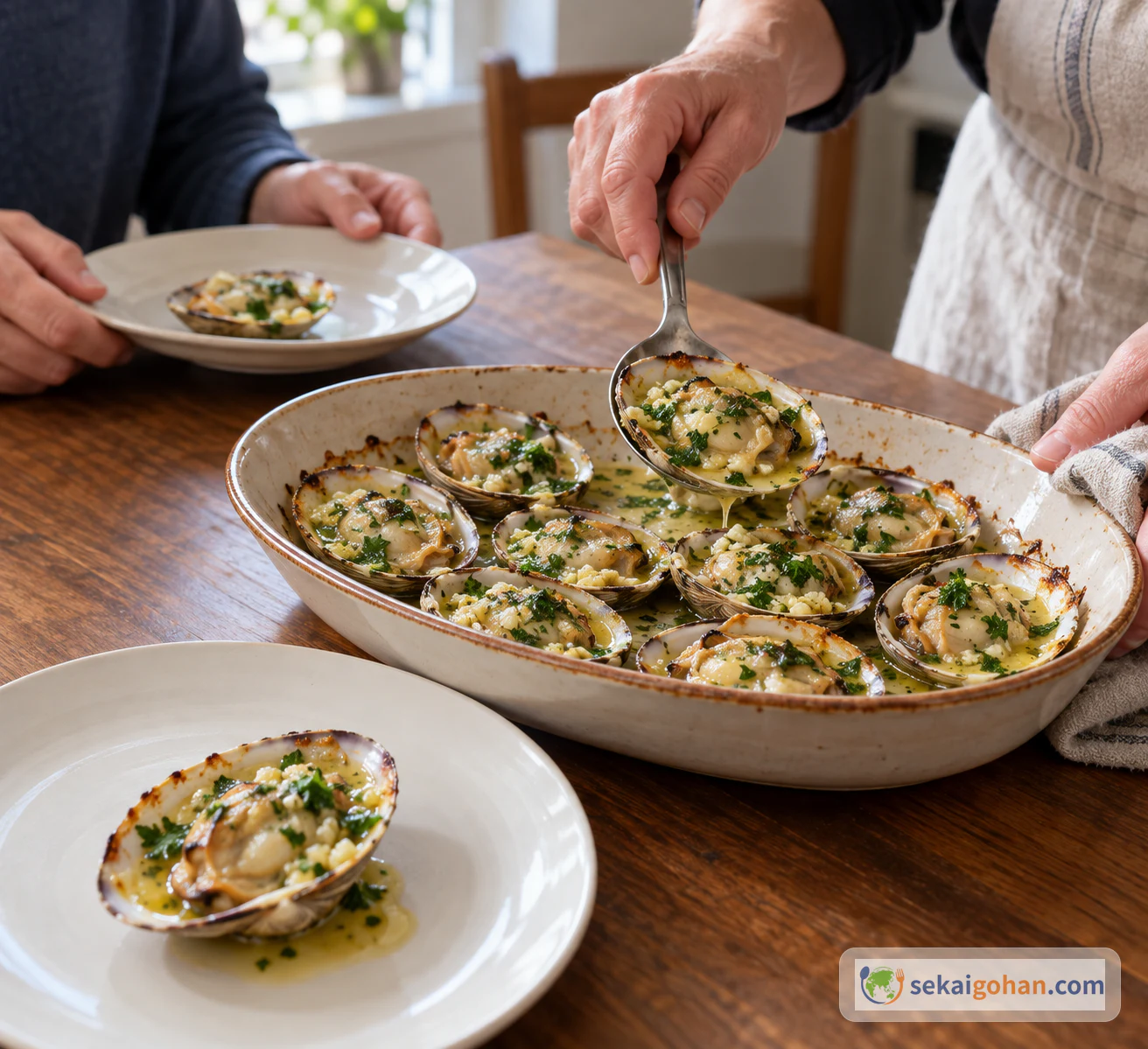
The coconut milk dish belongs to another way of cooking. The umu is a traditional pit oven: food is wrapped in banana leaves and cooked over heated stones, and an umu meal includes shellfish cooked in coconut milk. Palourdes farcies come from a French kitchen tradition instead, baked in an oven with garlic-parsley butter. Both start with the same shellfish, gathered from the reef at low tide.
Ingredients: Serves 4
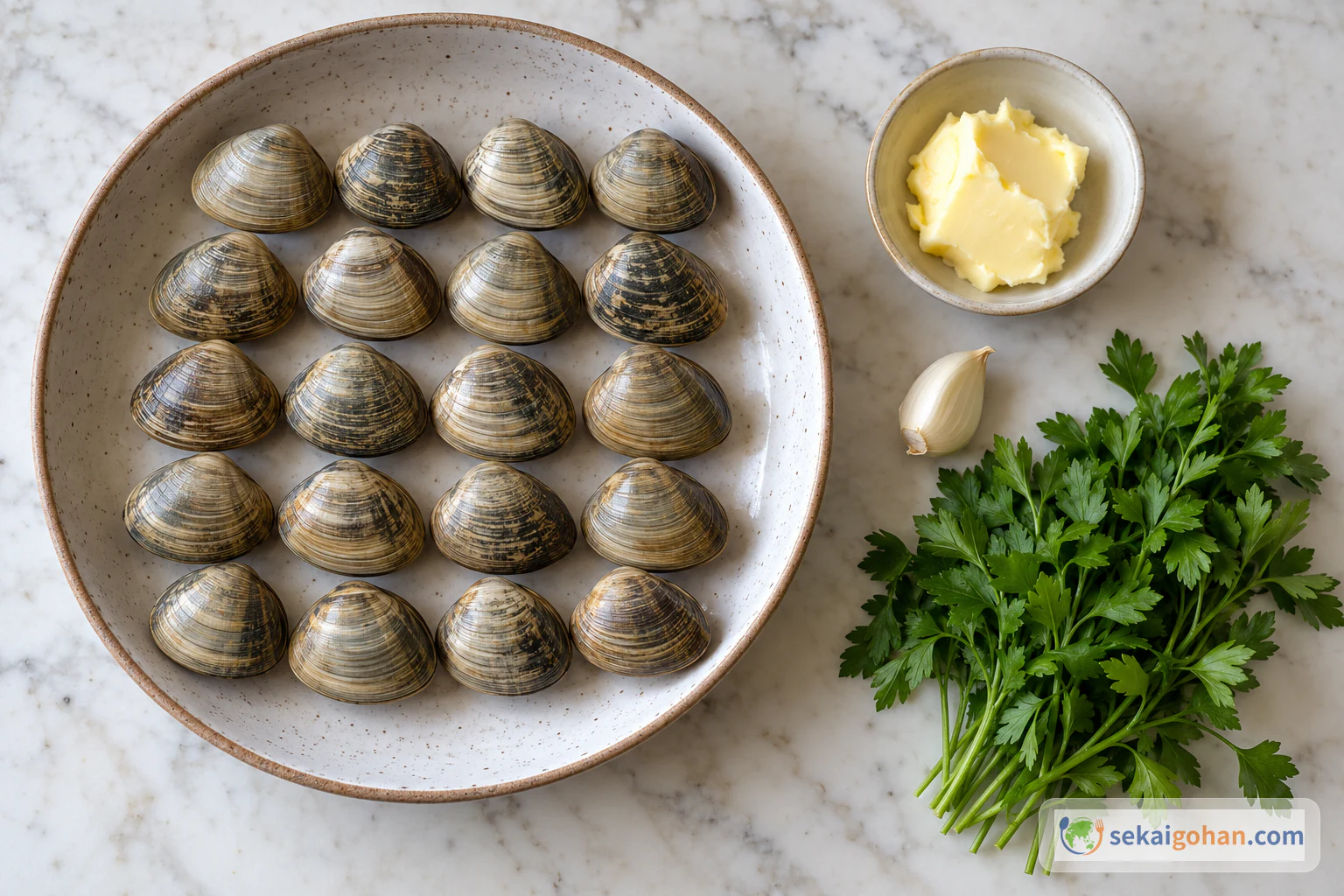
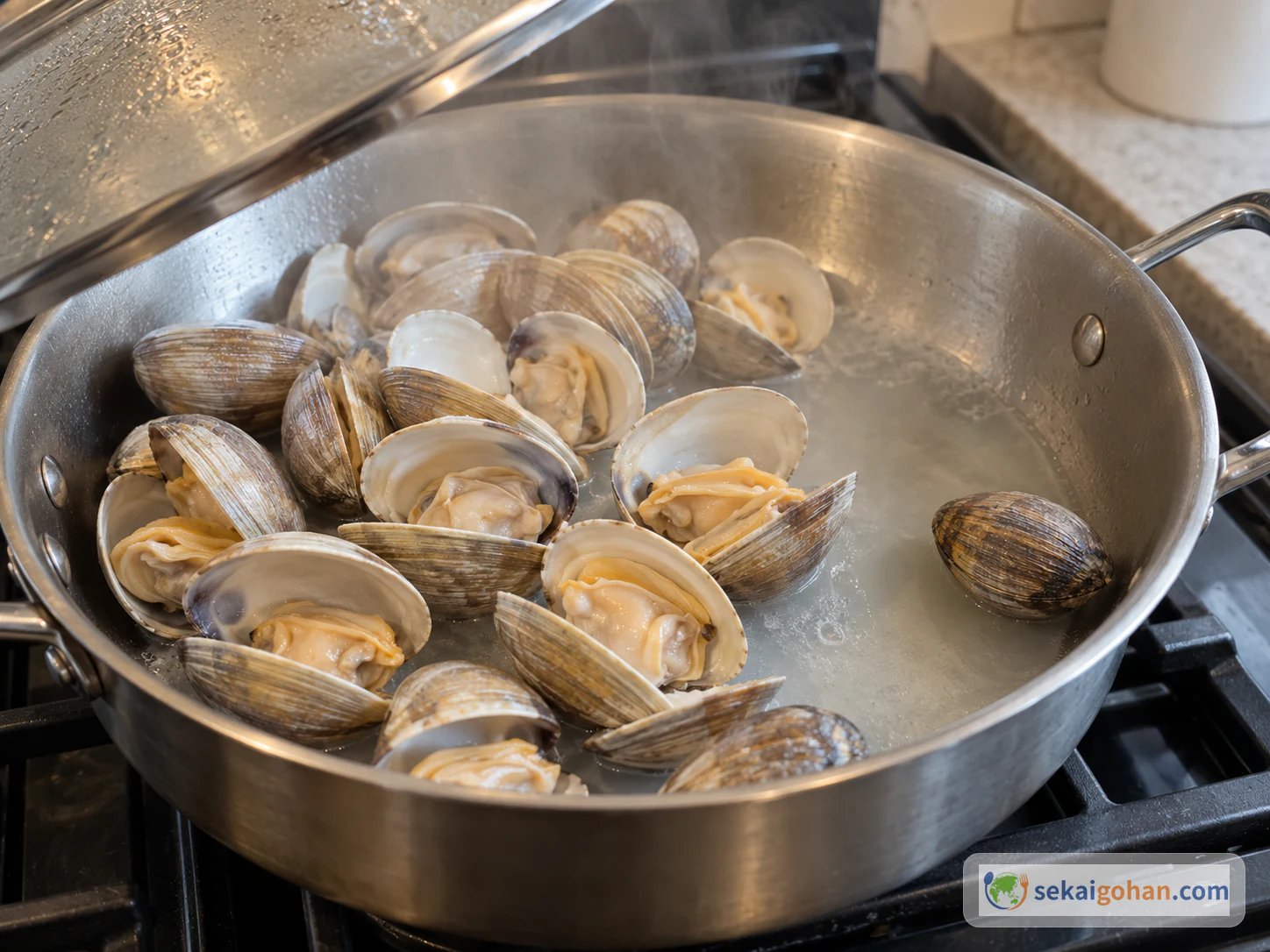
This dish contains shellfish (clams) and milk (butter). Check product labels and any cross-contact statements. Buy live clams sold for cooking, with clear handling and purging information. Do not use clams with cracked shells, or clams that are open and do not close before cooking. Discard any clam that stays closed after cooking.
Equipment
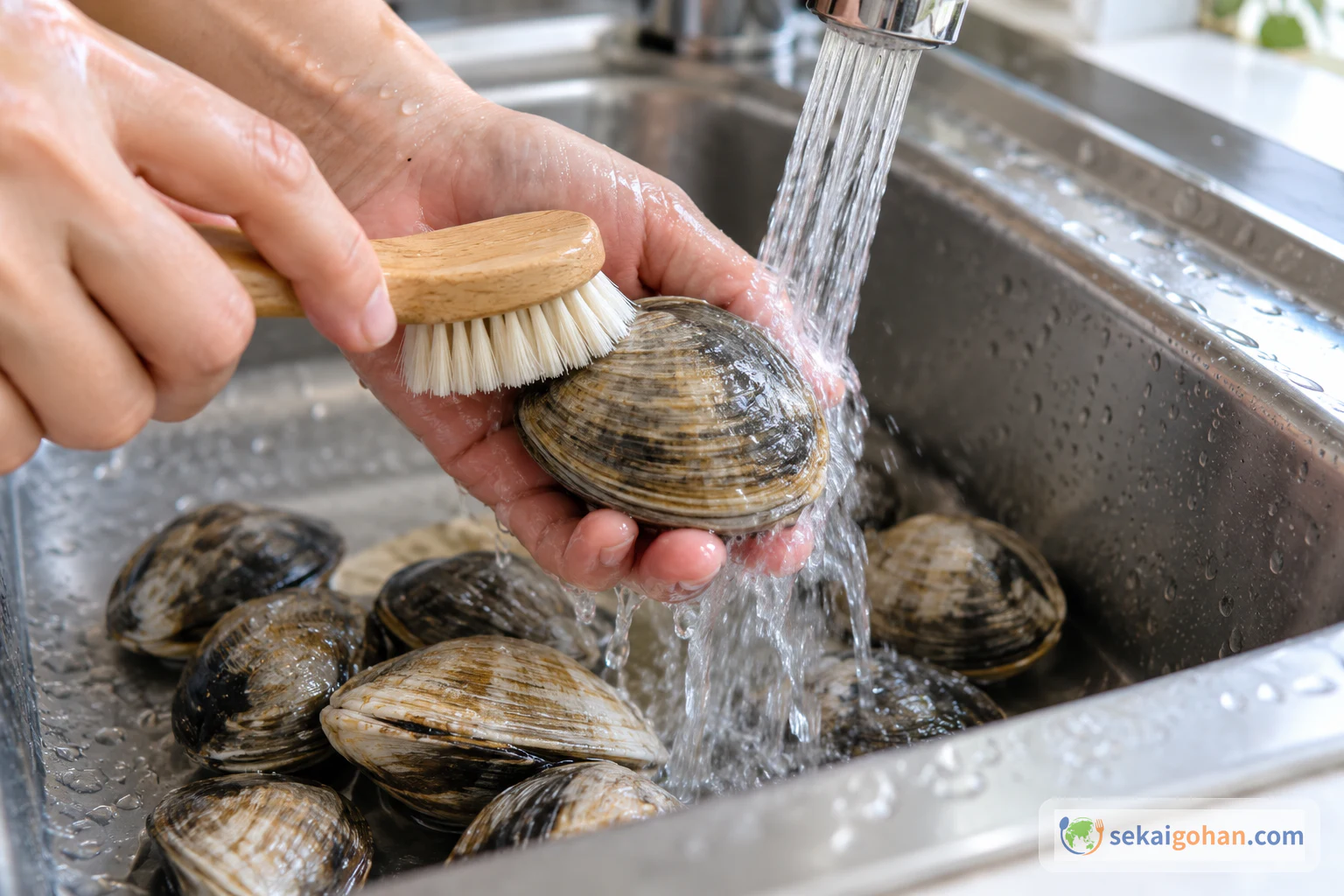
- Small kitchen brush for scrubbing shells
- Wide skillet or pan with a lid
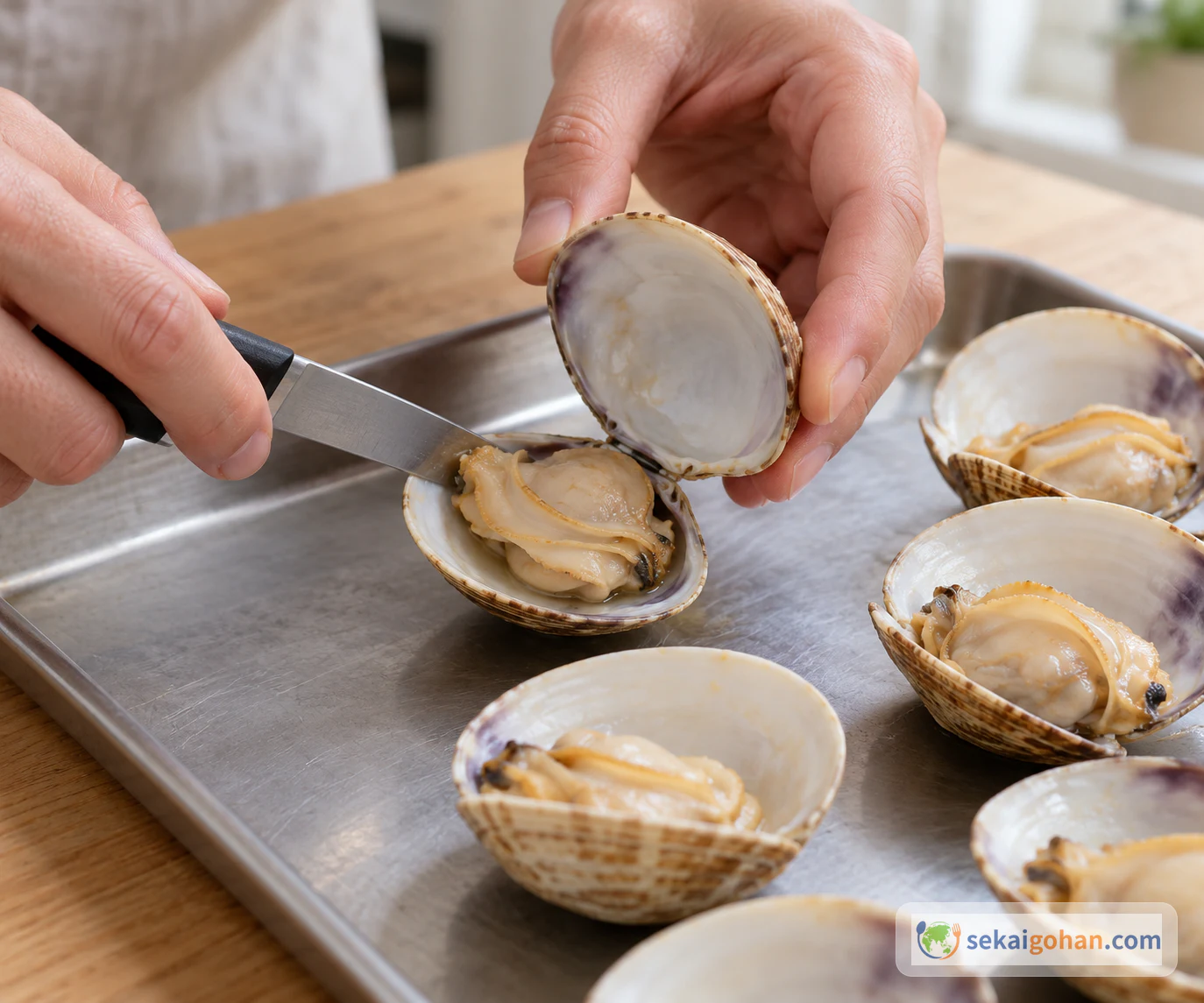
- Small knife for loosening the clams
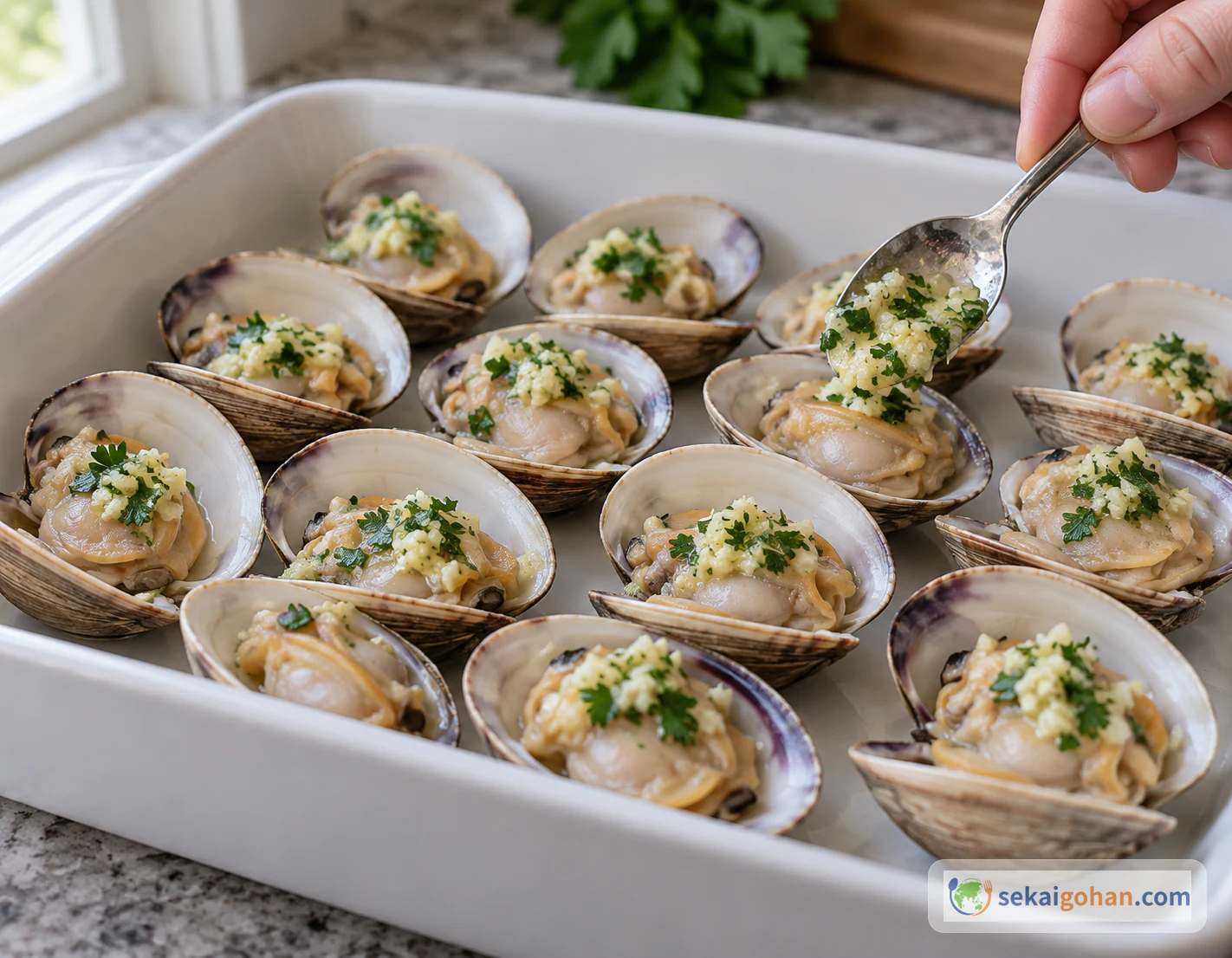
- Ovenproof dish or baking tray that holds the shells level
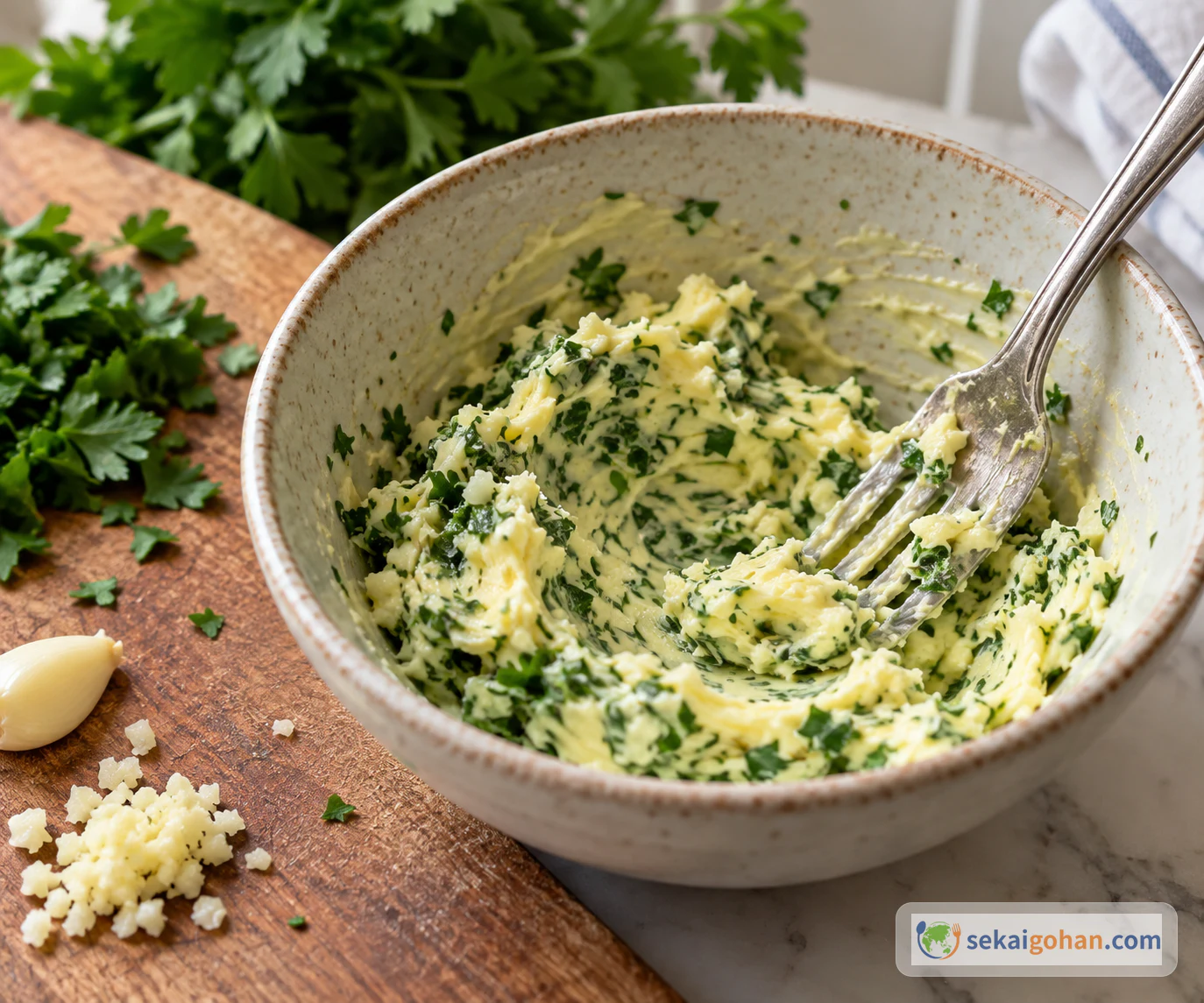
- Small bowl and fork for mixing the butter
- Oven
These are ordinary kitchen tools; there is no need to buy anything special if you already have a lidded pan and an ovenproof dish.
Choosing Clams for Palourdes Farcies
Palourdes is not a single species you can buy everywhere. Live hard-shell clams such as hamaguri, or larger Manila clams (asari), work well instead. Their size, saltiness and texture differ, so expect a close result rather than an identical one.
Shell sizes vary, so count the clams instead of weighing them. Then match the butter to how much each shell can hold, with less for small clams. You want a filling that melts over the clam without running off.
For purging sand, follow the instructions on the pack. Only use clams you have gathered yourself if you know the local harvesting rules, shellfish toxin advisories and hygiene information for that place.
Butter, garlic and parsley are everyday supermarket ingredients. White wine for opening the clams is optional, and water works just as well. Neither goes into the filling, which stays simply butter, garlic and parsley.
Fixing Common Problems with Stuffed Clams
Most problems come from too much butter or too much time in the oven.
Let the clam's own salt and savor lead. Keep the butter layer modest, and stop baking as soon as everything is hot and bubbling.
| Problem | Likely cause | What to do |
|---|---|---|
| Sand in the clams | Not enough purging or scrubbing | Next time, follow the pack's purging instructions and scrub each shell well. If you bite into sand, don't force yourself to swallow it |
| Butter runs off into the dish | Shells tilted, or too much butter for the shell size | Nest the shells so they sit level, and match the butter to each shell's size |
| Clams dry and tough | Baked too long | Stop as soon as the butter bubbles and the clams are hot through; the 10 minutes is a starting point, not a target |
| Edges scorched | Butter or parsley too close to the heat for too long | Take the dish out earlier, and keep the butter layer thin |
| A clam won't open in the pan | Likely dead before cooking | Discard it. Never pry it open to use |
| Too salty | Salty clams plus added salt | Skip the salt; the clams usually season the dish on their own |
Serving and Variations
Stuffed clams are best eaten right away, while hot. Once you know how the plain version tastes, a few small changes are worth trying.
- Lighter butter. Use less butter on each clam to put the clam's flavor further forward.
- Lime on the side. Serve lime wedges at the table for a few drops of acidity, rather than squeezing it over the whole dish.
- Different clam sizes. With smaller or larger clams, keep the same butter mixture and change only how much goes into each shell.
- Pepper at the table. Offer black pepper separately for those who want it; keep it out of the filling.
Frequently Asked Questions
What are palourdes?
Palourdes is the French name for clams, as in palourdes farcies. It covers more than one species: the clams gathered in Wallis and Futuna differ from those sold elsewhere.
Can I use Manila clams (asari) or hamaguri?
Yes. Choose live clams in the shell, preferably larger ones, and adjust the butter to each shell.
What should I do with clams that didn't open?
The shells must open fully during the first cooking. Discard any clam that stays closed, and do not force it open.
Can I make these ahead?
Make them to eat right away, while hot.
Back to the Reef
Somewhere on the reef flats of Wallis and Futuna, someone is still bending over the shallow water at low tide, looking for the next clam. The filling those clams receive at home remains their own; what this kitchen version offers is a simple way to honor them with butter, garlic and parsley, cooked until the shells open and served hot.