Ingredients and steps on one page. Print it, or choose “Save as PDF” in the print dialog.
Sekai Gohan
Attiéké Recipe (Atieke): Ivorian Cassava Couscous with Fish
Ingredients
Ingredients
| Ingredient | Amount | Substitutes & notes |
|---|---|---|
| Tapioca starch | 7 oz (200 g) | Available at baking supply stores and online. Cassava flour is best if you can find it |
| Water | ¾ cup (200 ml) | For steaming |
| Lemon juice | 2 tbsp | Recreates the sourness of fermentation |
| Salt | 1/2 tsp | — |
| Neutral oil | 1 tbsp | To keep the granules separate |
Accompaniments (grilled fish set)
| Ingredient | Amount | Substitutes & notes |
|---|---|---|
| White fish such as sea bream or horse mackerel | 2 whole fish | Côte d'Ivoire usually uses tilapia. Horse mackerel or mackerel also work |
| Onion | 1 (thinly sliced) | — |
| Tomatoes | 2 (diced) | — |
| Chile (fresh or dried) | 1–2 | Shishito peppers can stand in |
| Lime (or lemon) | 1 | Squeezed for the juice |
| Salt and black pepper | as needed | — |
| Neutral oil | 2 tbsp | — |
Steps
1Steam the attiéké dough
20 min
Put water in a steamer, set it over high heat, and bring it to a full boil in 3–4 minutes. Line a colander with a cloth, spread the granulated tapioca mixture about 1 inch (2 cm) thick, cover, and steam for 20 minutes over medium heat. It is ready when the granules turn somewhat translucent and break apart softly when pinched between your fingers. As soon as it is steamed, move it to a bowl, add 1 tbsp oil, and fluff it with a fork for about 2 minutes to work in air; this makes it less likely to clump as it cools.
If you have no steamer: Fill a large pot with water, set a heatproof bowl in it, and place a colander on top as an improvised steamer. Lining the bottom of the colander with a cloth keeps the starch from falling through. A microwave also works: cover a heatproof container with plastic wrap, heat at 600 W for 3 minutes, stir, and heat for 2 more minutes.2Cook the fish
15 min
Heat 2 tbsp oil in a frying pan over medium heat for about 1 minute, and put in the patted-dry fish skin side down. A whole fish should be split open at the belly; fillets about 1 inch (2–3 cm) thick cook through most easily. Cook slowly over steady medium heat, 7–8 minutes per side, until the edges are golden and the center is white all the way through. To crisp the skin, it is important not to move the fish for the first few minutes after it goes in. Touching it often tears the skin and makes the flesh fall apart.
A note once the heat is off: in Côte d'Ivoire tilapia cooked whole is the standard, but a split dried horse mackerel or mackerel also works well. The pairing of fish with a starchy staple, as in thieboudienne (Senegal), is a basic form of West African food culture.
3Prepare the vegetable side
5 min
Slice the onion thin and soak in cold water for 5 minutes to remove the sharpness. Cut the tomatoes into 0.5 inch (1 cm) cubes, chop the chile into 0.125 inch (2–3 mm) widths, and put them in a bowl with the drained onion. Add the lime juice and salt, and just fold lightly from the bottom so the tomato corners do not collapse. Stopping before the vegetables go limp keeps a fresh crunch against the attiéké and fish.
4Plate
3 min
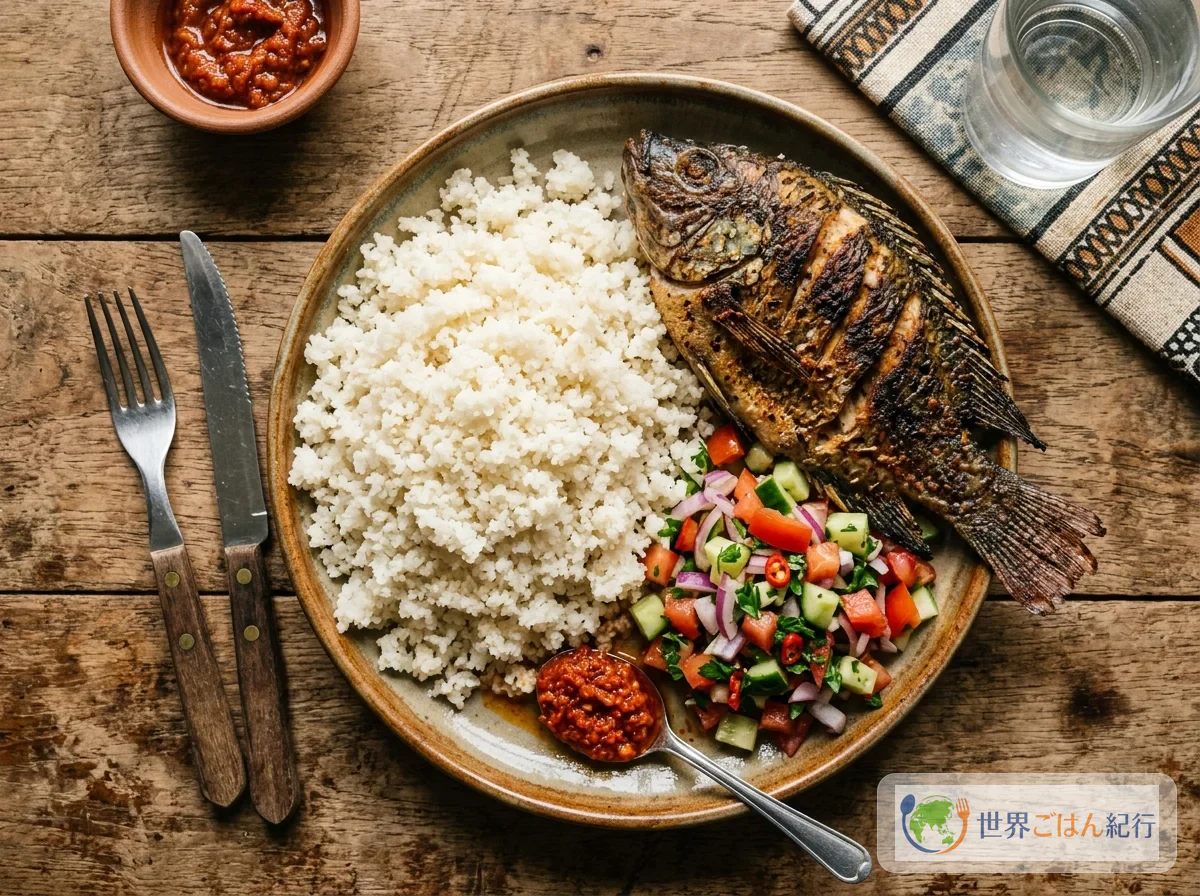
Mound the attiéké in a dome 2 inches (4–5 cm) high on the left half of the plate, and set the fish cooked over medium heat in step 2 on the right half, skin side up. Put the raw vegetable salad in a small pile in front of the fish, and if you are adding piment, put about 1 tsp at the edge of the plate. Serving while the fish skin is still crisp and the attiéké warm brings out the aroma.