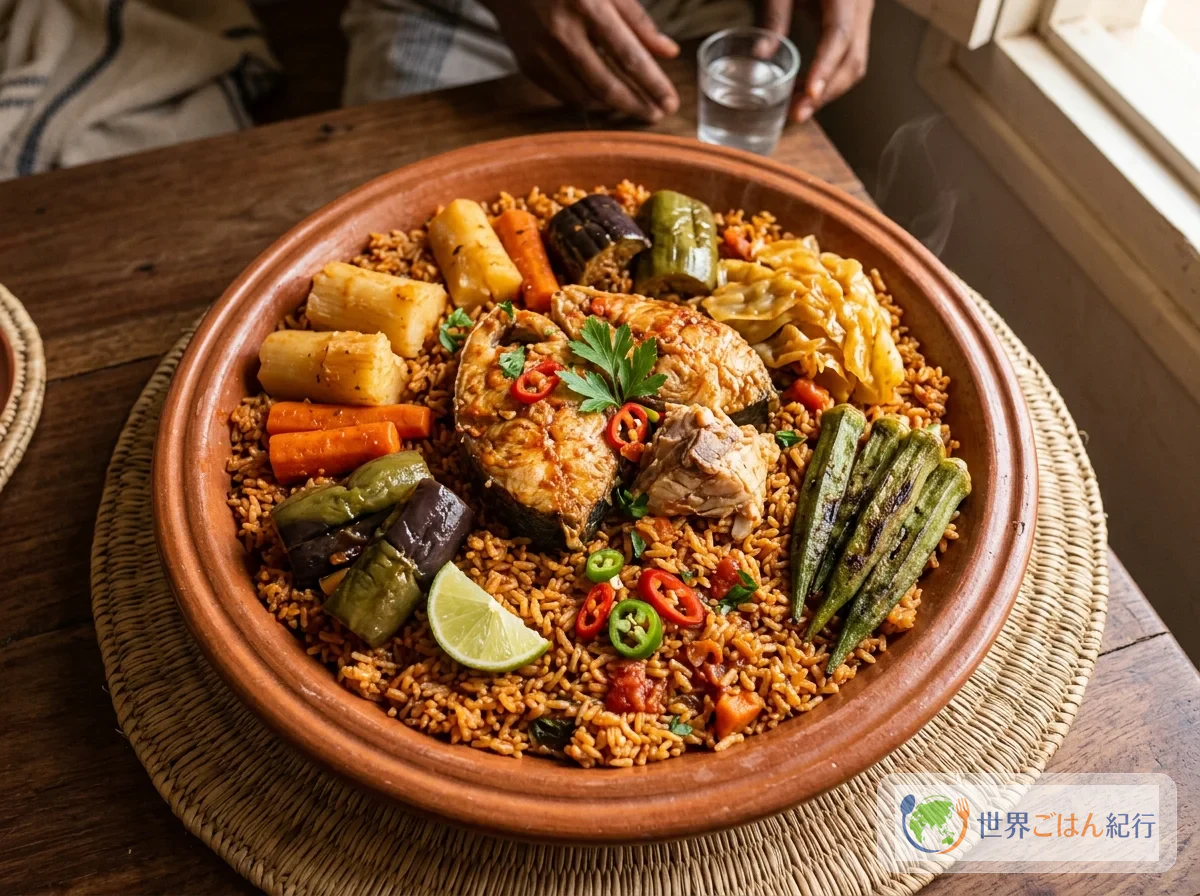
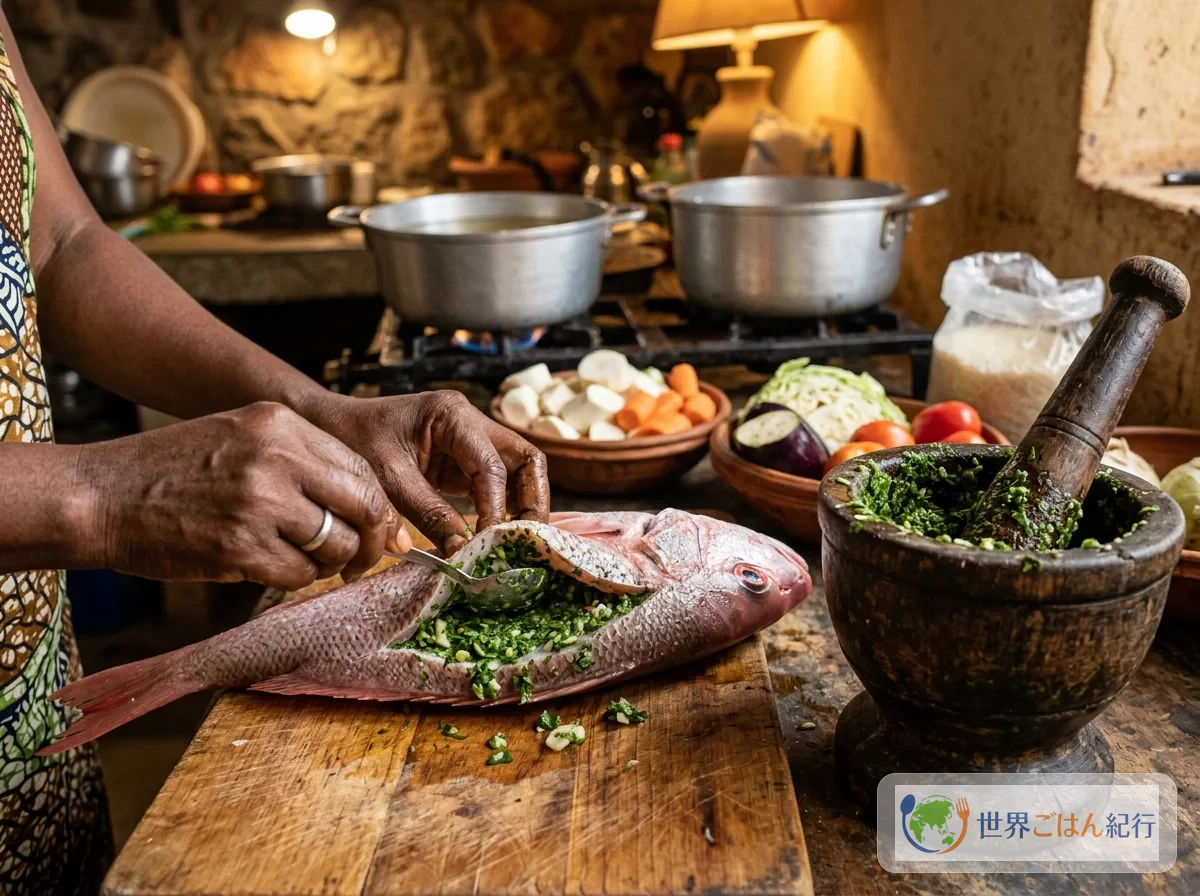
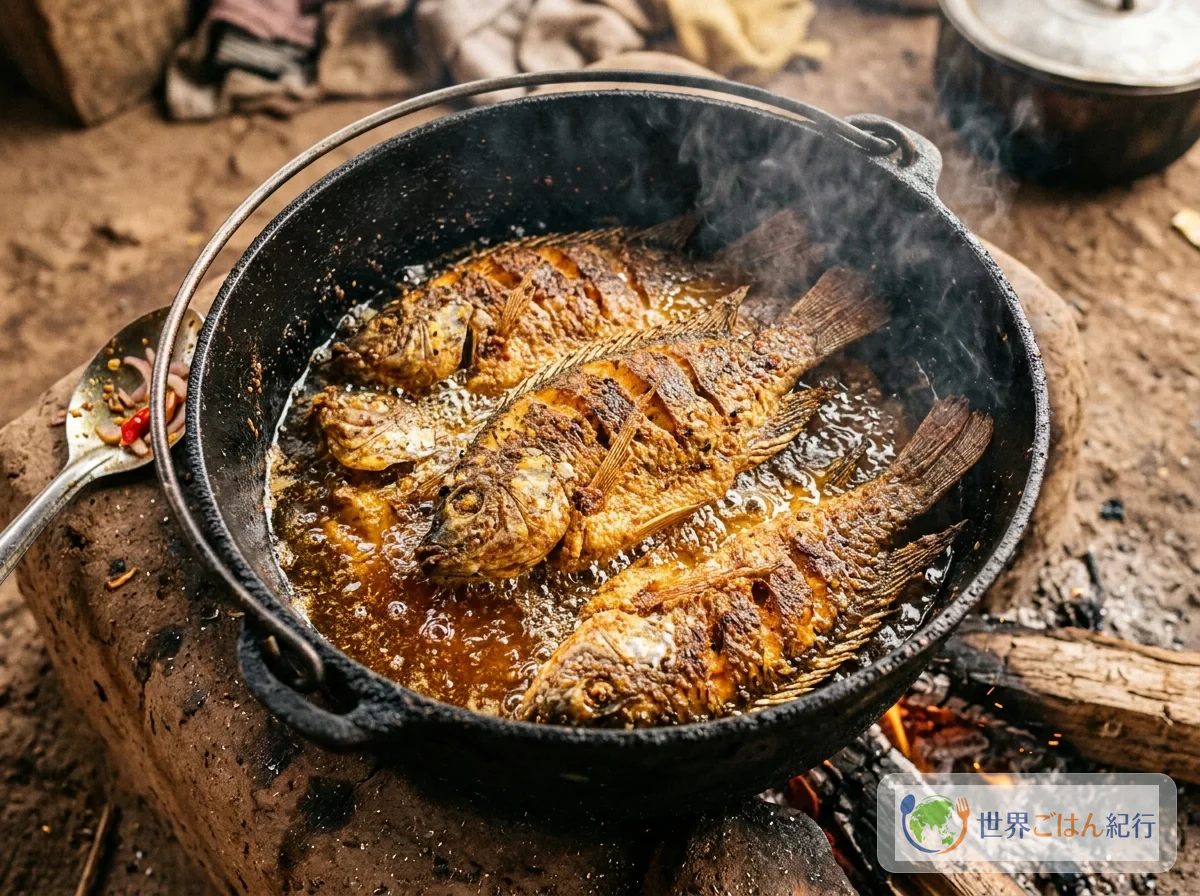
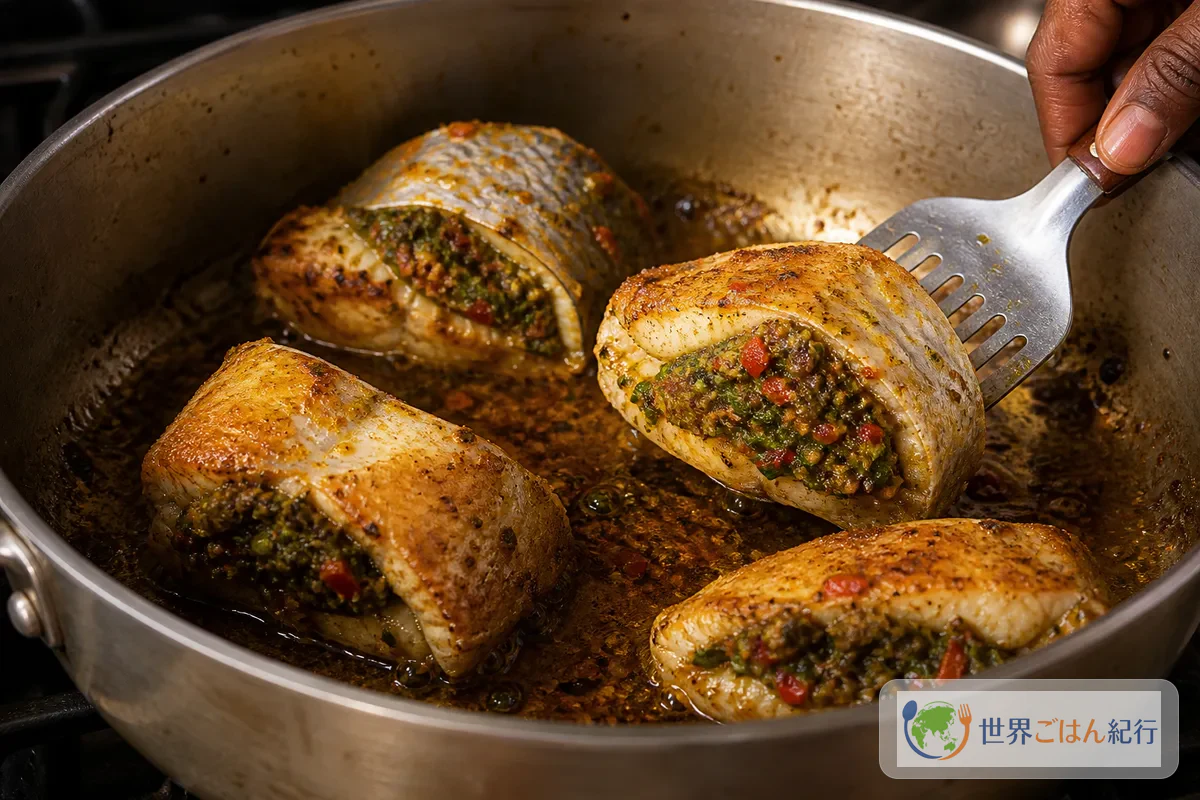
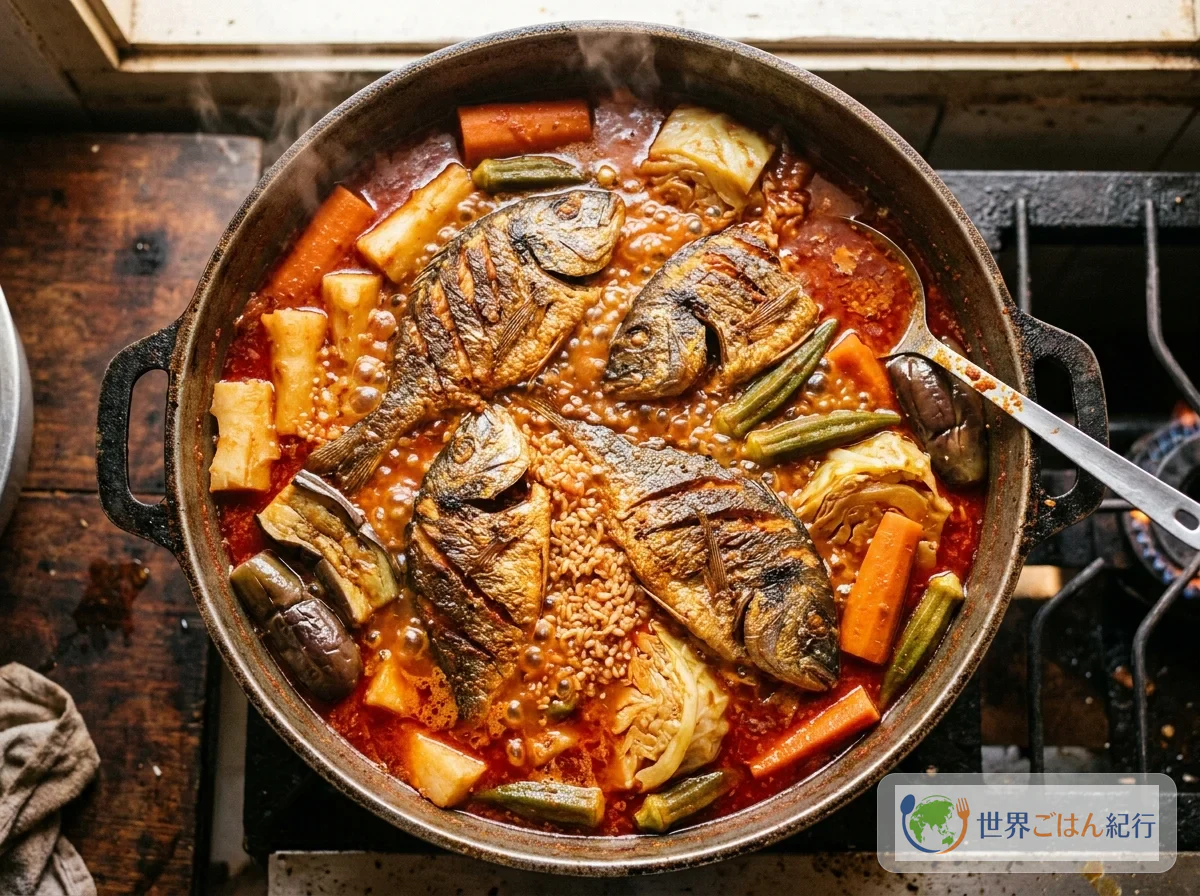
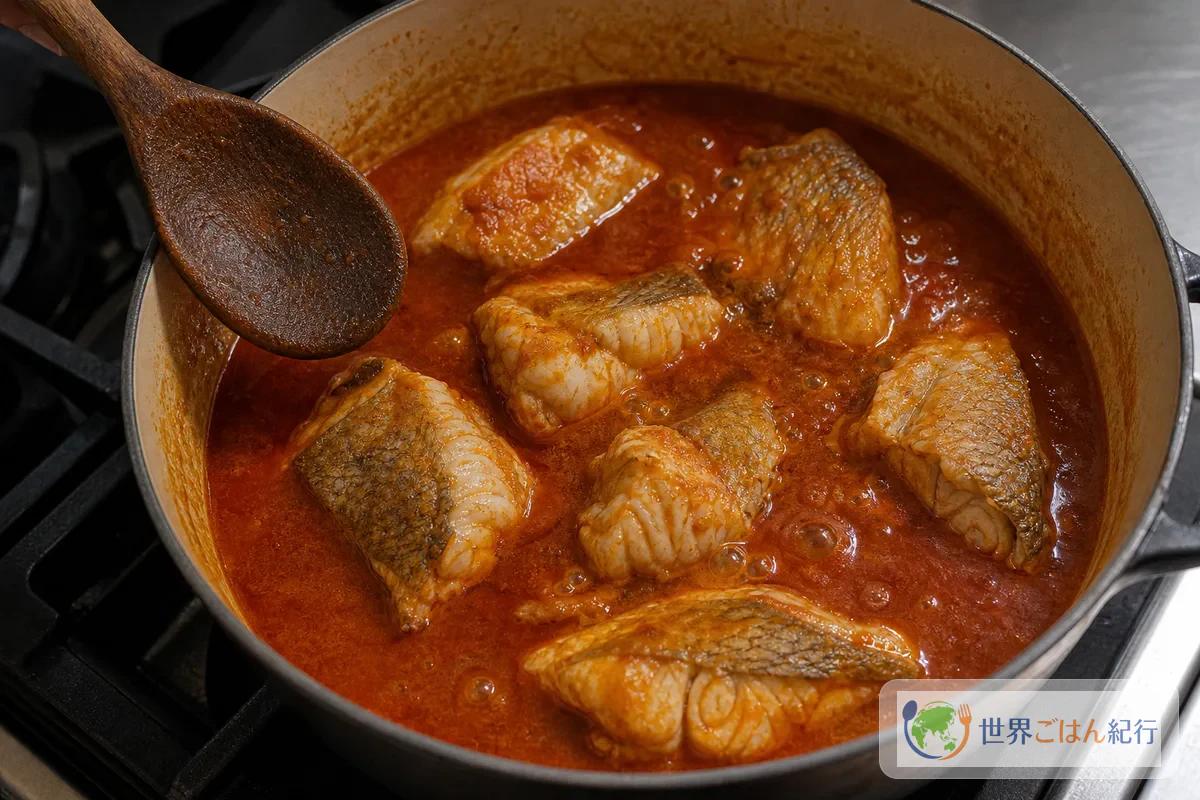
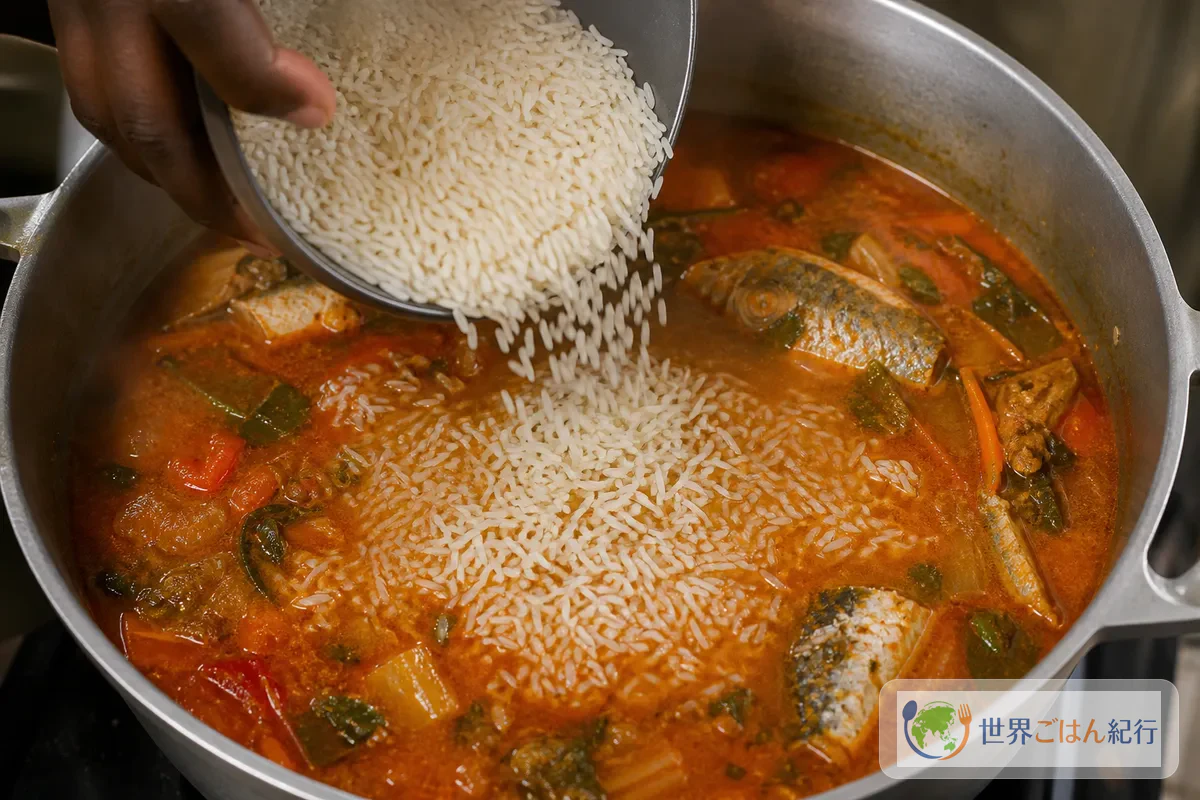
Dakar, a little after noon: the rich smell of tomato and fish starts drifting along the alleys from every home. That's thieboudienne (also spelled ceebu jën) on the stove. The name is Wolof, where ceebu means rice and jën means fish, so it is simply "fish and rice." White fish is stuffed with a spice paste called rof and fried, then rice and vegetables are cooked in a tomato-based broth. It is one of the defining dishes of West Africa, and you can make it with ingredients from an ordinary supermarket.
About Thieboudienne, Senegal's National Dish
Origins in Saint-Louis
Thieboudienne dates back to the late 19th century and the port city of Saint-Louis in northern Senegal. It was created there under French colonial rule by a Wolof woman named Penda Mbaye, who cooked in the household of a French governor. Millet and sorghum had been Senegal's staples, but rice was starting to arrive through trade with France. She combined traditional fish stews with French techniques (sofrito, bouillon) and the imported rice, and a new dish was born.
How rice came to the Senegalese table
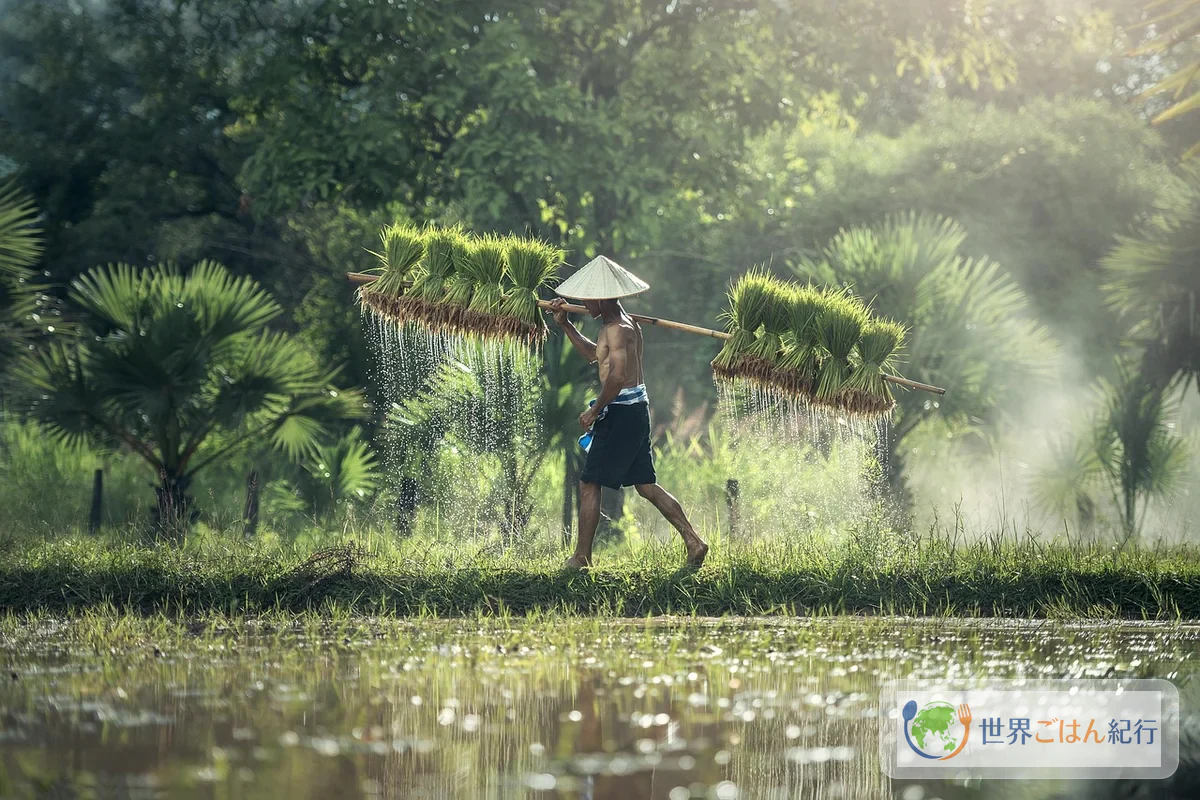
Rice in West Africa is older than most people think. The native species Oryza glaberrima was cultivated in the Niger River basin about 3,000 years ago. The rice eaten across the region today, though, is Asian rice (Oryza sativa), and the turning point came in the colonial period, when France shipped large amounts of broken rice from Indochina (present-day Vietnam and Cambodia) to Senegal.
Broken rice was cheaper than ordinary polished rice, and because the grains are broken, starch dissolves out during cooking and gives a distinctive sticky texture. Cheap and filling, it spread quickly among the urban working class, and after independence in the 1960s it became a national food. Broken rice is the original rice for thieboudienne. Vietnamese banh mi shows the same colonial influence from the other direction: there, the French baguette became Vietnamese.
Teranga and the shared platter
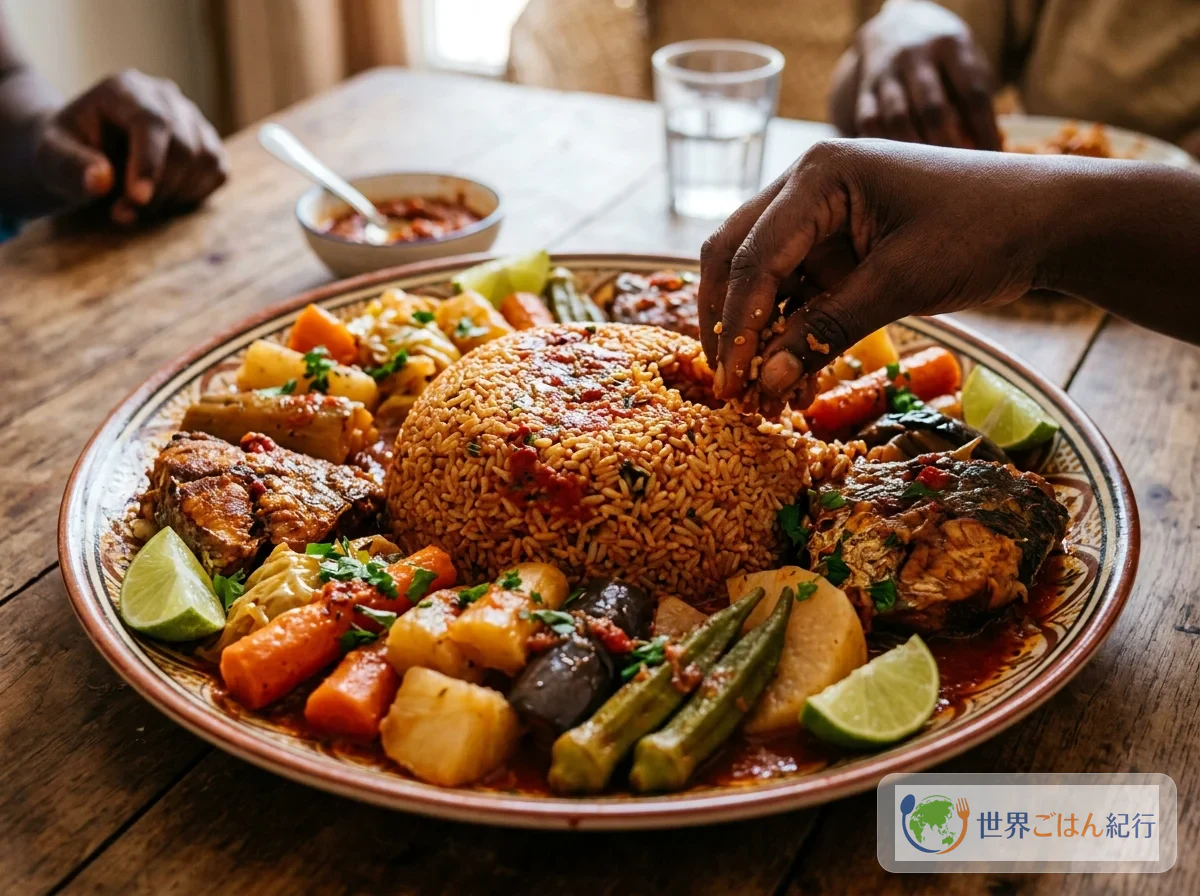
In Wolof, "teranga" means hospitality, and it is close to a national creed. Senegal calls itself "the country of teranga" (Le pays de la Teranga), and even a stranger passing by at mealtime may be invited to "eat with us." Thieboudienne is the first thing served when guests come, and when it was added to the Intangible Cultural Heritage list in December 2021, the listing recognized not only the cooking technique but also the communal way of eating from one shared platter and the spirit of teranga.
That platter is large and round. The family sits in a circle, and each person eats with the right hand from their own side, pressing rice together with fish and vegetables; no spoons or forks. It is good manners for the senior woman to push the best pieces of fish and vegetables toward children and guests.
Thieboudienne is eaten every day in Senegal, but Friday is special. On the Muslim day of prayer, the whole family gathers after prayers at the mosque for a more lavish version: a bigger fish, more kinds of vegetables, and plenty of crust (xoon). It is a festive meal, a bit like osechi on Japanese New Year.
There are two kinds of thieboudienne: red (ceebu jën rouge), cooked with tomato paste for a rich flavor, and white (ceebu jën blanc), made without tomato and finished with garlic and lemon for a lighter taste. This recipe is the red version.
Thieboudienne and similar dishes
Fish, rice, and vegetables cooked together turn up in many places.
| Dish | Country / region | In common | Difference |
|---|---|---|---|
| Paella | Spain | Rice cooked in seafood stock | Uses saffron; the crust at the bottom, socarrat, is also prized |
| Jollof rice | Nigeria / Ghana | Rice cooked in a tomato base | Chicken rather than fish is common. The "jollof wars" of West Africa are the original Nigeria vs. Ghana dispute |
| Biryani | India | Rice and meat cooked with spices | Mainly dry spices, yogurt marinade |
| Taimeshi | Japan | Rice cooked with fish | Soy sauce base, cooked in dashi |
The closest relative is jollof rice: both cook rice in a tomato base, but fish is the star in thieboudienne and chicken in jollof. Japanese cooks will also recognize a lot of takikomi gohan (seasoned mixed rice) here, with rice cooked in fish-flavored stock and served with seasonal vegetables. Like nasi lemak and pad thai, which have found fans abroad, it fits easily onto any home table.
Part of that familiarity comes from stock cubes, which are essential to thieboudienne and to West African cooking in general. For anyone used to Japanese dashi, their role is much the same. In Ethiopian dishes such as doro wat, the spiced butter niter kibbeh does a similar job of building savoriness.
Ingredients (serves 4)
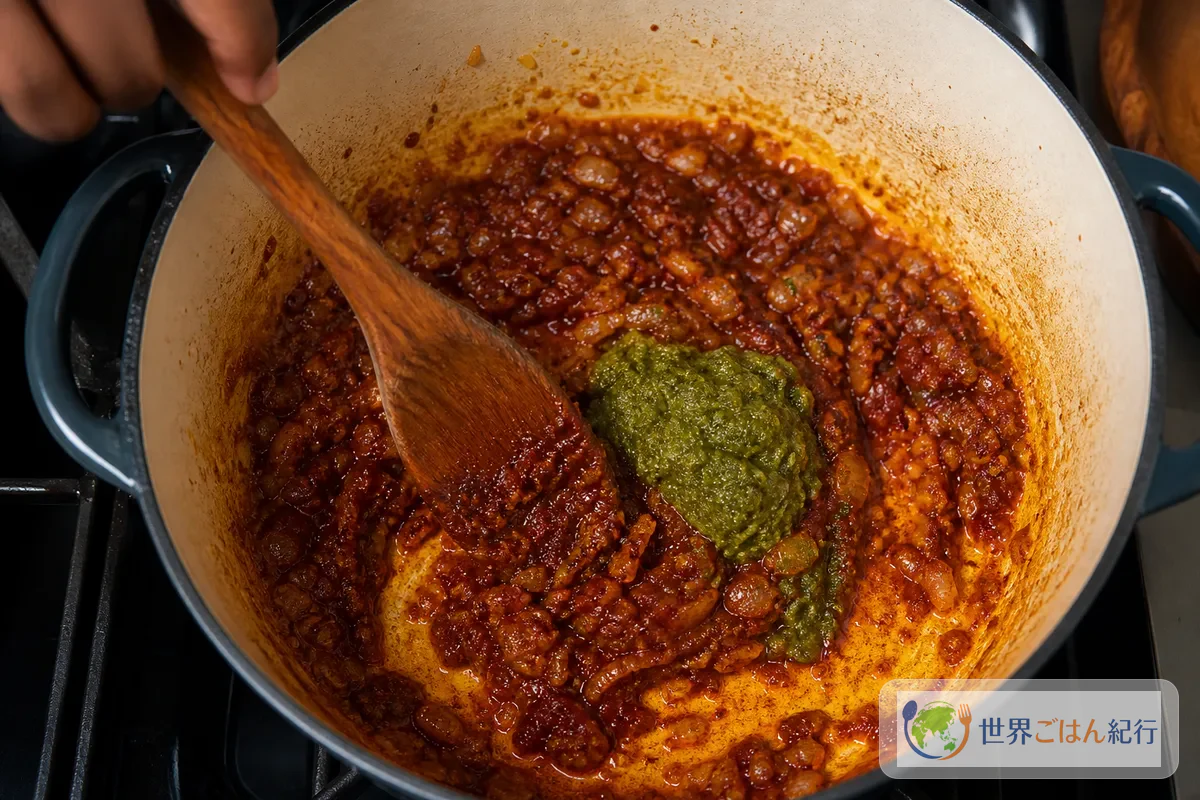
Rof is the most important seasoning paste that decides the flavor of thieboudienne. Parsley, garlic, chili, and dried shrimp are ground in a mortar or food processor. Pressing the paste into slits in the fish and dissolving the rest in the broth carries deep savory flavor through the whole dish. Senegalese will tell you that thieboudienne without rof is not thieboudienne.
Cut the vegetables for thieboudienne much larger than you would for Japanese cooking. Carrots are just halved, eggplant is halved lengthwise, cabbage is in wedges. The size must survive long simmering, and keeping the vegetables' presence on the platter is what makes a beautiful result.
Choosing Ingredients for Thieboudienne

White fish
You want firm flesh that does not fall apart and strong savoriness. Authentic thiof is hard to get outside Senegal, but these make excellent substitutes.
| Fish | Recommended | Characteristics |
|---|---|---|
| Red sea bream | Best | Firm flesh that does not break easily. Strong savoriness, and the bones can be used |
| Swordfish | High | Dense flesh. Does not break up in simmering, good for beginners |
| Sea bass | High | Mild taste that pairs well with spices. In season in summer |
| Cod | Medium | Inexpensive, but the flesh breaks easily. Shorten the cooking time |
| Splendid alfonsino (kinmedai) | Best | Rich with fat and savory. The best choice if budget allows |
If the fish counter sells sea bream bones (head and bones) cheaply, buy them. Simmer them for 30 minutes with 1.5 quarts (1.5 L) water, onion skins, and celery leaves, strain, and use that stock in place of water for far more depth. Senegalese homes add dried or fermented fish known as guedj for further layers of savoriness, but sea bream bone stock is the closest equivalent elsewhere.
Rice and oil
Broken rice (riz brisé) is still the mainstream in Senegal, and Thai broken rice gets closer to the authentic flavor than ordinary rice. Short-grain rice makes a delicious version too.
Authentic thieboudienne uses red palm oil (huile de palme rouge) for its distinctive richness and color. You'll find it at import and African grocery stores, but for an easy version, untoasted white sesame oil is the closest in flavor. Canola or salad oil works as well, though it lacks palm oil's richness; 1 tsp paprika powder brings the color closer.
Spices and seasonings

| Ingredient | Where to find it |
|---|---|
| Italian parsley | Herb section of the supermarket, or grow it yourself |
| Scotch bonnet / habanero | Specialty grocers, online |
| Dried shrimp (powdered) | Chinese grocery section |
| Tomato paste | Canned goods section |
| Bouillon cubes | Import grocers, online |
| Palm oil (if available) | African grocery stores, online |
Method
Preparing the rof (spice paste) (time: 15 min)
Main cooking (time: about 90 min)
The pot now holds a savory broth. This broth is the secret weapon that makes the rice of thieboudienne special.
Thieboudienne Cooking Tips and Fixes
The most important step is cooking the tomato paste carefully in oil. Called "concentre de tomate" in French, it drives off the paste's acidity and concentrates sweetness and savoriness. Keep going until the paste turns dark red and begins to separate from the oil. Rush it and the result is sour and heavy.
Rather than measuring water exactly as you would for a Japanese rice cooker, cook with the broth 1–2 cm above the rice. The excess evaporates and the rice ends up at the right firmness. Too little liquid burns and turns bitter; too much makes it mushy.
Root vegetables (carrots, sweet potato, pumpkin) go in before leafy and fruit vegetables (eggplant, cabbage, okra). Add everything at once and the cabbage and okra fall apart and cloud the broth. Vegetables that hold their shape are a big part of how impressive the platter looks when it comes to the table.
Thieboudienne Nutrition and Storage
Nutrition
Fish protein, carbohydrates from the rice, and the vitamins, minerals, and fiber of the vegetables all land on one plate.
| Nutrient | Per person, out of 4 servings | Role |
|---|---|---|
| Protein | About 1.25 oz (35 g) | High-quality animal protein from white fish. Low in fat and easy to digest |
| Carbohydrate | About 2.5 oz (72 g) | From rice, sweet potato, and pumpkin. Sustained energy |
| Fiber | About 8 g | From okra, cabbage, and carrots. Supports gut health |
| Vitamin A | Plentiful | Beta-carotene from carrots and pumpkin. Immune function and eyesight |
| Lycopene | Plentiful | From the tomato paste. Antioxidant |
| DHA and EPA | Plentiful | From white fish. Supports brain function and cardiovascular health |
| Vitamin C | Plentiful | From cabbage and parsley. Helps iron absorption |
Because it uses white fish, the fat is modest, and it is lighter than "meat plus rice" dishes such as biryani. To cut calories further, reduce the rice and increase the vegetables.
Storage
| Storage | Keeps | Point |
|---|---|---|
| Room temperature | Same day | In an environment above 30 degrees C, finish within 2 hours |
| Refrigerator | 2–3 days | Store rice, fish, and vegetables separately. Add a little broth when reheating so it does not dry out |
| Freezer | 2 weeks | The texture of fish changes when frozen, so freeze only the rice and vegetables |
Spread leftover rice thinly in a frying pan and cook over medium heat for 5 minutes, and the whole surface turns into crisp crust.
Thieboudienne Variations
Ceebu jën blanc (white thieboudienne)
If you like lemony dishes such as tabbouleh, try the white version. It skips the tomato paste in the sofrito and uses more garlic (8 cloves), with 2 tbsp lemon juice added at the end; otherwise the method is the same as red. Preferred in the hot season, it lets the flavor of the fish come through directly. It looks yellowish white, and 1/2 tsp turmeric makes it prettier.
Chicken version (yassa-style)
This one crosses Senegal's yassa poulet with thieboudienne, using 1 lb (500 g) bone-in chicken thighs instead of fish. The chicken is marinated for 1 hour in lemon juice and mustard before browning, and its fat soaks into the rice for a balance of sourness and savoriness like a Filipino adobo.
Pressure cooker shortcut
A pressure cooker cuts the total time to about 50 minutes. Pan-fry the rof-stuffed fish as usual and finish the sofrito, then cook the hard vegetables and water for 10 minutes under pressure. After natural release, add the soft vegetables and simmer 5 minutes, lift out the vegetables and fish, add the rice, and cook 8 minutes under pressure. The flavor falls slightly short of the long-simmer version, but it's good enough for a weeknight dinner.
Vegetarian version (no fish)
Make the broth from kombu stock and the soaking liquid of dried shiitake, use kombu powder instead of dried shrimp in the rof, and pan-fry 2 blocks of thick fried tofu as the main protein. As with falafel, plant protein alone makes a satisfying plate. The core of the flavor is the tomato paste sofrito, so even without fish it tastes convincing.
Leftovers: thieboudienne omelet
Melt 1 tbsp butter in a frying pan, stir-fry the leftover rice, then pour in 3 beaten eggs and make an omelet. Tomato-soaked rice with egg is a classic next-morning dish in Senegalese homes. A fried egg on top, as with nasi goreng, is also delicious.
Frequently Asked Questions
Q1. What is the difference between thieboudienne and jollof rice?
Thieboudienne comes from Senegal and is built around fish, while jollof rice spread through Nigeria and Ghana and mainly uses chicken. The cooking differs too: thieboudienne cooks rice in the broth in which the fish and vegetables were simmered, while jollof rice cooks rice directly in tomato sauce. So thieboudienne tastes of seafood, jollof rice of chicken and tomato.
Q2. How do I adjust the heat?
Change the amount of Scotch bonnet (or habanero) in the rof. To remove the heat entirely, substitute 1 tsp paprika powder, which keeps the color and flavor and takes away only the spiciness. Senegalese tables often have an extra chili sauce so each person can adjust the heat.
Q3. Where can I buy broken rice?
Search for "broken rice" online and you can buy Thai or Vietnamese broken rice cheaply; Asian grocery stores carry it too. Ordinary rice makes a delicious dish as well, so for a first try we recommend starting with that.