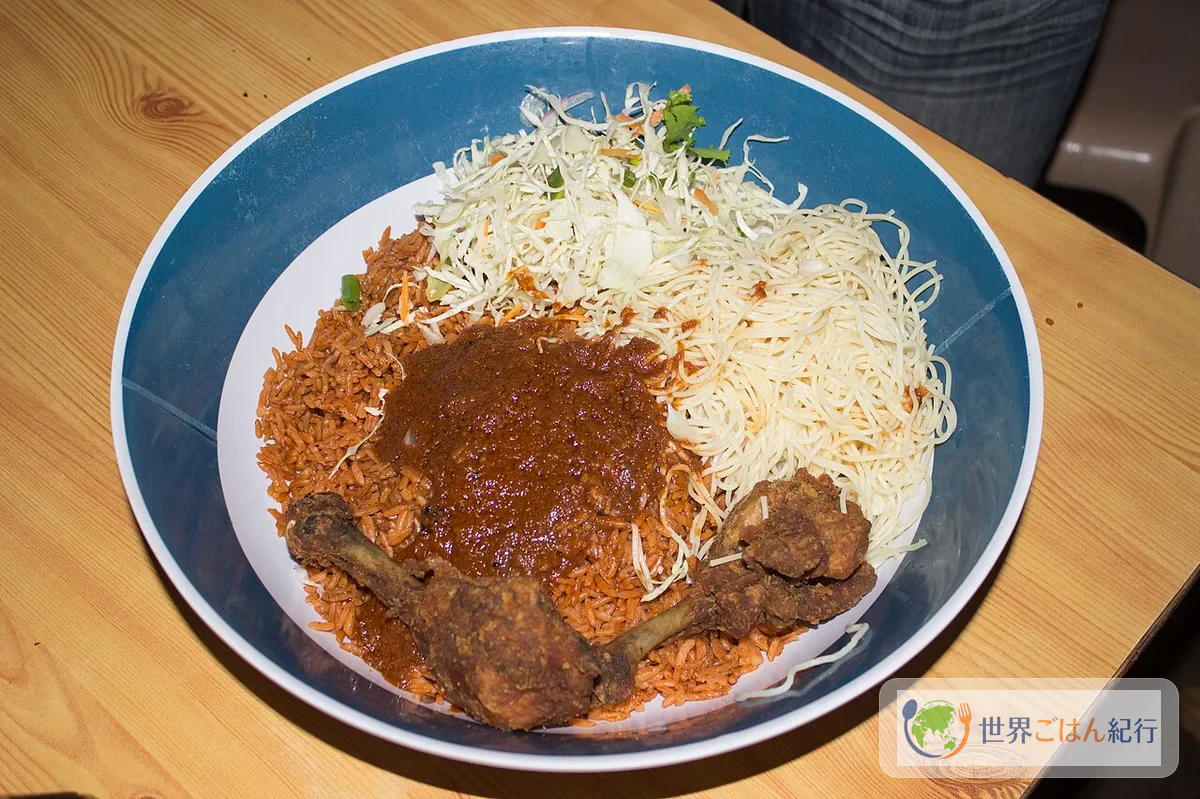
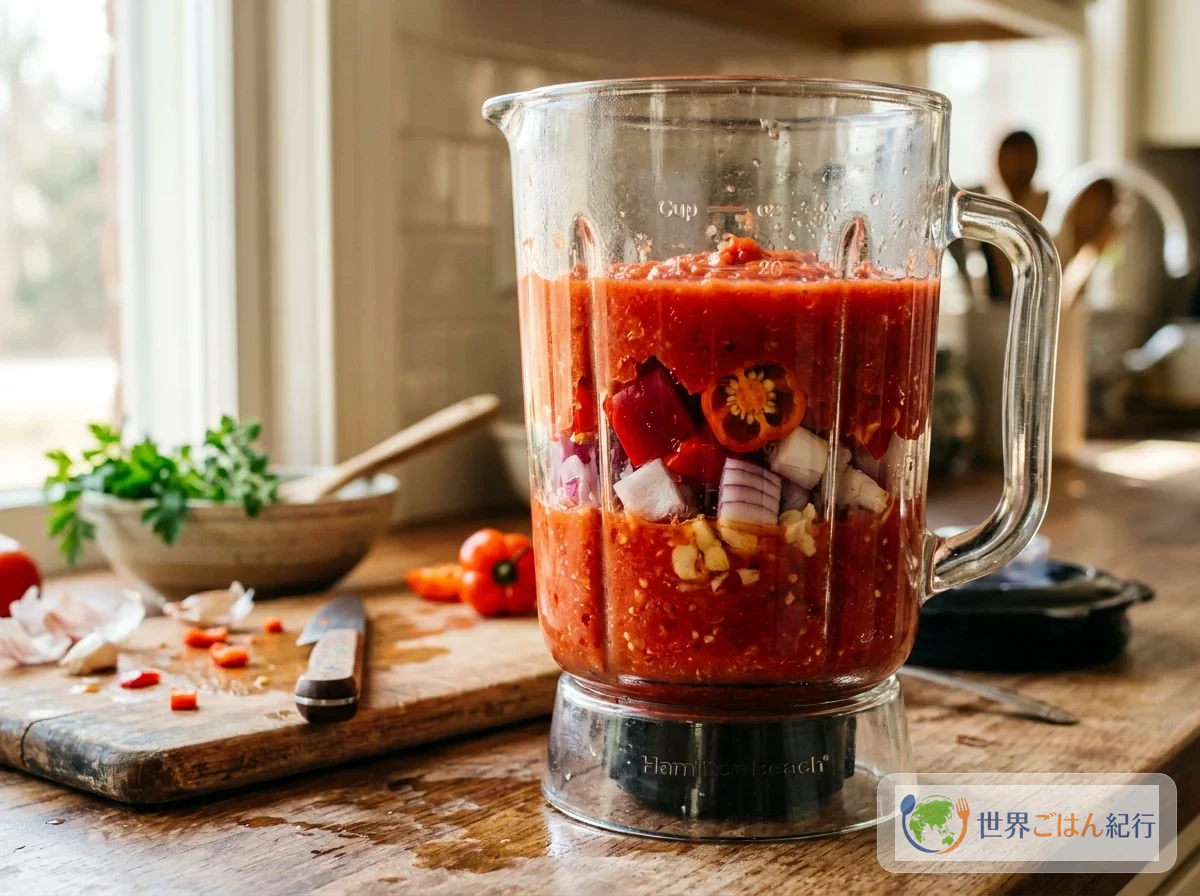
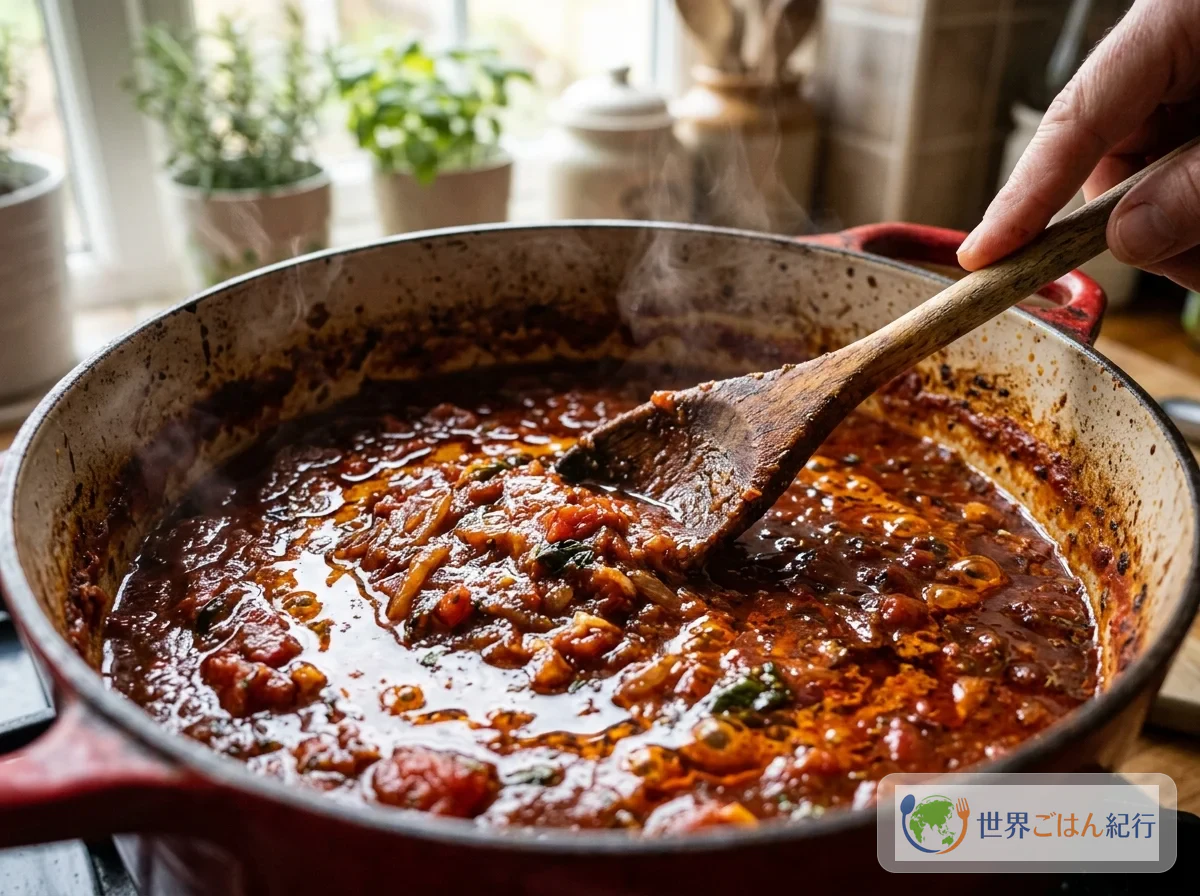
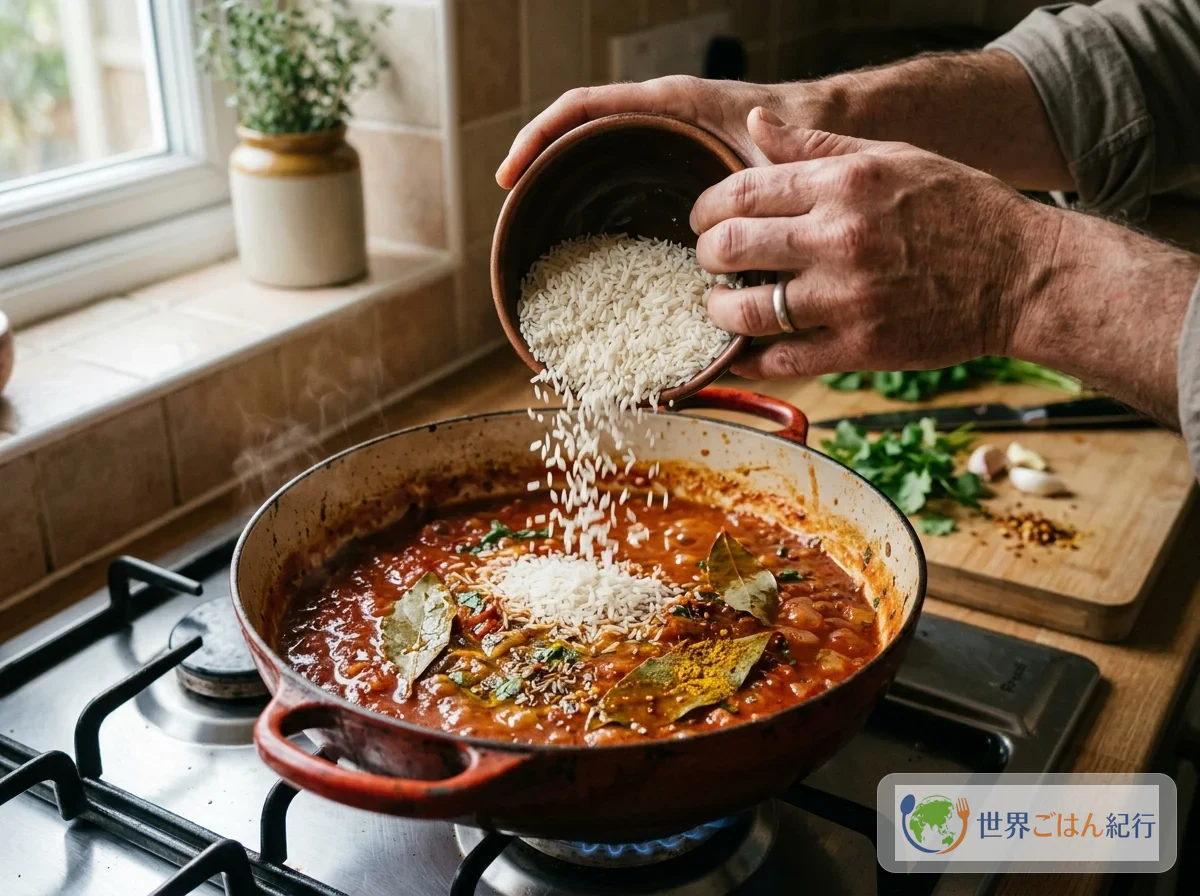
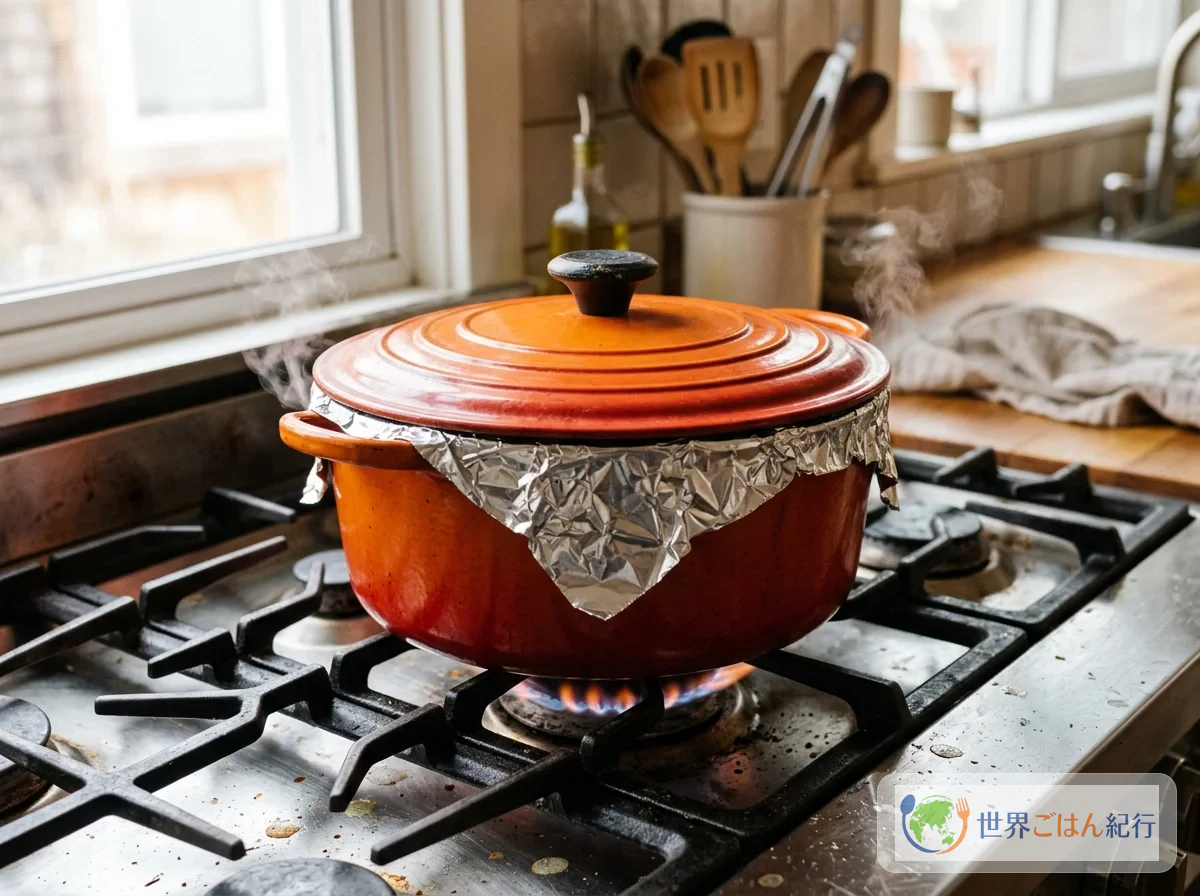
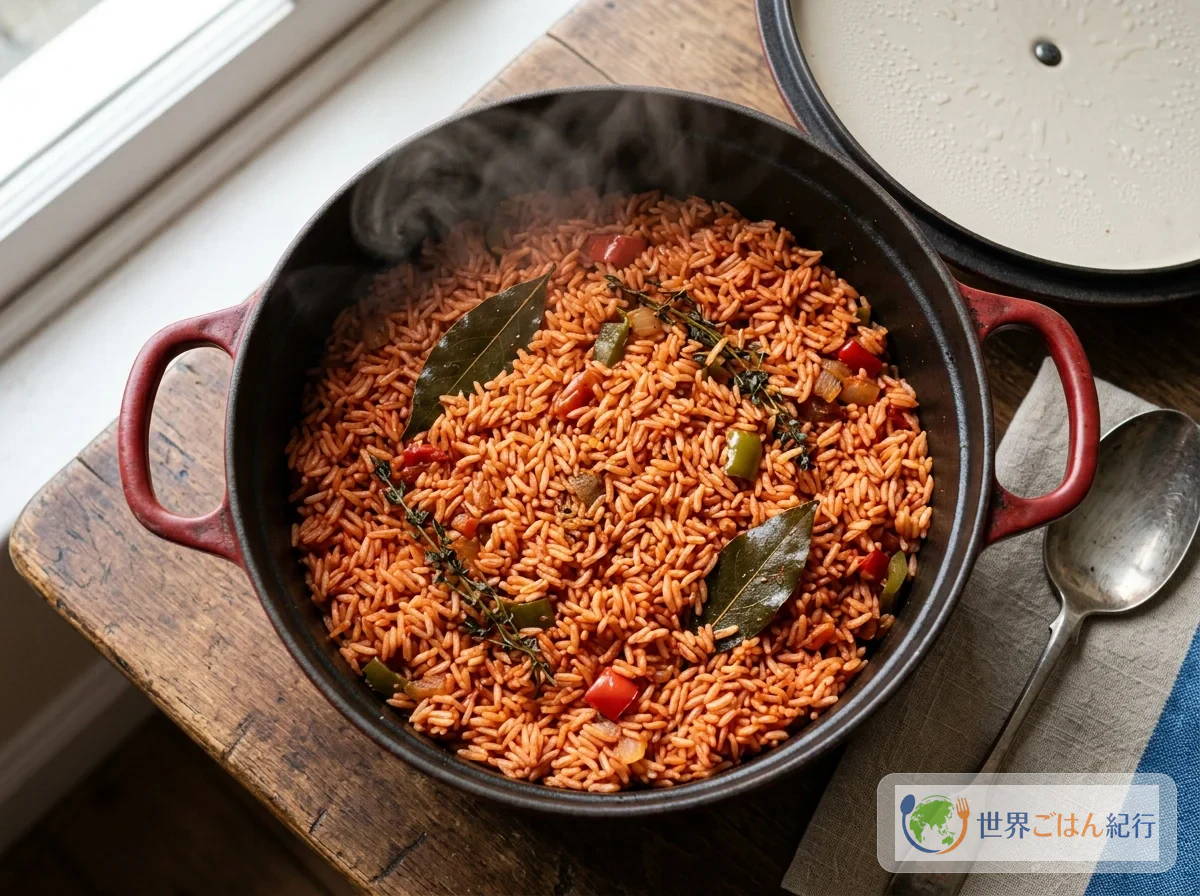
On a West African table you can spot it from across the room: rice grains stained a vivid tomato red, a smoky aroma rising from the pot, and a kick of chile the moment it hits your tongue. Jollof rice is a one-pot rice dish loved in Nigeria, Ghana, Senegal, Cameroon and beyond, and it sits at the heart of the region's cooking. The rice simmers in a reduced base of tomato, pepper and spices until every grain is red and fragrant, and the best part is often the toasty layer at the bottom of the pot. This version is Nigerian style.
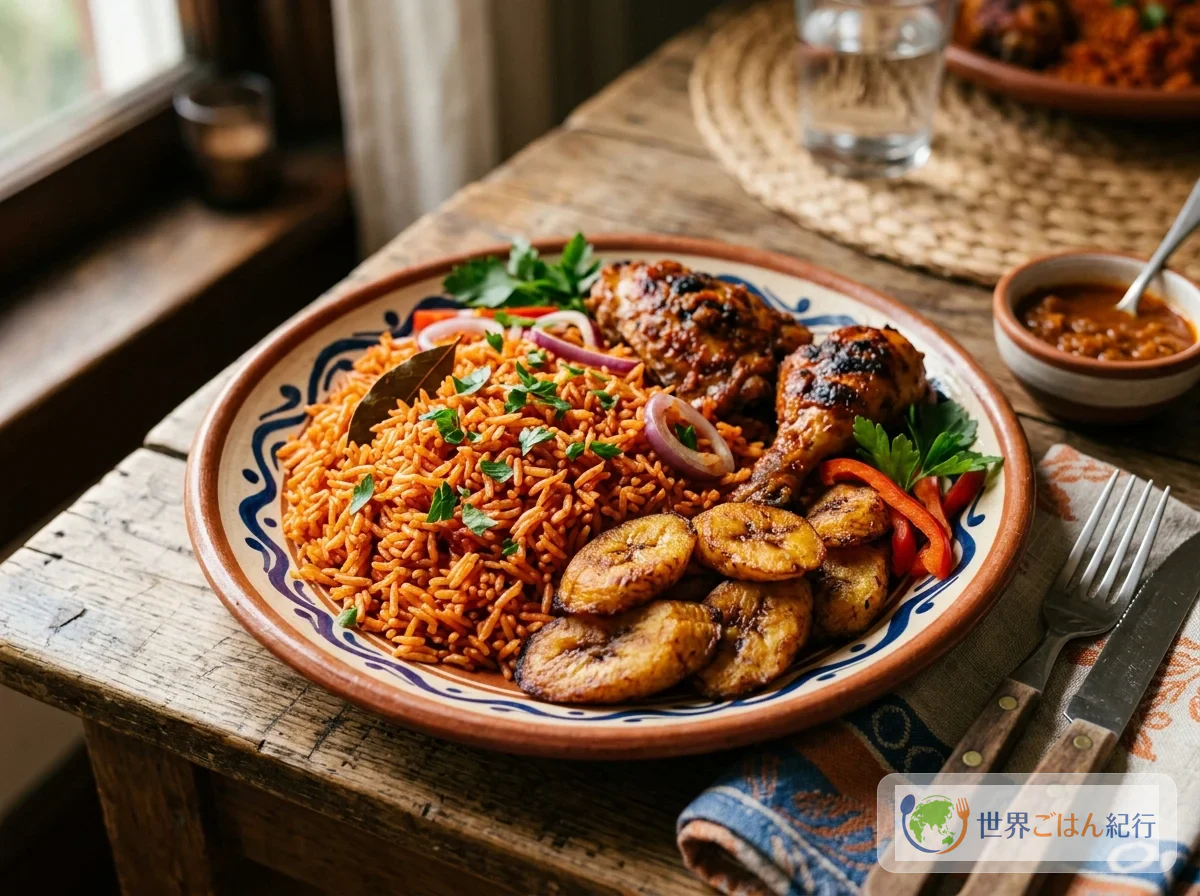
Jollof Rice in West Africa
Where jollof rice comes from
The name comes from the Wolof (Jolof) Empire, which flourished from around the 14th century, centered on what is now northern Senegal. Rice has long been grown there, and it gave rise to ceebu jën, Senegal's rice cooked with fish. From there the dish spread along the West African coast and took on local flavors, becoming each country's own jollof in Nigeria, Ghana, Sierra Leone, Cameroon and elsewhere.
Tomatoes and chiles are native to the Americas. The red jollof we know today only took shape after they arrived through trade and became established in West Africa.
Some people point out similarities between jollof and rice dishes on the other side of the Atlantic, such as jambalaya in the American South. However, no solid record of a direct lineage has been found.
Parties and family meals
Jollof rice turns up at every kind of occasion, from an ordinary lunch to the star dish at a wedding reception, and it's essential at festivals, holidays and family gatherings. In Nigeria, party jollof, cooked in huge pots for celebrations, has a deliciousness all its own. Cooking over a wood fire scorches the bottom of the pot and carries a smoky aroma through the whole batch.
Every family's version is different, and everyone says the best jollof is their mother's. That pride in home cooking stretches all the way to the national level.
Nigeria and Ghana have a long-running, half-joking argument over whose jollof rice is better. Online it is known as the "Jollof Wars," and it has inspired songs and cook-off events. Because the two countries' versions are so similar, the small differences are debated with real passion.
Ingredients (serves 4)
Nutrition
The nutrition figures for this recipe are an estimate for the whole batch (4 servings); one serving is about a quarter of that. Most of the carbohydrate comes from the rice and most of the fat from the cooking oil. Serve it with chicken to add protein.
This basic recipe may contain wheat (some bouillon cubes contain traces). Choose a gluten-free bouillon to avoid it. Capsaicin, the compound that makes chiles hot, can be hard on the stomach, so if you don't like spicy food, leave out the habanero and flavor the rice with paprika alone.
Choosing Ingredients and Equipment for Jollof Rice
Your pot matters as much as anything you put in it. A thin stainless steel pot scorches easily on the bottom and makes the heat hard to control, so a heavy cast-iron Dutch oven, such as Le Creuset or Staub, is ideal. Large aluminum pots are also common in Nigerian homes, and a clay pot works if you have one.
For the oil, Nigeria also has "native jollof," cooked with red palm oil instead of vegetable oil. Replacing 2 tbsp of the vegetable oil with palm oil adds an orange tint and a distinctive aroma. The flavor is strong, so start with a small amount the first time.
Common Jollof Rice Problems
Rice that isn't red
Almost always, the tomato base wasn't reduced enough or there wasn't enough tomato paste. Use at least 3 tbsp tomato paste, and reduce the base until oil floats on the surface. Extra paprika also boosts the color, and red palm oil makes a dramatic difference.
Mushy rice
Check that you're using long-grain rice: short-grain rice won't give you separate grains, so use basmati or jasmine. It's also important to cook off the liquid in the tomato base well before adding the rice, and not to add too much water. Use about ¾ cup (200 ml) water as a guide; if your tomato base is well concentrated, you can cut it to ½ cup (150 ml).
No crispy crust (bottom pot)
The toasty crust on the bottom of the pot, called "bottom pot" in Nigeria, only forms if you turn the heat up to medium for the last 5 minutes of cooking; on low the whole time, you won't get one. Listen for crackling 2–3 minutes after turning up the heat. That's your sign of success. If the heat is too high or you walk away, though, it will burn black, so let the sound guide your timing. A heavy pot gives a more even crust.
Serving, Storing and Variations
Classic Nigerian sides
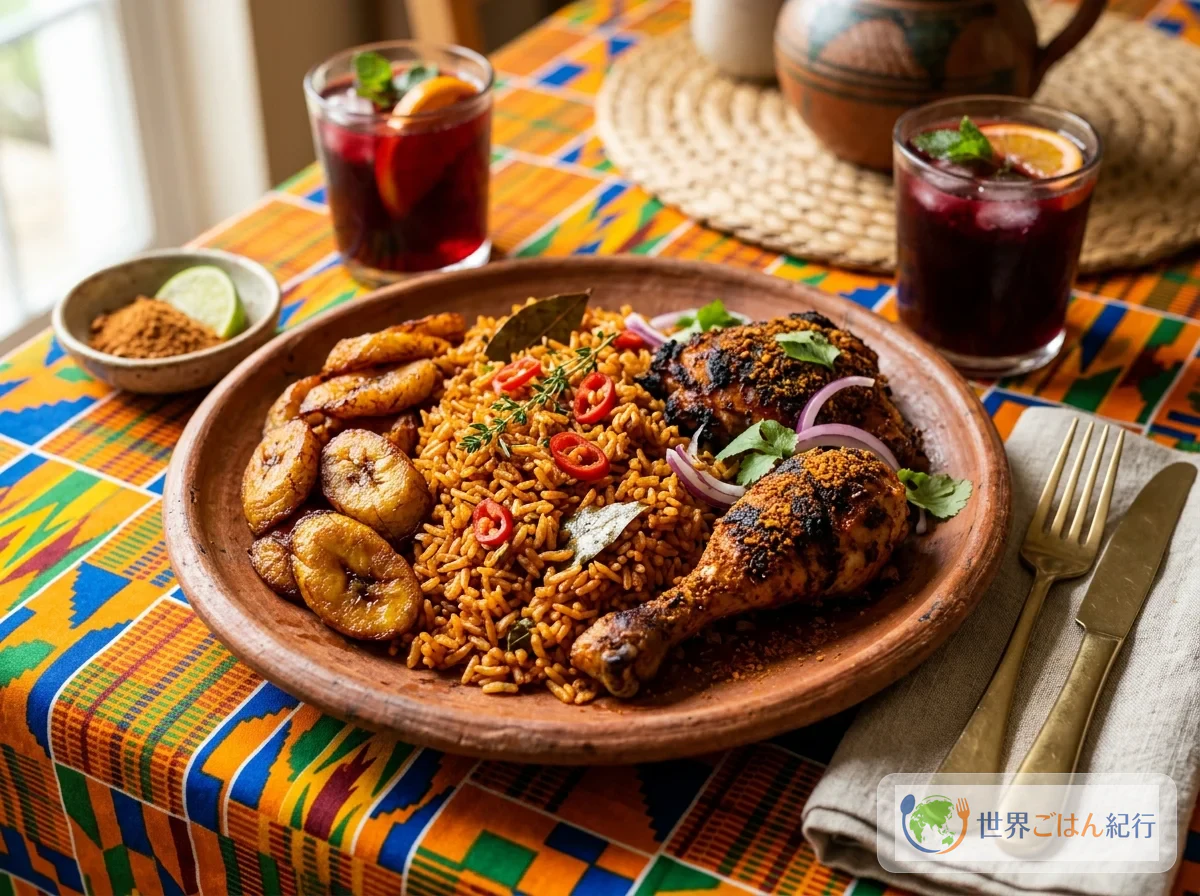
Jollof rice is complete on its own, but on West African tables it always comes with side dishes. At Nigerian parties, several are laid out around the jollof and everyone builds their own plate.
- Fried plantain (dodo): ripe plantains cut on the diagonal and fried in oil. Their sweetness balances jollof's heat. If plantains are hard to find, thick slices of very ripe banana pan-fried in butter make a stand-in
- Coleslaw: cabbage and carrot dressed with mayonnaise. Surprisingly, it's a staple at Nigerian parties and shows a Western influence
- Moin moin: a steamed pudding of puréed black-eyed peas, rich in protein, that rounds out the meal
- Grilled chicken (suya-style): chicken marinated in a spicy mixture and grilled. In Nigeria, jollof rice and chicken are the golden pairing
Instead of plantain, thinly sliced sweet potato roasted in olive oil and sprinkled with salt goes beautifully. For the chicken, rub chicken thighs with curry powder, paprika, garlic, ginger and salt and cook them under the broiler for a taste of suya-style chicken.
Making it ahead
If you make the tomato base the day before and refrigerate it, the spices meld and the flavor deepens. On the day, all you do is add the rice and cook it, which is handy for parties. Because it keeps well, jollof is also useful for weeknight dinners, and it makes a great weekend lunch.
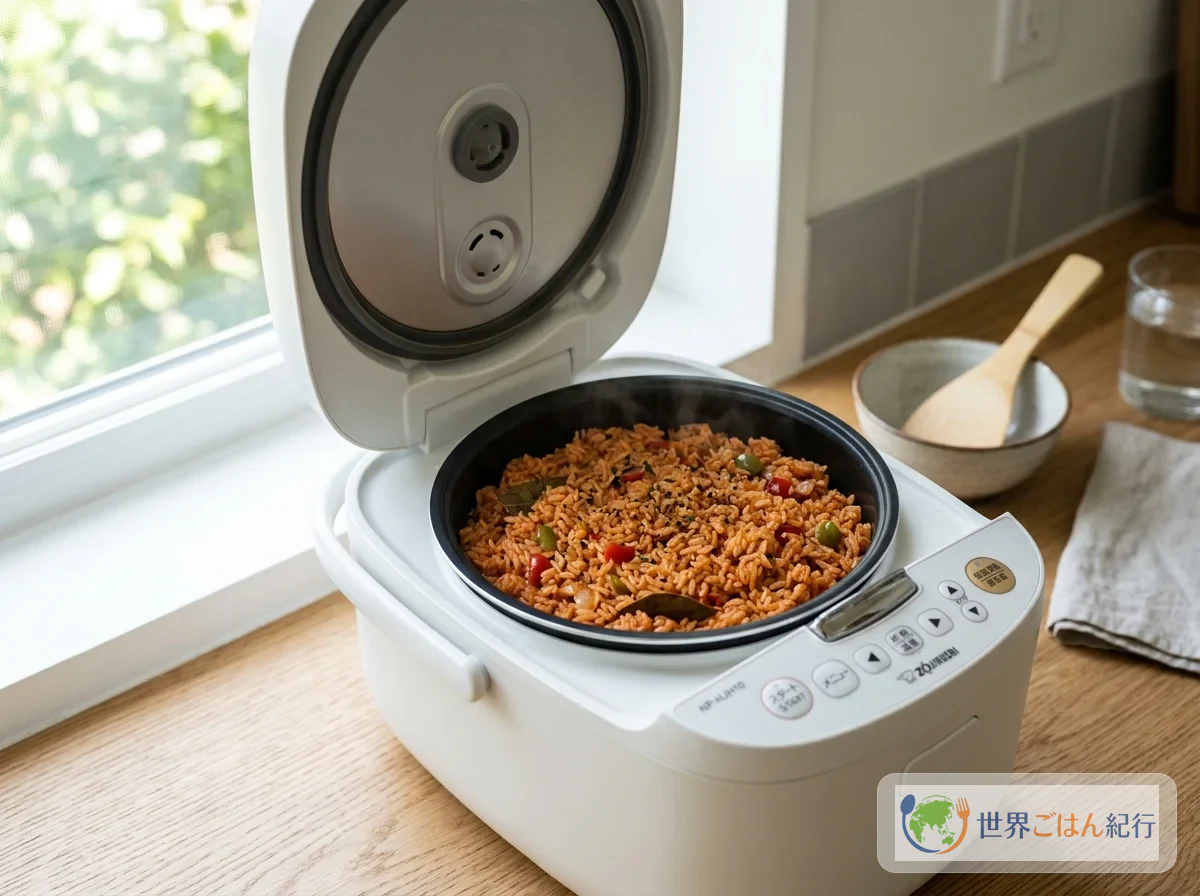
A rice cooker shortcut
On busy days, put the reduced tomato base, rinsed long-grain rice, spices and water into the inner pot of a rice cooker and cook on the regular setting. To allow for the moisture in the tomato base, use ½ cup (100 ml) less water than you'd normally use for that amount of rice. You won't get the crispy bottom, but the flavor is plenty authentic.
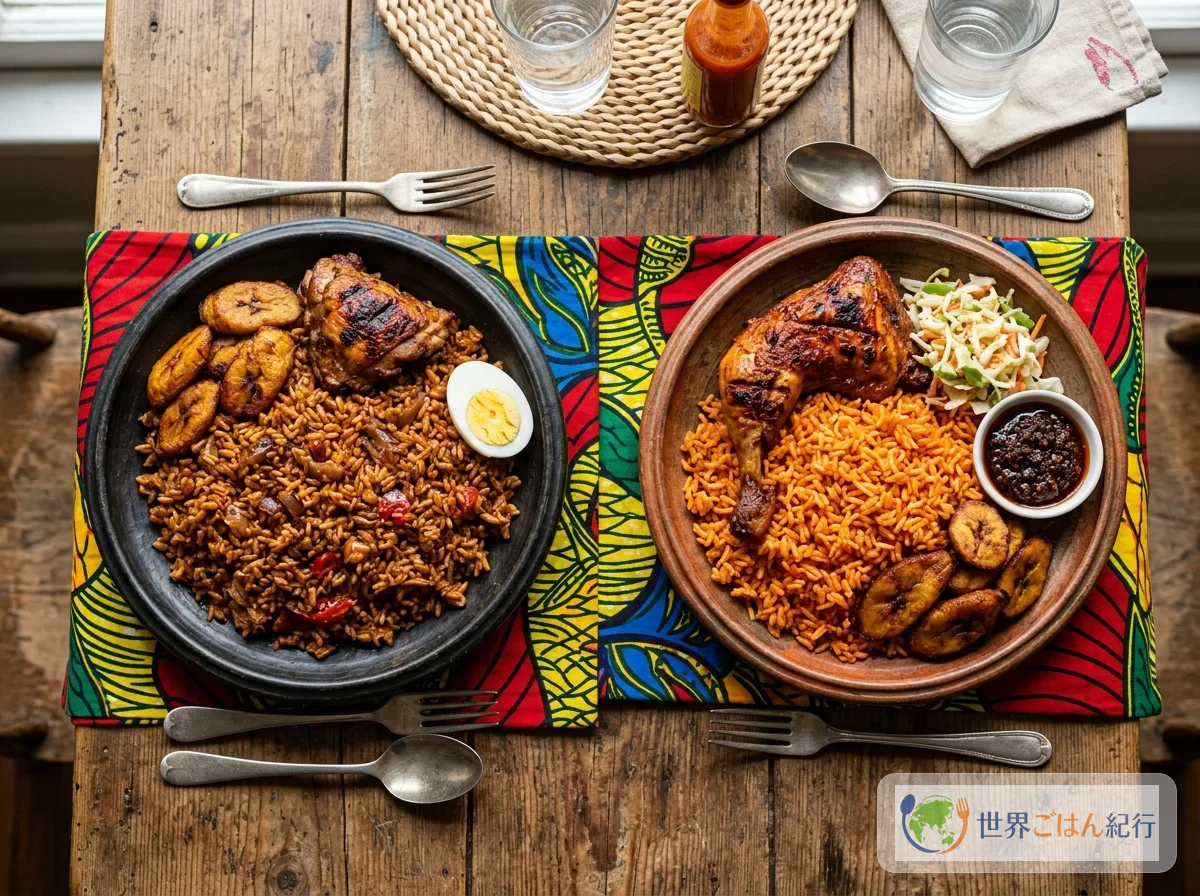
Ghanaian jollof rice
Nigerians prefer parboiled long-grain rice, while Ghanaians favor fragrant long-grain rice such as basmati. In Ghana, jollof is often served with a chile paste called shito, a deeply savory condiment of dried shrimp, chiles, onion and garlic slowly cooked in oil.
Senegalese ceebu jën (thieboudienne)
Jollof's ancestor is cooked with fish and vegetables (such as carrot, cabbage, eggplant and okra) in the same pot; in Wolof, "ceebu" means rice and "jën" means fish. In 2021, ceebu jën was recognized as intangible cultural heritage. At home, use white fish fillets and whatever vegetables you like.
Cameroonian jollof rice
Cameroon and other neighboring countries have their own jollof too, and some versions add the savory depth of seafood such as dried shrimp. Finely crushing 2 tbsp small dried shrimp and adding them gives a similar kind of savoriness.
Japanese-style "jollof-inspired tomato rice"
With short-grain Japanese rice, it's best to enjoy it as "jollof-style" rice rather than jollof rice itself. Put 2 rice cups of Japanese rice, 1/2 can tomatoes, 1 bouillon cube, 1/2 tsp curry powder and 10 g butter in a rice cooker, cook on the regular setting and finish with chopped parsley. It won't be fluffy and separate, but it makes a delicious, comforting tomato rice.
Vegetarian and vegan jollof
Swap the chicken bouillon for vegetable bouillon. For more depth, finely chop 2–3 mushrooms and sauté them with the onion. The vegan version works the same way, and using palm oil as the cooking oil brings the color and flavor closer to the original.
Frequently asked questions
Q1. I can't find habaneros. What can I use instead?
Three small dried red chiles, finely chopped with their seeds, plus 1 tsp ground red chile will get you close on heat, though not the habanero's distinctive fruity aroma. If you can find dried habanero powder (online, for example), adding 1/2 tsp brings the heat closer to the original.
Q2. How can I make it less spicy for kids?
Leave out the habanero entirely and increase the paprika to 2 tsp. That keeps the spice flavor while removing all the heat. If the tomato's acidity bothers you, adding 1 tsp sugar gives a mild flavor that kids find easy to eat.
Q3. Can I freeze it?
Yes. Once the cooked jollof rice has cooled, spread it thinly in a zip-top freezer bag and freeze; it keeps for about 1 month. Thaw it in the microwave, then stir-fry it in a pan with a little oil to bring back the separate grains. Stir-fry it with egg and it becomes a whole new dish: jollof fried rice.