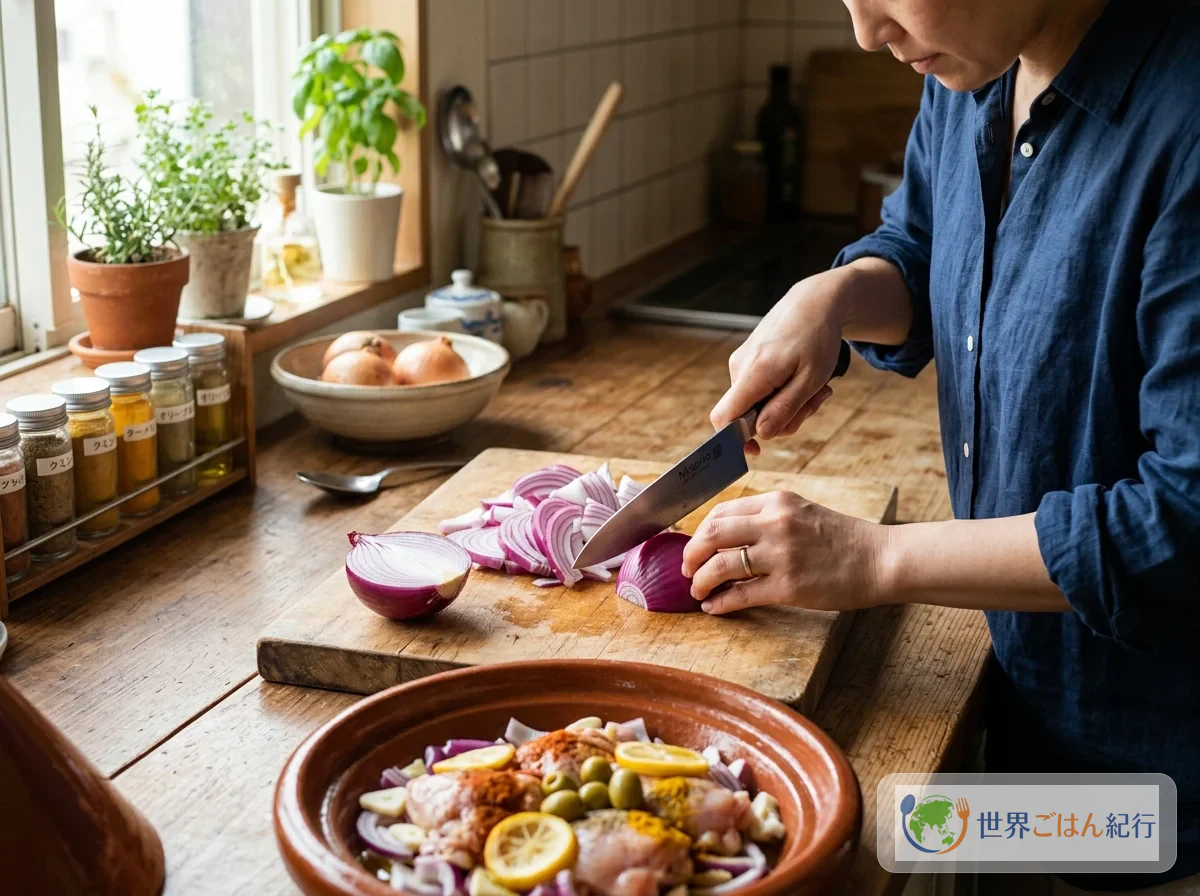
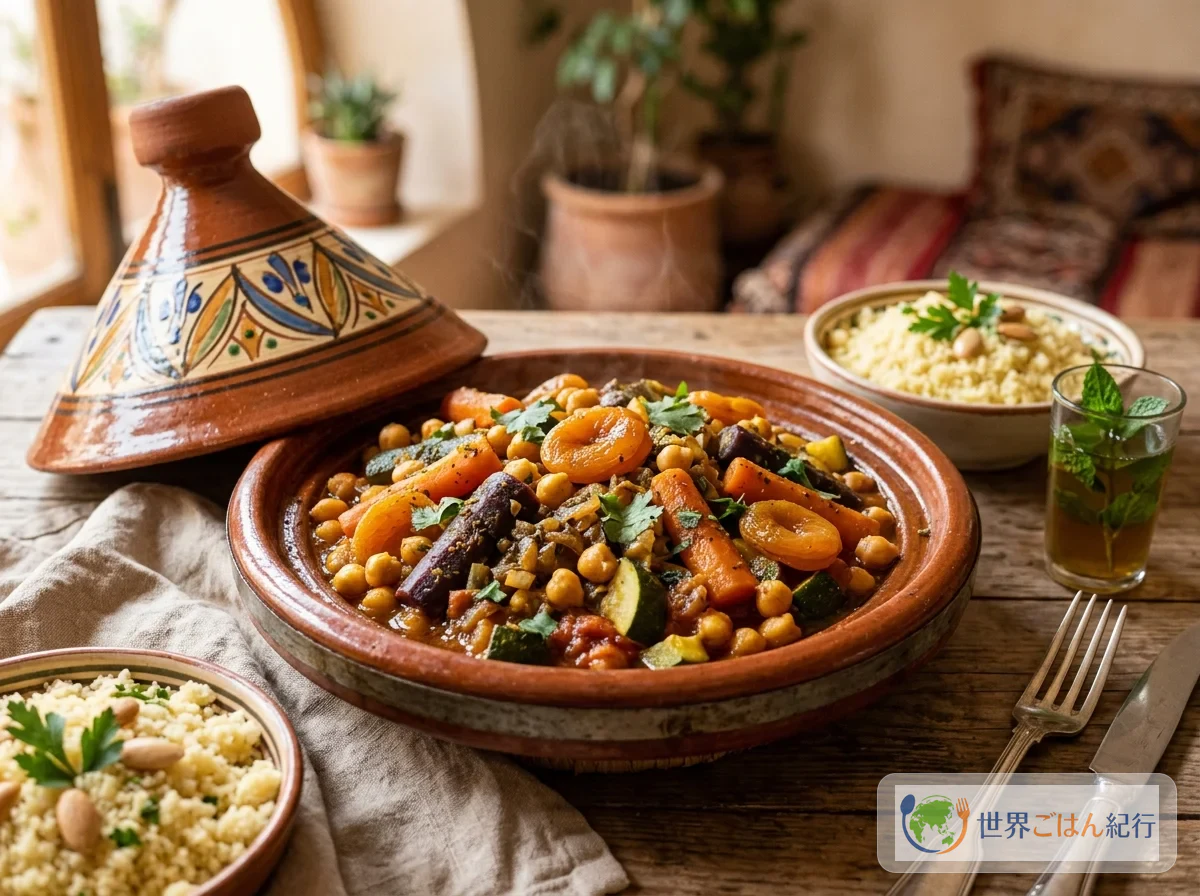
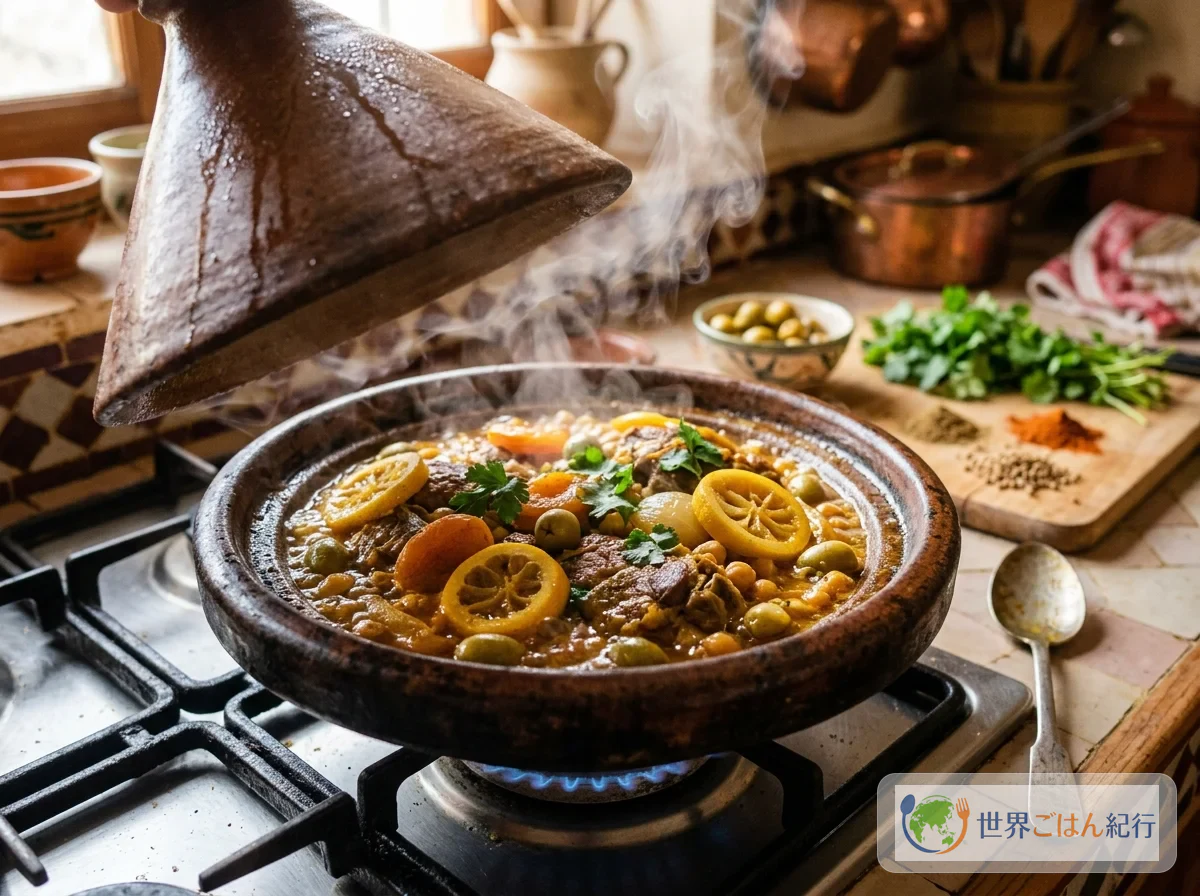
Pinch the knob of the lid with a cloth and lift it slightly. The steam that has risen runs down the inside of the cone and drips back into the pot, and the sweetness of the onion, the fat of the chicken, the peel of the preserved lemon, and the saltiness of the olives stop being separate and become one sauce. That is tagine (tajine / tagine), a Moroccan dish named after the pot it is cooked in. Whatever goes inside, the method stays the same: a small amount of liquid circulates under the lid while everything simmers slowly over low heat.
Tagine in Moroccan Homes
In Morocco, tagine names both a vessel with a conical lid and a way of cooking food in very little liquid, so it has no fixed ingredients. Seasonal vegetables, meat, fish, herbs, preserved lemon, and dried fruit all go in, and at home everyday ingredients such as chicken and onion can be the star. Whatever leads in the pot changes the order in which the aromas rise and how long it cooks.
| Type | Main ingredients | Notes for the home cook |
|---|---|---|
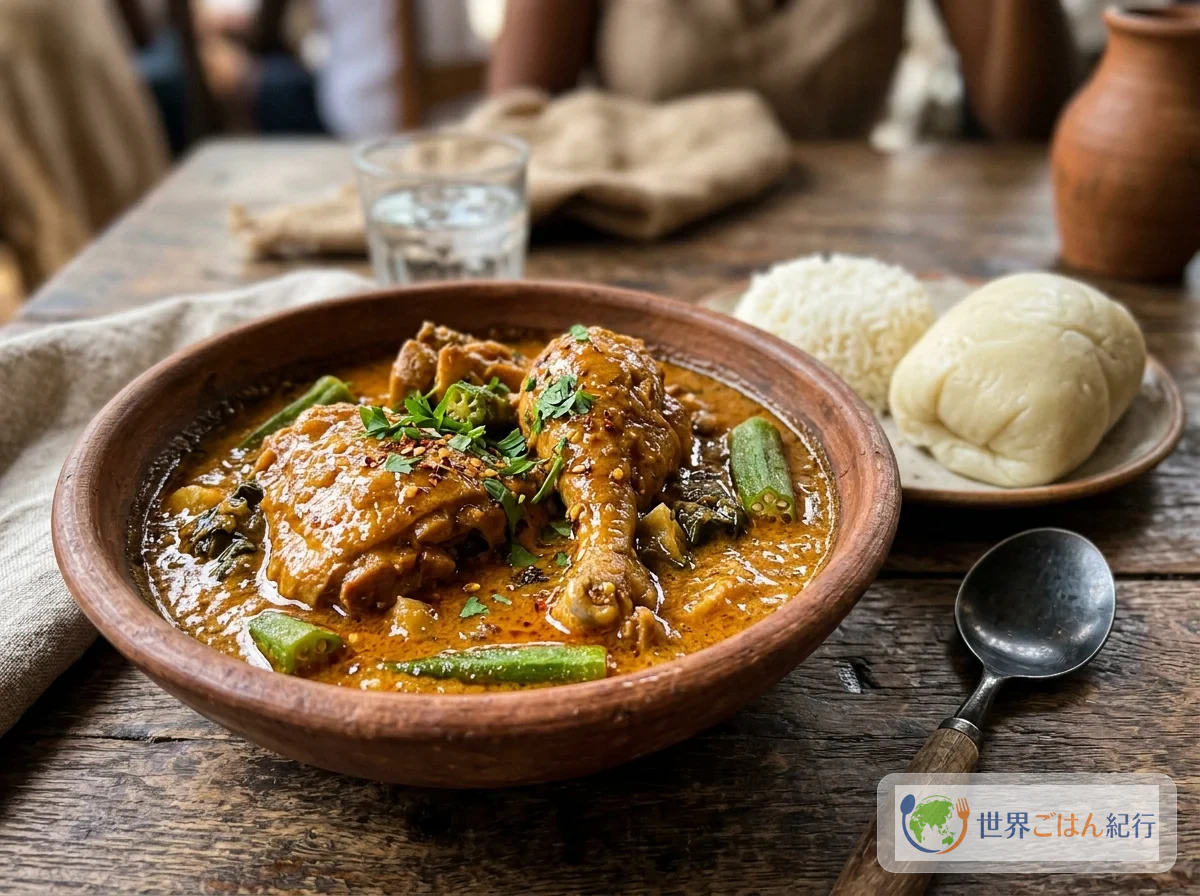
| Chicken tagine | Chicken, preserved lemon, olives | Best for a first try. Easy to reproduce with chicken thighs and fresh lemons |
| Lamb tagine | Lamb, apricots, prunes, almonds | Enjoy the sweetness and the fat of the meat. Beef shank if you cannot find lamb |
| Fish tagine | White fish, tomato, coriander | Leans toward coastal flavors. Shorten the cooking time |
| Vegetable tagine | Chickpeas, root vegetables, zucchini | Works without meat. Do not add too much water |
| Tunisian tagine | Eggs, meat, cheese, herbs | A different dish from the Moroccan stew, closer to a baked dish |

Tagine is a showy plate for visitors, but it is just as much an everyday home pot dish. At the table everyone gathers around the pot itself and catches the sauce with bread or couscous. Unlike a stew you ladle onto plates, lifting the lid becomes part of the meal.
Ingredients: Chicken Tagine for 4
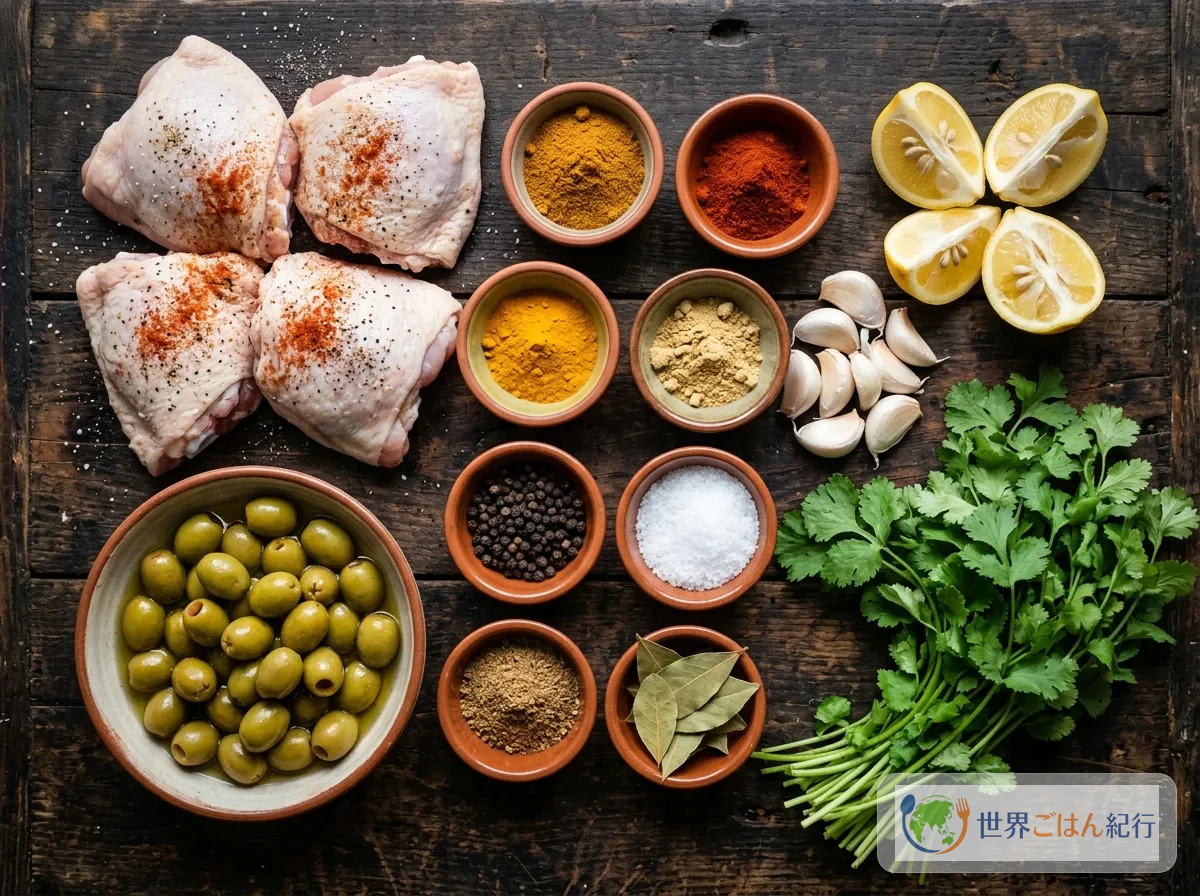
Bone-in chicken thighs or drumettes release flavor even in a small amount of liquid. Boneless thighs also work; use 1.75 lb (750 g) and start checking the internal temperature after the 30-minute mark in step 5. Rest the meat as soon as it is cooked.
This recipe uses chicken. If you serve couscous or bread as the starch, note that they contain wheat. The lamb variation uses almonds, so watch for tree nuts. Commercial ras el hanout differs in ingredients and allergen labeling from product to product, so if you have an allergy, check the label of the jar you buy.
Choosing Spices, Preserved Lemon, and a Pot for Tagine
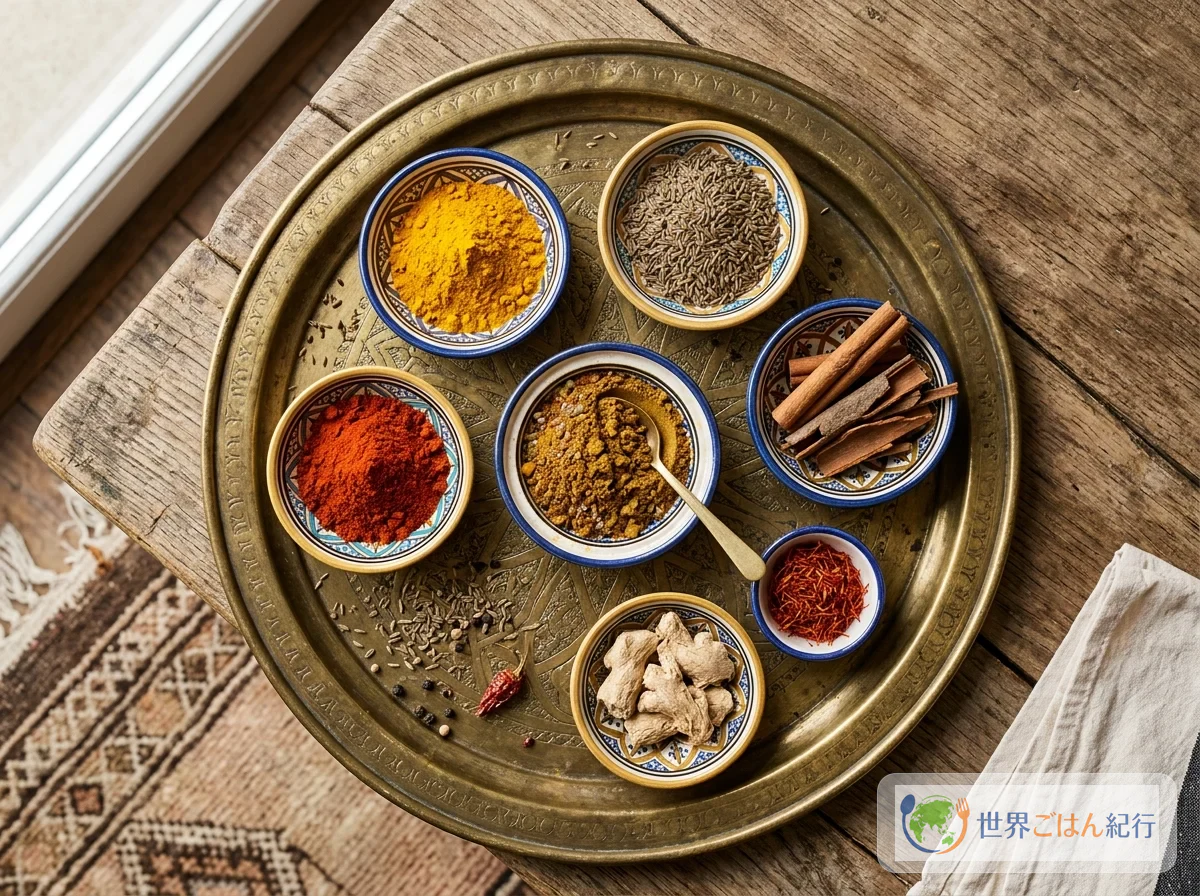
The chicken and onions are easy. The things that are hard to find at a local supermarket are ras el hanout, saffron, and the pot. Lemons, olives, and herbs are better bought in person, so you can judge their aroma and freshness.
Ras el hanout
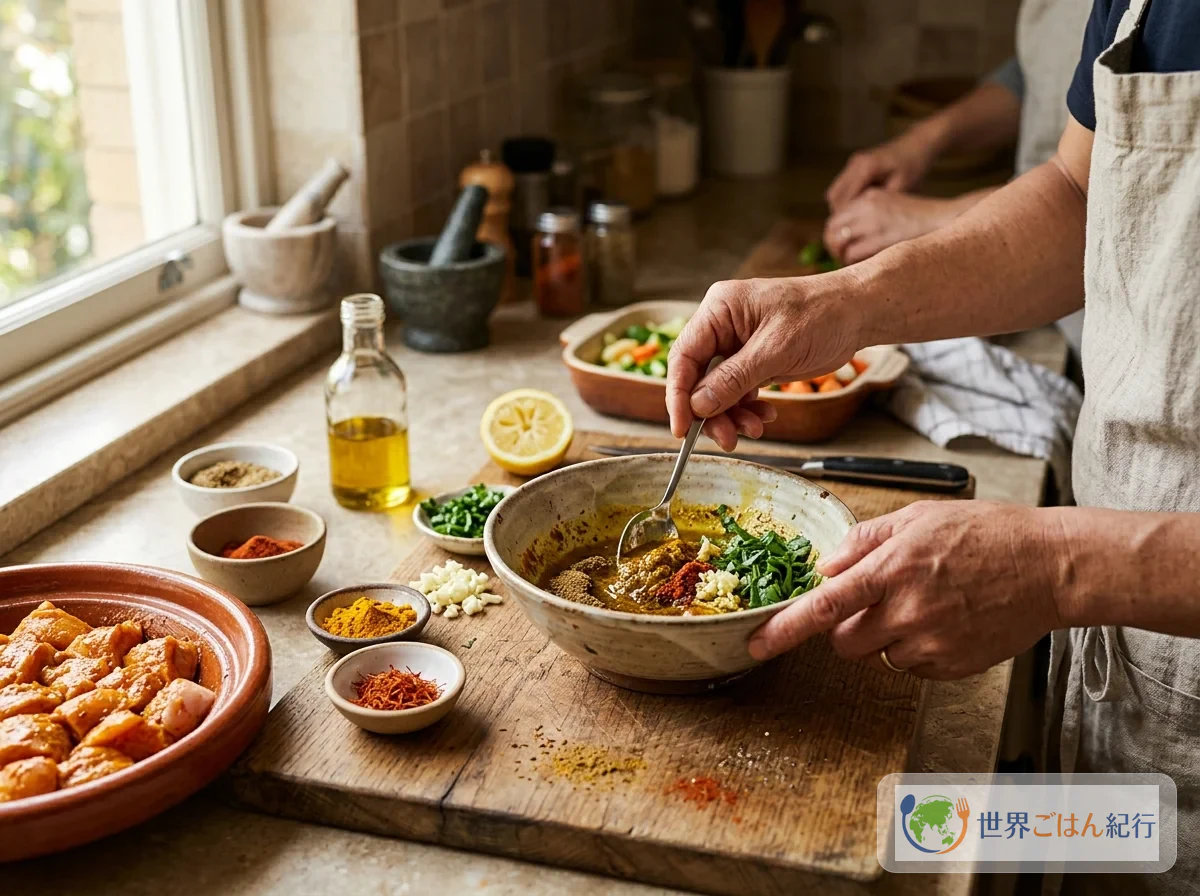
Ras el hanout is a spice blend common in Moroccan cooking, and its name means "the best of the shop." Blends differ from shop to shop and from home to home. You can buy a jar, which will also serve lamb and vegetable tagines, or mix your own from spices you already have.
If you cannot find it at a specialty or import grocer, this blend makes one batch.
| Spice | Amount |
|---|---|
| Cumin | 1 tsp |
| Ground coriander | 1 tsp |
| Turmeric | 1/2 tsp |
| Cinnamon | 1/4 tsp |
| Cardamom | 1/4 tsp |
| Ground ginger | 1/4 tsp |
| Smoked paprika | 1/2 tsp |
| Black pepper | 1/4 tsp |
The total is a little over 1 tbsp. The chicken recipe uses 1 tbsp; keep the rest for adjusting at the end. Old powders with faded aroma leave only the saltiness of the lemon and olives standing out, so a small amount of fresh spice gives a steadier flavor.
Preserved lemon
Preserved lemon is salt-cured lemon peel. It is more salty than sour, with the aroma of citrus peel and a fermented roundness. Store-bought is easiest and has a rounder aroma and deeper saltiness, but for a first try, briefly salting fresh lemon peel is enough to give the dish its outline.
- Store-bought: look for preserved lemons at import or Middle Eastern grocers
- Quick substitute: thinly slice the peel of 1/2 fresh lemon, toss with 1 tsp coarse salt, and leave for 10 minutes
- Even simpler: add the grated zest of 1/2 lemon, 2 tsp lemon juice, and 1/3 tsp salt at the end
Saffron
Saffron is optional; turmeric alone covers the color. Still, a pinch soaked in warm water deepens both color and aroma, which is worth it for lamb or for guests. More is not better. Check the quantity and grade on the label, and don't confuse it with the saffron-style seasonings sold under similar names.
The pot
A heavy pot with a lid, low heat, and a small amount of liquid are enough to learn how a tagine cooks. For four servings, start with a wide, heavy pot. A dedicated tagine pot lets you feel the moisture return under the shallow base and conical lid, and it suits people who will make the dish often. A small 5.5 inches (14 cm) pot is for one or two trial servings or a side dish, not a main dish for four.
If you buy one, check that the listing states the diameter, the material, the handle, and whether it is flameproof. Flameproof does not mean induction compatible, so check your stove type too. Choose by the interior size and capacity given, not the product name, and remember that many of the bright lids in markets are decorative rather than working pots.
Instructions
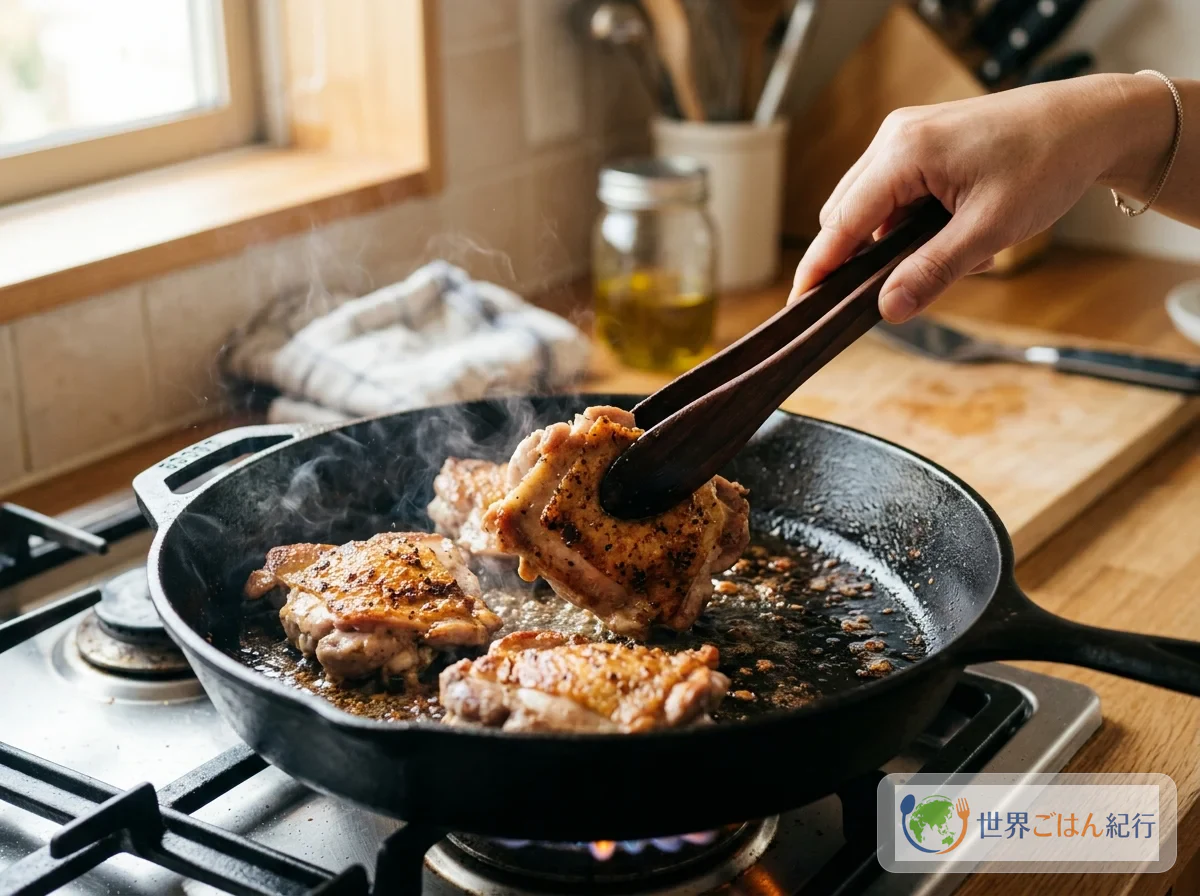
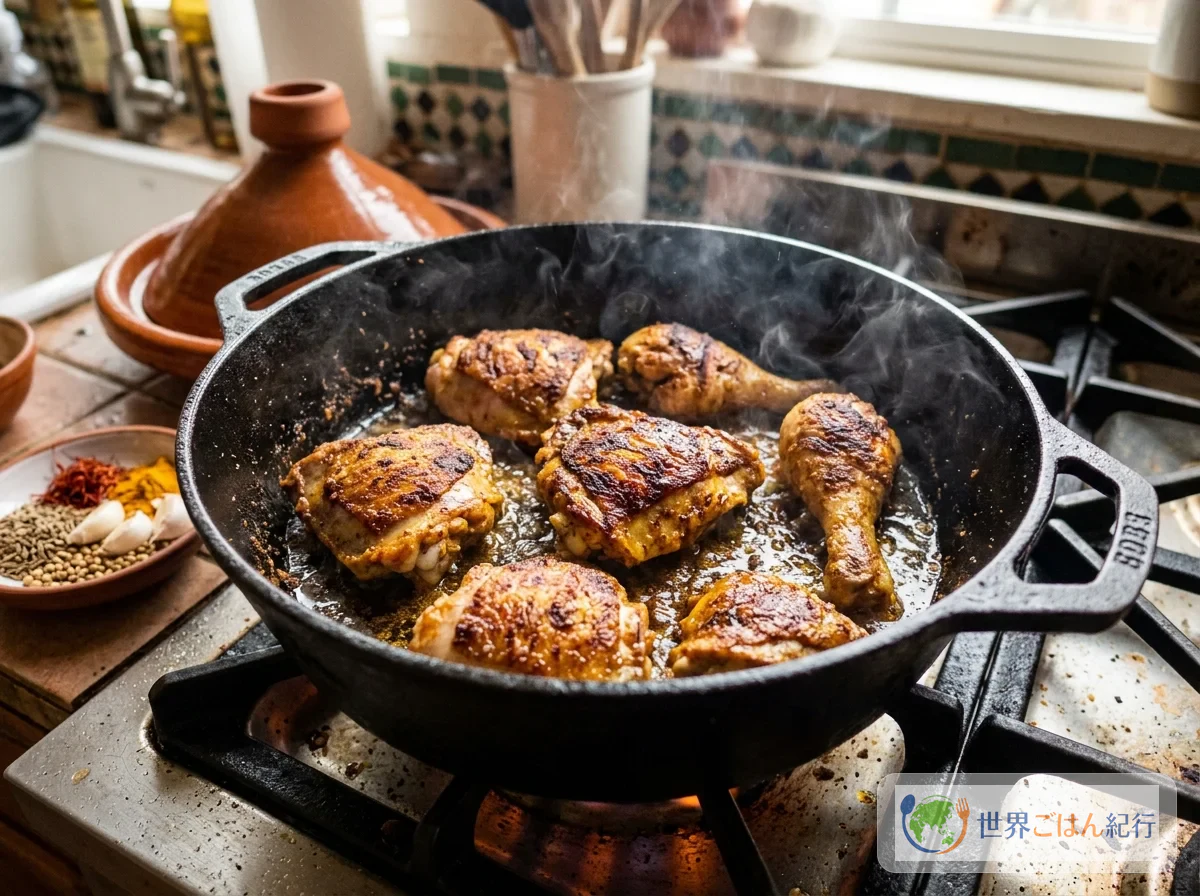
Do not boil tagine hard over high heat. Put in the aroma first, sear the surface, then cook through over low heat while returning the moisture. Check with a thermometer that the chicken reaches an internal temperature of 165°F (74°C) or higher. Without a thermometer, check that the meat is white all the way to the bone with no red left.
Where Chicken Tagine Goes Wrong
Three habits keep the dish on track, with or without a dedicated pot: go easy on the water, let the steam return to the pot over low heat, and adjust the lemon and any fruit at the end. Reduce over high heat, pile on spices, or salt at the end instead, and the lemon peel and the sweetness of the onion get lost.
| Symptom | Cause | Fix |
|---|---|---|
| Chicken is tough | Kept simmering at medium heat or above | Drop to low as soon as it bubbles, keeping only small bubbles |
| Too salty | Did not account for the saltiness of the preserved lemon and olives | Soak olives in water for 5 minutes and adjust the lemon juice at the end |
| Watery | Too much water at the start | Stock only ¾ cup (180 ml). If adding, 3.5 tbsp (50 ml) at a time partway through |
| Perfumy | Too much saffron or cinnamon | A pinch of saffron; keep cinnamon to the lamb variation only |
| Scorched bottom | Thin pot and high heat | Lay onions on the bottom, lower the heat, and loosen the bottom with 1 tbsp water |
| Clay pot cracks | Sudden heating or cooling | Use only flameproof ones and warm from low heat. Never pour cold water on a hot pot |
The most common mistake is treating it like a stew and adding lots of water. A tagine is meant to return the moisture that comes out of the ingredients, not to make soup. If the liquid comes above halfway up the meat, you've added too much; if it looks a little short, check partway through and add a little at a time so the lemon and onion stay clear.
Serving, Storage, and a Lamb Variation
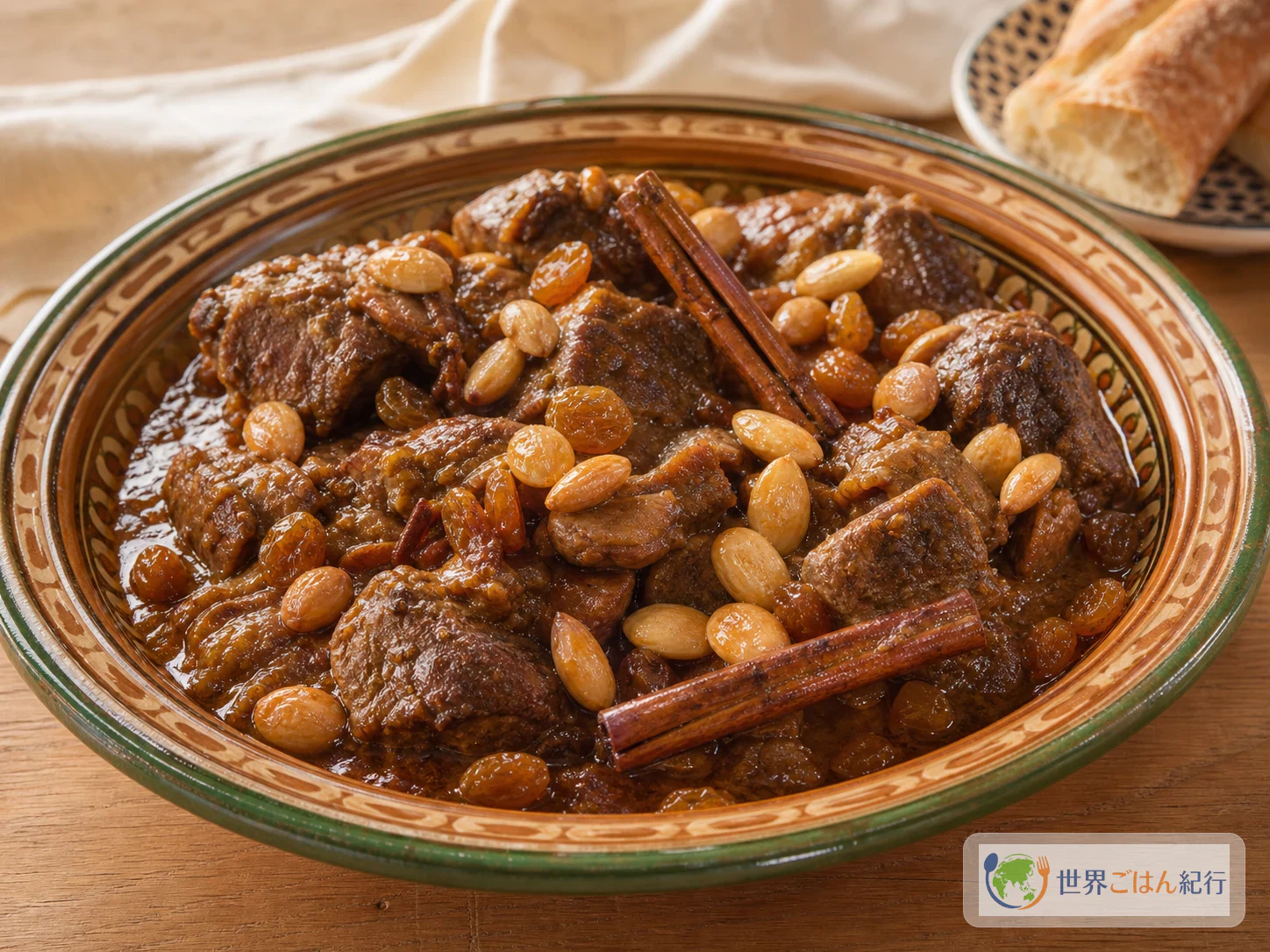
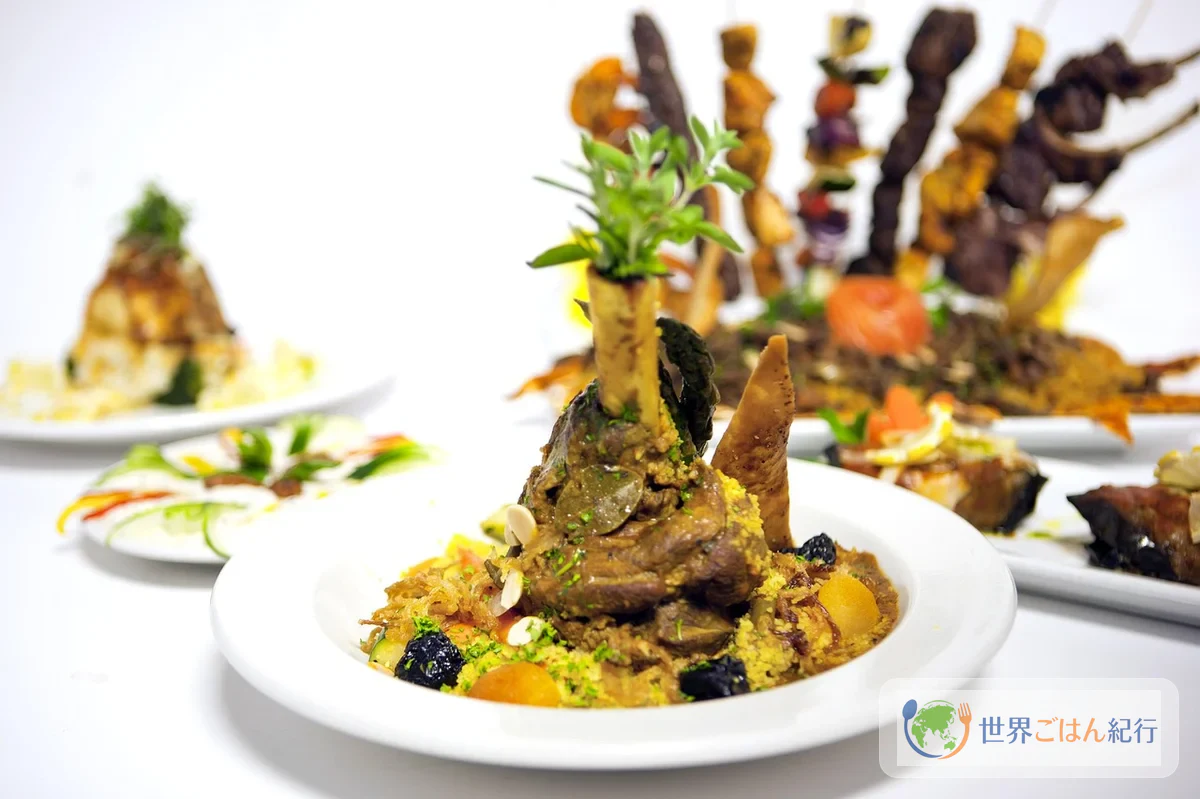
Lamb and apricot tagine
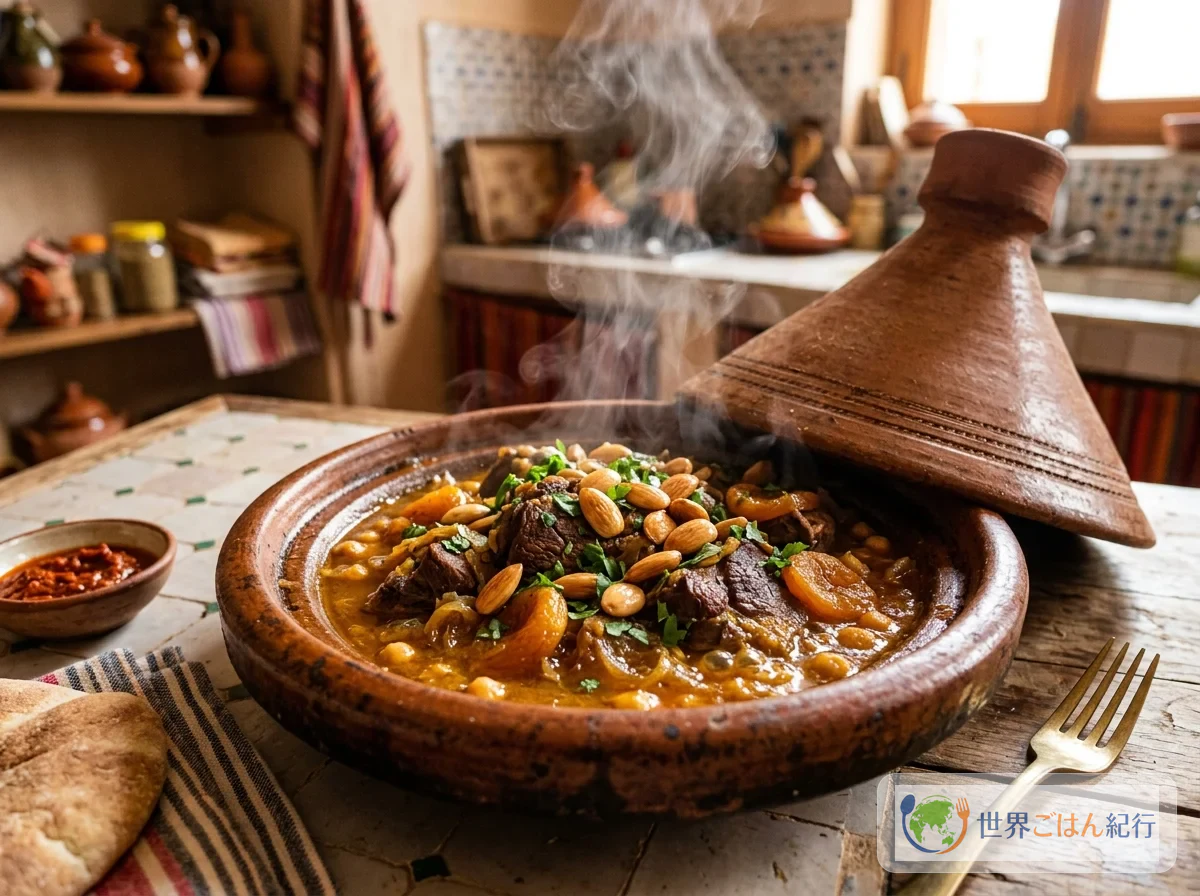
On days when you want a sweet tagine, switch to lamb shoulder and dried apricots; only the thickness of the meat and the moment the fruit goes in really change. The sweetness of the fruit sits over the fat of the meat, and as the plate reaches the table the spices come first and the apricot follows. It looks close to dessert, but if you're used to sweet-savory braises, you'll read the sweetness as depth in the sauce.
For four servings, cut 2 lb (900 g) lamb shoulder into 1.5 inches (4 cm) cubes and rest for 30 minutes with 1 1/4 tsp salt, 1 tbsp ras el hanout, 12 g garlic, and 10 g ginger. Sear all sides over medium heat, cook 8 oz (220 g) onion, add 1¼ cups (300 ml) water or light stock and 1 cinnamon stick, and simmer on low heat for 90 minutes. When chopsticks or a fork slide easily into the meat, add 3.5 oz (100 g) dried apricots, 2 oz (60 g) prunes, and 2 tsp honey and cook on low for 20 minutes. Finish with 1 oz (30 g) dry-toasted almonds.
If you cannot find lamb, beef shank works, but extend the simmer to around 120 minutes. Pork shoulder also works, though the aroma drifts toward a plain stew. Honey cannot be taken back out, so add only 1 tsp more at the end if needed. For another sweet meat dish, mrouzia layers lamb, raisins, and almonds.
Building a Moroccan meal
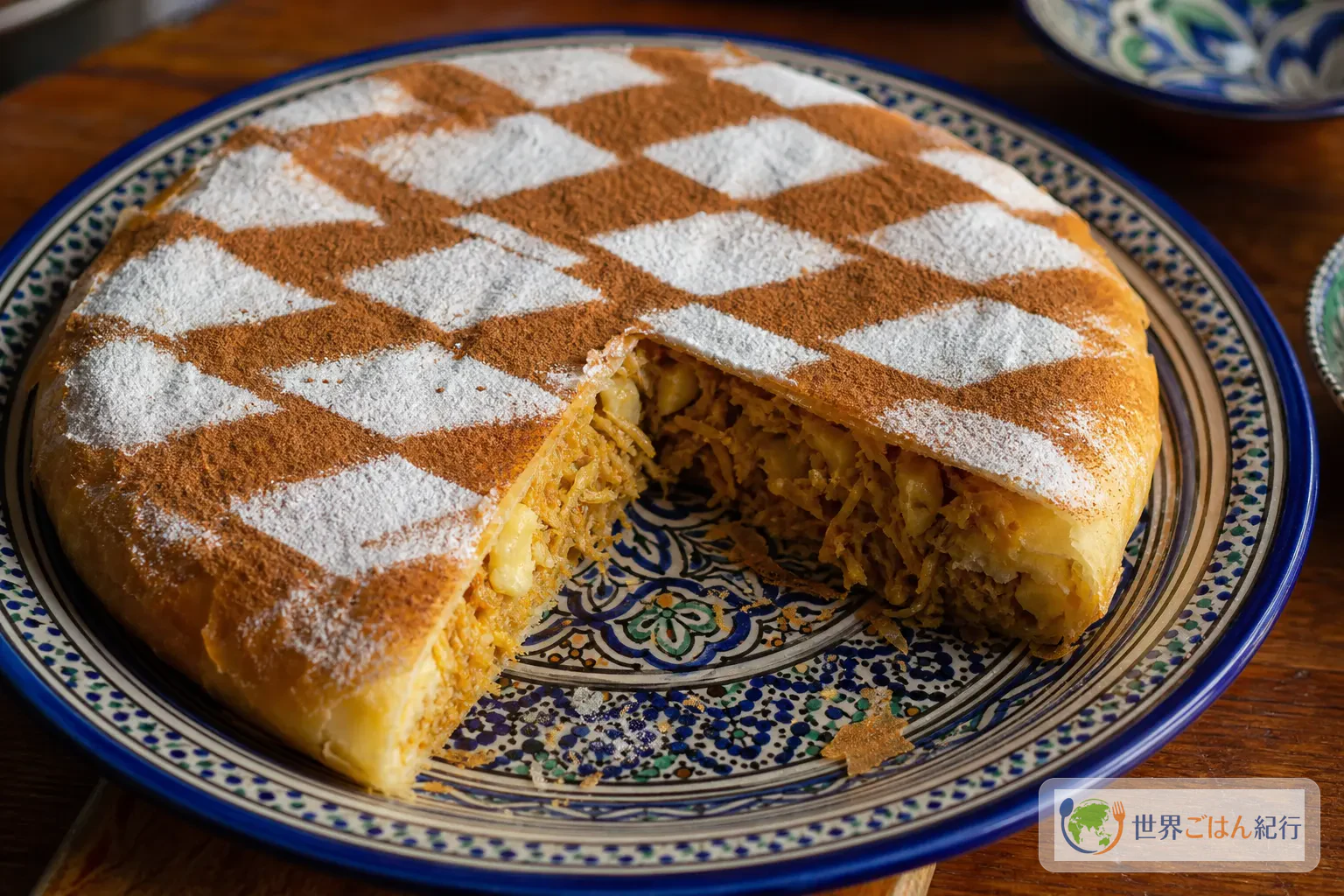
Put couscous or flatbread beside the tagine, with zaalouk as the starter and harira as the soup, and beans, vegetables, and meat balance well. On days when the lemon is strong, pastilla or the Algerian mhancha, with its honey and almond aroma, softens the end of the meal.
From the same spice world, ahriche grills offal until fragrant, taktouka puts roasted peppers and tomatoes in the lead, and tangia, from Marrakech, shows how a clay jar changes the cooking. For another home dish where bread soaks up the broth, try rfissa, layering chicken and lentils.
Storage and leftovers
Move the meat and sauce together into a shallow airtight container. Refrigerate for 3–4 days, or freeze for 2–3 months. To reheat, return it to a pot with 2 tbsp water and warm the whole thing over low heat; in a microwave, heat small amounts and confirm that the center reaches 165°F (74°C).
By the next day the saltiness of the lemon and olives comes forward, so add a few more herbs after reheating. If the sauce has thickened too much, 2 tbsp unsalted chicken stock instead of water keeps the flavor fuller. Meat that has broken up can go on bread or be mixed into couscous for a dish that feels different from day one.
Frequently Asked Questions
Can I make it without a tagine pot?
Yes. A heavy pot with a lid, kept at small bubbles over low heat, works well. Avoid a thin frying pan: it loses moisture quickly and scorches easily.
Can I put a clay tagine pot directly on the heat?
Only if its description clearly states it is flameproof. Warm a cold pot from low heat, don't move a hot pot suddenly onto a cold surface, and never pour cold water on hot clay. Decorative pots that cannot be confirmed as flameproof should not be used for cooking.
Which cut suits lamb tagine if I make it with beef?
Beef shank or beef shoulder. Lean thin slices turn tough with long simmering. Cut into 1.5 inches (4 cm) cubes, simmer on low for around 120 minutes, and add the dried fruit only for the last 20 minutes so it doesn't break down.
What do I serve if I have no couscous?
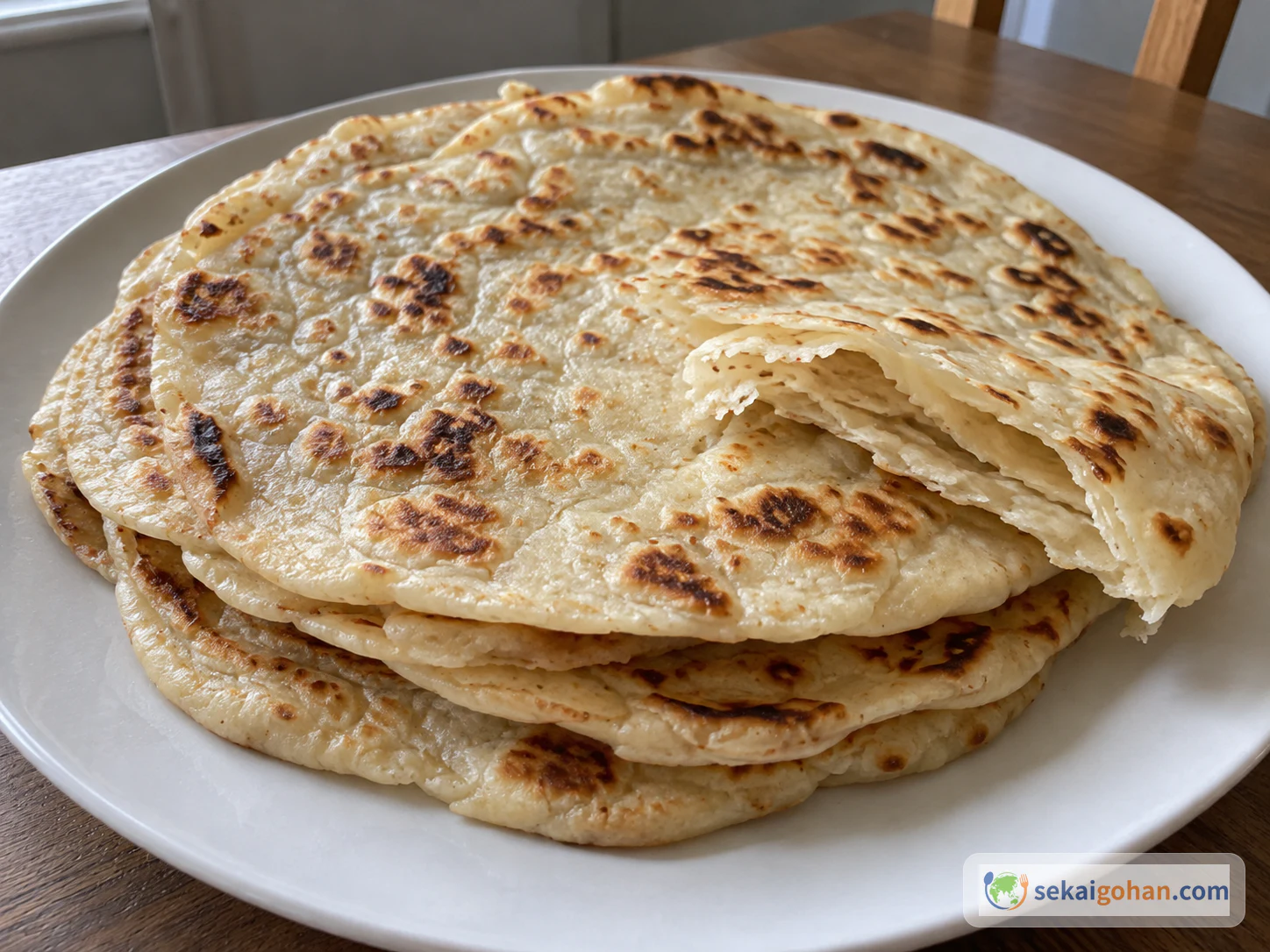
A baguette or round flatbread is easy. Rice works too, but bread does a better job of catching the aroma of lemon and olives. If you use couscous, rehydrate it with hot water, salt, and a little oil, fluff with a fork, and spoon over a little of the tagine sauce.