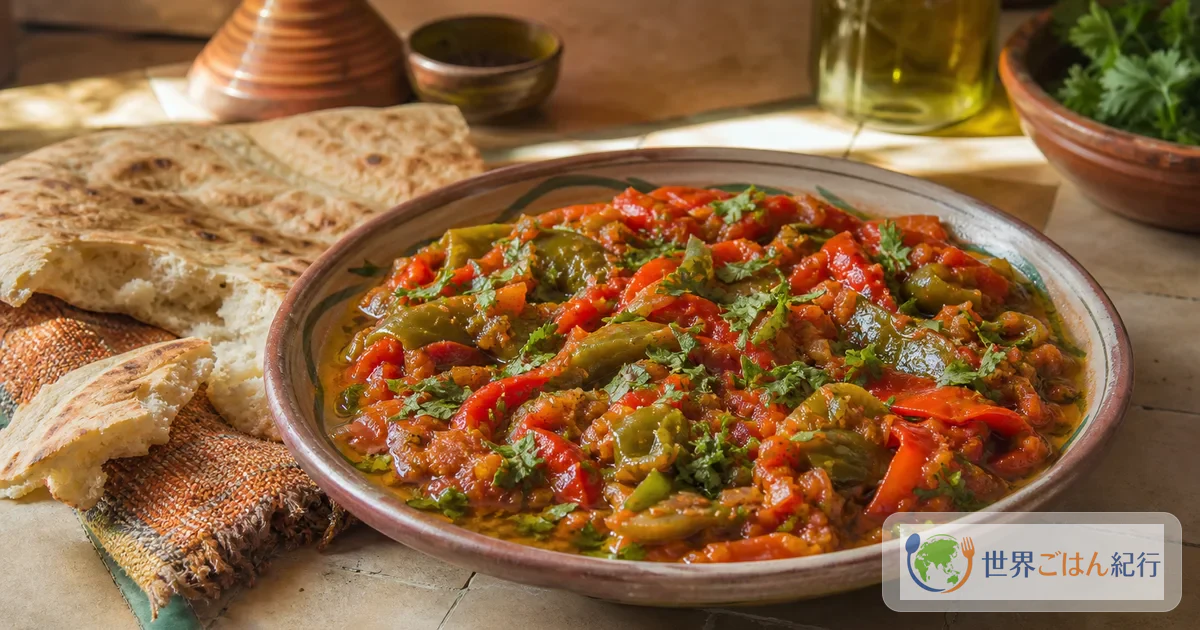
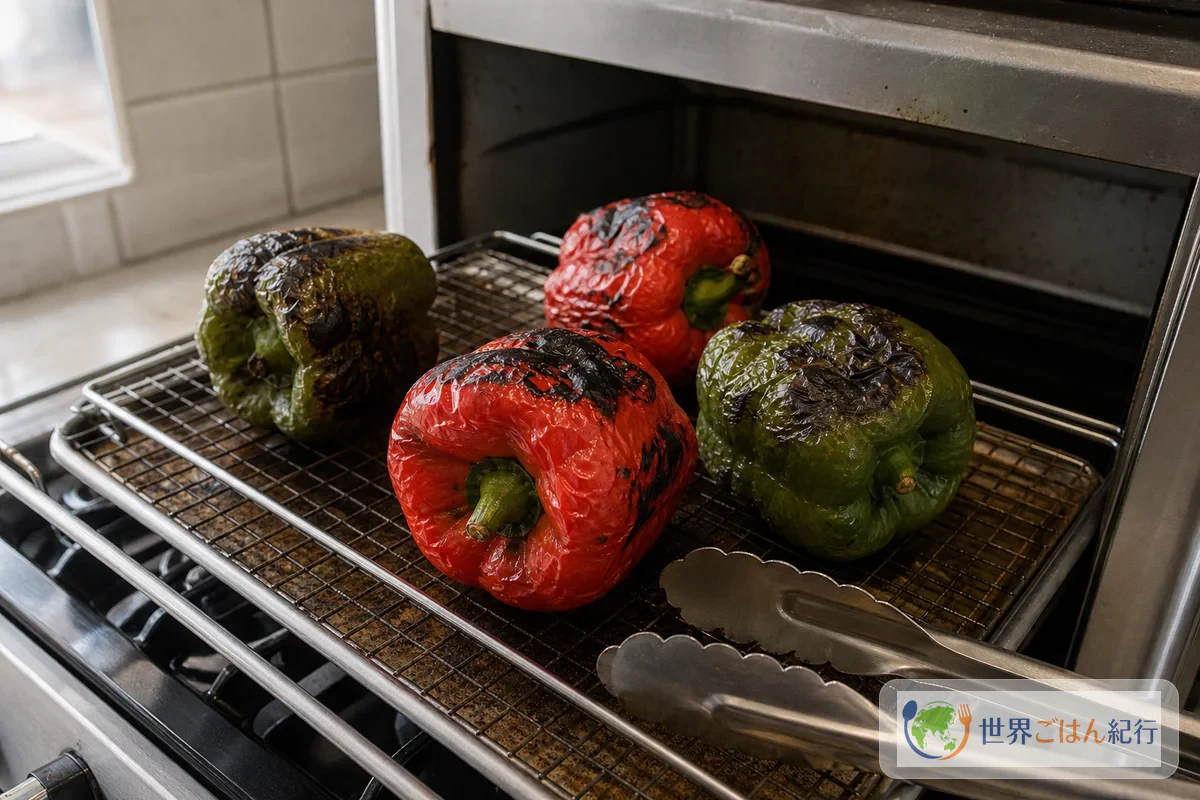
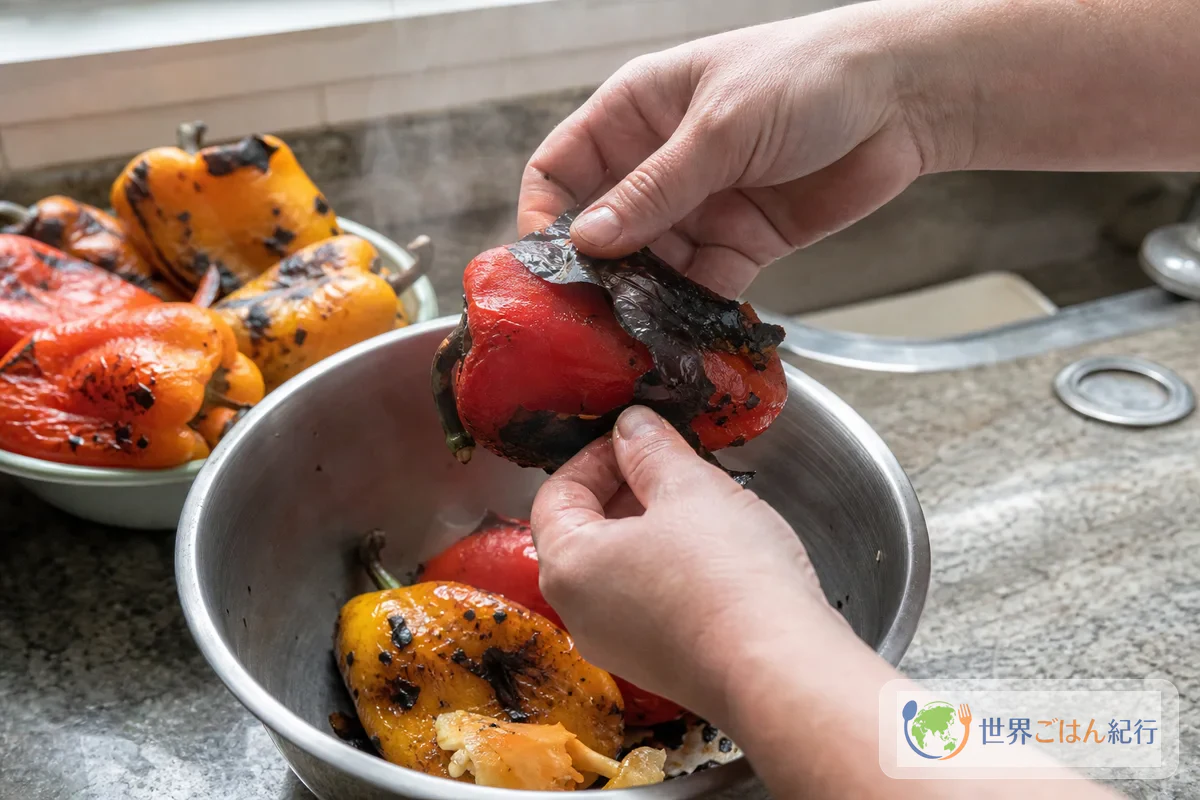
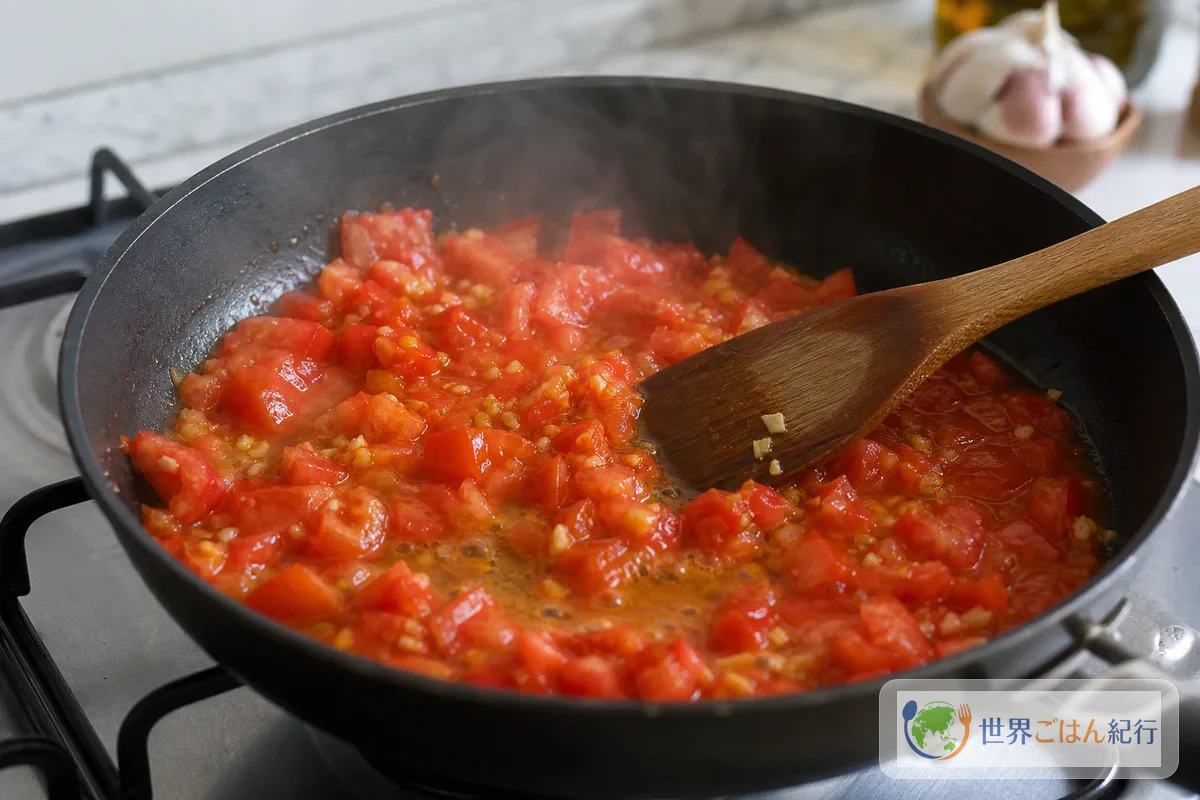
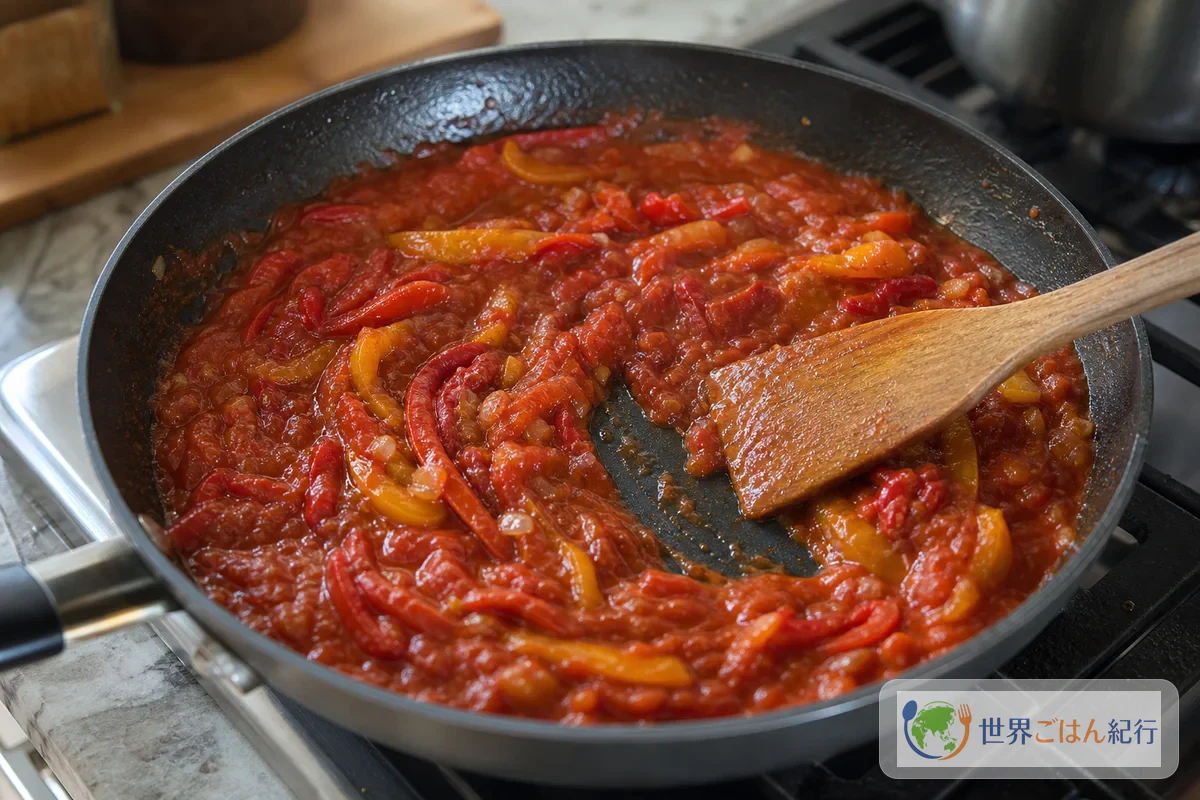
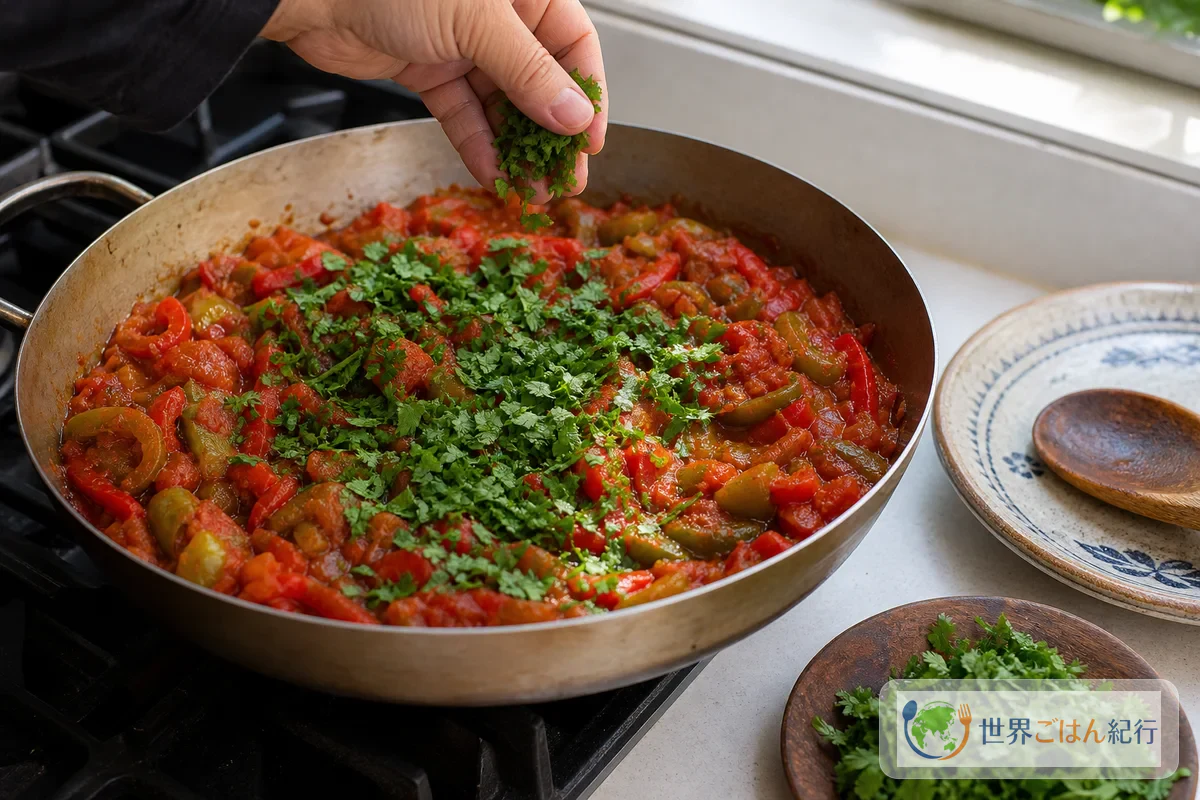
Under the broiler, the pepper skins puff up and blister black. Let them steam for a while and the charred skin slips right off, leaving sweet flesh that smells a little like grilled corn. Then the peppers go into tomato warmed with garlic and olive oil and cook down until the roasted aroma and the tomato's acidity become one flavor. Taktouka is a cooked vegetable salad that Moroccan tables serve as a starter or side. This version uses red and green peppers, serves 4, and works with a regular broiler; serve it warm or slightly cooled.
Taktouka in a Moroccan meal
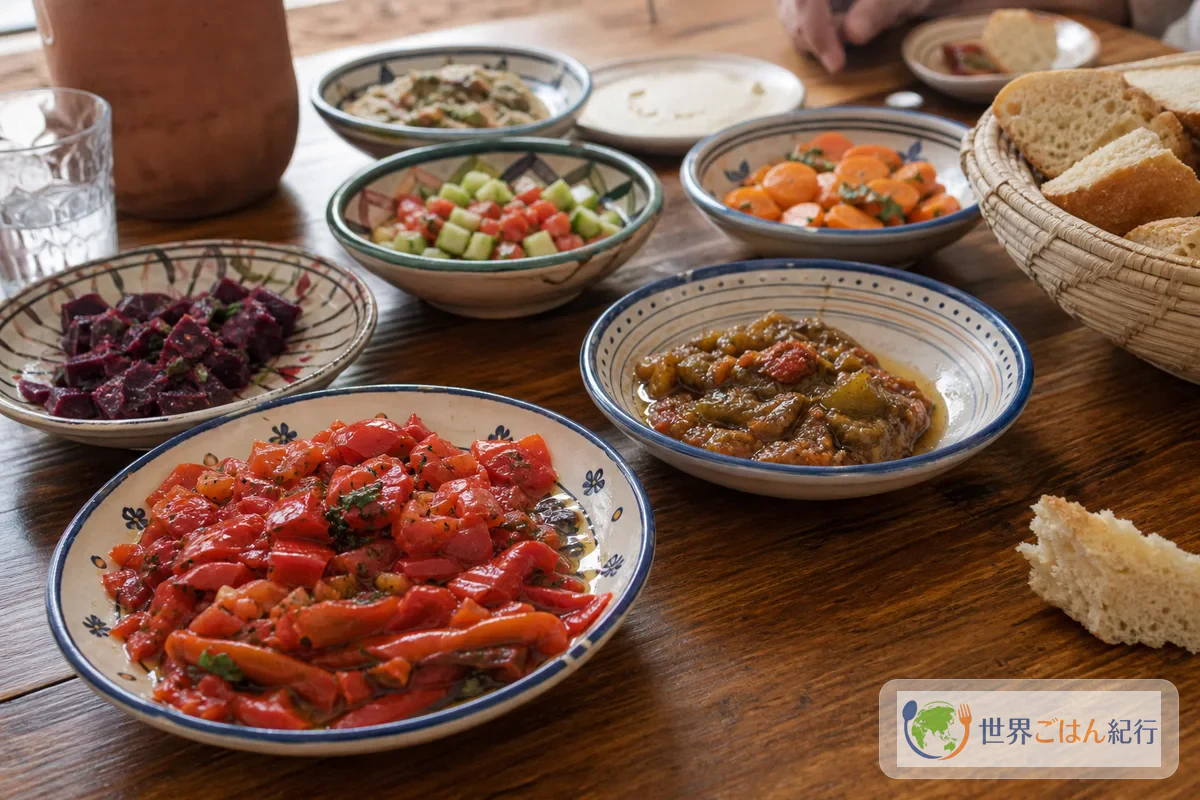
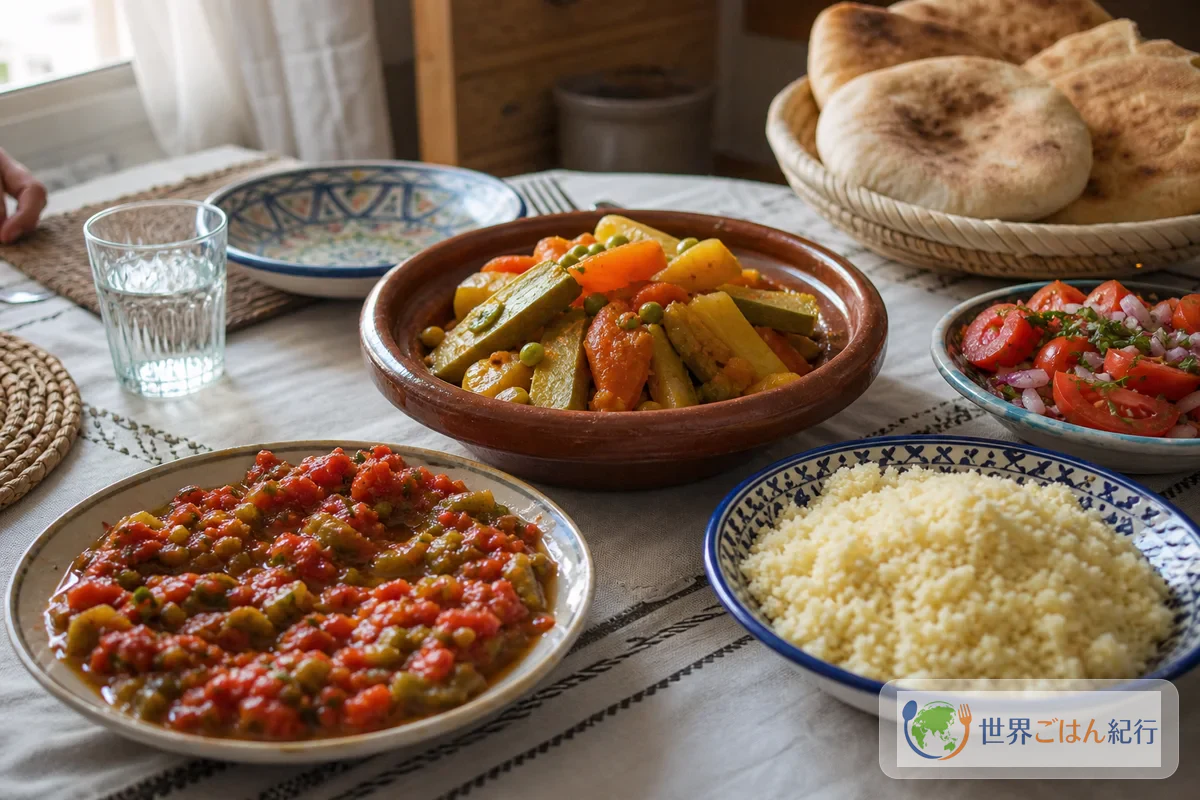
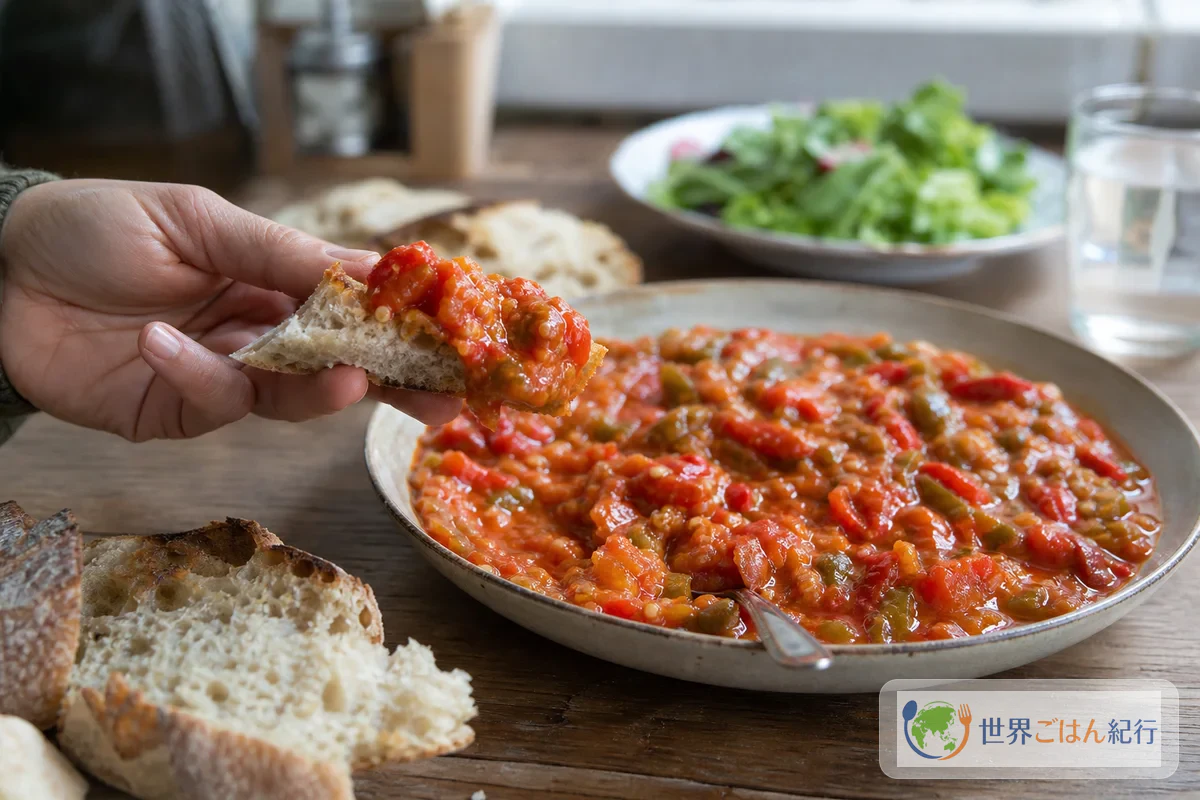
A Moroccan meal opens with starters: raw and cooked vegetable salads, stuffed pastries, Tektouta (similar to a pepper and tomato ratatouille), and zaalouk, an eggplant purée. Unlike a cold leaf salad, these are cooked vegetables shared in small dishes, and each one builds its aroma and color differently. Taktouka is a purée of tomato and green pepper, scooped up with bread, which is why it should never be watery.
The spelling varies between Taktouka and Tektouta, and so does the dish itself. Pepper colors, tomato cuts, and the amount of cilantro change from cook to cook. What matters more than a fixed ingredient list are three things: the roasted aroma, the concentrated tomato, and the earthy note of cumin.
Taktouka is built on pepper, where zaalouk is built on eggplant. Serve both as starters and you get the smoothness of eggplant from one and the aroma of charred pepper skins from the other. That contrast is part of the pleasure of a Moroccan salad plate, so keep the two distinct.
A short ingredient list: judge by roasted aroma and moisture
Ingredients for 4 servings
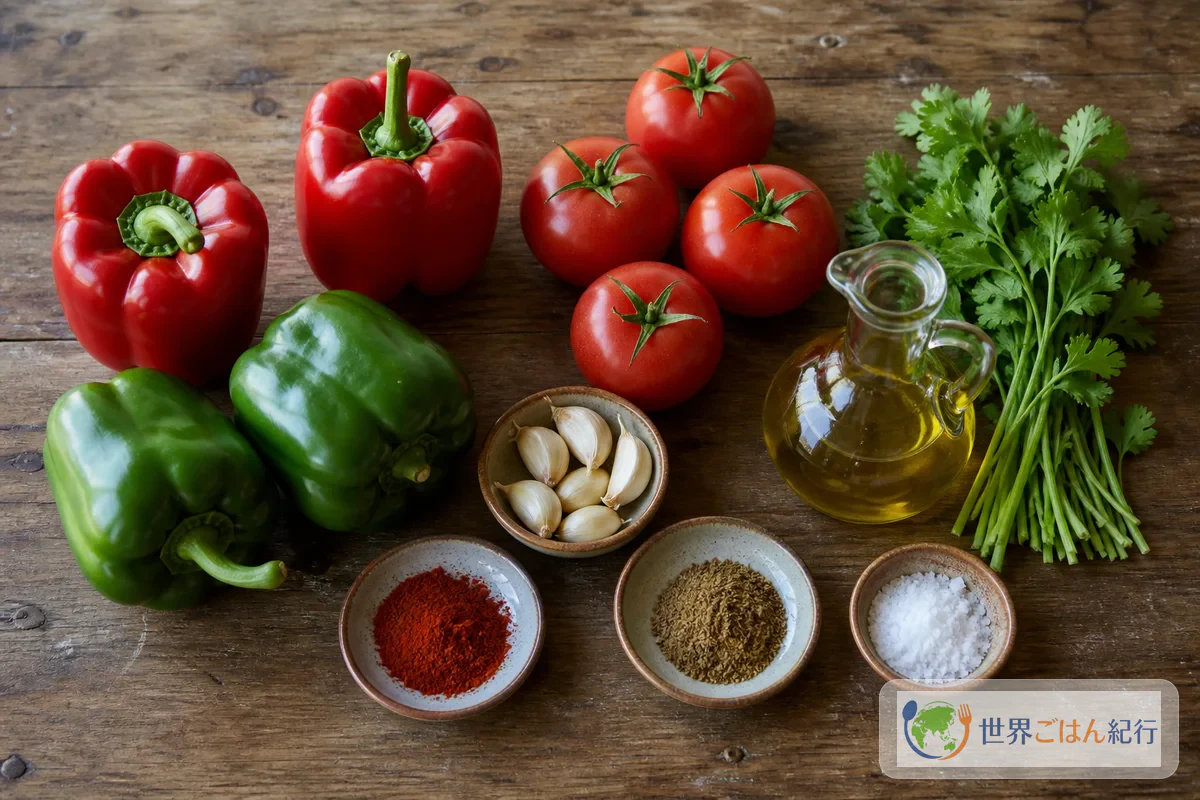
Choose tomatoes that are close to fully ripe. Hard tomatoes release their water first and leave only acidity behind. You can make this with red peppers alone, but mixing in green peppers adds a slight bitterness to the aroma and gives the dish its characteristic outline.
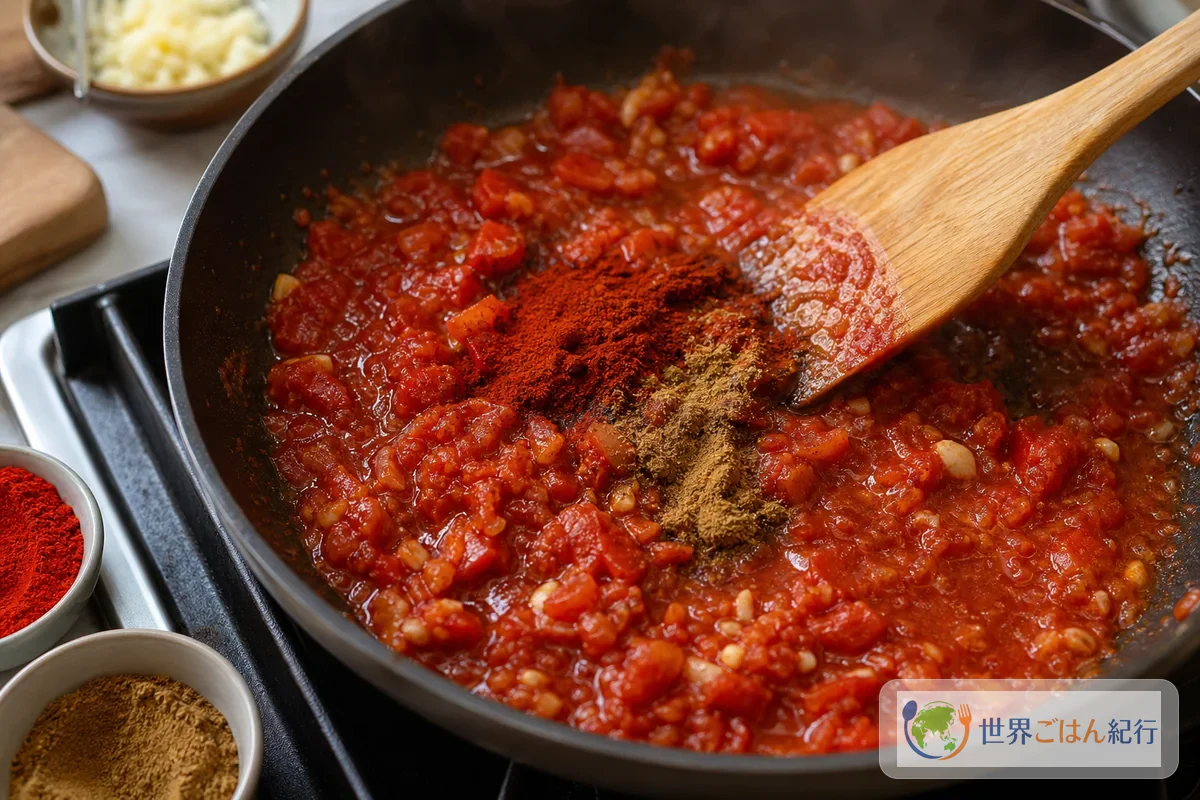
Paprika is not just a powder for adding red color. When the tomato cooks down, it leaves a sweet aroma that catches the roasted-pepper scent. Use sweet paprika, and check the weight on the label if you buy a new jar.
Cilantro adds a green aroma when added at the end. If it is not to your taste, replace it with flat-leaf parsley at half the amount. Dried parsley changes the aroma on its own, so treat it as optional.
Easy swaps, and aromas that are hard to replace
| Traditional anchor | Home-kitchen option | What changes |
|---|---|---|
| Green peppers | 2 green peppers and 2 red bell peppers | Red bell peppers alone make it sweeter |
| Fully ripe tomatoes | 14 oz (400 g) canned unsalted chopped tomatoes | Canned tomatoes carry more water, so cook down about 5 minutes longer |
| Paprika | Sweet paprika | Smoked paprika is strong, so start with half |
| Cumin | Ground cumin or cumin seeds | Seeds give a sharper aroma and add a crushing step |
| Cilantro | Flat-leaf parsley | The green aroma becomes milder |
| Fish grill (broiler) | Oven at 425°F (220°C), or a skillet over high heat | Charring pattern and roasting time change |
When you use canned tomatoes, avoid flavored or herb-added types. What defines taktouka's aroma is not a sauce added at the end but the state where roasted peppers and tomatoes have been cooked down in the same pan.
Choosing cumin and roasting without a broiler for taktouka
Ground or whole cumin
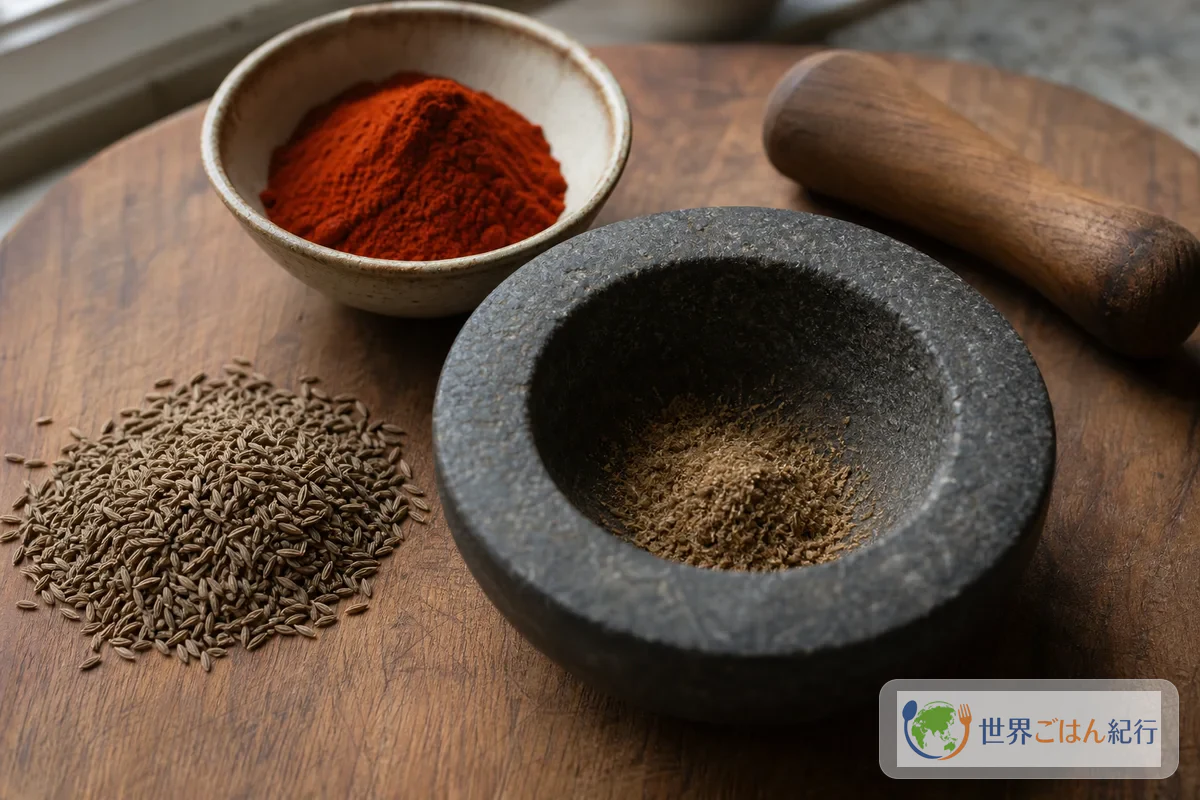
Ground cumin is easy to measure, and for these 4 servings 1 teaspoon builds the aromatic core. If this is your first time making taktouka, or you won't use cumin in other dishes, the ground cumin you already have is enough.
If you use cumin seeds, warm 1 teaspoon in a dry skillet for about 30 seconds, and once the aroma rises, let it cool and crush lightly. Crushed too fine, it turns to powder and scorches easily on the pan bottom. A small mortar is worth buying only if you'll keep using cumin or coriander seeds and want control over the grind.
Oven or skillet instead of the broiler
Without a broiler, you can roast the peppers in an oven or a skillet; what changes is the roasting time and how the char forms. In an oven, roast at 425°F (220°C) for 30 to 40 minutes, turning once partway. In a skillet, roll the peppers with no oil over medium-high heat, and when the skin takes color and the flesh softens, steam them in a bowl. A skillet concentrates the char in one spot, so wait until the whole surface has puffed. Either way, roast the peppers first, before the tomato, and the dish stays taktouka.
Common taktouka problems and fixes
Judging when it's done
Time alone will fool you, because the amount of tomato and the water in the peppers vary. Drag a wooden spoon across the pan bottom: if the line fills with liquid right away, keep cooking. When the track holds for a moment and no liquid runs outward on the plate, it's thick enough to scoop with bread.
Cooking off the liquid completely decides the flavor of this dish. Stop before it sets like jam, though; you want shreds of pepper still visible and tomato that holds together in grains. If you've gone too far, add water 1 tablespoon at a time and stir over low heat to bring it back.
Watery taktouka
Take the lid off, set the heat to medium-low, and cook 3 to 5 minutes at a time. If it's about to scorch and the pan bottom shows, lower the heat and add just 1 tablespoon of water. Fix the liquid before adding salt or spices so the flavor doesn't end up too strong.
Skins that won't come off
Firm peppers with clinging skin usually mean the roasting was too short. Roast longer, until large puffs appear on the skin, then cover and steam for 10 minutes. Peeling by hand after steaming leaves more flesh than scraping with a knife. Remove every bit of black skin for a gentler smoky aroma; leftover char brings bitterness, so let the smoke come from the flesh instead.
Serving and varying taktouka
Pairing it with other Moroccan dishes
Taktouka shifts the direction of flavor next to the main. With roasted meat, hold back the heat and keep the tomato's acidity. Beside couscous, cook it a little thicker so it can be scooped with bread. If there's soup on the table, harira, a bean and tomato soup, keeps the vegetable aromas from overlapping too much.
For a fuller Moroccan table, add couscous, where steamed grains meet vegetables, or tagine, where spices and ingredients are layered in a pot. Plate the taktouka first and let its temperature settle while the main cooks, and the roasted aroma won't fade.
6 ways to vary it at home
-
Make green peppers the center Three green peppers and one red bell pepper hold the sweetness down and bring the aroma forward.
-
Make it with red bell peppers only The bitterness is gentler, and it's easier to eat as a dip on bread. Hold some salt back and adjust at the end.
-
Add heat Add a pinch of cayenne. Harissa brings salt too, so if you use it, halve the salt and taste.
-
Add one drop of acidity Add 1 teaspoon of white wine vinegar just before turning off the heat. Skip it if the tomatoes are already sharp that day.
-
Pair it with eggs Warm leftover taktouka in a skillet, crack in eggs, and cook them through for a breakfast plate. Set aside the portion you'll serve as a starter first.
-
Leave out the eggplant Skip the eggplant to keep it distinct from zaalouk. If you want eggplant, make Moroccan zaalouk separately, where its flavor is clearer.
Storage and FAQ
Is it eaten warm?
It can be eaten warm, at room temperature, or chilled. Warm, the roasted aroma is strongest; rest it 10 minutes or more and the tomato's sweet acidity comes through. If you chill it, let it cool first, then seal it.
How long does it keep in the fridge and freezer?
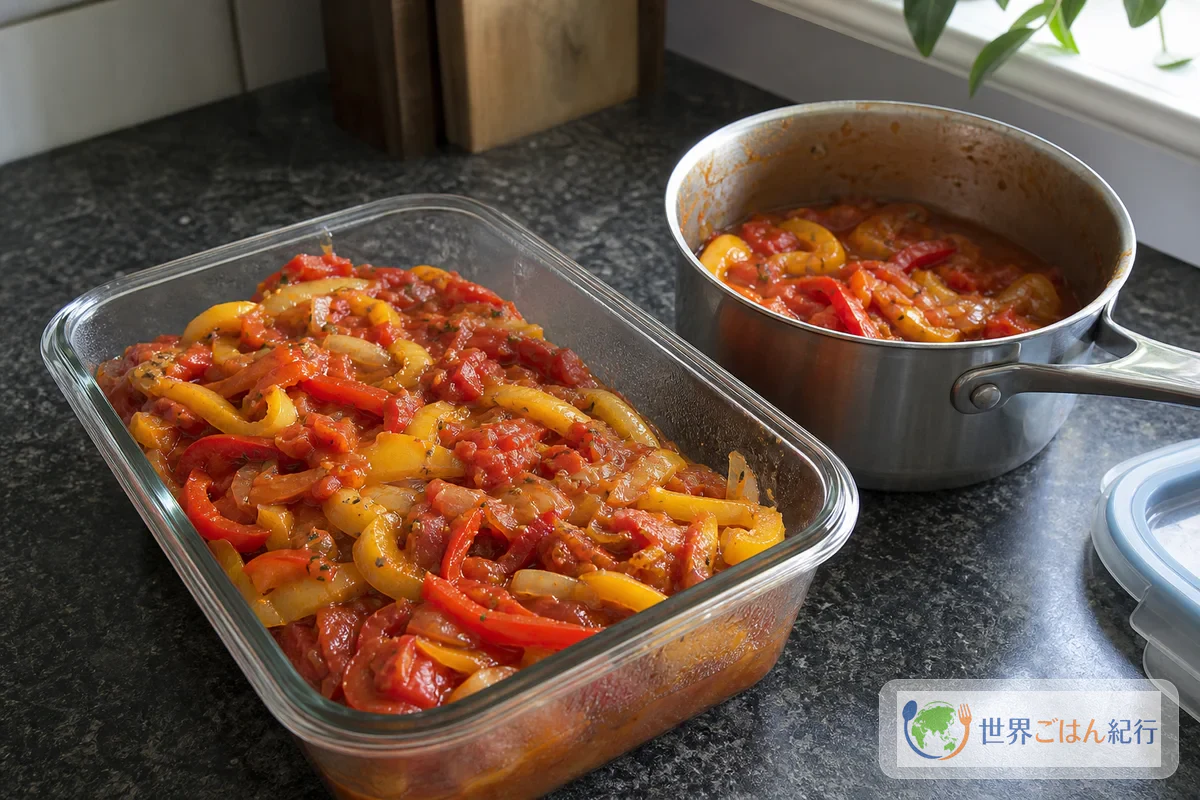
Keep it sealed in a container in the refrigerator and finish it in about 3 days. To freeze, portion it out and use it within about 1 month. If liquid separates after thawing, warm it over low heat and stir. Store only the taktouka, since bread loses its texture if stored with it.
Can I make it without cilantro?
Yes. Cilantro is the aroma at the end, so without it the core of roasted pepper and tomato remains. Flat-leaf parsley is milder; chop a small amount and add it at the end.
Any allergy or ingredient cautions?
Taktouka is made from vegetables, spices, and olive oil. Bread contains wheat, so check its ingredients if anyone has an allergy. Harissa and spice blends vary in salt and added ingredients, so read the label on each product.
Nutrition values are per serving, calculated from the ingredient table. They don't account for vegetable size, salt content, or the type of bread, so check the nutrition label on each product you use.