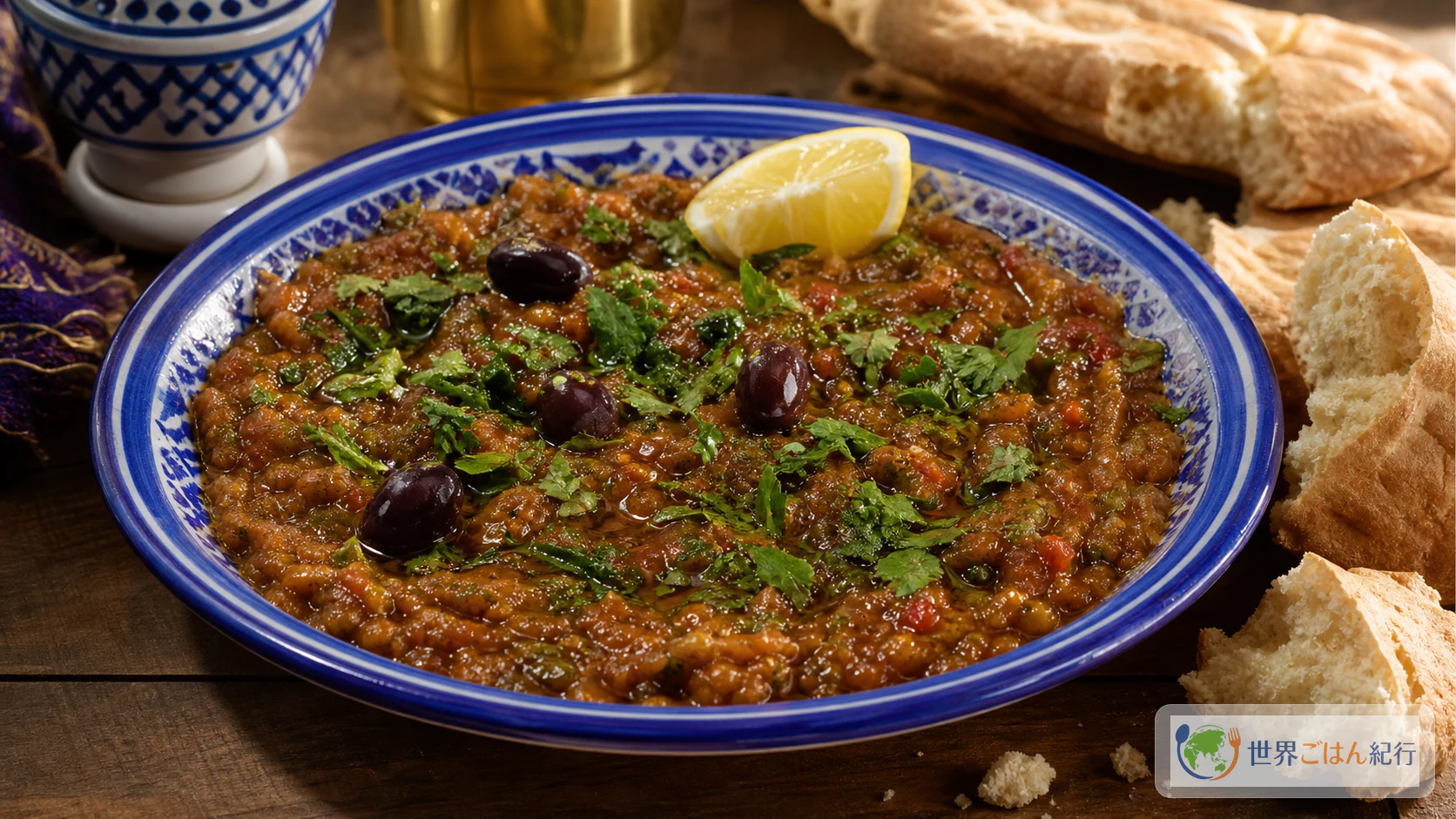
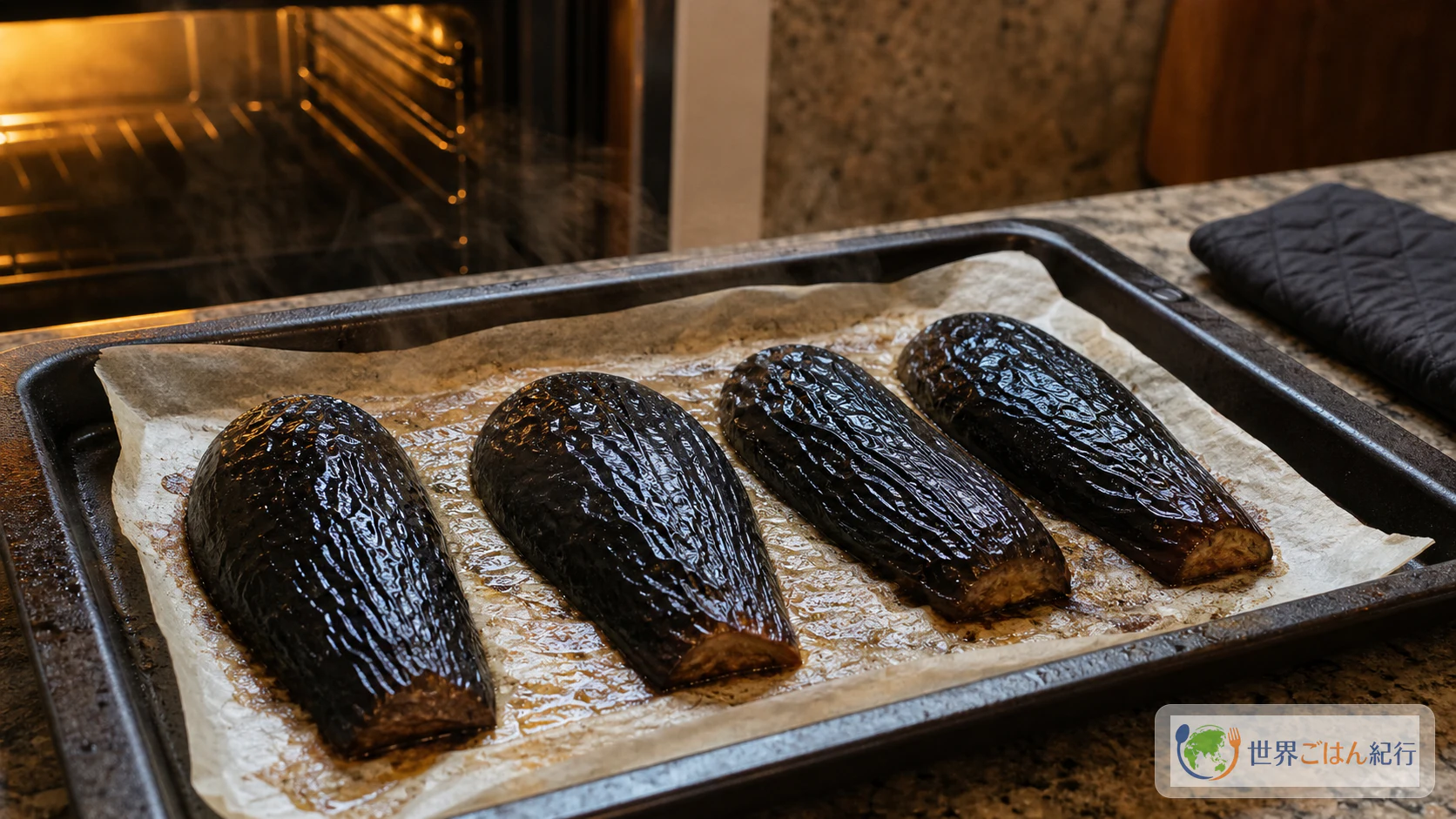
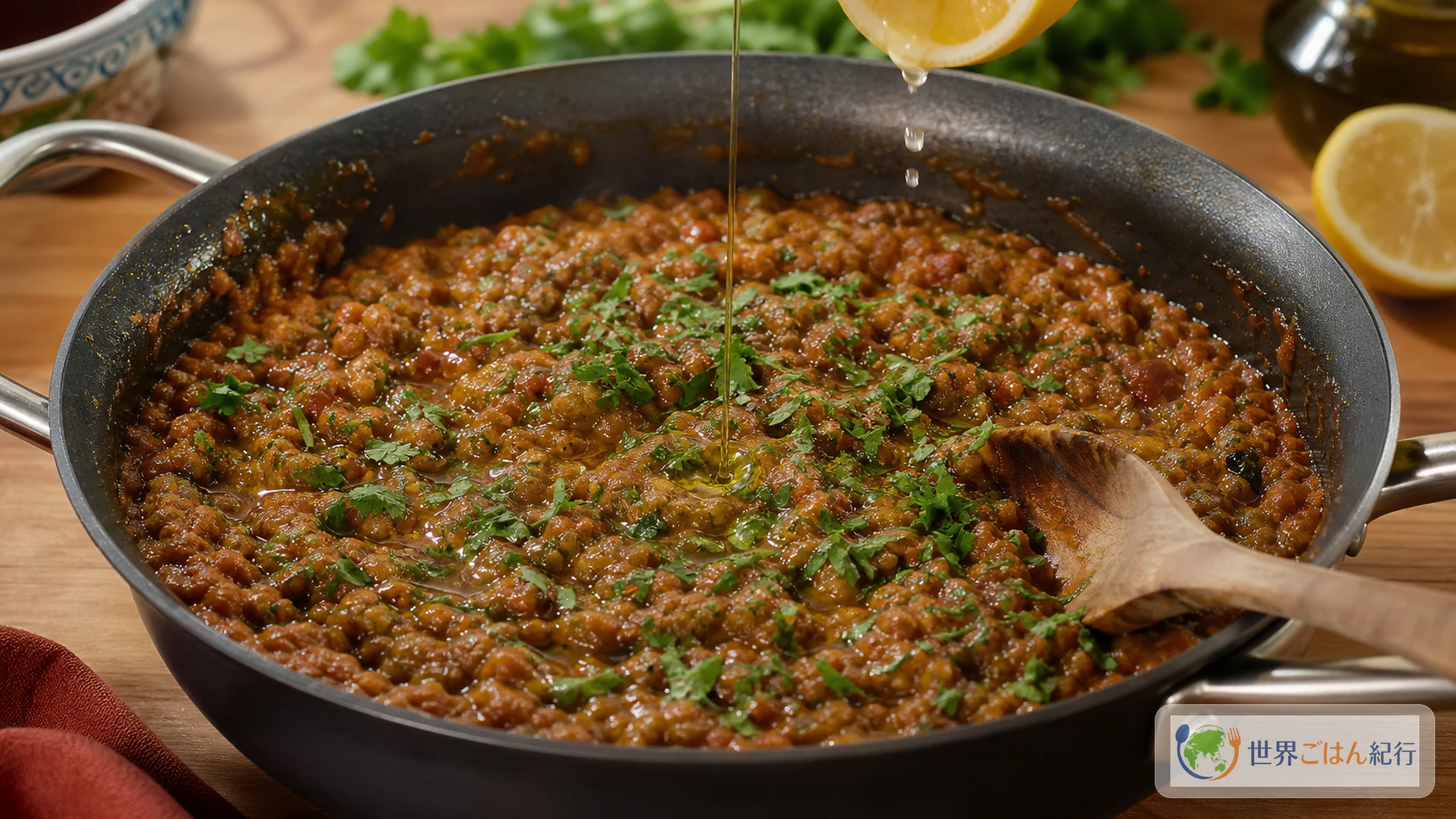
When you peel a roasted eggplant, a faint smoky smell hangs in the kitchen for a while. In zaalouk, that toastiness gets cooked down with tomato, garlic, cumin, and paprika until it's thick enough to scoop up with bread. It's a Moroccan small plate, known in Arabic as زعلوك. Expect something smoky and gently spiced, with tomato reduced to a mellow richness.
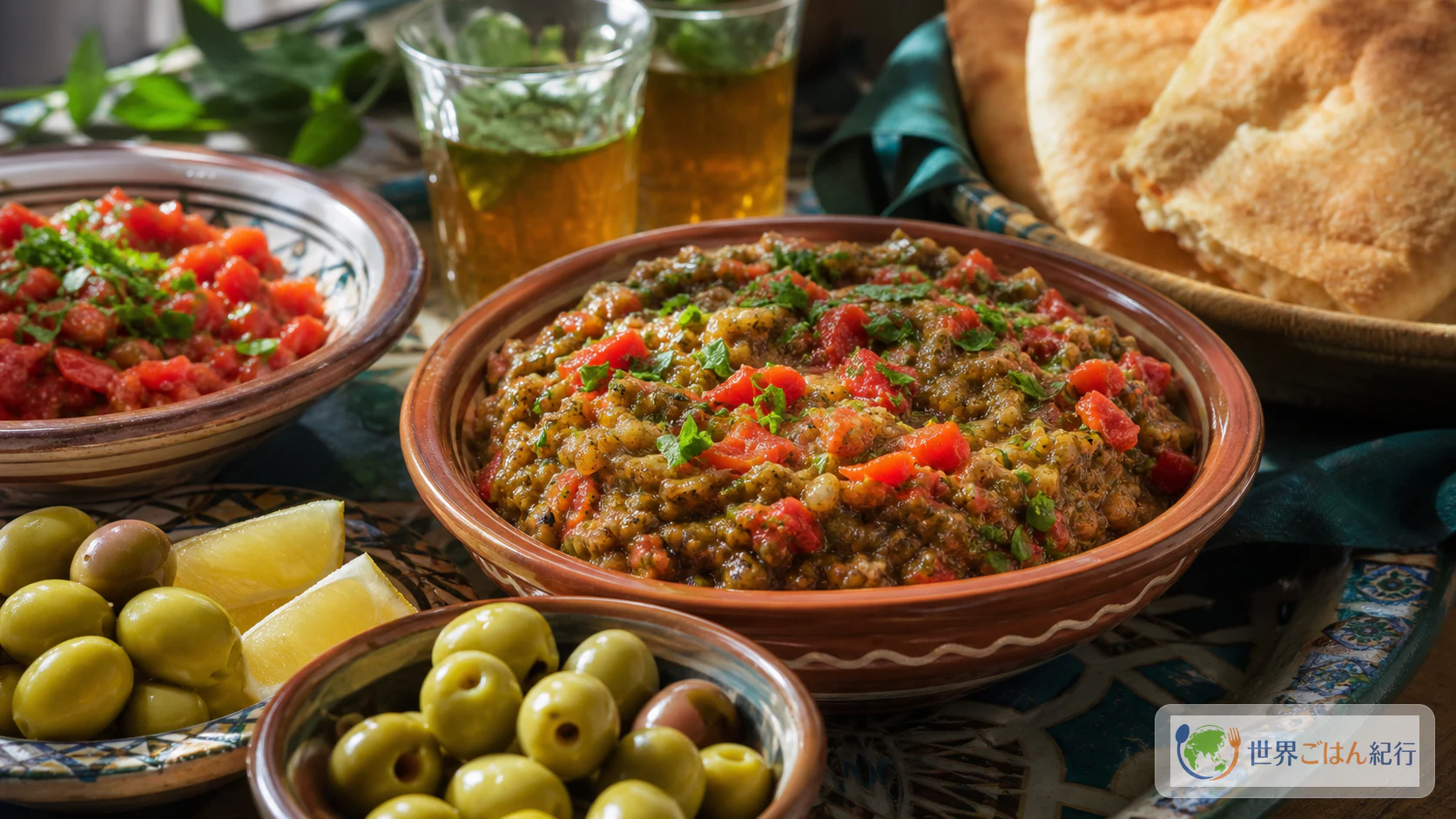
Zaalouk on the Moroccan Table
In Morocco, plenty of dishes called "salad" are cooked vegetables served in small dishes rather than leafy greens. Zaalouk is one of them. It comes cold or as a warm appetizer, and the closest description is a dip-style salad of roasted eggplant and tomato that works either way.
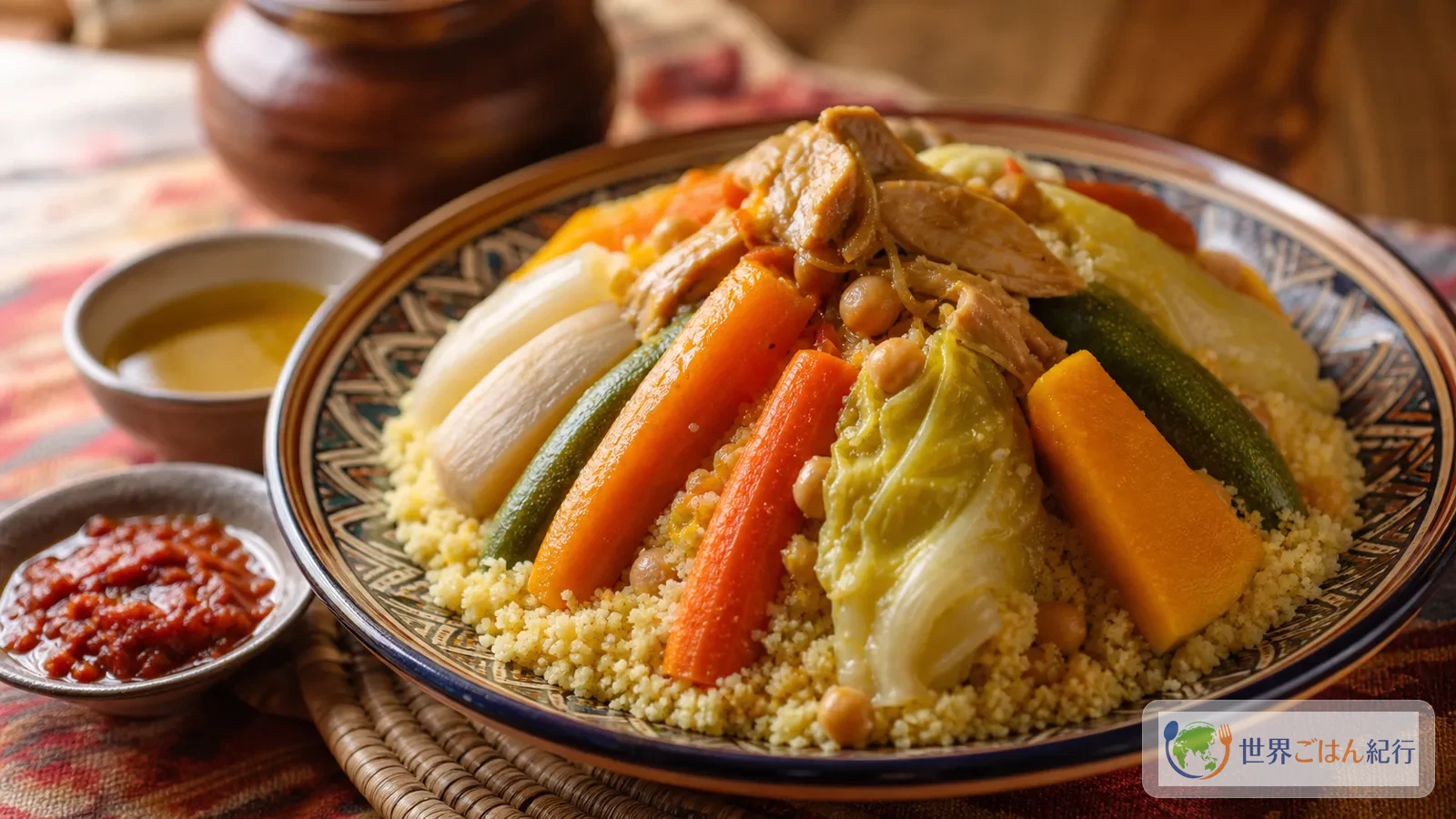
The main-course tagine and the staple-leaning couscous sit at the center of the table, and zaalouk is the aromatic small dish set out before them. On a day you make harira, the bean and herb soup, serving zaalouk with bread alongside gives you a properly Moroccan meal.
Zaalouk Compared with Similar Dishes
| Dish | Main ingredients | What is alike | What differs |
|---|---|---|---|
| Zaalouk | Eggplant, tomato, cumin, paprika | A small dish scooped with bread | The acidity and water of the tomato are reduced |
| Baba ghanoush | Roasted eggplant, tahini, lemon | Roasted eggplant is mashed | Sesame richness leads, with no tomato |
| Taktouka | Bell pepper, tomato, spices | A Moroccan cooked salad | Bell pepper rather than eggplant is the center |
| Ratatouille | Eggplant, zucchini, tomato | Summer vegetables cooked down | A stew that keeps its shapes, not a scoopable paste |
Ingredients: Reading the Water in Roasted Eggplant and Tomato
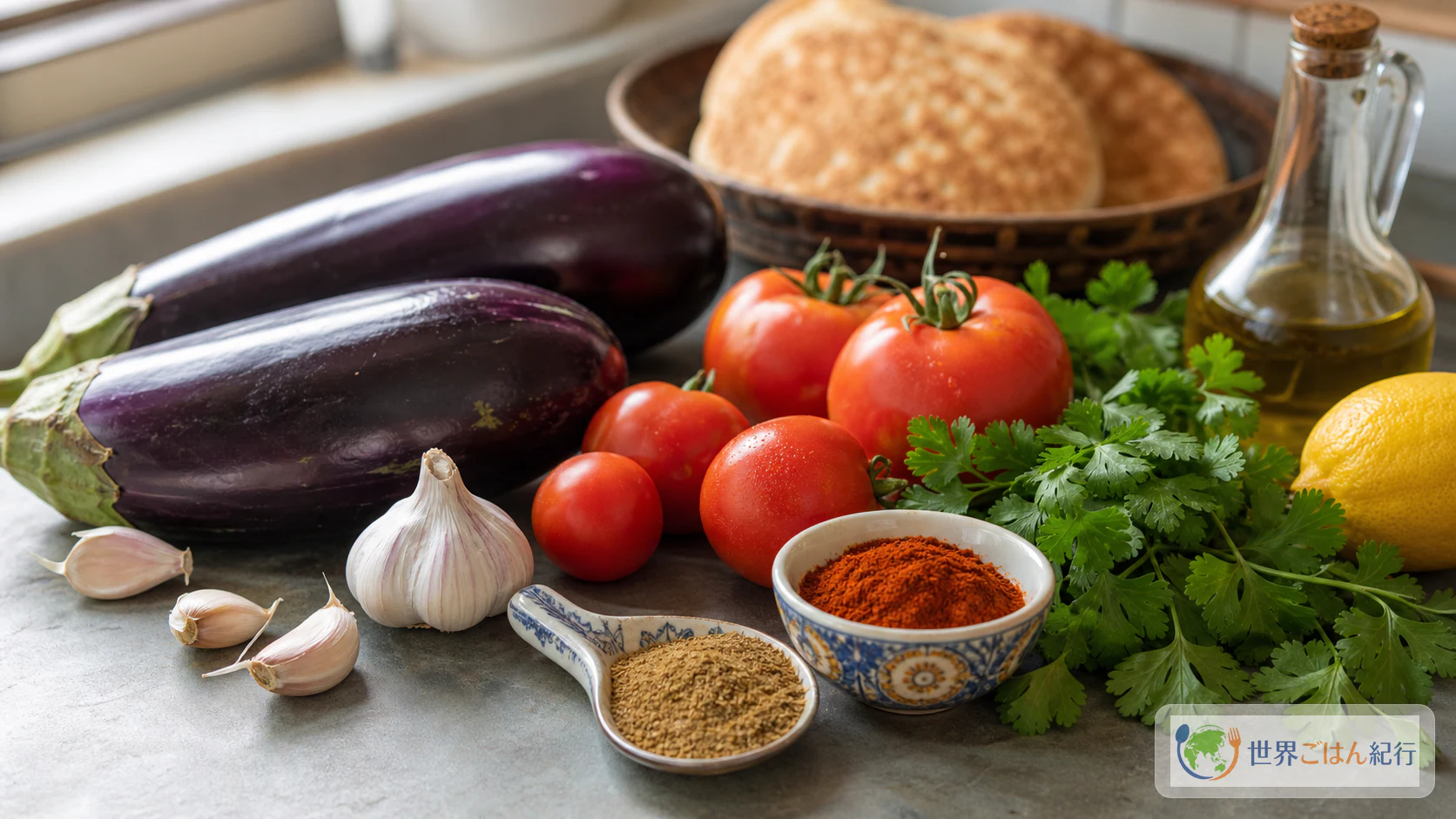
For 4 people
Substitutions
| Closer to local | Easier substitute | Caution when substituting |
|---|---|---|
| Eggplant grilled over charcoal | Oven at 425°F (220°C), a broiler, or a direct flame | Roasting until the skin chars brings the aroma closer, but don't mix in charred skin |
| Ripe tomatoes | 5.5 oz (150 g) canned tomatoes plus 1 tbsp tomato paste | With canned only the acidity stands out, so reduce 10 minutes or more |
| Cilantro | Flat-leaf parsley | If you dislike cilantro, replace half with parsley and add 1 tsp more lemon |
| Khobz | Baguette, pita, toasted sandwich bread | Soft sandwich bread is easier to scoop with once toasted to drive off moisture |
Once you buy cumin and paprika, they carry over to harira and couscous too. Don't mix harissa into the zaalouk itself; adding it in a small dish only for those who want heat keeps it from erasing the aroma of roasted eggplant.
Nutrition and Allergens
For the full recipe serving 4: energy 760 kcal, protein 14 g, fat 2 oz (54 g), carbohydrate 2.25 oz (66 g), fiber 22 g, and salt equivalent 4.7 g. It contains none of the major allergens, but if you serve store-bought seasonings such as harissa, check the ingredient label. On a day you want to share heat within a family, keep the zaalouk itself mild and adjust with harissa in a small dish, which makes it easier to bring to the table.
Choosing Ingredients for Zaalouk
For a first batch, use fresh tomato together with tomato paste. The paste helps the sauce reach a scoopable thickness without tasting thin.
Eggplant and tomato are easy to find, but cumin, paprika, and harissa end up in different places depending on the store. Check the spice aisle, the imported foods aisle, and the shelf with tubed seasonings. If they're nowhere to be found, ordering them all online at once sets you up for your next Moroccan dish, too.
Method: Cook Off the Water So It Tastes Good Even Cold
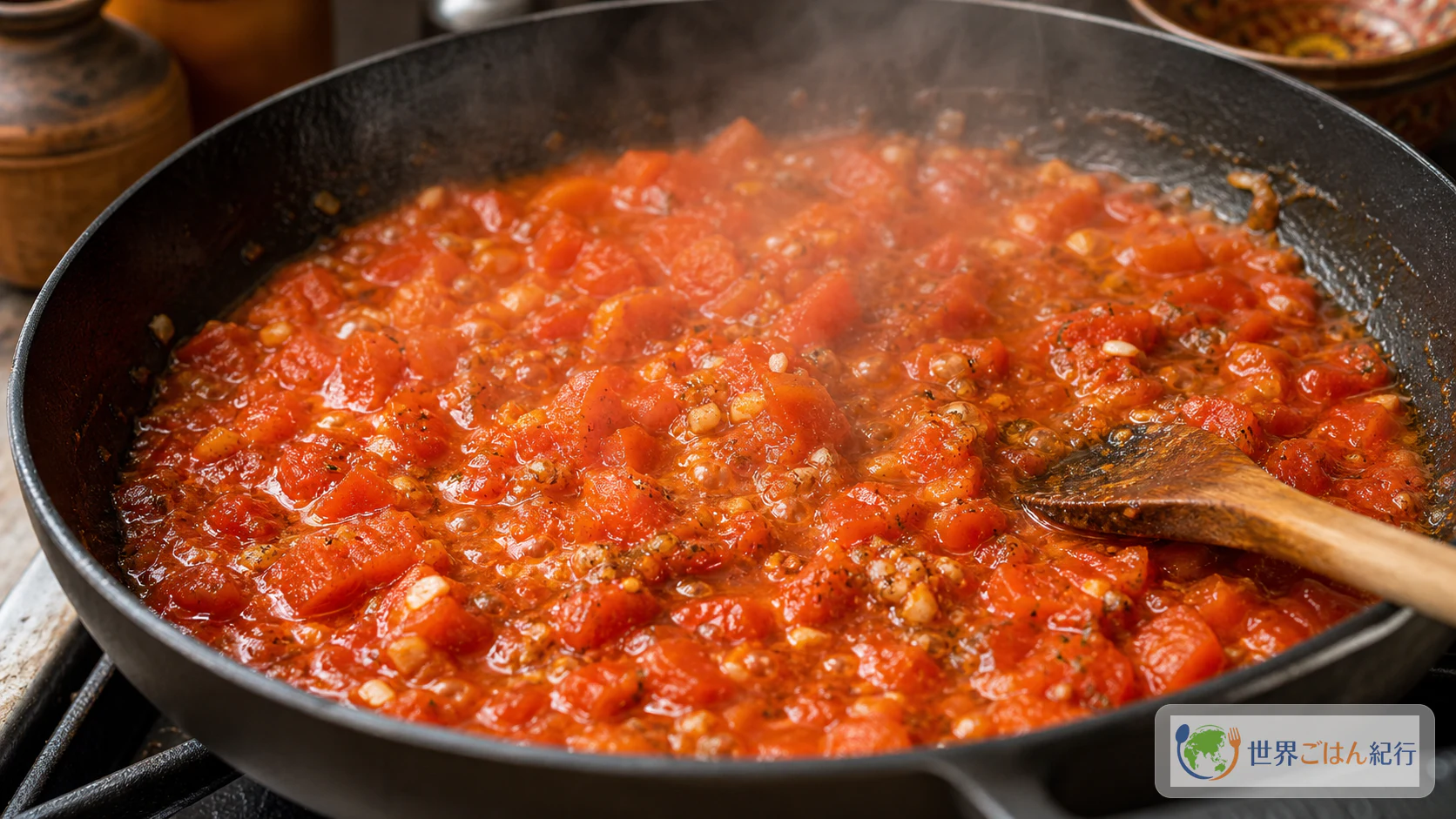
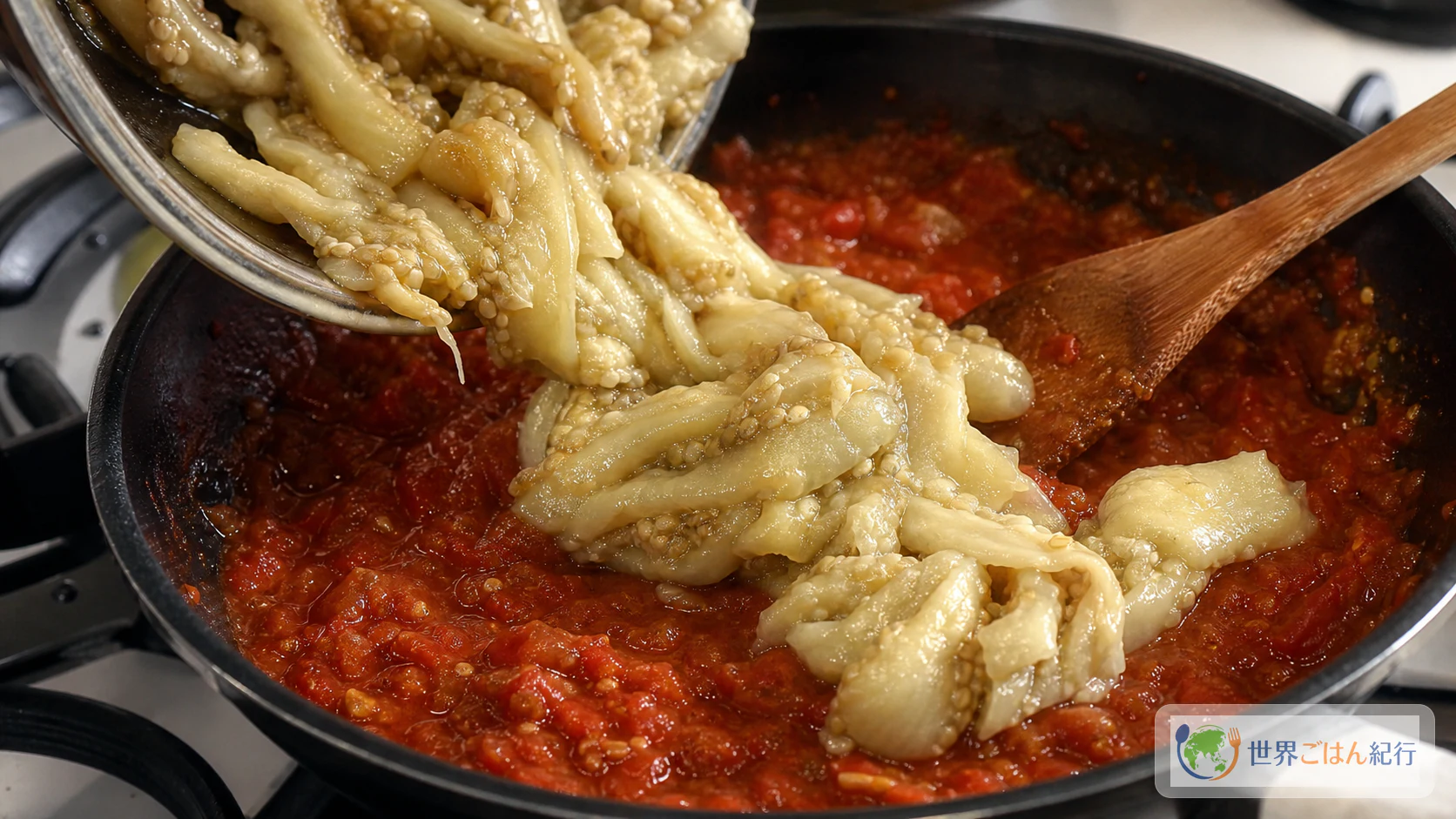
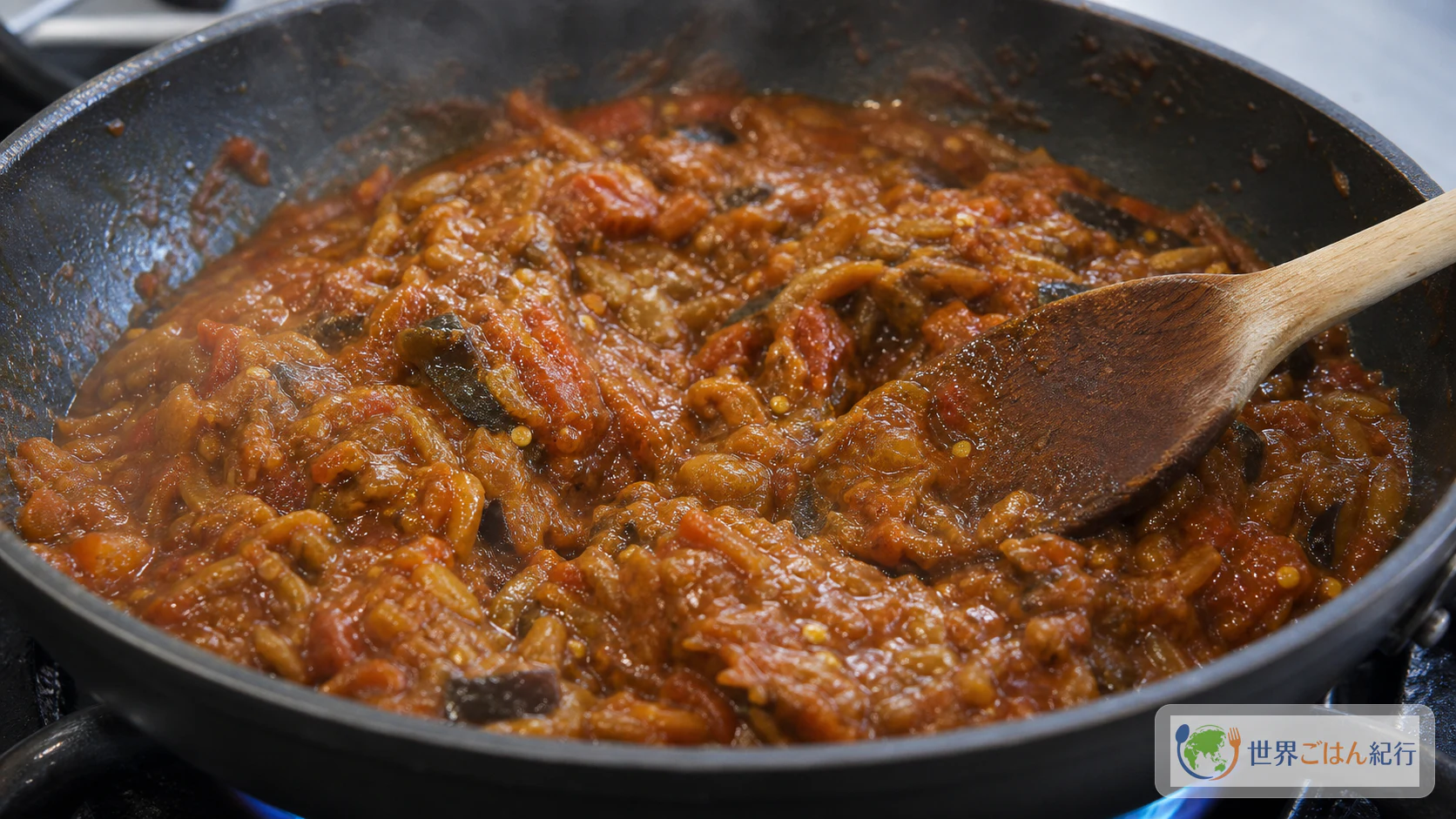
Zaalouk is not a dish for making eggplant soft; it is a dish where the water of the eggplant and the water of the tomato are handled separately and then brought together. Hurry roasted eggplant into the pot and it turns watery, and reduce the tomato too far and the aroma goes flat. Proceed by how the bottom of the pot looks.
Roasting vs. Boiling and Fixing Zaalouk
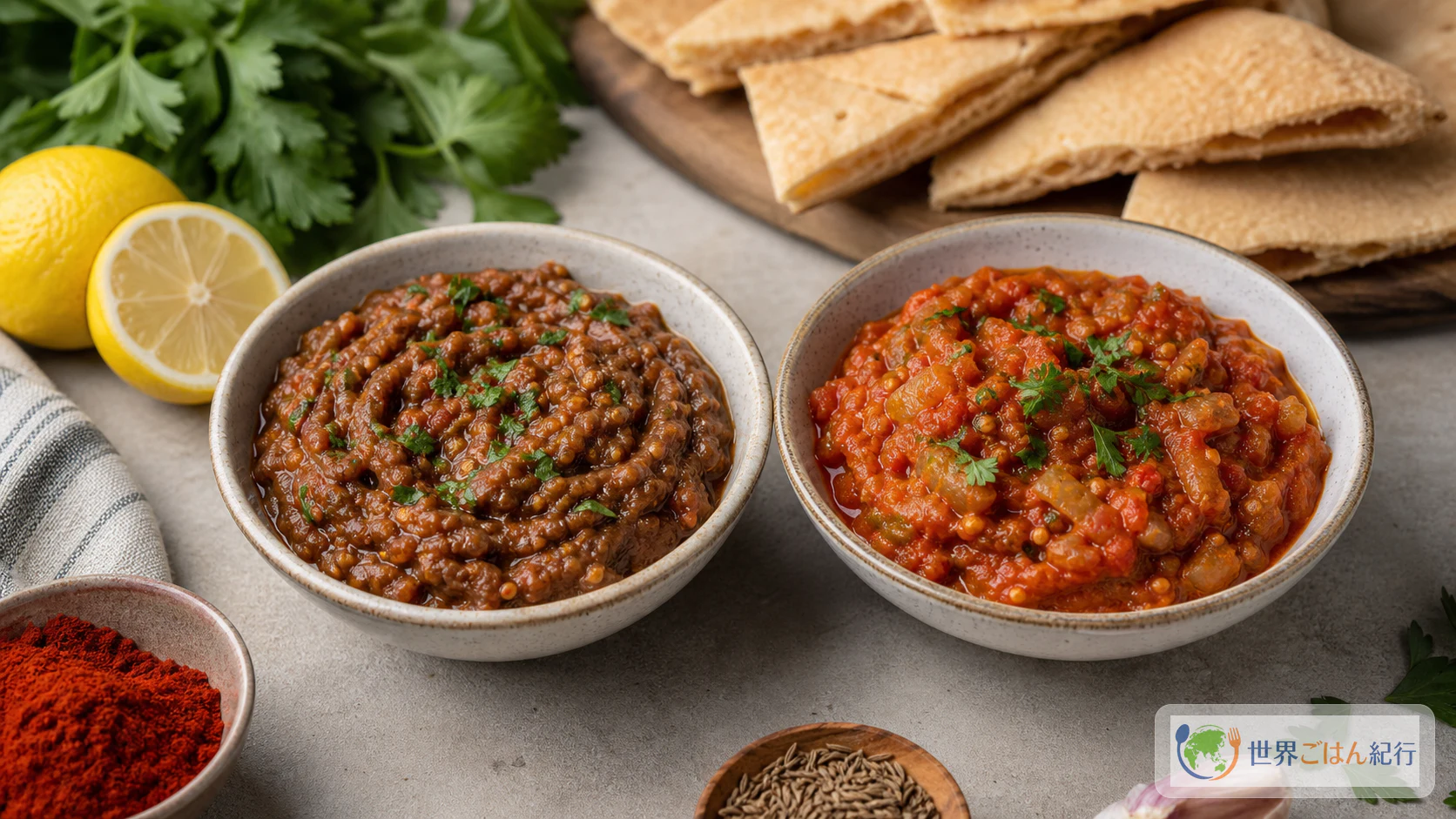
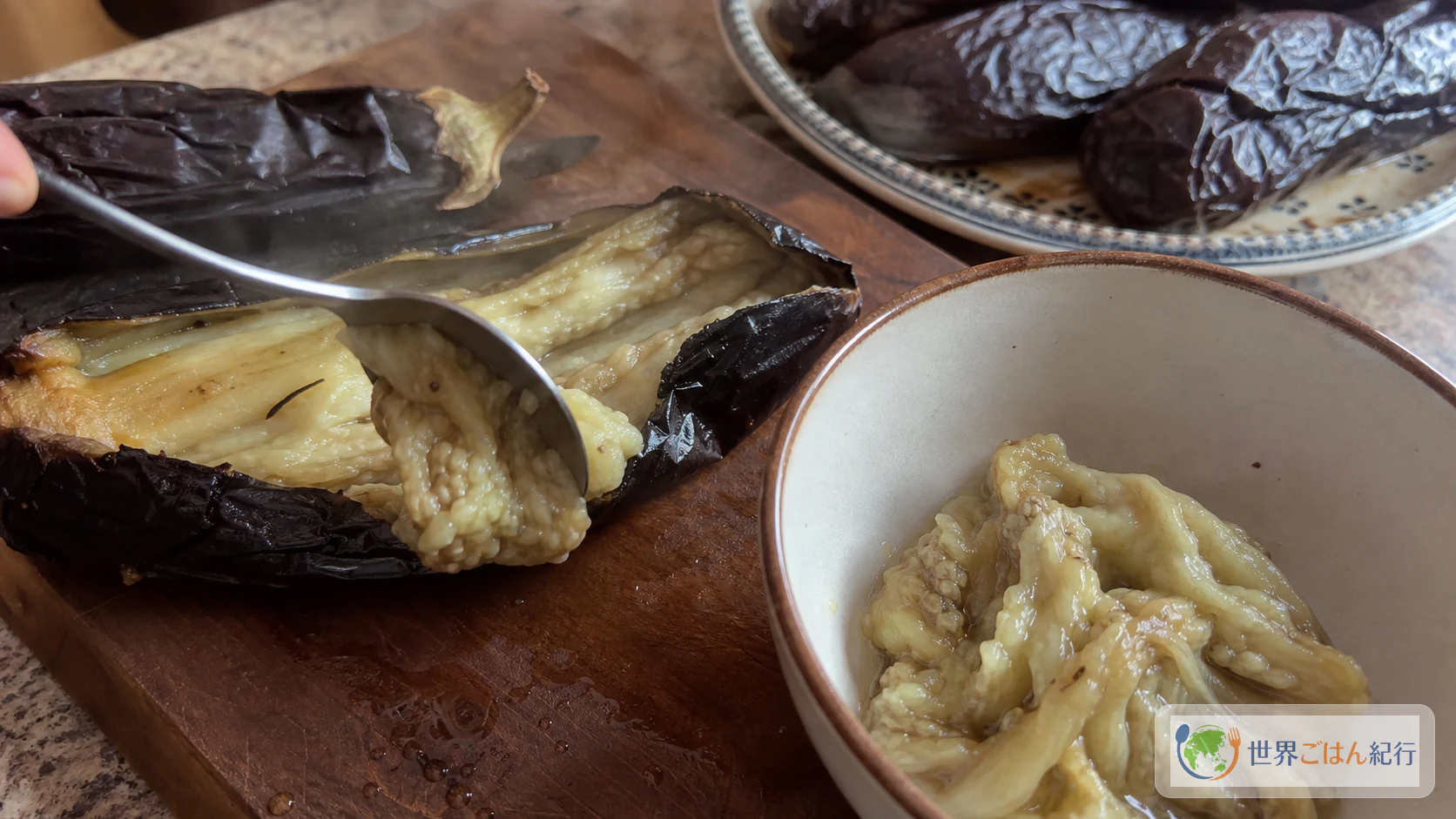
Moroccan homes cook the eggplant all sorts of ways: roasted, boiled, steamed, or sautéed in oil. For a first batch, roast it in the oven or under a broiler. The eggplant gives up its water early, so you can easily judge how long to reduce the tomato. Keep going until a line drawn across the bottom of the pot stays put, and you'll have a thickness bread can lift.
| Method | Result | Good for | Caution |
|---|---|---|---|
| Roast in a 425°F (220°C) oven | Toasty and rich | First batch, cold dish, making ahead | Don't mix in charred skin |
| Roast under a broiler | Strong aroma | Days you want it closer to open flame | Scorches quickly, so turn it partway |
| Boil | Light and soft | Days you want less oil | It turns thin unless drained in a colander for 10 minutes |
| Steam | Sweetness comes out | People who dislike charred skin | The aroma is gentle, so add 1/4 tsp more cumin |
If it turns out watery, simmer it uncovered over medium-low heat for 5 minutes. Bitterness usually means charred skin got in, and 1 tsp lemon juice plus 1/2 tbsp olive oil will round off the edges. If the flavor seems flat, hold off on salt and add 1/4 tsp cumin, 1 tsp lemon juice, and 1 tbsp herbs, in that order. That sequence is much less likely to throw the dish off.
Serving and Storing Zaalouk
Zaalouk tastes more settled after resting about 30 minutes than straight from the pot. Eat it any way you like, with baguette, pita, round khobz-style bread, or even toasted sandwich bread. On a day you want heat, set a little harissa beside it for a stronger North African flavor.
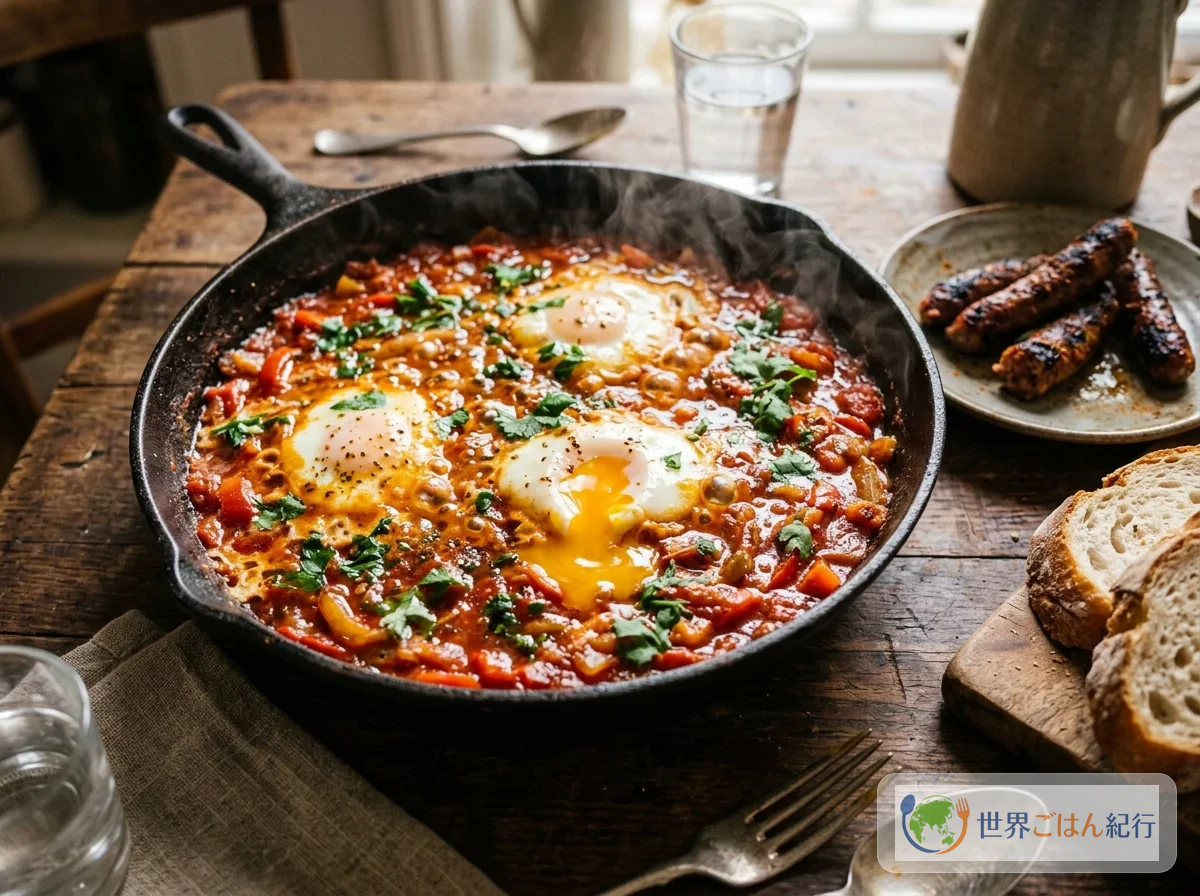
For a simple dinner, zaalouk, bread, a boiled egg, olives, and a light soup are plenty. For something more substantial, serve it as an appetizer before chicken tagine, then spread the leftovers on toast the next morning. Next to the celebratory pastilla, you can taste how a Moroccan small dish differs from a centerpiece. Serve it with an egg dish such as the Tunisian-leaning chakchouka, and you'll see how the same tomato and spices can put either eggs or vegetables in the lead.
Refrigerate zaalouk in a clean container for up to 3 days, with about 1 tsp olive oil drizzled thinly over the surface to keep it from drying out. Freezing tends to draw the water back out, so freeze it in portions only if you have to, and re-simmer it in a pot for 3 to 4 minutes after thawing.
Frequently Asked Questions
Can I make it with canned tomatoes only?
You can. Use 5.5 oz (150 g) canned diced tomatoes and keep the 1 tbsp tomato paste. Canned tomatoes bring more acidity, so reduce longer: 12 minutes in step 3 and 10 minutes in step 5.
Can I mix in the eggplant skin?
A little fine skin carries aroma, but a lot of black charred skin makes the dish bitter. If you want to use some, finely chop only the unscorched purple parts and mix in about 1 tbsp at step 4.
What if I don't like cilantro?
Use 3 tbsp flat-leaf parsley instead. The green aroma becomes gentler, so add 1 tsp more lemon juice to keep the flavor defined once it cools. Shiso changes the aroma's direction and moves the dish somewhat away from Moroccan style.
Where do I add heat if I want it spicy?
To mix it into the zaalouk itself, add 1/2 tsp harissa at step 3. The heat then spreads through the whole dish, though, so for a first batch, harissa served in a small dish at the table is easier to adjust.
Does it work as a side for meat dishes?
It does. It goes well with grilled lamb, chicken, and white fish, and beside a cumin-seasoned dish it ties the flavors together. With a rich main, reduce the finishing olive oil from 1 tbsp to 2 tsp.