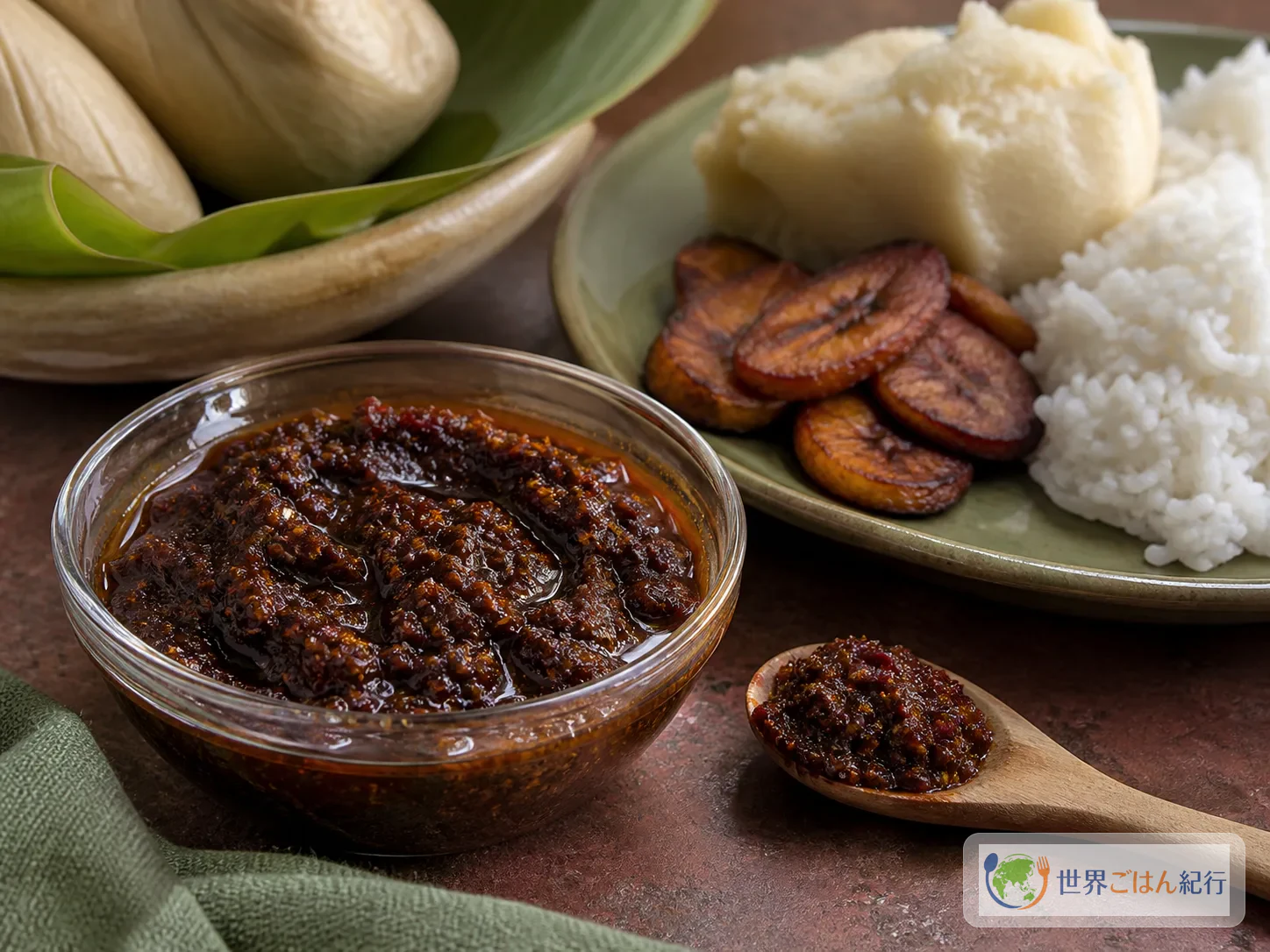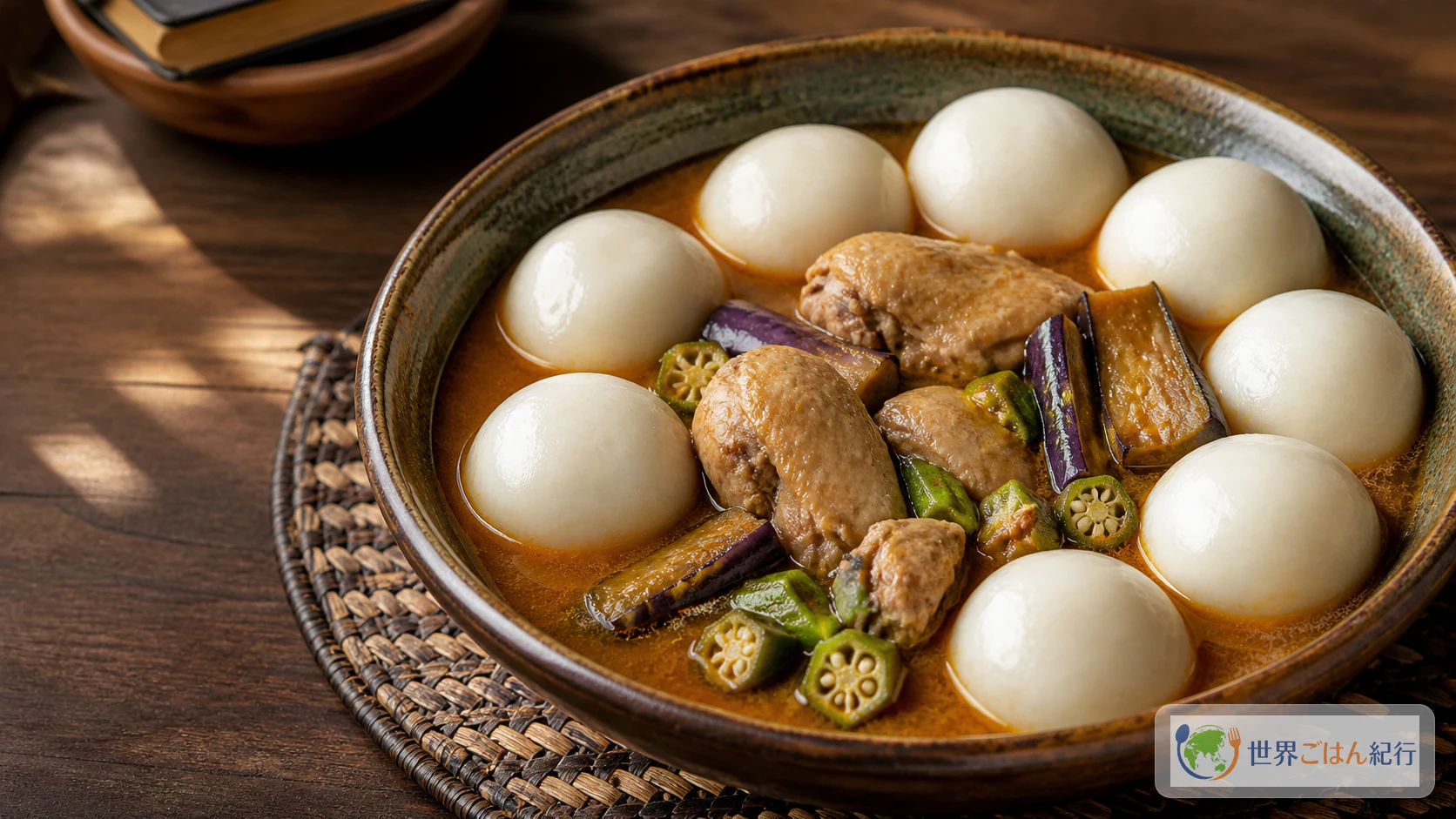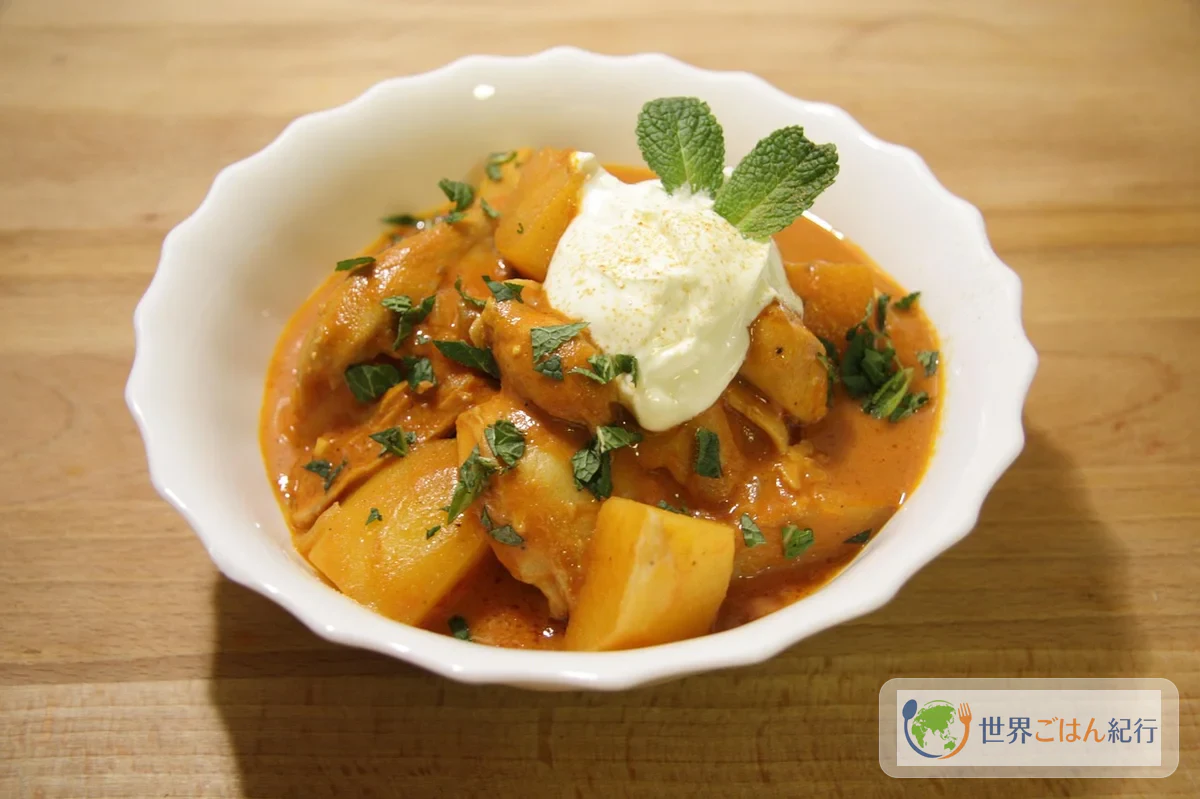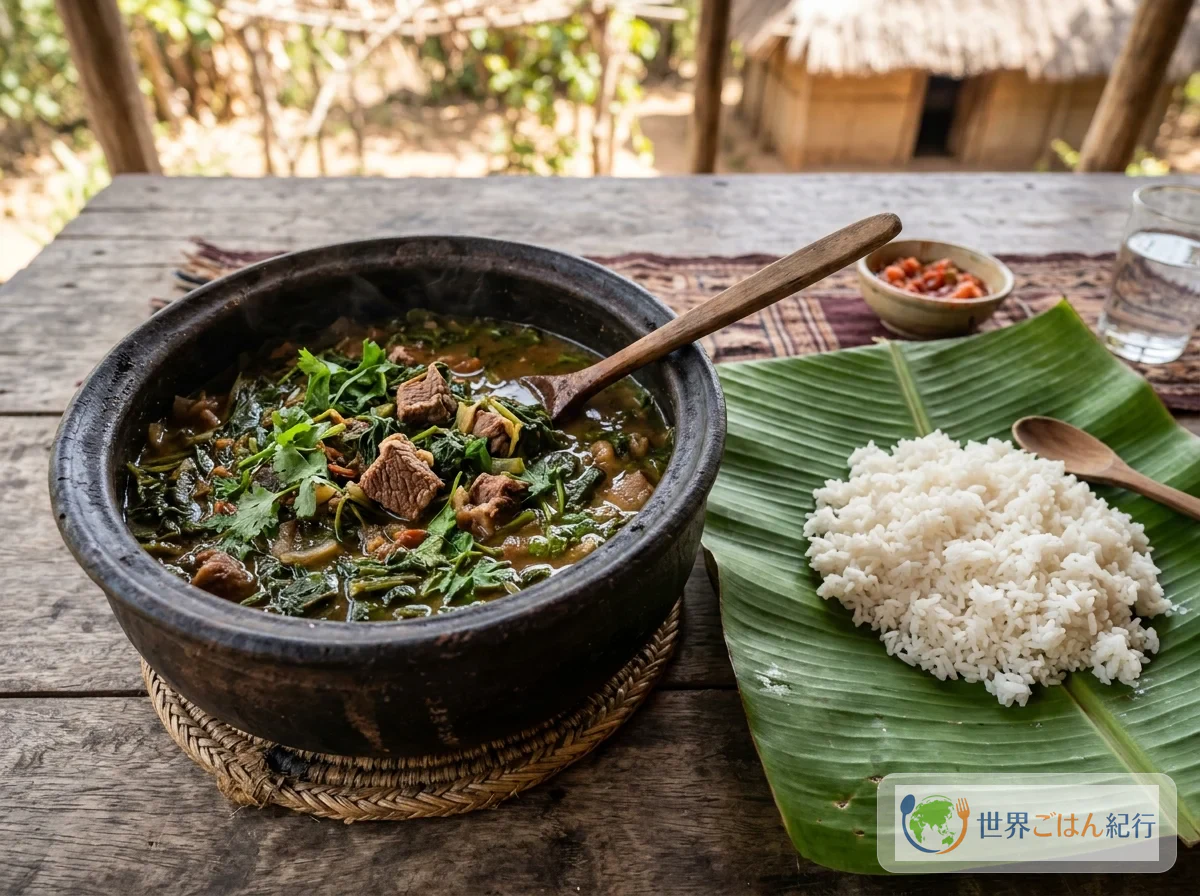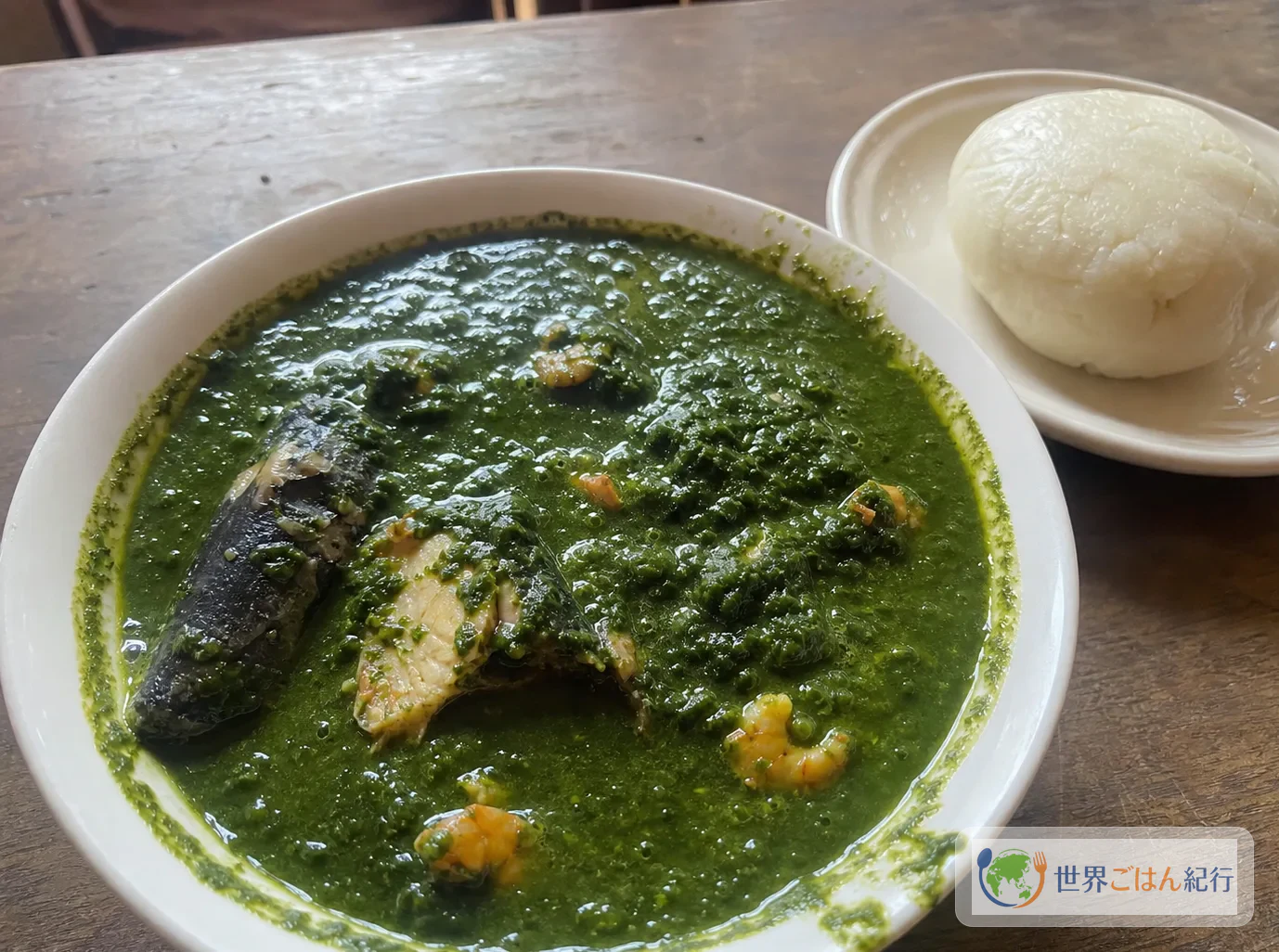
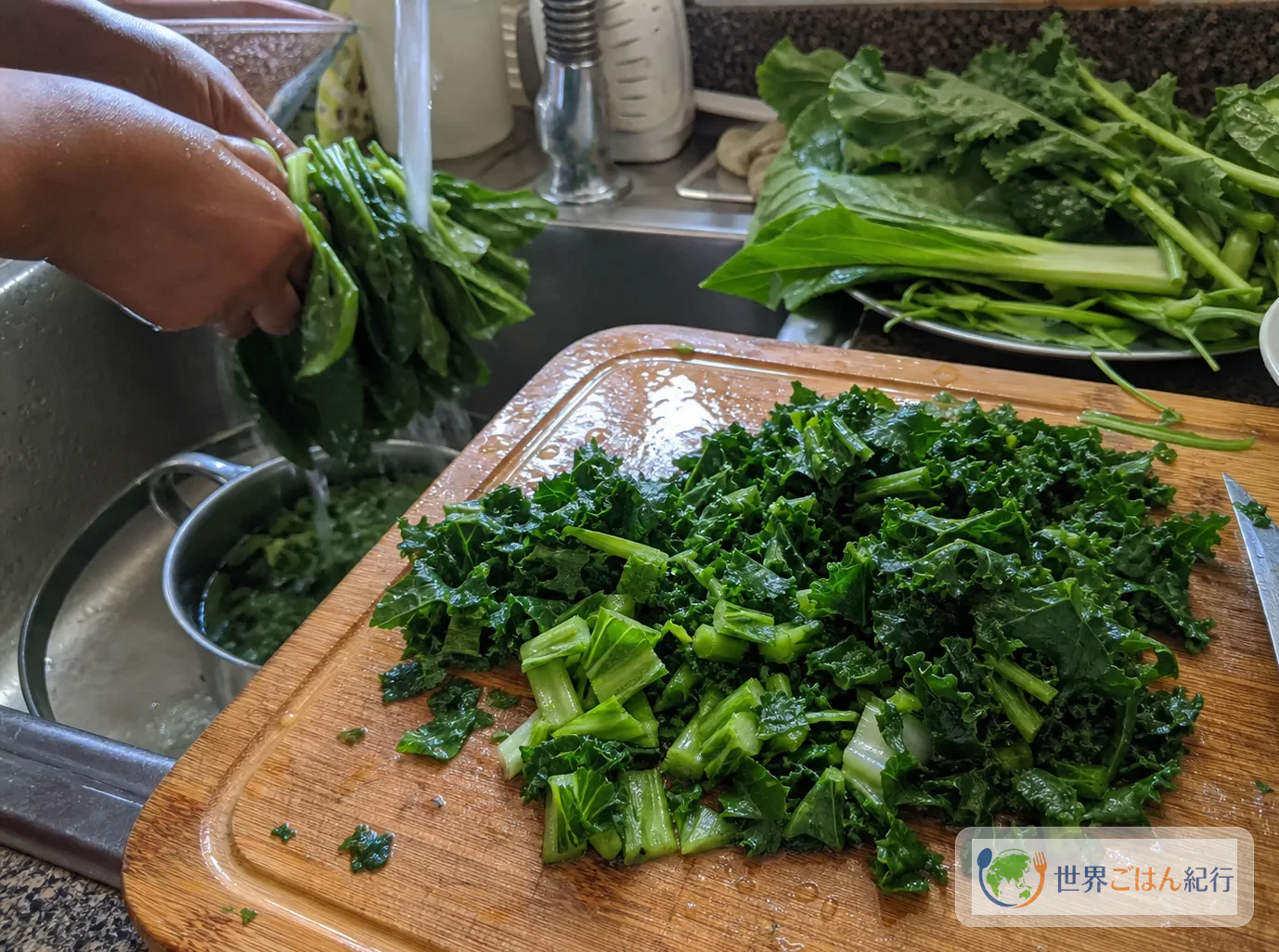
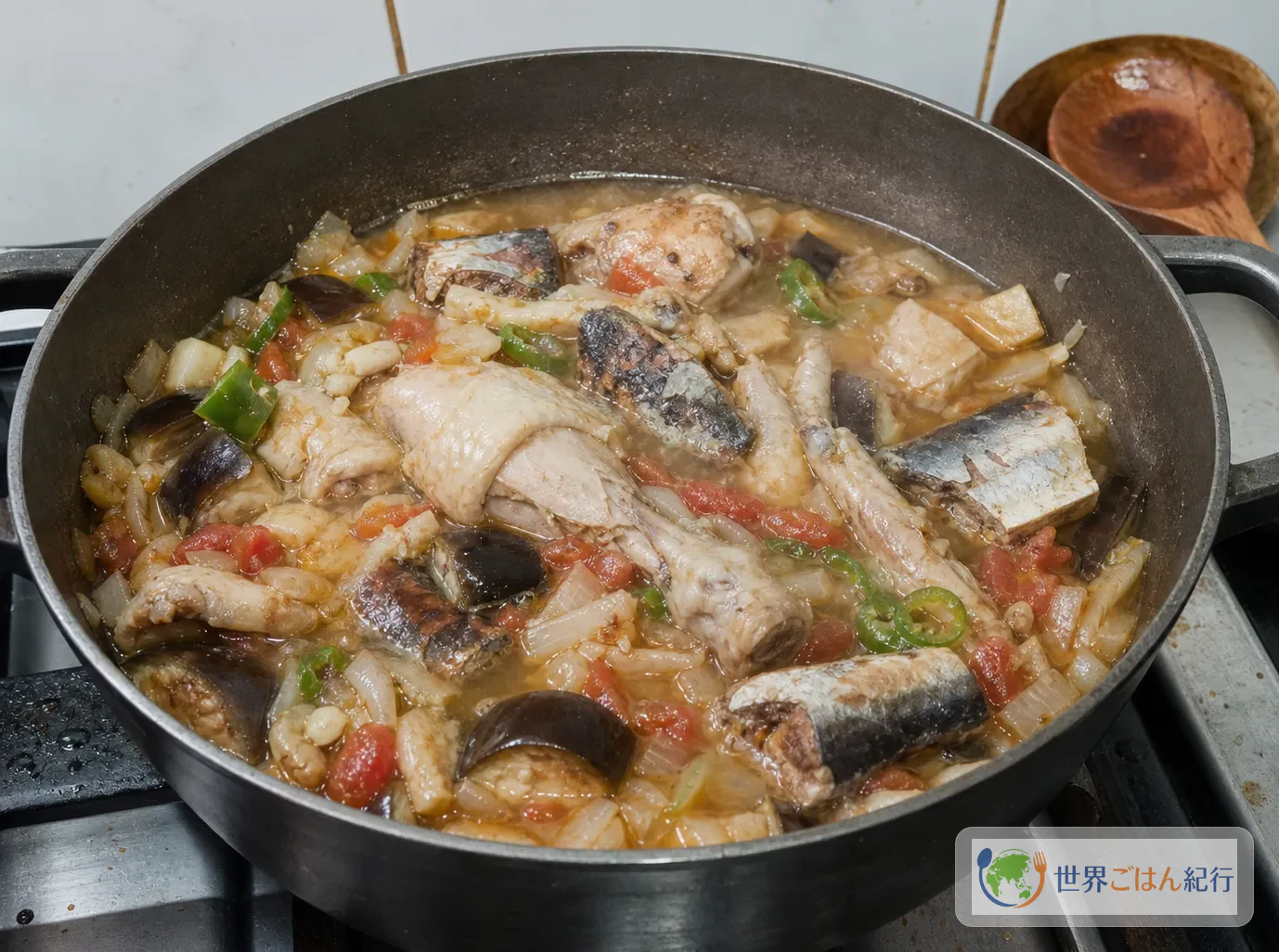
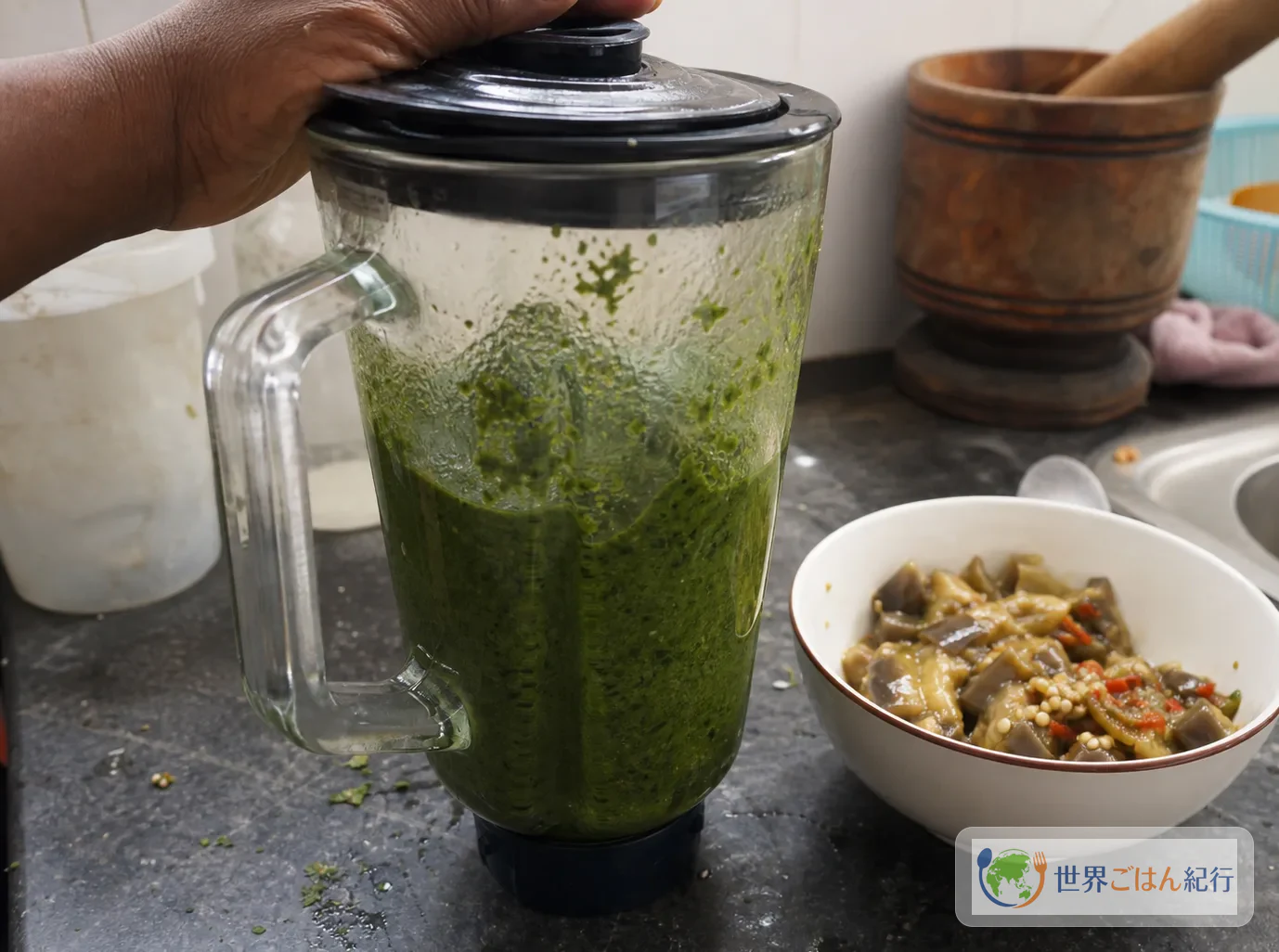
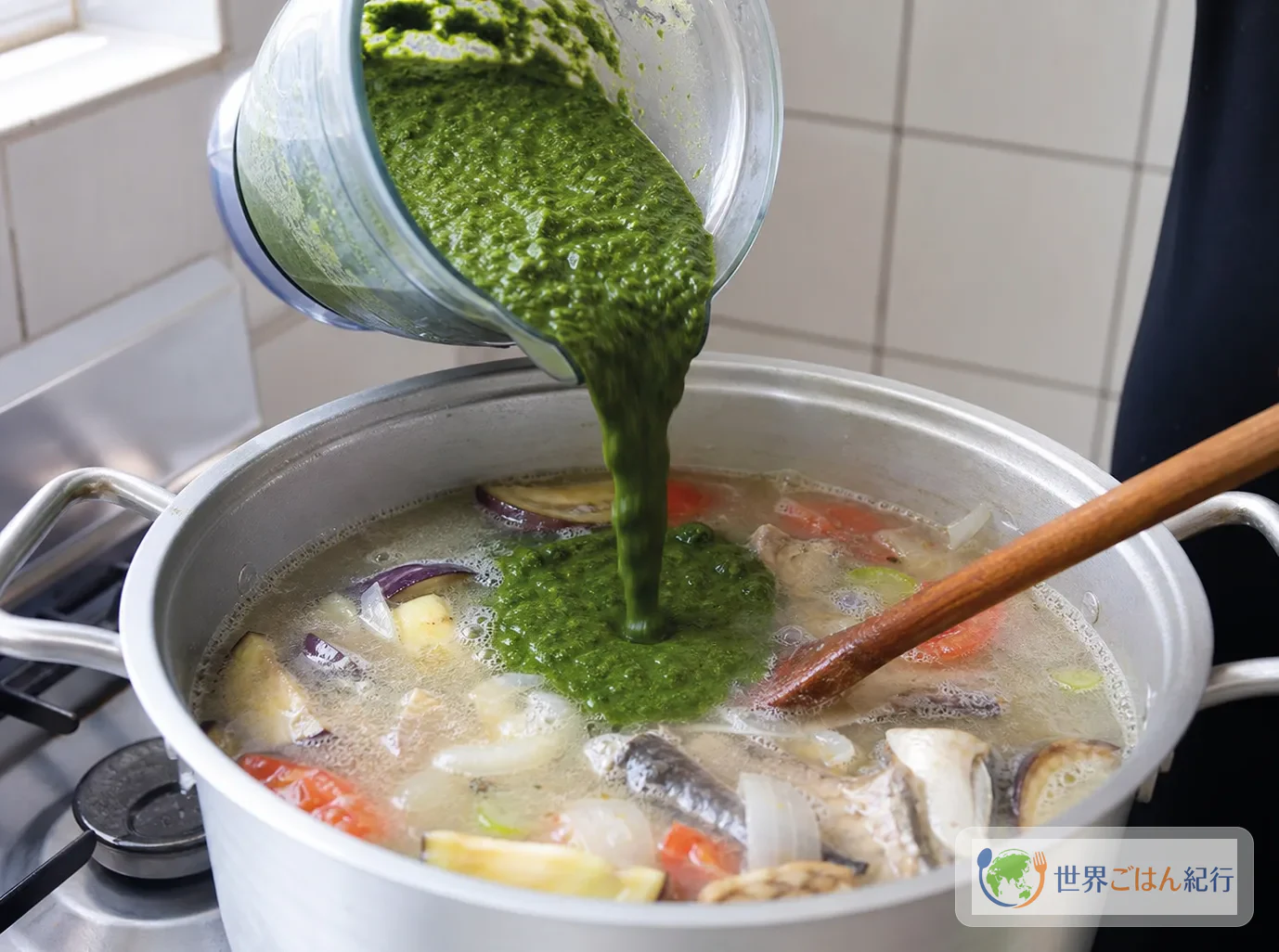
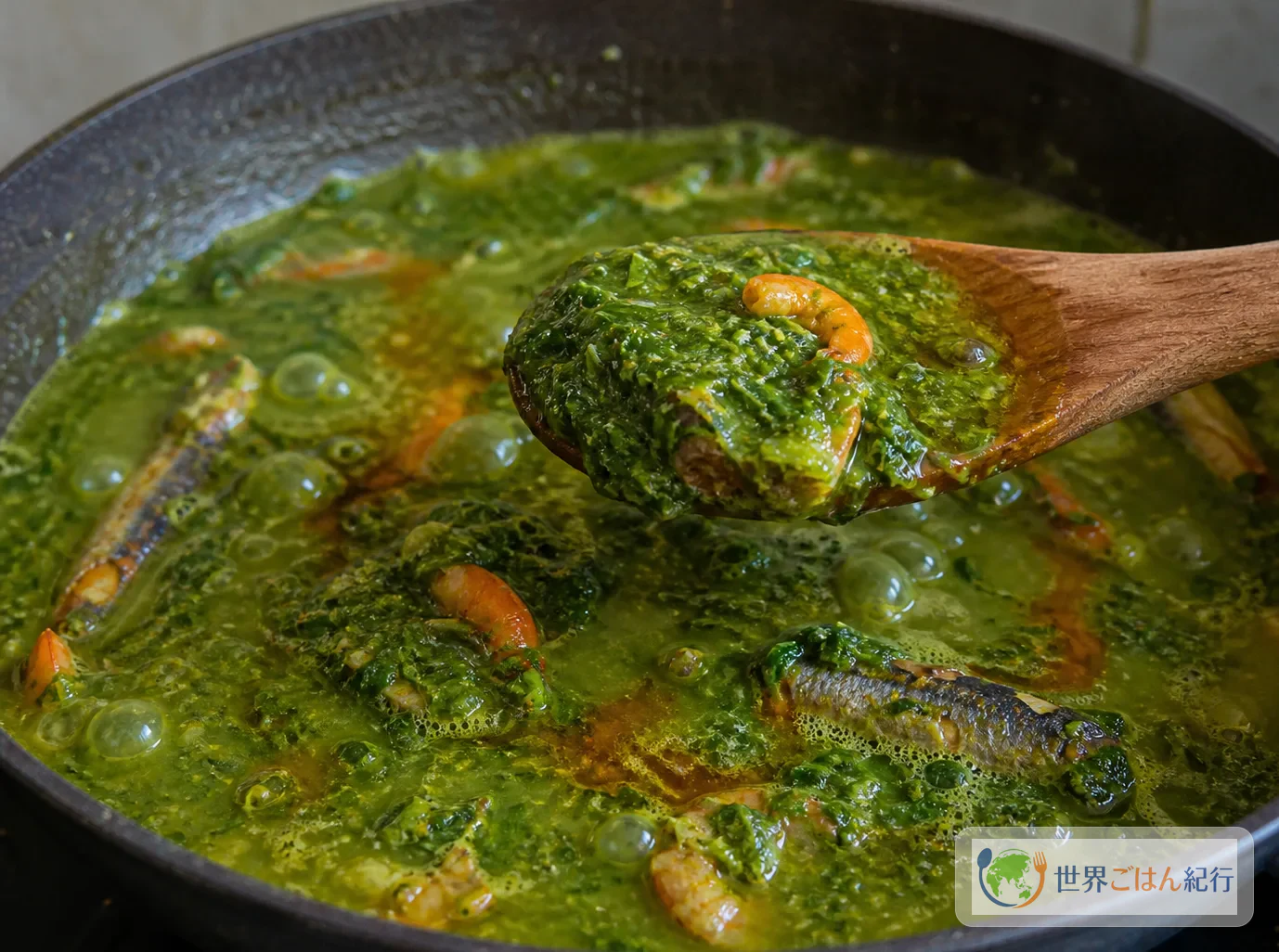
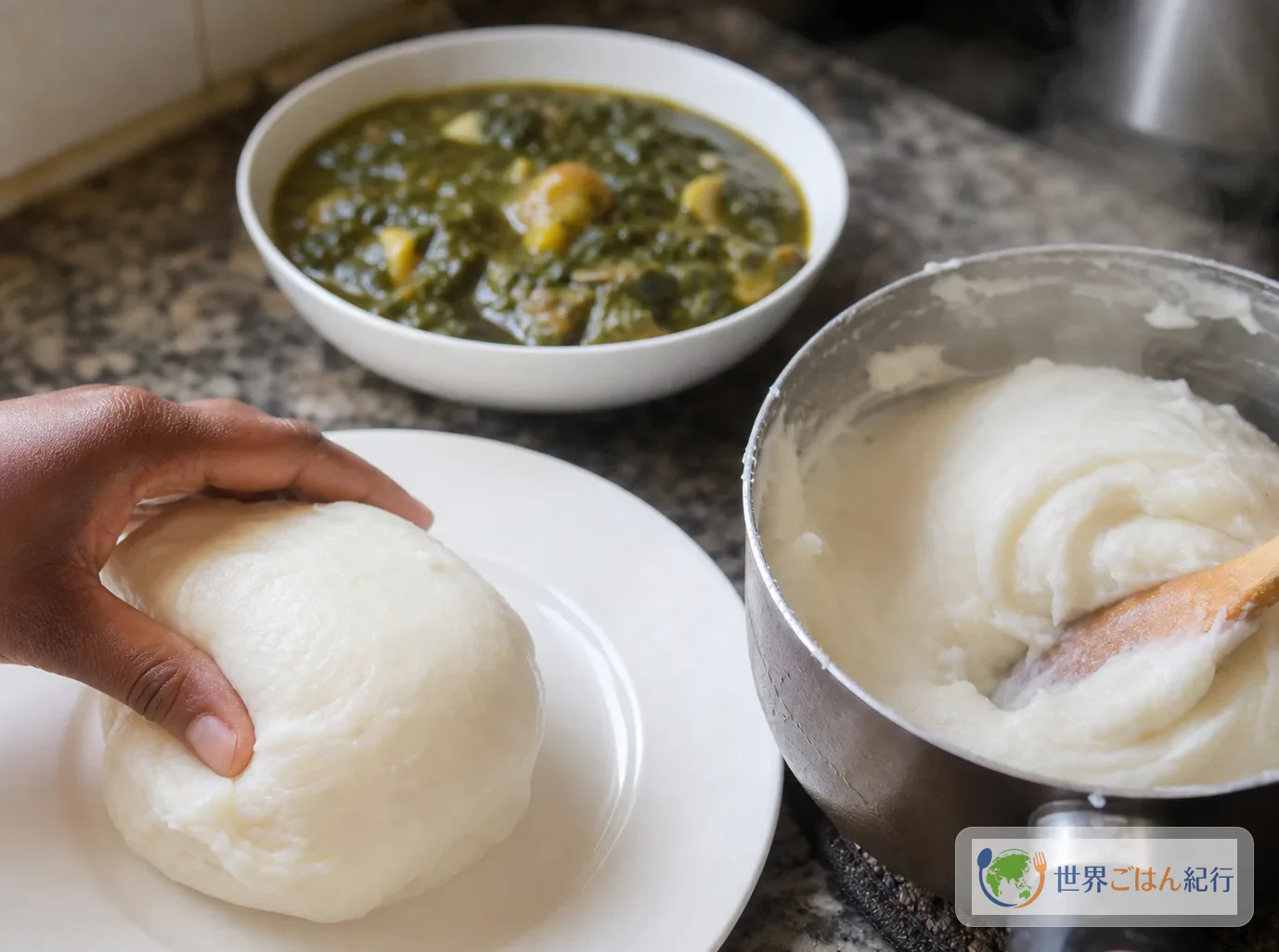
The grassy smell of chopping greens puts you in a different mood than a pot of miso soup or a stew. Roughly chop mustard spinach, spinach and kale, return them to a pot where eggplant and tomato have been simmering, and the soup turns a deep green all at once. This is abunuabunu (also spelled ebunuebunu), Ghana's green soup, traditionally made with cocoyam leaves known as kontomire. It looks gentle, but its backbone isn't only the leaves: smoked fish, dried fish, dried shrimp, chile and garden eggs (a small eggplant relative) build it into a soup with enough body to carry fufu.
Abunuabunu in Bono and across Ghana
Abunuabunu comes from the Bono region in west-central Ghana (formerly part of Brong-Ahafo), and it has long been cooked in Akan homes, especially by the Bono people. The name "ebunu ebunu" means "green, green," and the color of the boiled, mashed cocoyam leaves defines the dish. In English it's simply called green soup.
At the table, fufu or banku is the classic pairing, though it's also eaten with rice or boiled yam. Families put different things in the pot, such as smoked fish, snails, goat or chicken. Ghanaian households in cities or abroad often use spinach in place of cocoyam leaves.
Ghana has plenty of soups: tomato-based light soup, palm nut soup made from the fruit of the oil palm, and groundnut soup made with peanuts. Abunuabunu is the one where the green of the leaves takes center stage. Cameroon's ndolé heads in a similar direction, but ndolé leans on bitterness and peanuts, while abunuabunu puts the leaves and seafood further forward.
| Item | At a glance |
|---|---|
| Yield | 4 servings |
| Prep | 25 min |
| Cooking | 45 min |
| Total | About 1 hr 10 min |
| Serve with | Fufu, banku, white rice, boiled root vegetables |
| Heat | Medium. Adjust with the amount of green chile |
Ingredients (serves 4)
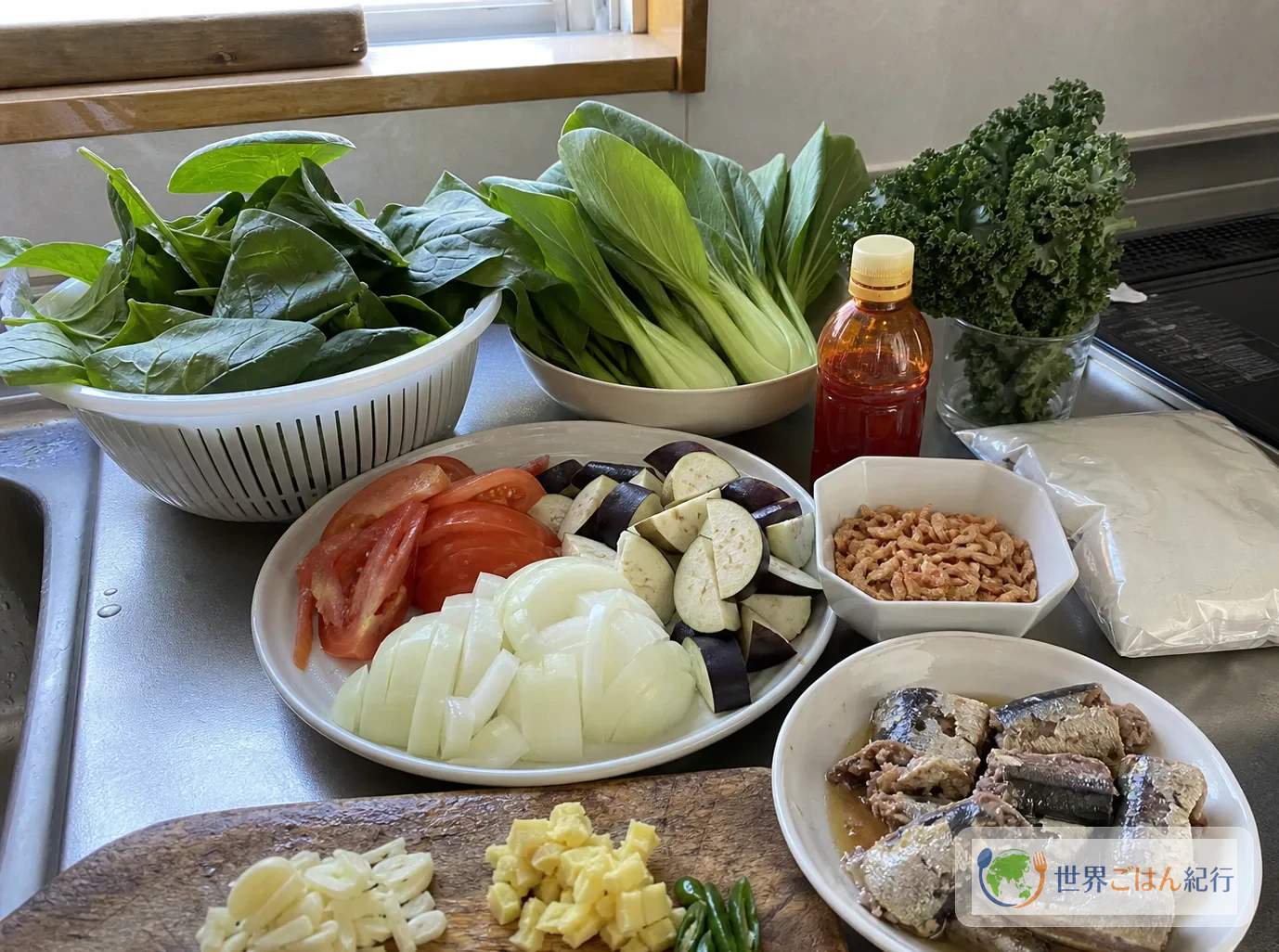
This recipe uses fish, shrimp and chicken. If you avoid shellfish, leave out the dried shrimp and add 2 tsp powdered bonito flakes (katsuobushi) for savoriness. The chile also adds a fresh green aroma, so if you are sensitive to heat, halve it, simmer it, and take it out before finishing.
Ingredients that can be tricky to shop for
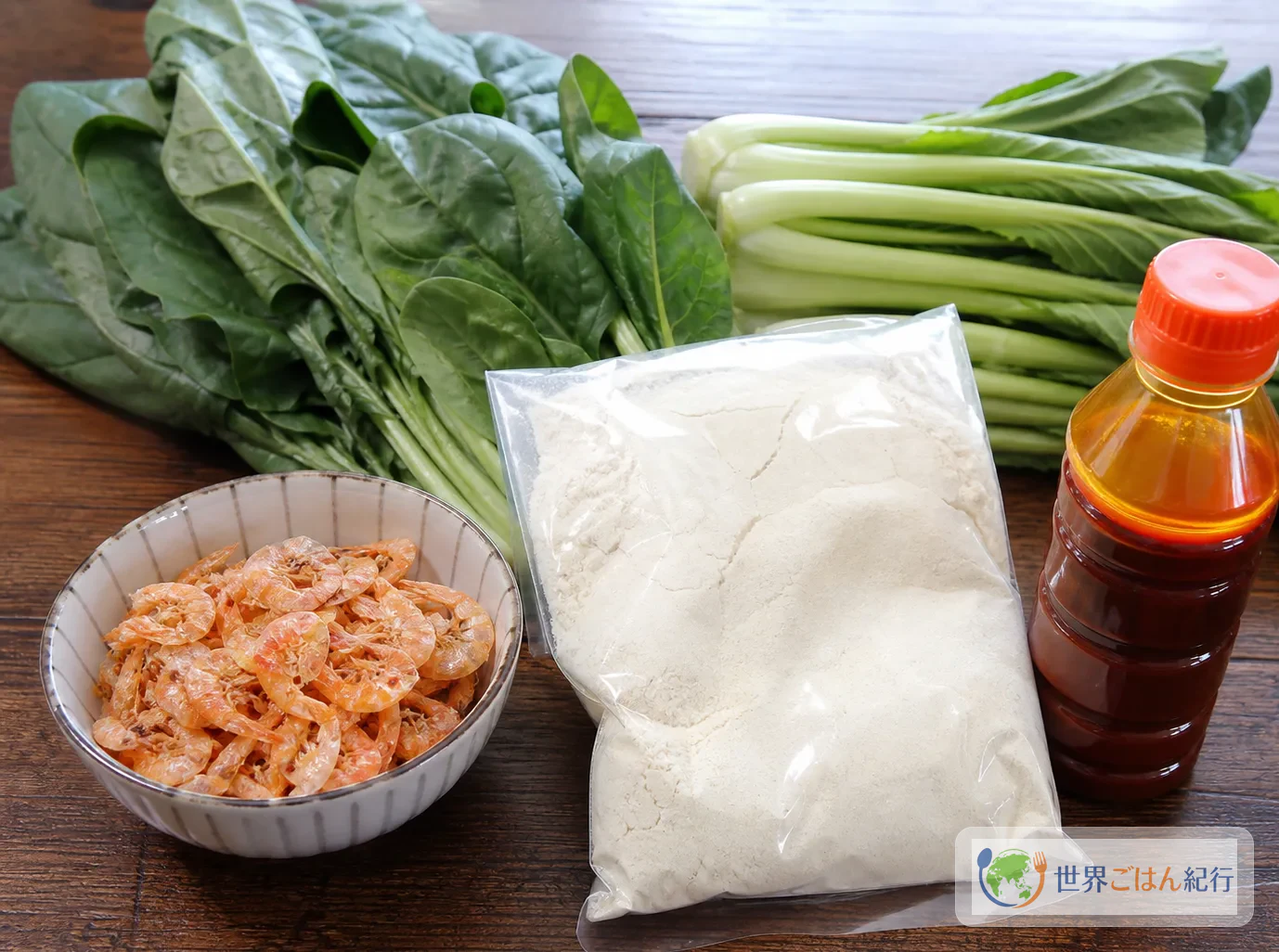
Hunting for kontomire itself makes the shopping hard. For a first try, buy the greens at an ordinary supermarket, and get only the seafood savoriness at the heart of the dish and the fufu from an African grocery or online.
Dried shrimp backs up the ocean aroma of smoked and dried fish. Ground finely, it blends into the whole soup and adds a depth canned mackerel alone can't give. If shellfish is fine for you, don't leave it out; it is what makes the soup taste like abunuabunu.
Abunuabunu makes the most sense eaten with fufu or banku rather than as a soup on its own. On days when there is no time to make fufu from scratch, a fufu mix makes it easy to experience scooping up green soup.
Red palm oil is an aromatic here, not the star. Even 2 tsp brings a West African red-palm aroma in between the seafood and the greens. On days when you want to keep the color as green as possible, use rice bran oil, then add palm oil little by little the next time.
Choosing greens, fish and oil for abunuabunu
The hard parts to source outside Ghana are kontomire and smoked fish. Kontomire is close to taro leaves, but it's hard to find for most home cooks and takes some practice to handle. This recipe combines komatsuna (Japanese mustard spinach), spinach and kale, splitting the jobs of green flavor, tenderness and a light bitterness among them. Using several greens together is the shortcut to that fresh aroma and bitterness.
In Ghana, small eggplants called turkey berries and the savory depth of smoked fish are part of the soup. Real smoked fish is best if you can get it, but canned mackerel in water plus ground dried shrimp gets you realistically close with an ordinary grocery run, and everyday eggplant takes over from the turkey berries.
Go easy on the red palm oil. In Nigerian egusi soup or Ghanaian groundnut soup the oil is a big presence, but here the leaves are the star. Use 2 tsp for aroma, and if you want more, add just a few drops right before eating.
Keeping abunuabunu green
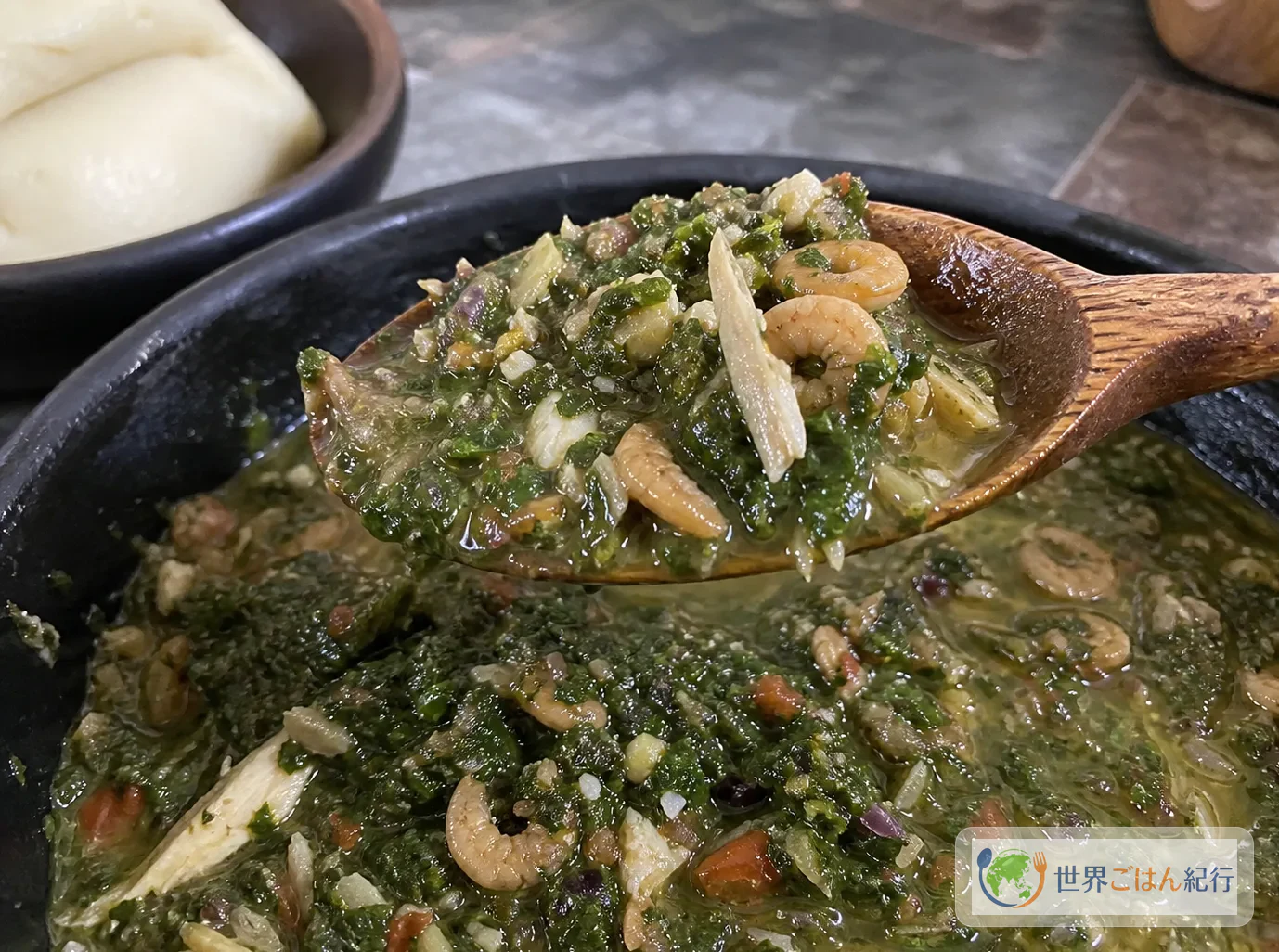
Where abunuabunu most often goes wrong is the balance between the green flavor and the seafood. Cook the greens too long and the color darkens, and the leafy aroma turns heavy. Add them too late, and they never meld with the seafood broth, so the soup ends up tasting like a plain greens purée.
Once the green paste is back in the pot, don't let it boil hard; just warm it at a gentle bubble. Long cooking dulls the color and drives off the fresh aroma of the leaves.
The order to stick to: build the chicken-and-eggplant base first, then turn the greens into a paste and return them over low heat. Simmering the eggplant until soft gives the green paste a natural roundness. Too much tomato pushes the color toward reddish brown, so keep it to 1 tomato for 4 servings.
Serving and storing abunuabunu
To eat it the way it's eaten in Ghana, pinch off a small piece of fufu, coat it in soup and swallow it rather than chew. Fufu is there to carry the soup, not to gain flavor as you chew. With slightly sour banku, the green flavor and seafood aroma tighten up a little. With rice, serve the soup separately in a deep bowl and combine a little at a time; the saltiness is easier to manage than if you pour it over.
For a fuller picture of Ghanaian cooking, make waakye or red red on another day and compare how beans, rice, staples and soups play off each other.
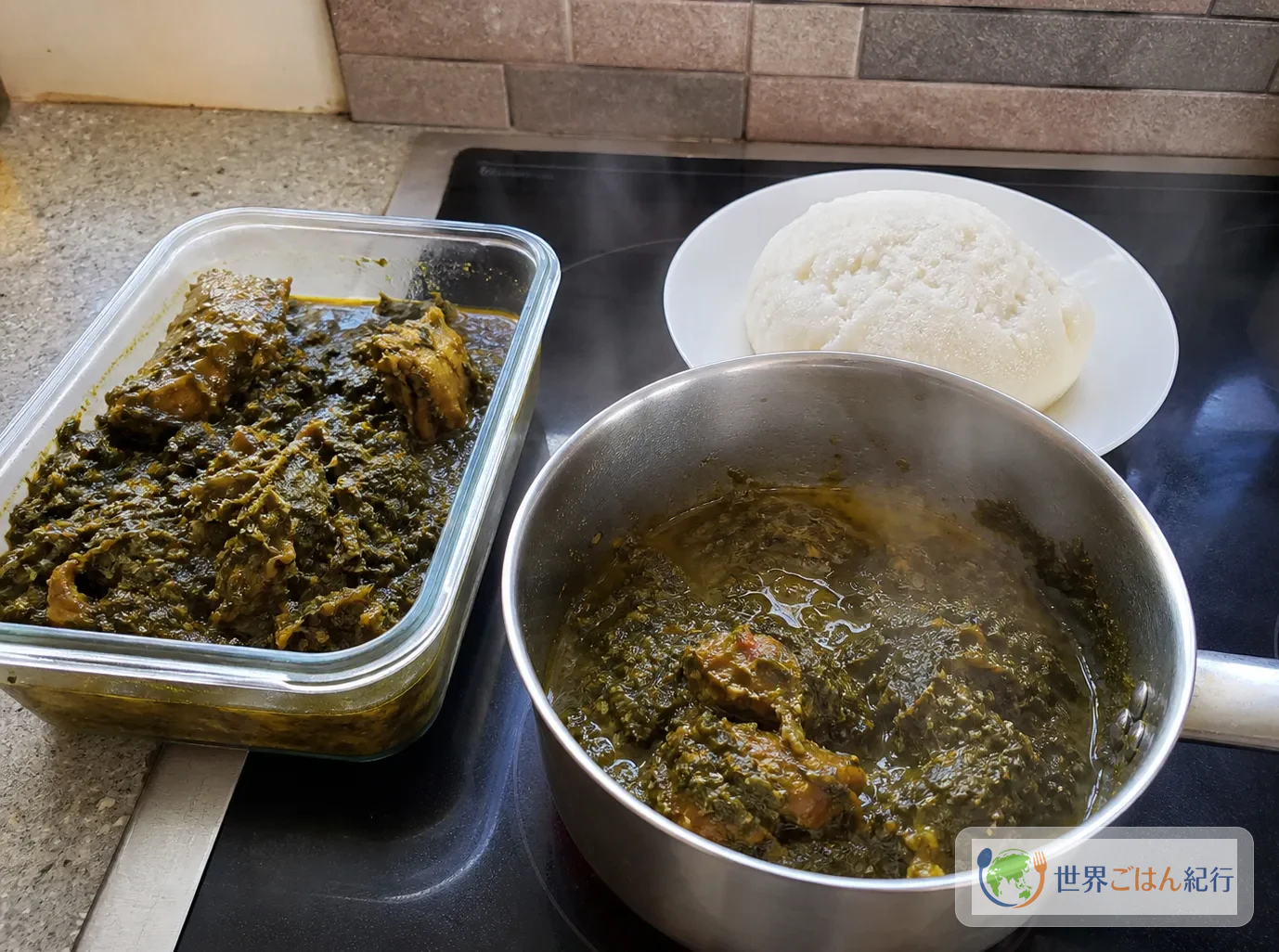
Refrigerate for up to 2 days. Because it contains seafood and greens, don't leave it at room temperature for long; once it has cooled slightly, move it to a storage container. Reheat in a small pot over low heat for 5 minutes, or in the microwave at 600 W in 1 minute 30 second bursts, checking as you go. Stop as soon as it steams and the surface starts to bubble gently, since a hard boil darkens the green.
FAQ
If I can get kontomire, can I use it as is?
Yes, but taro-family leaves need care. Remove the tough, stringy parts and cook them thoroughly before using. For a first try, it's easier to make the soup with everyday greens, get a feel for the flavor, and then move on to Ghanaian ingredients.
What if I use smoked fish instead of canned mackerel?
Break 4 oz (120 g) smoked fish into large flakes and add it in step 5. If it is very salty, cut the salt back to 1 tsp before tasting. If the fish has a lot of bones, remove the large ones before adding it.
Without red palm oil, is it a different dish?
Not entirely. The heart of abunuabunu is the green of the leaves and the savoriness of the seafood. Red palm oil adds aroma and a West African roundness, so on days when color comes first, or in households that don't care for the oil, the soup still works with rice bran oil.
Can I make it mild for the family?
Yes. Halve the green chile, remove the seeds and simmer it. If you only want its aroma, add it whole in step 2 and take it out before step 4. For anyone who wants more heat later, a little chile paste at the table is the safer route at home.
Is it worth making without fufu?
Yes. It's good with white rice, boiled potatoes or steamed taro. With fufu or banku, though, you understand why the soup needs this thickness, so if you like it with rice, try it with fufu next time.