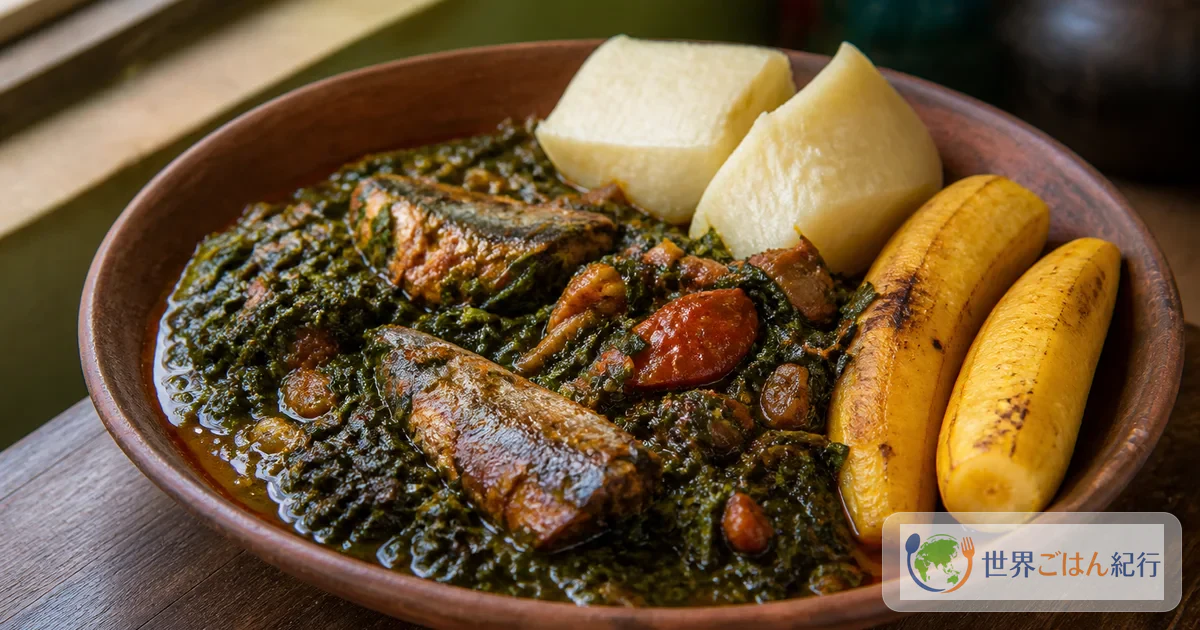
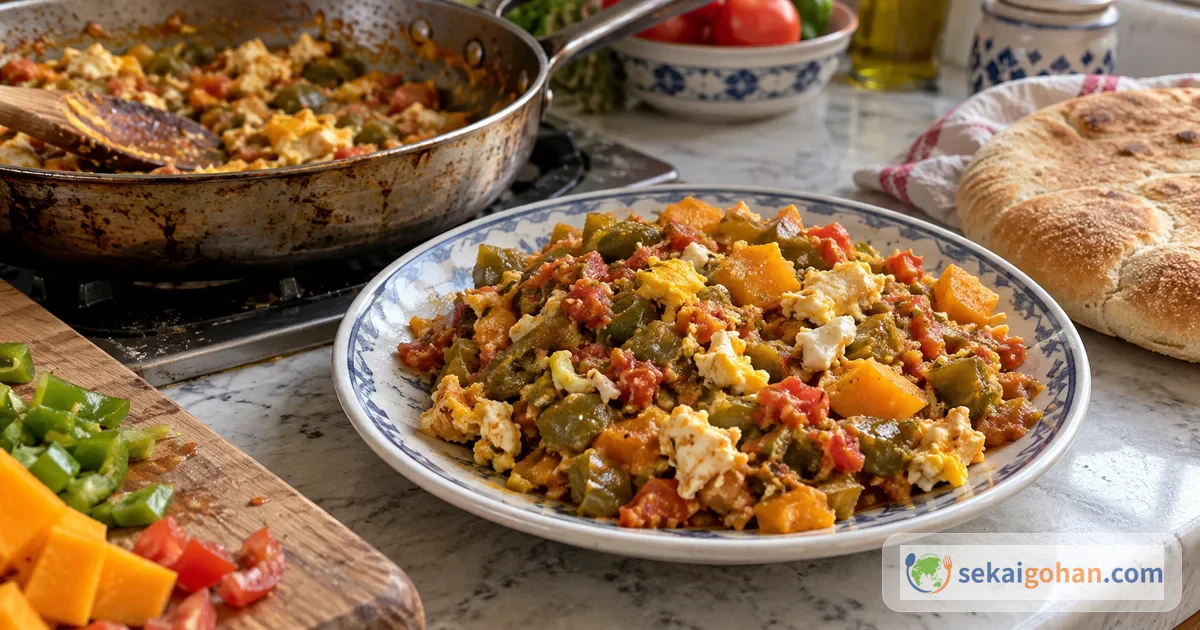
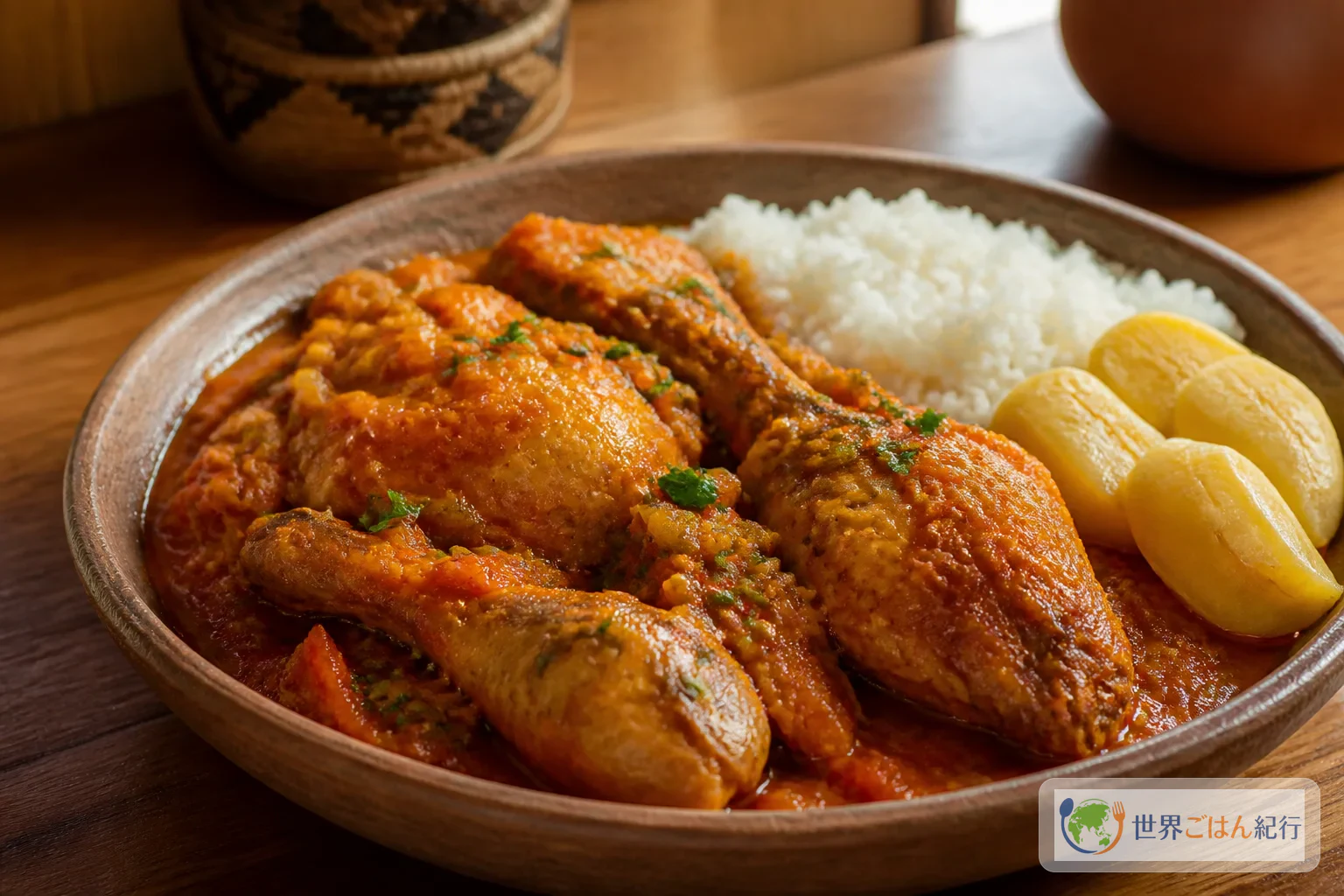
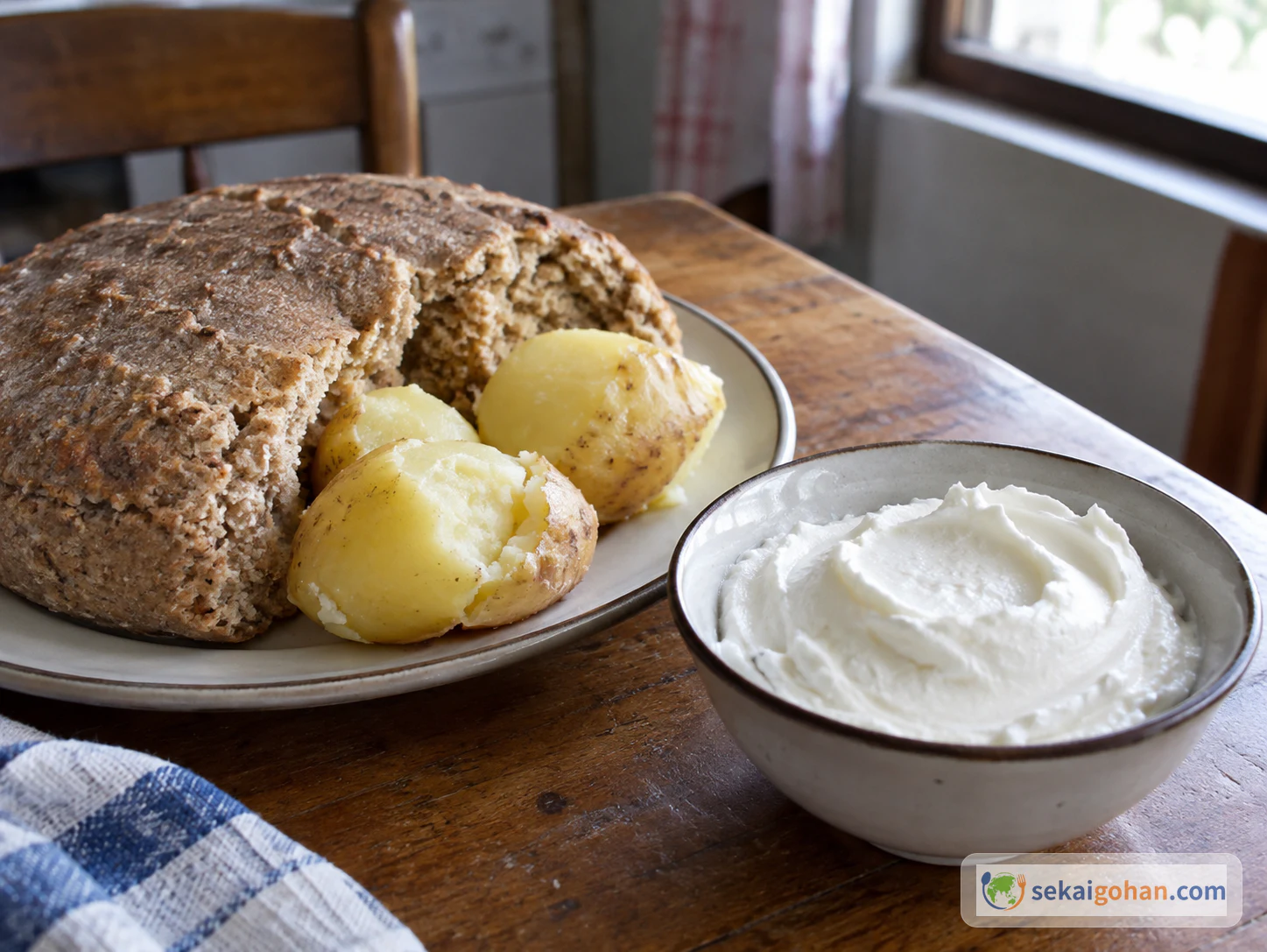
Drain a bowl of soaked beans, set them on the heat, then add rice to their fragrant, brown-tinted cooking liquid. The rice comes up a soft reddish brown, quite unlike plain white rice. This is Waakye (also spelled Waache), the rice and beans Ghanaians eat for breakfast or lunch, piled with boiled egg, shito (a black chili sauce), gari (coarse cassava flour), spaghetti, meat or fish, and salad as you like. You get the aroma of beans, the heat of shito, the gritty crunch of gari, and the slightly mysterious presence of spaghetti. The first time you'll probably wonder why there's pasta on a rice and bean dish, but as you eat through the plate, you find that rice, beans, heat, oil, acidity and texture each do a separate job.
Waakye in Ghana
A street-stall breakfast and lunch
Waakye is closely tied to Ghanaian city life. People buy it from a stall in the morning and eat it at work, have it wrapped in paper or leaves on the way to school, or make it lunch with meat or fish for staying power. It is made at home too, but for many people memories of waakye are tied to the steam rising at a street stall.

What people often discuss in Ghana is which stall's waakye is best: soft beans, rice that isn't mushy, shito that isn't too hot, toasty gari, generous meat and fish. When you recreate it elsewhere, getting the rice and beans right, with distinct grains, brings you closer to waakye than gathering every luxurious side.

Origins of waakye
In Ghana it is written "Waakye" in English. It is pronounced close to "WAH-chay." The name comes from the Hausa "shinkafa da wake" (rice and beans). It spread as a city street food under the influence of northern Ghana and trade culture.
Waakye's origins lie in the food culture of northern Ghana and Hausa-related communities. Rice and beans cooked together appear across West Africa, with different beans, rice and sides in each place. In Ghana, sorghum leaves for coloring, shito, gari, spaghetti and egg were added, and it grew into a one-plate city street dish.
How waakye differs from other rice dishes
As a starting point, waakye is a little like Japanese sekihan (red bean rice), but it is eaten much more freely. If Ghanaian fufu is the staple that catches the soup, waakye is the staple that gathers the sides on the plate. And unlike Nigerian jollof rice, which is colored red with tomato, this is rice colored quietly by beans and leaves.
Beans in the rice and spaghetti on top can seem a little odd, but dishes that layer starches on one plate exist around the world. Egyptian koshari layers rice, lentils, macaroni and chickpeas, and Brazilian feijoada goes with black beans and rice. Waakye works the same way: rice and beans as the base, and whatever sides you can get gathered onto one plate. Treat it as plain "rice cooked with beans" and you lose about half the fun. What matters is the ratio of rice to beans, the reddish-brown color, and what goes alongside.

Ingredients (serves 4)
Here the waakye serves 4, and the sides are the minimum for eating it street-stall style. Adding meat and fish makes it very filling, so on a weekday, egg and shito alone are enough.

This recipe contains eggs, and the quick shito may contain shrimp. Store-bought shito can contain seafood, nuts, soy and preservatives, so people with food allergies should check the ingredient list. Gari comes from cassava, but some products are made on lines that also handle wheat and soy.
Beans and long-grain rice, once you have them, widen your range of West African cooking. You can use them not only for waakye but also for jollof rice, dal bhat and biryani, so a big bag you can finish is worth more than small packets.
Long-grain rice is easy to find at Asian and Middle Eastern groceries. Black-eyed peas are sold at international groceries, natural food stores and online. Gari and shito are realistic from African groceries or online. For a first try, you can skip gari and start with just egg and quick shito and it will still taste like waakye.
Choosing Ingredients for Waakye
Beans and rice
The beans are the star: black-eyed peas or cowpea-type beans give the aroma and bite. Cowpeas are close; kidney beans turn sweet and heavy, so use only a little. In Ghana the rice is mostly long-grain, and at home basmati absorbs water yet keeps its grains separate, which suits waakye. Jasmine has a good aroma and comes out slightly softer. Short-grain rice works if you cook it firm with less water than usual. It will be chewy, and too much stickiness weakens the character of waakye, but it is still good as a rice and bean dish.
Sorghum leaves and color
In Ghana, dried sorghum or millet leaves give waakye its reddish-brown look and toasty aroma. Sorghum is a type of grain, and simmering the leaves or stalks colors the liquid. Edible sorghum leaves are not easy to buy reliably in many places, though, and since the center of the flavor is beans and rice, the dish works without them. Leaving them out on the first attempt actually lets you focus on how the beans cook and how much water the rice needs; from the second time, look for edible sorghum leaves or sorghum tea.
At home, start by getting color from the black-eyed pea cooking liquid. Soak dried black-eyed peas and cook them thoroughly, and a pale brown color moves into the liquid. It isn't a perfect reddish brown, but the aroma and texture come close enough. For more color, add a small amount of food-grade sorghum tea or hibiscus. Hibiscus adds sourness, though, so too much makes it a different dish.
The leaves used to color waakye must be sold for eating. Don't use ornamental leaves, garden sorghum, or leaves of grain plants of unknown pesticide history. Cooking only in the bean liquid is safer and tastes better than forcing the color.
Shito, gari and spaghetti
Shito is what keeps you eating. With just rice and beans the flavor is gentle; with shito it instantly becomes street food. Store-bought Ghanaian shito is easiest. If you can't find it, combining 2 tsp chili oil with dried shrimp powder, tomato paste and soy sauce gets you the same direction of oil, heat and umami. Gari and spaghetti are there for texture, and both can be swapped or skipped.

| Ingredient | OK to substitute? | Recommendation |
|---|---|---|
| Black-eyed peas | Keep if possible | Cowpeas are close. Kidney beans turn sweet and heavy, so use a little |
| Long-grain rice | Keep if possible | Basmati, jasmine. If using short-grain, cook it firm |
| Sorghum leaves | Can substitute | Omitting is safest. For color, a little edible sorghum tea |
| Shito | Can substitute | Store-bought shito, or chili oil plus dried shrimp powder plus tomato paste |
| Gari | Can substitute | Fried onion, crushed shrimp chips, a little toasted breadcrumbs |
| Spaghetti | Can omit | A small amount of thin pasta only on days you want the street-stall feel |
If you bought long-grain rice for waakye, use it next for jollof rice, nasi goreng or biryani so nothing goes to waste.
Instructions
If you soak the beans the night before, the day itself is much easier. For breakfast, prepare the night before; for dinner, soak in the morning. If you forget to soak, use canned beans. Getting the cooked rice right matters more than forcing a start from dried beans.
Step 1: Soak the black-eyed peas (the night before)
Rinse 5.5 oz (160 g) dried black-eyed peas quickly and soak them in 4 times their volume of water. After about 8 hours the beans are plump. In hot weather soak in the refrigerator. Left overnight in a warm kitchen they can develop a fermented smell.

If you use canned beans, skip this step. But canned beans are already soft, so adding them from the start with the rice makes them fall apart. It is better to add them a little before the rice is done, or mix them in afterward so they keep their shape.
Step 2: Parboil the beans (25 min)
Drain the soaked beans and put them in a pot. Add 2½ cups (600 ml) water, a pinch of salt and a pinch of baking soda and bring to a boil over medium heat. When it boils, reduce to medium-low and cook for 20–25 minutes. Stop when a bean pressed between your fingers still has a little firmness in the center. If you make them completely soft here, they will break down while cooking with the rice.

If you use sorghum leaves, put them in the pot with the beans and simmer to extract color. Remove the leaves when the liquid is reddish brown. Leaf fragments left behind spoil the texture, so if you're worried, put them in a tea bag to simmer. If you have no leaves, go on with just the bean liquid.
Step 3: Wash the rice and cook it in the bean liquid (25 min)
Rinse 2 cups of long-grain rice lightly and drain in a sieve. In a pot, combine the rice, parboiled beans and 400 ml of the bean liquid. If the liquid is short, add water to a total of about 420–450 ml for 2 cups of rice. Add 1 1/2 tsp salt and stir everything once.

Cover and bring to a boil over medium heat, then cook over low heat for 15 minutes. Turn off the heat and steam for 10 minutes without lifting the lid. Long-grain rice settles during steaming. Stirring right away can break the grains, so wait a little and then fluff with a fork.
After parboiling the beans, put the rice, beans and cooking liquid in the rice cooker pot. Use a little less liquid than for 2 cups of ordinary white rice, and choose the normal cooking setting rather than quick cook. When done, steam for 10 minutes and fluff lightly with a fork rather than a rice paddle so the grains don't get crushed.
Step 4: Make the quick shito-style sauce (15 min)
Put 3 tbsp oil in a small pot and sauté the finely chopped onion over medium-low heat for about 8 minutes. Add the garlic and ginger for 1 minute. Add the tomato paste and cook for 2 minutes until the color deepens. Add the chili flakes, dried shrimp powder and soy sauce and simmer 2–3 minutes more.

Authentic shito is blacker and is made by slowly frying fish powder, dried shrimp, chiles and oil. The home version comes out lighter, but don't be too afraid of the oil. Waakye itself is plain rice and beans, so a small amount of spicy oil pulls the plate together.
Step 5: Prepare the sides (15 min)
Put the 4 eggs into boiling water and cook over medium heat for 10–11 minutes until the yolks are hard, then cool in cold water and peel. Boil 4 oz (120 g) spaghetti in salted water for 1 minute less than the package says and toss with a little oil. Cut the tomatoes into wedges, slice the red onion thinly and soak it in water for 5 minutes. If you use canned tuna, drain the oil lightly; if you use cooked fish, remove the bones and make it easy to eat.

Sprinkle on the gari just before eating. If added early, it absorbs moisture and softens. Use just 1 tbsp at first. If you don't like the gritty texture, crushed fried onion works as a substitute.
Step 6: Plate it (5 min)
Mound the waakye on the plate and place the egg, spaghetti, tomato, onion and tuna or flaked fish beside it. Add 1 tsp to 1 tbsp of shito and finish with a sprinkle of gari. If you're worried about the heat, serve the shito on a separate dish.

How to eat it
You don't need to mix everything from the start. Take a bite of waakye, a little shito, break up the egg, add a pinch of gari. Adding tomato in between rests the heat. As with Ghanaian street food, it is more fun to build flavor on the plate little by little than to eat neatly.
For a sweet and spicy side, kelewele, plantain tossed with ginger and chile, goes well. On the days you want to get close to a full street-stall plate, keep the waakye lightly seasoned and layer flavor with the sides.
Common Waakye Problems and Fixes
Waakye has few ingredients, so how well the rice and beans cook shows directly in the result. The most important step is parboiling the beans before the rice goes in. Dried beans and rice started together tend to leave the rice soft while the beans are still hard; take the beans to just short of "slightly firm but edible," then cook them with the rice, and they finish together.

| Problem | Cause | Fix |
|---|---|---|
| Hard beans | Not enough soaking or parboiling | Cook the beans alone for 10 more minutes before cooking with the rice |
| Mushy rice | Too much water, stickiness of short-grain rice | Next time reduce water by 2–3 tbsp and use long-grain rice |
| Beans break apart | Parboiled too long, canned beans added at the start | Mix canned beans in after the rice is done |
| Pale color | No sorghum leaves, too few beans | The flavor is fine. Prioritize the bean aroma over color |
| Weak flavor | Not enough salt or sides | Make up with shito and gari rather than adding more salt to the rice |
When the flavor seems vague, adjusting with the sides is closer to how waakye is eaten in Ghana than salting the rice more. The heat of shito, the toastiness of gari, the mellowness of egg and the acidity of tomato balance the flavor on the plate.
Serving, Storing and Varying Waakye
Weekday and weekend plates
Waakye is complete on one plate, and changing the sides lets it work for weekdays and for guests. For a weeknight, waakye, boiled egg, quick shito and tomato are enough: the beans bring protein and fiber, the egg gives satisfaction, and skipping spaghetti and gari makes shopping lighter. If someone at the table doesn't like spicy food, serve the shito on the side.
On the weekend, go for the full street-stall plate: waakye, egg, spaghetti, gari, shito, grilled fish and a tomato and onion salad. Salted mackerel works for the fish, and oily fish with hot shito supports the plainness of the rice and beans nicely.

Vegetarian waakye
Without fish, meat or egg, add avocado, roasted peanuts, tomato, onion and cucumber. Leave the dried shrimp out of the shito and make the oil sauce from tomato paste, garlic and chili alone, and the plate stays plant-based and satisfying. Beans and rice together have plenty of strength as a staple.
Storing waakye
Waakye can be made ahead, but because it contains beans and rice, handle storage carefully. Don't leave cooked rice at room temperature for a long time; once it has cooled a little, refrigerate or freeze it promptly. Especially in summer, it is safer not to rely on a rice cooker's keep-warm setting for long.
| Storage method | Approximate time | Tip |
|---|---|---|
| Refrigerator | 2 days | Spread thin in single portions to cool |
| Freezer | about 3 weeks | Wrap flat in plastic wrap and put in an airtight bag |
| Reheating | Microwave or re-steam | Sprinkle 1–2 tsp water and heat |
| Sides | Eggs: same day to the next day | Keep gari and shito separate |
Refrigerated waakye firms up a little, so cover it loosely with plastic wrap before microwaving. Frozen portions can go straight into the microwave; breaking them up once partway reduces unevenness. Store only the waakye base and keep the spaghetti and gari out of it, since spaghetti absorbs moisture and gets heavy and gari loses its texture. Add the sides just before eating.

The next day, try it lightly stir-fried. Heat 2 tsp oil in a skillet, spread the waakye out and sear it, then toss in a little shito at the end. With an egg on top it's more everyday leftover rice than Ghanaian dish, but the aroma of beans and spicy oil go very well together.
Waakye on an African menu
Coming from an introduction to African cuisine, it is easiest to place waakye as a West African rice and bean dish. Read it alongside red tomato rice jollof rice, the pounded staple fufu, peanut stew mafe and fish and rice thieboudienne, and you start to see how rice, beans, root vegetables and sauces combine in West Africa.
Frequently Asked Questions
Q1. Is it still waakye without sorghum leaves?
At home, yes. The reddish-brown look is weaker, but cooking in the black-eyed pea liquid gives plenty of the aroma of a bean and rice dish. If you can't get edible sorghum leaves, leave them out rather than using leaves of unknown safety.
Q2. Can I use adzuki beans instead of black-eyed peas?
Adzuki beans make a bean and rice dish, but the aroma and sweetness move toward Japanese sekihan. For something closer to waakye, use black-eyed peas, cowpeas or cowpea-type beans. Kidney beans are large and get heavy if they break down, so use a small amount.
Q3. How do I adjust the heat for children?
The waakye itself isn't spicy; the heat is all in the shito. For children and anyone who doesn't like heat, serve the shito on a separate dish and let them eat with tomato, egg and a little tuna. Adults can add shito on their own plates.