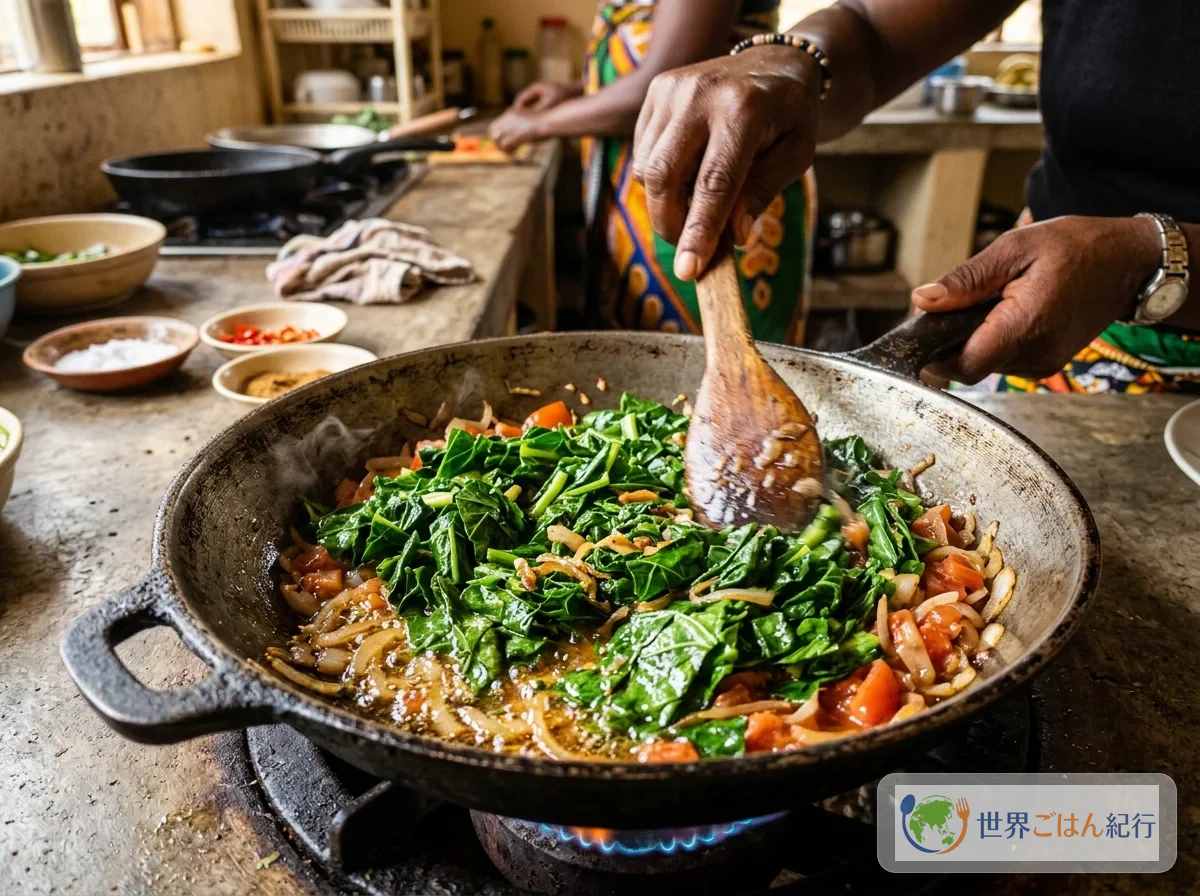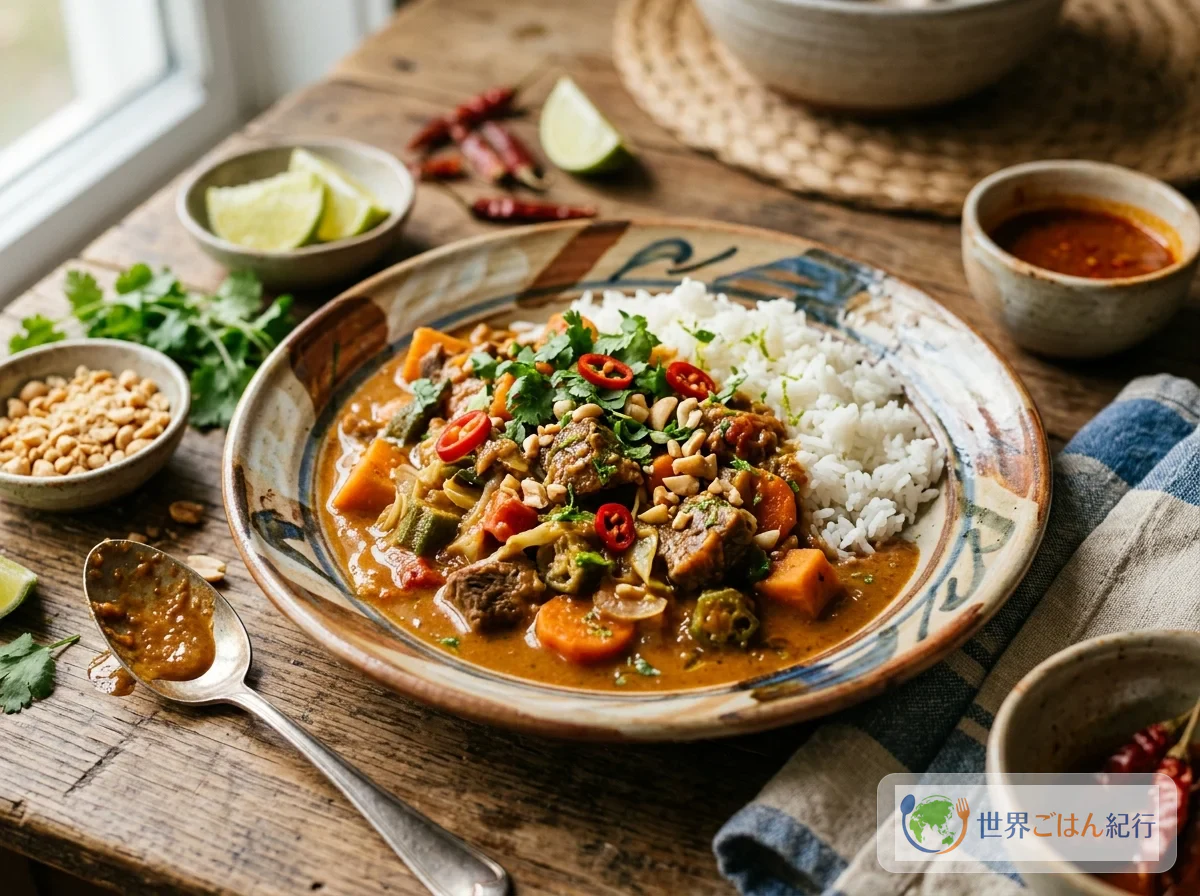
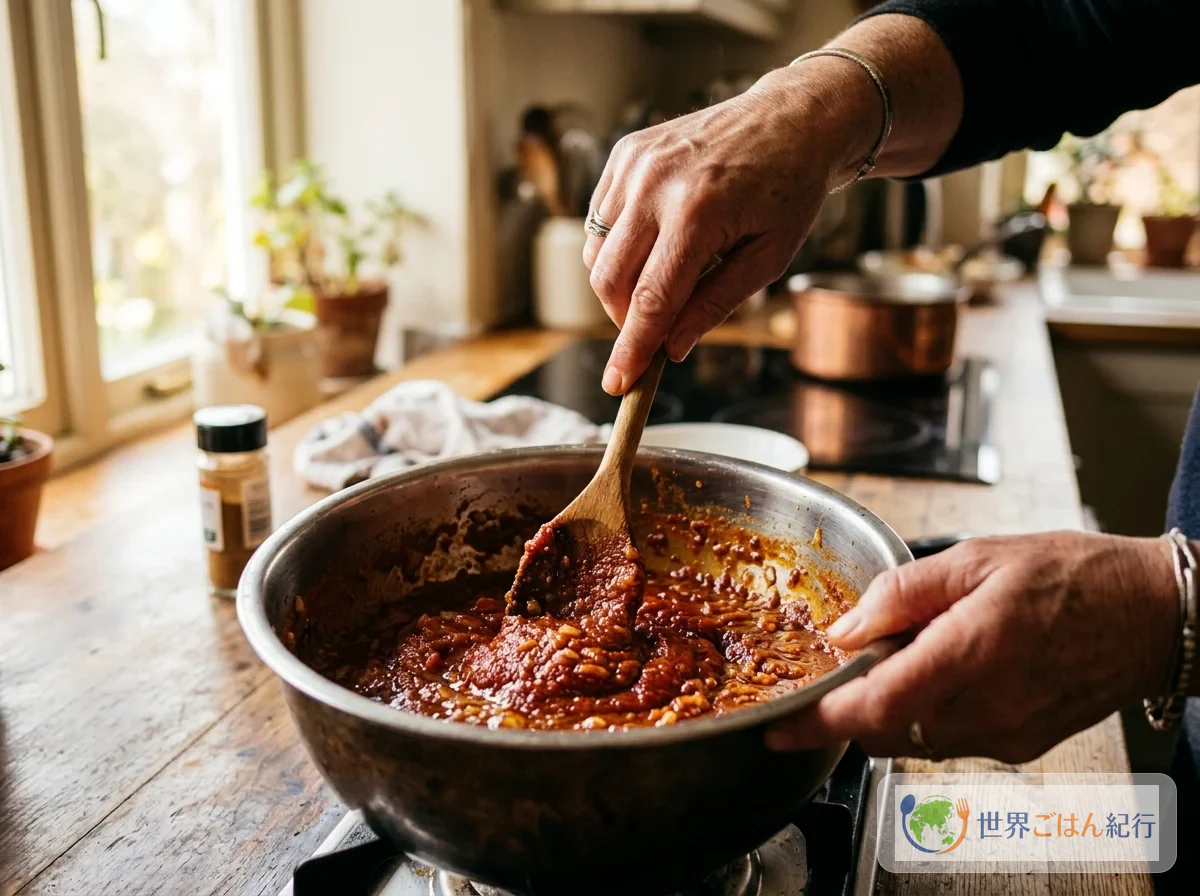
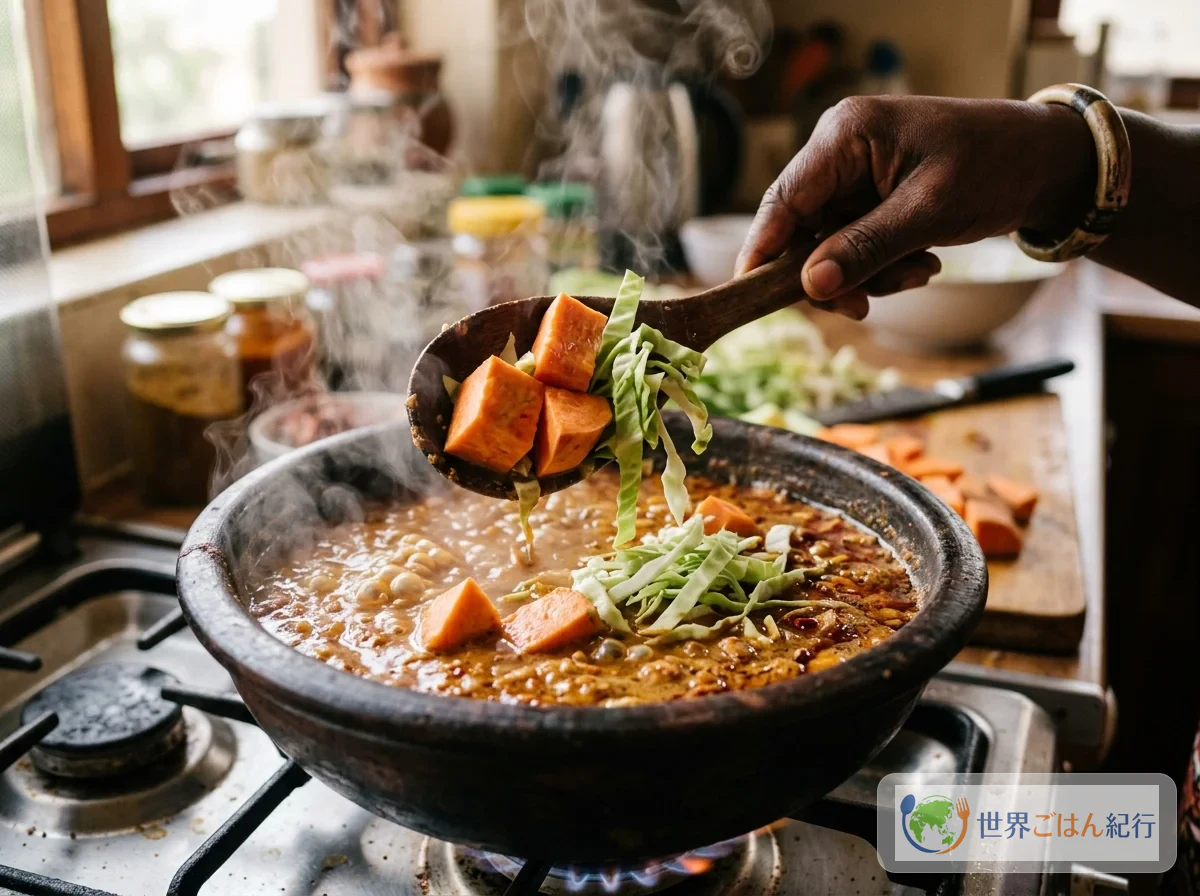
Around midday in an alley in Bamako, the sweet, toasty smell of peanuts drifts in from somewhere. In a big pot, a rich brown sauce bubbles with chunks of chicken and vegetables. This is mafé, a national favorite of Mali: a stew based on peanut butter and tomato, ladled generously over white rice, with chile adding heat at the end. Its flavor is deep, savory and mellow.
Mafé in Mali and across West Africa
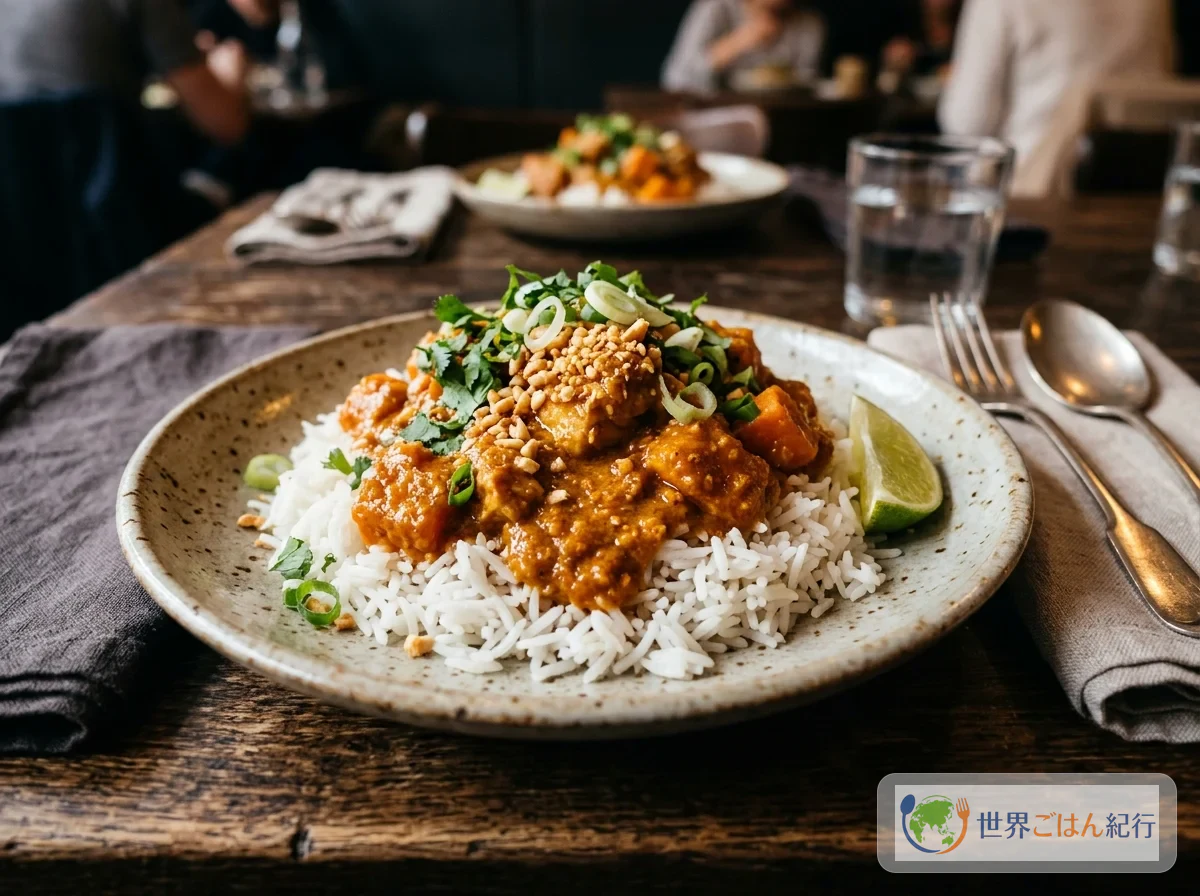
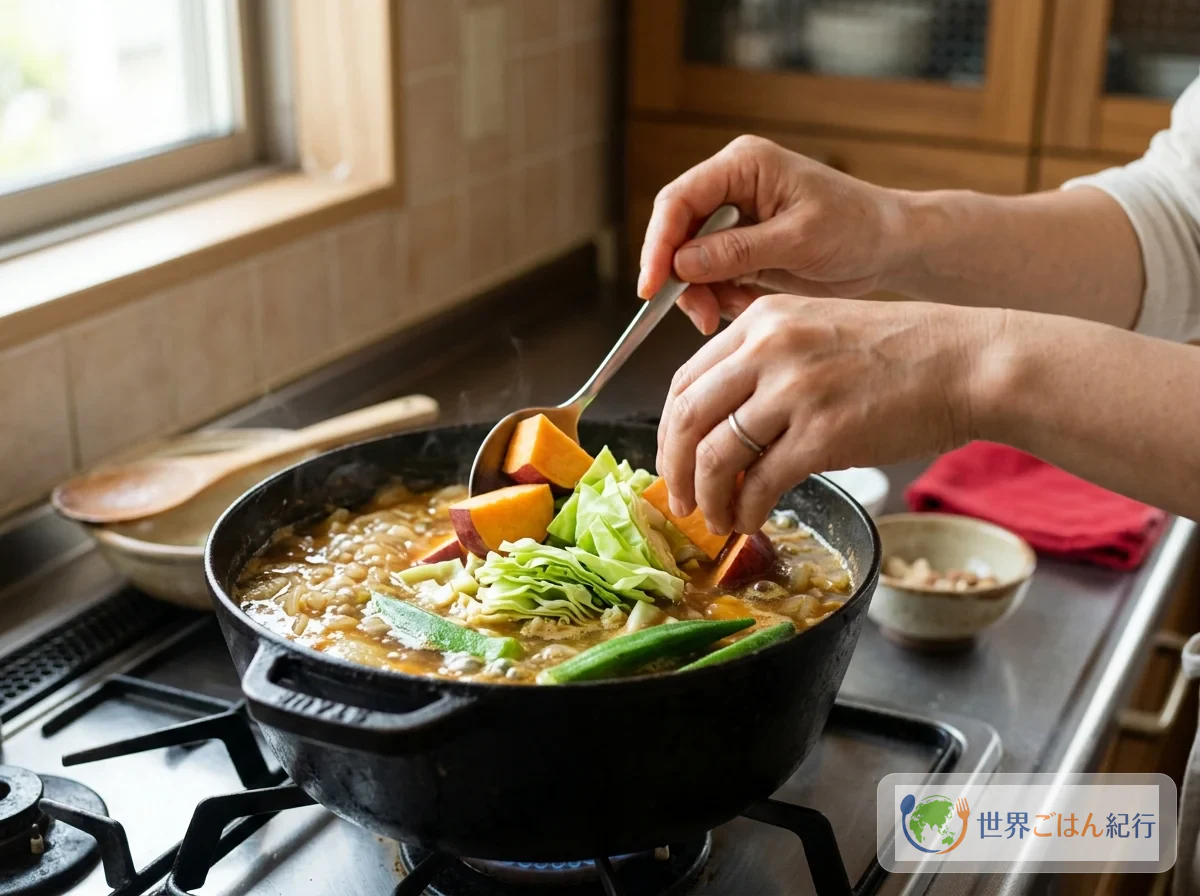
Mafé is usually chicken, beef or fish simmered with vegetables such as cabbage, carrots, potatoes and sweet potatoes, and it is always at the center of the West African table. Mali claims it as a favorite, but it is a pan-regional dish loved across West Africa, from Senegal and the Gambia to Guinea, Burkina Faso and Côte d'Ivoire.
The name "mafé" comes from the Wolof language of Senegal. In Mali it is called "tigadèguèna" in Bambara (tiga = peanut, dɛgɛ = paste, na = sauce). It is a stew made with peanut paste and tomato, and in English it is also called "groundnut stew" or "peanut stew."
In Senegal, mafé is generally eaten over white rice. In Mali it is also served with fonio or tô (a millet paste), and in the Gambia a very similar peanut stew goes by the name "domoda."
The peanut in West Africa
The history of mafé is the history of the peanut (groundnut) itself. The peanut originated in South America, and in the 16th century the Portuguese brought it to West Africa along the routes of the Atlantic slave trade. It took perfectly to the climate and soil and quickly became a major crop. The agriculture of Senegal, Mali, the Gambia and Guinea came to revolve around it, and by the 19th century a "peanut economy" had taken shape.
Among the Bambara and Mandinka peoples of Mali, tigadèguèna has been eaten for a long time; mafé, eaten over rice, spread from Senegal. When French colonial rule spread across West Africa from the late 19th century (present-day Mali was then called "French Sudan"), the cultivation of peanuts for export expanded greatly in places such as Senegal.
Today, Maggi bouillon cubes are a seasoning in many West African homes, and they add savor to mafé, just as they do to dishes like thieboudienne (Senegal's one-pot rice). Since Mali's independence in 1960, peanut sauce stews have remained a lunchtime staple in homes and eateries, and migrants from West Africa have carried them to European cities, including those in France.
How mafé is eaten
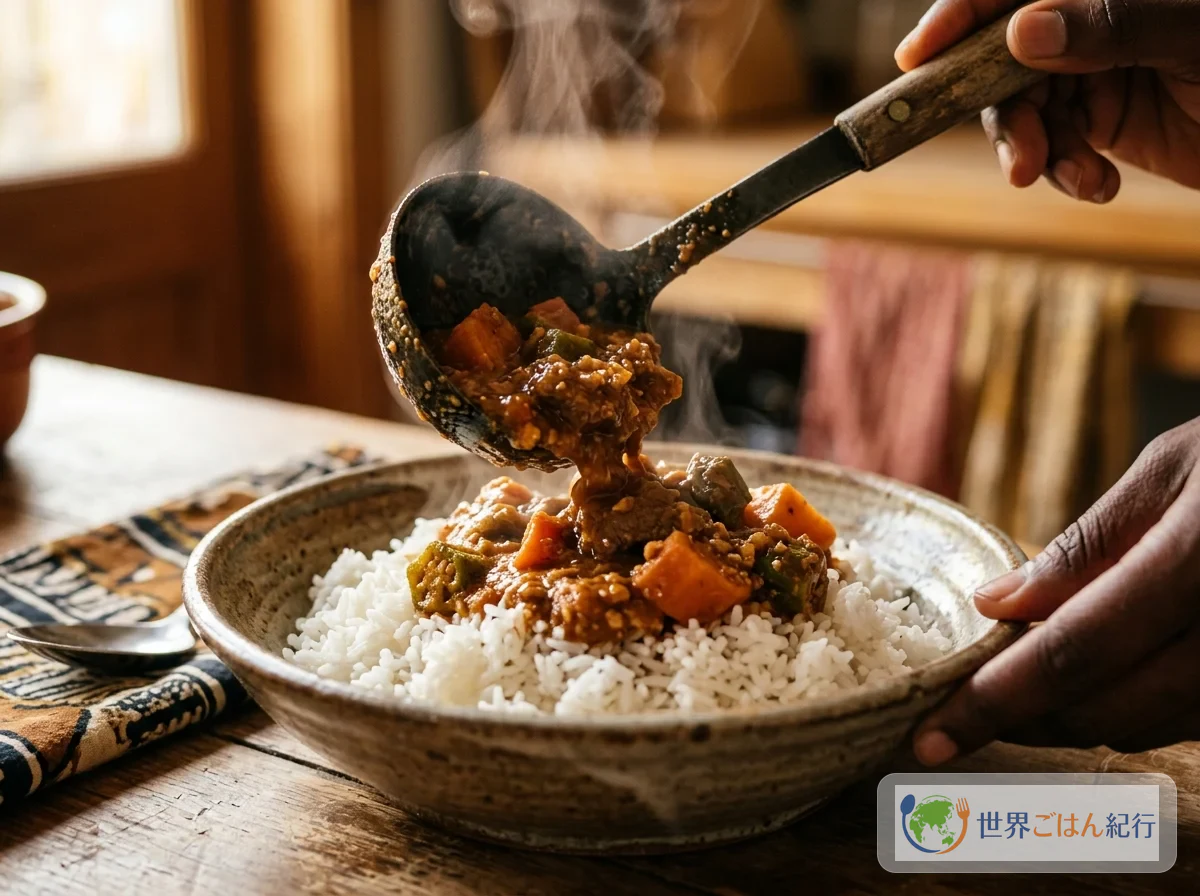
Mafé is an everyday dish shared with family and friends. In homes in Mali and Senegal, rice is piled on a large platter, the sauce is poured over it, and the family gathers around the plate to eat, often with the right hand. Sharing the plate is an important part of the meal. In Mali, lunch is often the substantial meal of the day, and that is when mafé appears.
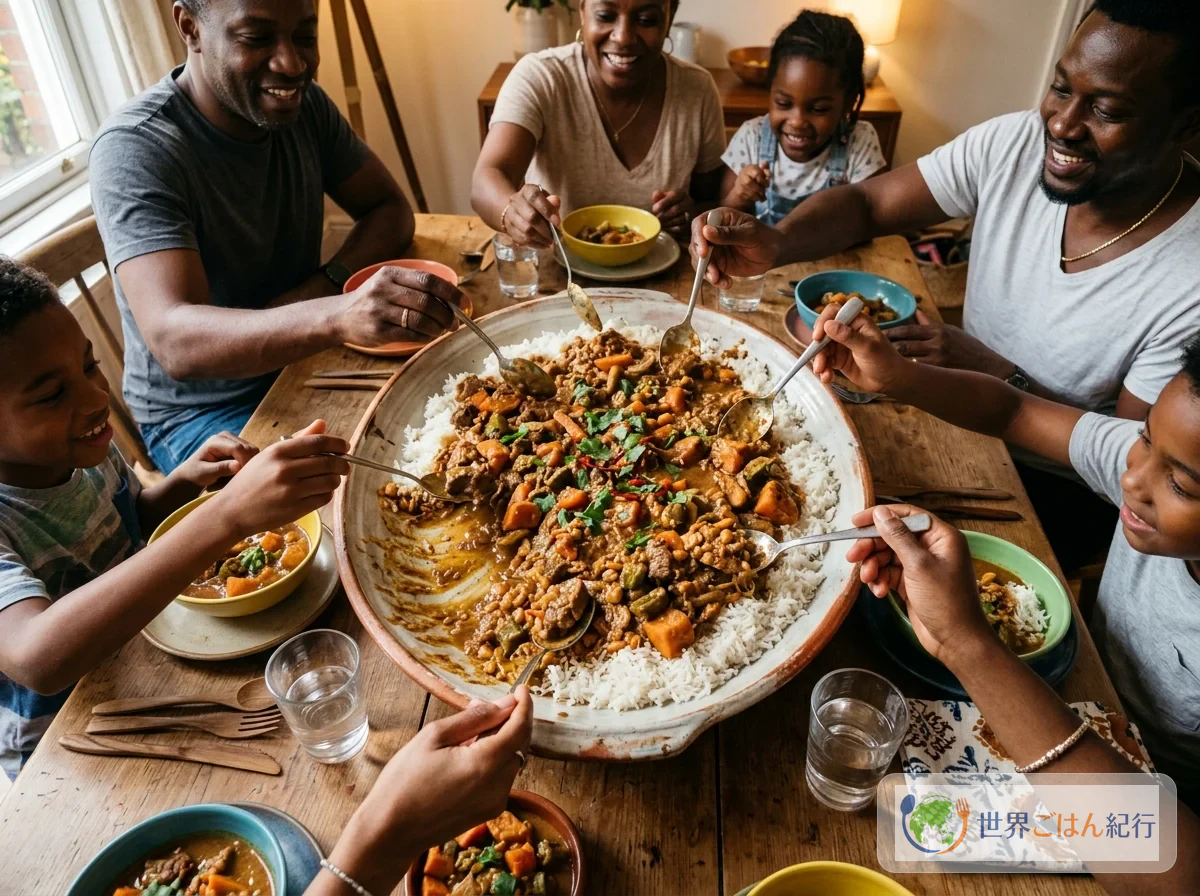
Every household has its own version. Some use chicken, lamb or beef; some add sweet potato, cabbage or okra. Each cook decides how much tomato goes in, and some make their own peanut paste while others buy it.
Ingredients (serves 4)
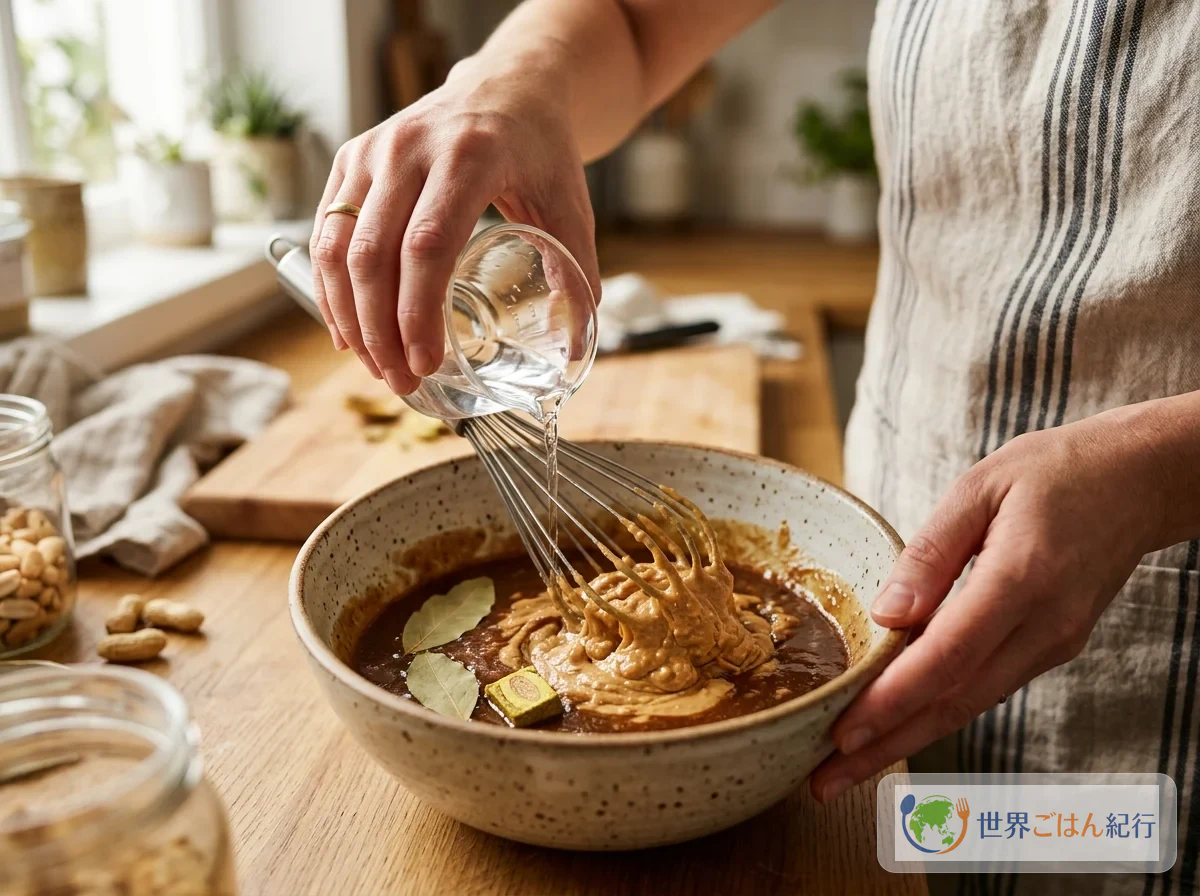
The flavor of mafé is decided by the peanut butter. Be sure to use an unsweetened, unsalted type. Sweet peanut butters such as Skippy or Jif are out of the question. Look for a natural peanut butter whose only ingredient is peanuts. If you use a salted type, cut the salt in half.
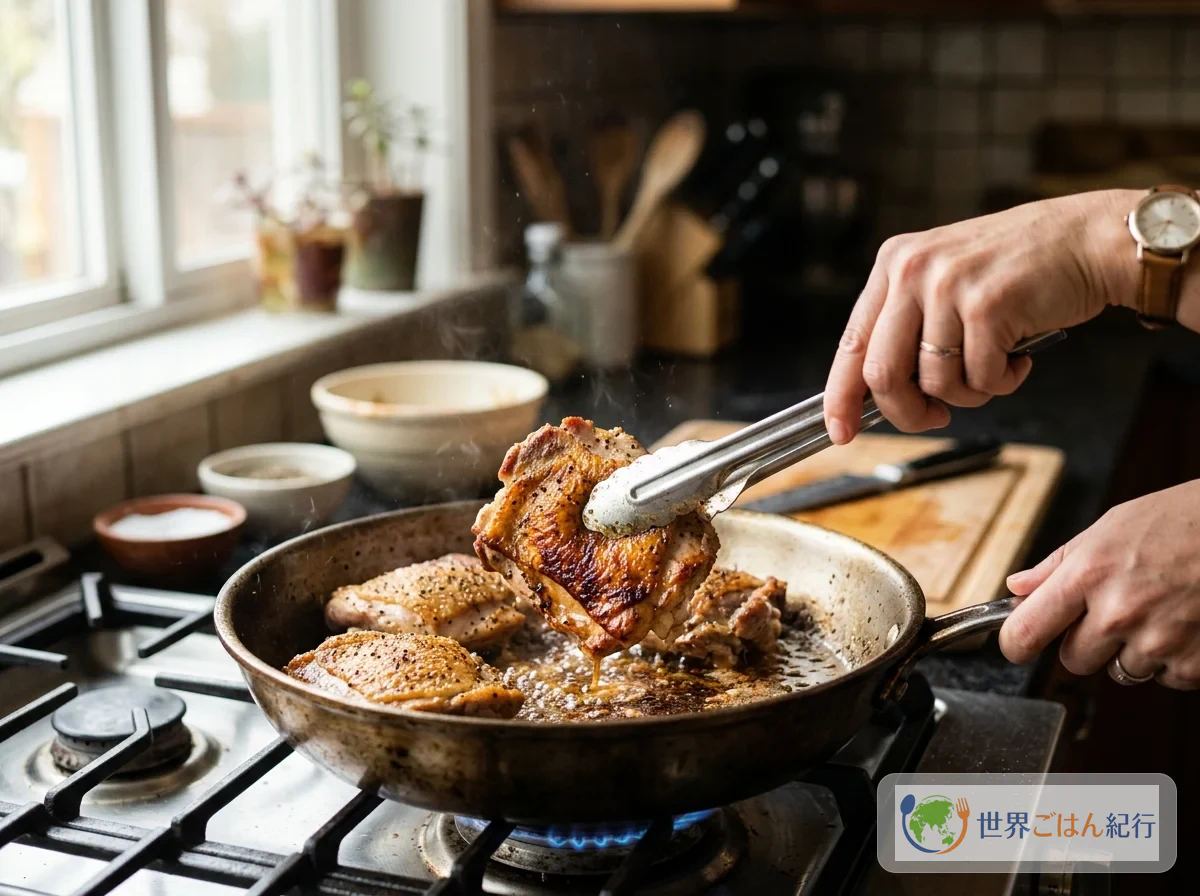
Ingredients and tools for this dish
Mafé needs no special ingredients. A heavy-bottomed pot (a Dutch oven or cast iron pot) helps keep the peanut sauce from sticking and scorching on the bottom. For serving, red palm oil, cassava flour, and white sorghum flour (gluten-free) let you bring the meal closer to a West African table. They are not required for this recipe.
Choosing ingredients for mafé
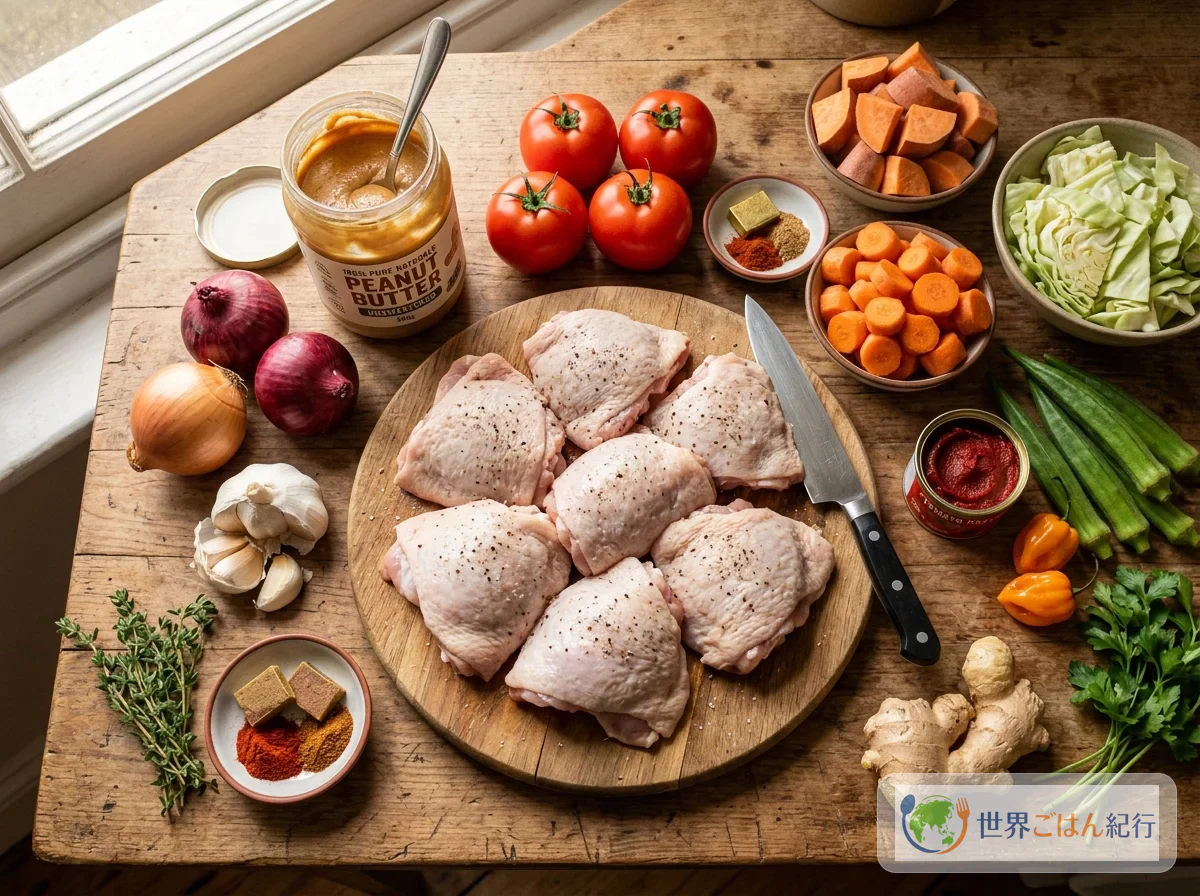
Every ingredient for mafé can be found at an ordinary grocery store. The one thing to get right is the peanut butter, because it decides most of the flavor. A sweet one (the creamy type of Skippy or Jif) makes the stew cloyingly sweet beyond repair. Choose one whose only ingredient is peanuts, with no sugar, vegetable oil or salt on the label.
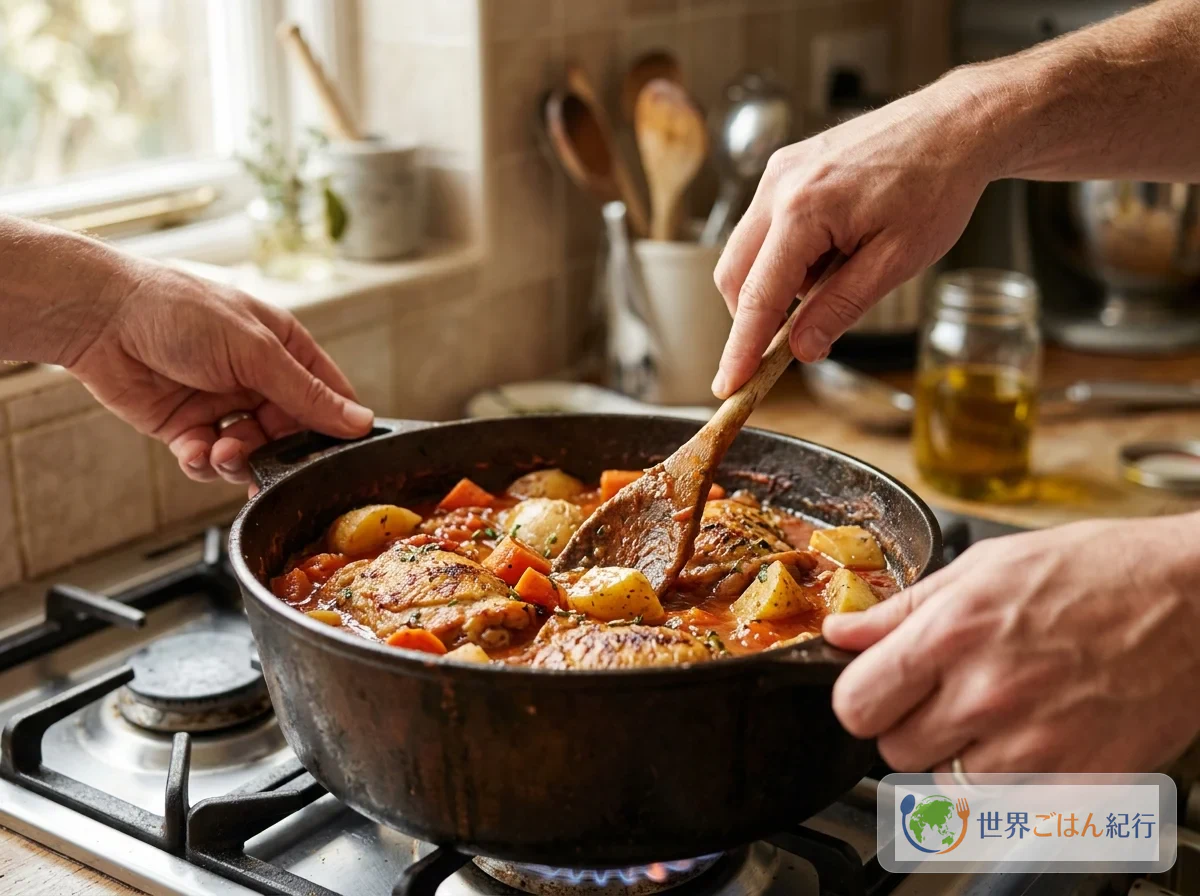
Bone-in chicken matters too. The stock of mafé comes from the bones, and with boneless meat the sauce tastes as if something is missing. As bone-in thighs simmer, collagen dissolves and gives the sauce body and savor; drumsticks or wings work as well. If you can only get boneless meat, dissolve chicken bouillon in the water to make up for it.
A Maggi-style bouillon cube can be hard to find in some places. A regular bouillon cube plus a small amount of MSG brings you close to the West African taste, since what the cube really adds is a lump of savor. Skip Japanese-style dashi powder, which takes the flavor in a different direction.
| Ingredient | Where to find it | How to choose |
|---|---|---|
| Unsweetened peanut butter | Grocery store, international grocer, online | No added sugar or oil |
| Tomato paste | Grocery store | A small can or tube is enough |
| Chicken thighs (bone-in) | Grocery store | Bone-in gives stock |
| Bouillon cube (Maggi-style) | International grocer, online | Regular bouillon cube if you cannot find it |
| Chile powder | Grocery store | Start on the mild side |
| Ingredient | Substitute | Difference in the result |
|---|---|---|
| Unsweetened peanut butter | Homemade (grind peanuts in a food processor) | Some texture remains, closer to the original |
| Bouillon cube (Maggi-style) | Regular bouillon cube plus a little MSG | Nearly equivalent |
| Okra | None (can omit) | Less body |
| Sweet potato | Kabocha squash | A slightly different kind of sweetness, but delicious |
Mafé uses a large amount of peanut butter, so people with a peanut allergy must never eat it. For a version without tree nuts or peanuts, use tahini (sesame paste) in place of the peanut butter. The flavor differs from the original. Check for sesame allergy first.
Method
Preparing the meat and vegetables
Use the chicken in large chunks. Bone-in meat releases stock and adds depth to the flavor of mafé.
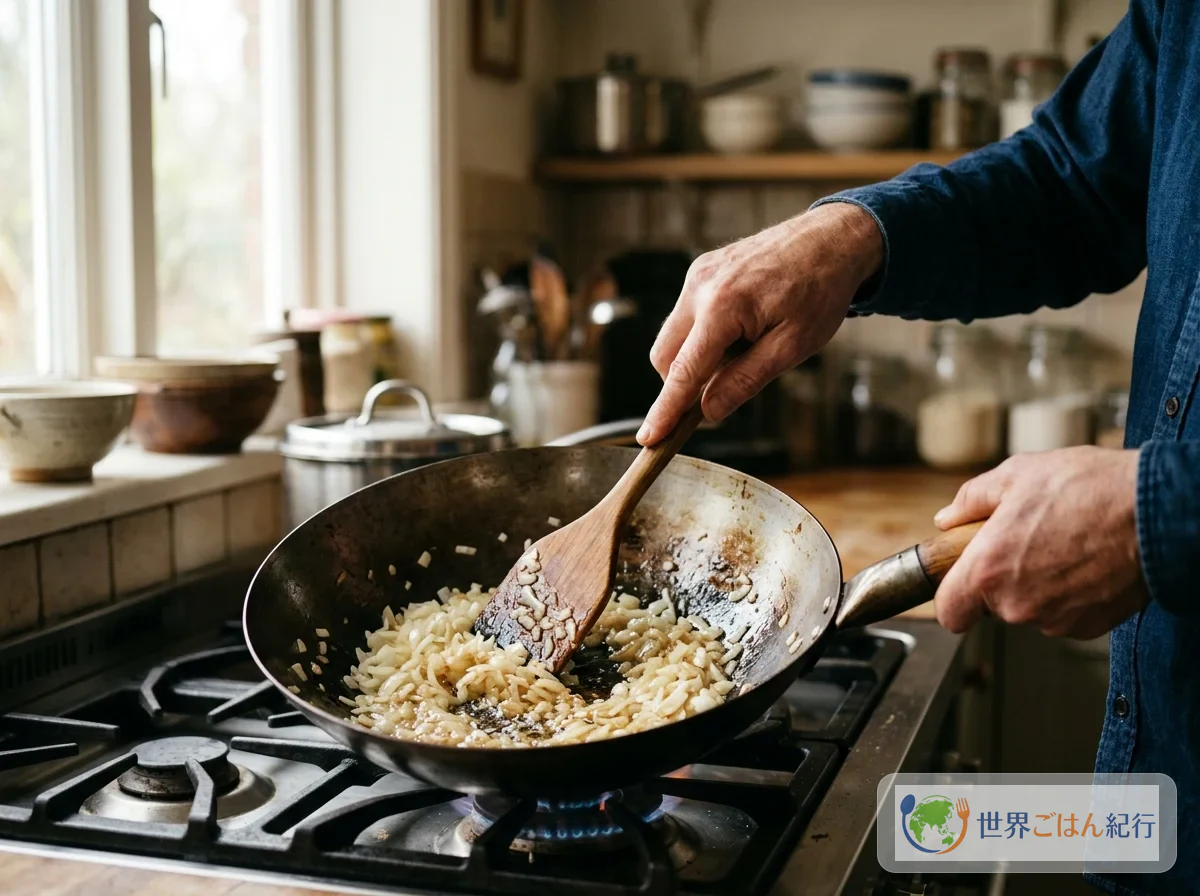
Peanut butter sticks and scorches easily on the bottom of the pot. While simmering, stir the bottom with a spatula every 10 minutes. Scorching brings bitterness that cannot be rescued. A thick-bottomed pot or a gentle low simmer prevents it.
Mafé cooking tips and common mistakes
Cook the tomato paste
Tomato paste dropped straight into the pot stays sharp and sour. Cook it in oil for 2 to 3 minutes to drive off the sourness. Cooking triggers the Maillard reaction and brings out its sweetness, which gives the finished sauce a complex depth. It's the same essential step you'll find in jollof rice.
Give it time
Mafé needs a long simmer, at least 45 minutes, so the oil of the peanut butter separates and blends with the tomato paste. Watch the surface: when orange oil floats on top, the mafé is done.
Keep the rice firm
The sauce is rich, so soft rice turns soggy under it. Cook the rice firm, with about 10 percent less water than usual.
Serving and varying mafé
Serving
Rice is the everyday partner, but pairing mafé with fufu (Ghana's pounded staple) or ugali (East Africa's cornmeal paste) is also traditional. To drink, something sour such as hibiscus tea (bissap) or ginger beer balances the richness of the peanut sauce. If you want alcohol, a light lager stays out of the way of the peanut flavor.
Meat and fish mafé
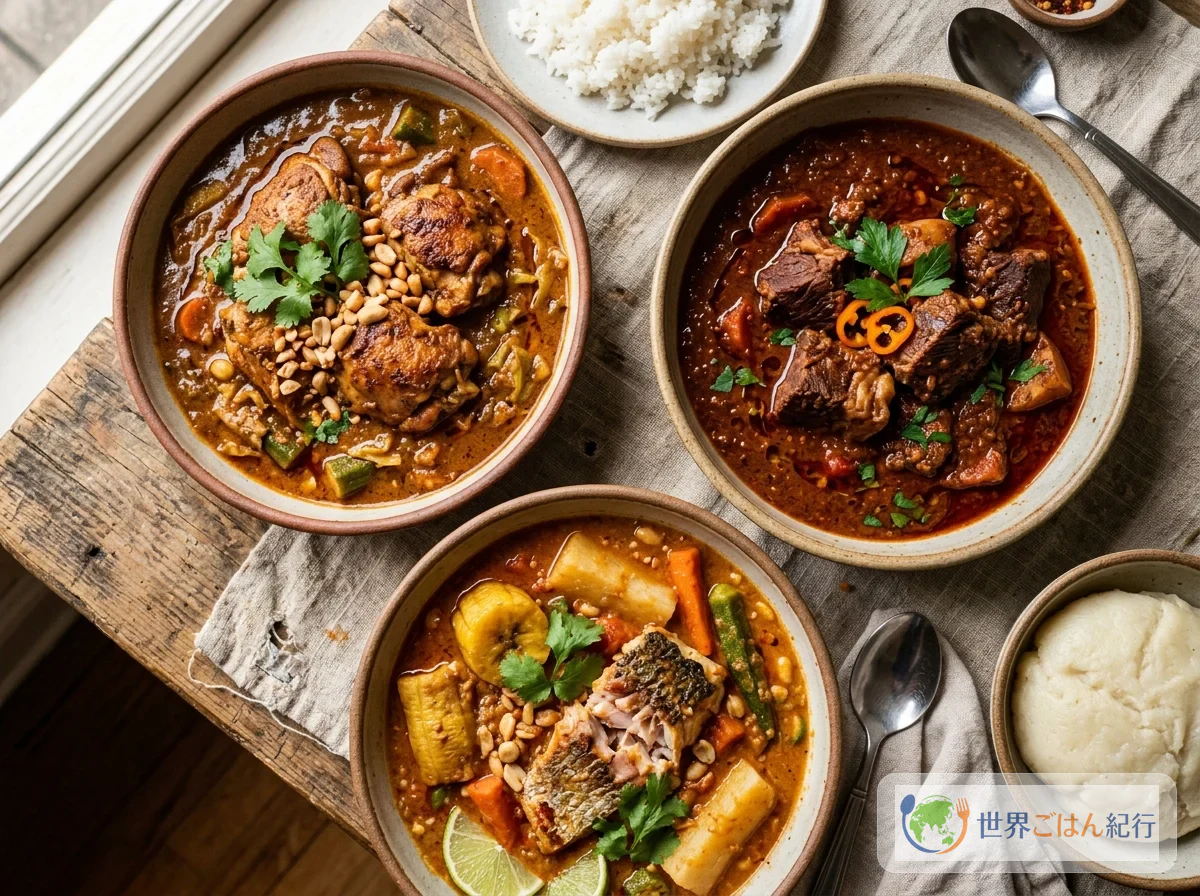
The appeal of mafé is that the main ingredient can be changed freely.
| Variation | Main ingredient | Character |
|---|---|---|
| Mafé poulet | Chicken | The most popular. This recipe |
| Mafé viande | Beef | With chunks of beef shank. Simmer 90 minutes or more |
| Mafé mouton | Lamb | A festive, luxurious version. Lamb fat pairs well with the peanut sauce |
| Mafé poisson | Fish | With fillets of white fish. Popular on the Senegalese coast |
Vegetable mafé
A plant-based mafé built on tofu, chickpeas or sweet potato has a good balance of protein, fat and carbohydrate and makes a complete meal. Use vegetable stock in place of chicken stock, and add 1 tsp of miso in place of the bouillon cube to make up for the savor.
Cubed pork works instead of chicken, and the richness of peanut butter pairs nicely with pork fat. Any root vegetable, such as kabocha squash, daikon, or taro, is fine. Mafé is simply simmering in peanut sauce, so the ingredients are up to you.
Frequently asked questions
Q1. What is the difference between mafé and tigadèguèna?
Both are peanut sauce stews. "Mafé" is the name widely used in places such as Senegal, while "tigadèguèna" is the Bambara name in Mali. Malian tigadèguèna has a thinner sauce and is served with a millet paste.
Q2. Can I adjust the heat?
Of course. Use more or less chile to taste. In homes with children, leave the chile out and serve a chile paste on the side so each person can adjust. If you like it hot, a little habanero powder gets you closer to the extra-hot mafé of West Africa.
Q3. Can I make it with something other than chicken?
Beef shank (simmer 90 minutes or more), lamb (simmer 70 minutes or more), fillets of white fish (simmer 15 minutes), shrimp and tofu all work. For a vegan version, chickpeas and sweet potato are a classic combination. In Mali, the way of mafé is to "make it with what is in the refrigerator."
Q4. Is it better the next day?
Yes, mafé is best the next day. Overnight, the oil of the peanut butter and the tomato sauce blend completely and the flavor deepens. It keeps 3 days in the refrigerator. To reheat, add a little water and warm it over low heat.
Q5. What other staples go with it besides rice?
Fufu (Ghana's pounded staple) and ugali (East Africa's cornmeal paste) are the authentic choices. Couscous also pairs very well.
Q6. Can children eat it?
Without chile, it's an ideal dish for children, who tend to love the mellow flavor of peanut butter. However, always check beforehand whether there is a peanut allergy. When serving it for the first time, start with a small amount.
Sources

- [1] Peanut stew - Wikipedia (English) (accessed 2026-10-22) — the names mafé, tigadèguèna, and domoda, and regional differences
- [2] Peanut - Encyclopaedia Britannica (accessed 2026-10-22) — origin and spread of the peanut
- [3] Information on food allergy labeling - Consumer Affairs Agency (Japan) (accessed 2026-10-22) — allergy labeling for peanuts
Related articles: African stews
West African stews: Thieboudienne is Senegal's one-pot rice. Jollof rice is a tomato-based one-pot rice from Nigeria, and the argument over which country's jollof is best never ends across West Africa. Attiéké is Côte d'Ivoire's fermented cassava.
East African stews: Doro wot is Ethiopia's spiced chicken stew, known for the heat of berbere. Zigni is Eritrea's beef and tomato stew. Ndolé is a stew of bitter greens from Cameroon, which shares the use of peanuts with mafé.
African staples: Fufu is Ghana's pounded staple, and pairing it with mafé sauce is a West African classic. Ugali is East Africa's cornmeal paste, a base for any stew. Injera is Ethiopia's fermented flatbread, eaten with doro wot on top.
Summary: a food history that peanuts connect across continents
Mafé is a dish built on the simple idea of "making a stew with peanut butter." But behind it are the peanut's journey across the Atlantic, the economic exploitation of the colonial era and the food wisdom that was born from it, and West Africa's communal culture of "eating around a large plate."
When you dissolve unsweetened peanut butter into a pot in your own kitchen, you touch one end of a food history that goes back to the 16th century. As long as you choose the peanut butter correctly, even a beginner can make mafé deliciously and reliably. Sear the chicken, add the vegetables, and simmer in peanut sauce. That alone recreates the West African table. With that one bite of rich peanut sauce over white rice, the smell of a Bamako alley should reach your kitchen.