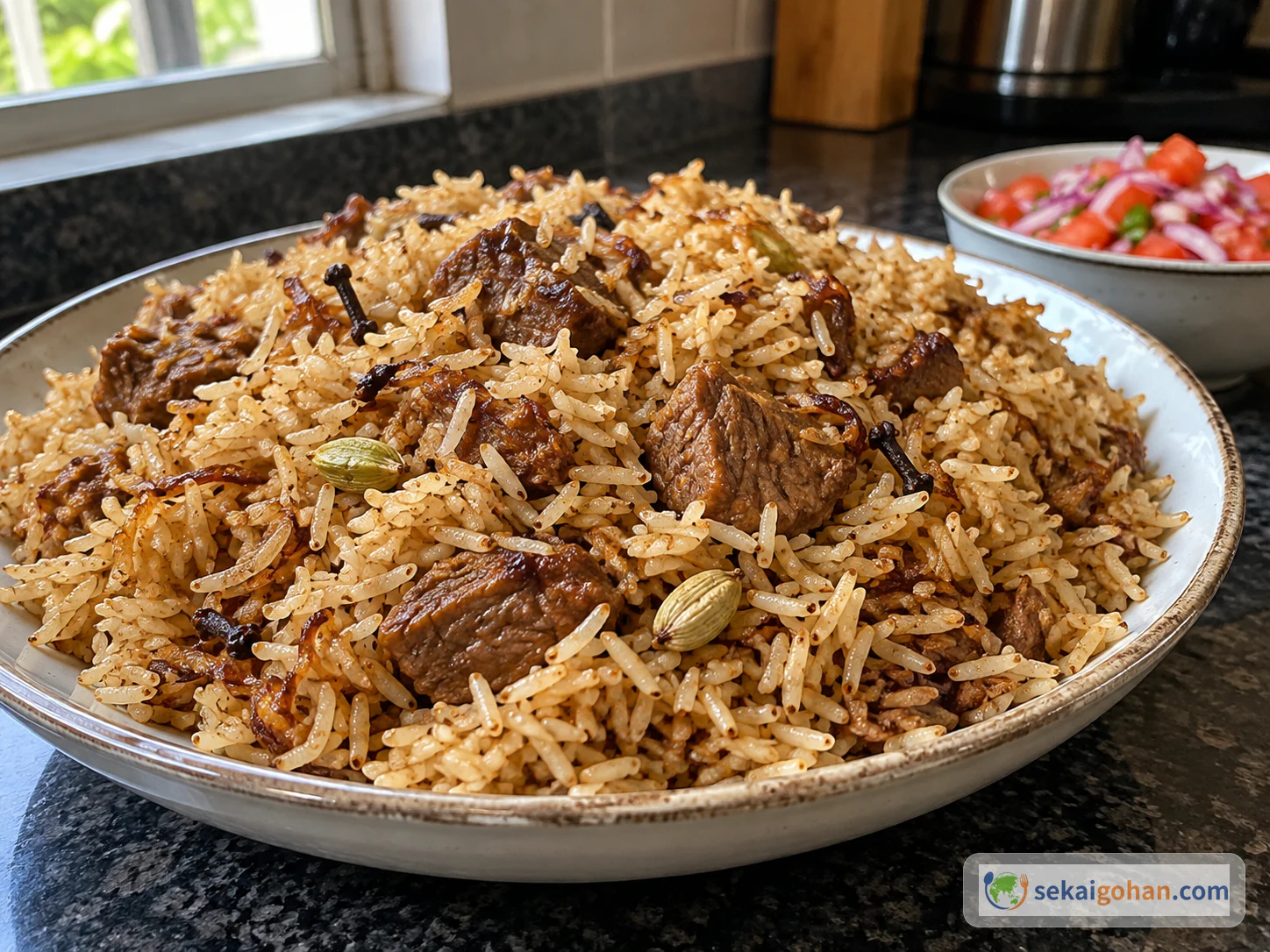
Some days you buy two big bunches of greens, and suddenly the vegetable drawer looks like a plan. There's only a little meat, and the rice is already cooked. You chop an onion and a tomato and pile in a mountain of greens, and as you stir, the volume collapses in the pan and turns into a real dish for the table. That's sukuma wiki, the everyday greens of Kenya and much of East Africa, cooked in a little oil with the sweetness of onion and tomato and shaped by nothing more than salt.
Sukuma wiki in Kenya
The Swahili name translates as "push the week" or "stretch the week," and it describes the dish well: inexpensive greens that carry the household's meals until the next payday. If nyama choma is Kenya's weekend charcoal grill, sukuma wiki is the green dish that holds up the weekday table.
Sukuma wiki comes from Swahili. Spellings vary in other scripts.
In Kenya and the surrounding region, greens are a foundation eaten alongside the staple ugali, beans, meat and fish. Sukuma wiki is made with kale and tomato and served with ugali, nyama choma or mashed potatoes. Paired with ugali, it forms the classic East African staple-and-side plate.
This is home cooking built on affordable, easy-to-find ingredients, and the list is very short: greens, onion, tomato, oil, salt and water. Collard greens are cheap and popular, and making it with whatever leafy greens you have on hand is typical of African cooking. It isn't a lavish dish, which is exactly why it earns such a firm place on the table. Add more greens instead of more meat and the plate still works, the fridge gets cleared out, and it reheats the next day.
To see how staples, beans, greens, nuts and meat come together across the continent, take a look at the African cuisine overview, waakye, maafe and isombe (all in Japanese).
Ingredients (serves 4)
You can make basic sukuma wiki without animal products, wheat, dairy or eggs. But the cornmeal for ugali, seasonings, processed meats and prepared side dishes can contain allergens from shared production lines. Check the labels when you buy.
Ingredients and tools for this dish
You can make sukuma wiki entirely from a regular supermarket. The extras worth having are cornmeal for ugali, kale for a little bitterness, and a large, deep skillet that can take all the greens at once. If you cook greens often, a roomy pan makes a real difference to the result.
The first time, make it with just komatsuna (or another tender green), onion and tomato. Kale, green chile and cornmeal can wait until the second time. What makes sukuma wiki itself isn't unusual seasonings but using a generous amount of greens.
Choosing greens for sukuma wiki
The greens used in Kenya are collard greens, but what matters more than the name of the vegetable is the character of the leaf. Komatsuna holds a lot of water and turns soft when cooked. Kale has bitterness and fiber, which brings it a bit closer to Kenyan collards, while bok choy has a pleasant crunch and outer cabbage leaves add sweetness. Balancing those qualities is half the fun of a home version.
| Greens | Best use | Watch out for |
|---|---|---|
| Komatsuna | The basic choice for a first try. Easy to eat and good with white rice | Releases water easily, so uncover the pan at the end |
| Kale | Adds bitterness and body. Easy way to get closer to the Kenyan original | Remove the tough ribs. Too much makes it bitter |
| Bok choy | When you want the stems to keep their crunch | Drifts toward a Chinese stir-fry |
| Outer cabbage leaves | When you want sweetness and volume | Cut into thin strips and cook a little longer |
| Spinach | A quick substitute | Very watery and falls apart easily. Blanch and squeeze it first |
The blend to start with is 14 oz (400 g) komatsuna and 3.5 oz (100 g) kale. Komatsuna alone tastes like an ordinary stir-fry of greens, and kale alone lets the bitterness take over. A little of both gives you approachability plus the leafy body of the Kenyan version.
The rest of the plate can be adapted the same way:
| Element in Kenya | Home substitute | Why it matters |
|---|---|---|
| Collard greens | Komatsuna, kale, bok choy, outer cabbage leaves | Keeps the leaf's body and gentle bitterness |
| Tomato | Ripe tomatoes, cherry tomatoes, a little canned diced tomato | Adds acidity and moisture to the greens |
| Onion | Yellow onion, red onion | Sweetens the oil and rounds off the grassy taste of the greens |
| Ugali | Cornmeal, polenta, firmly cooked white rice | Soaks up the juices from the greens |
| Side next to meat | Nyama choma, grilled fish, grilled chicken thighs | Greens and tomato lighten the fat |
It's tempting to season greens with soy sauce, but sukuma wiki tastes better with ugali and meat when salt and tomato set the flavor. Soy sauce instantly turns it into an East Asian-style stir-fry, so try it with salt alone the first time.
Method
Sukuma wiki comes together quickly, but get the order wrong and it turns watery. Drain the greens well after washing, cook the onion and tomato first, and don't simmer the greens too long once they go in. Stick to those three things and the results are very reliable.
Common sukuma wiki mistakes
Sukuma wiki is simple, but when it goes wrong you get watery greens, kale that's only bitter, or something closer to a tomato braise. The causes are pretty predictable.
| Problem | Cause | Fix |
|---|---|---|
| Watery | Greens not drained enough, lid left on too long | Uncover at the end and cook off the liquid over medium-high heat |
| Bitter | Too much kale, too many ribs | Use more komatsuna. Add a little lemon at the end |
| Bland | Not enough salt, too much tomato | Add salt a little at a time and sharpen with black pepper |
| Dull color | Overcooked | Finish within 5 minutes of adding the greens |
| Tastes like an East Asian stir-fry | Soy sauce or sesame oil went in | For the first try, go back to just salt, tomato and oil |
Tender greens like komatsuna release water easily, so keep the lid on only briefly. It's understandable to want the greens soft, but sukuma wiki isn't a stew. Stop when the leaves are bright and the stems still have a little bite, and it suits both ugali and white rice.
Frozen spinach or other frozen greens work, but squeeze out the water thoroughly after thawing. Added frozen, they release a lot of water and dilute the tomato. On days you use frozen greens, use less tomato and cook off the liquid at the end.
Serving sukuma wiki
Sukuma wiki is a side dish, but it can shape the whole meal. Rather than parking the greens at the edge of the plate, think about what they're meant to go with.
With ugali
Ugali and sukuma wiki is the most Kenyan pairing. Ugali has a mild flavor, so it takes on the saltiness of the greens, the tang of the tomato and the richness of the oil. If you eat with your hands, pinch off a small piece of ugali, roll it into a ball, press a dent into it with your thumb and scoop up the greens. A fork is perfectly fine at home, but knowing the idea of a "scooping staple" makes the point of ugali much clearer.
Alongside nyama choma
With nyama choma, charcoal-grilled meat, setting out both kachumbari and sukuma wiki keeps the meal moving. Kachumbari cuts the fat with acidity, while sukuma wiki steadies the table with the bitterness of greens and a little oil. Even on days you can't put out much meat, the greens make the plate feel satisfying.
Over white rice
For a weeknight dinner, sukuma wiki over white rice with a fried egg or some grilled chicken is plenty. Lean on the tomato's acidity and pair it with something rich, like salted mackerel or grilled chicken thighs. Firmly cooked mixed-grain rice, roasted sweet potatoes and mashed potatoes work well too.
Next to other African dishes
On an African menu, setting it beside jollof rice, waakye, maafe and ndolé (all in Japanese) shows how differently leafy vegetables are used. Sukuma wiki uses neither peanuts nor palm oil, so it sits on the table as a light, distinctly East African plate of greens.
Storing and reheating sukuma wiki
Sukuma wiki keeps for about 2–3 days in the refrigerator. Let it cool slightly, drain off some of the juices and transfer it to a shallow container. Extra liquid makes it spoil faster and blurs the flavor, and the tomatoes and greens keep releasing a little water in the fridge, so check the bottom of the container and pour off any excess before reheating.
A skillet brings the aroma back better than the microwave. Add just 1 tsp oil and stir-fry over medium heat for 1–2 minutes; if you add water, 1–2 tsp is plenty, or your sautéed greens turn into a stew. If the flavor seems to have faded, a few drops of lemon juice and a little black pepper revive it more lightly than extra salt, which tends to leave greens tasting only salty.
Leftovers make an easy next-day rice bowl: top warm rice with reheated sukuma wiki and a soft-yolked fried egg, then finish with a little salt and black pepper. Or tuck sukuma wiki, grilled chicken and tomato into sandwich bread or a pita and squeeze over a little lemon, and the juices from the greens act as the sauce.
Freezing isn't recommended. It's safe to eat, but the greens release water when thawed and the texture suffers. If you must freeze it, drain the juices well, spread single portions flat to freeze, and stir-fry again after thawing.
Sukuma wiki variations
Sukuma wiki with beef
Brown 5.5 oz (150 g) thinly sliced beef first, and remove it once it's cooked through. After cooking the onion and tomato, return the beef with the greens. Even a small amount of meat goes a long way with this many greens, so it works as the main dish for dinner.
Sukuma wiki with egg
At the end, pour 2 beaten eggs over the greens and turn off the heat while they're still soft. It's very approachable, though more of a home variation than a Kenyan plate of greens, and best on days you serve it with white rice.
Lightly spiced version
Leave out spices the first time so you can taste the dish's real outline. After that, cooking 1/4 tsp cumin and 1/2 tsp paprika with the onion adds a bit more aroma. Add 2 tsp or more of curry powder, though, and it becomes a different dish; the backbone of sukuma wiki is greens and tomato.
Budget version with extra cabbage
Make it with 9 oz (250 g) komatsuna and 9 oz (250 g) outer cabbage leaves. Cut the cabbage into thin strips and cook it first, right after the onion. It's sweet and easy to eat, and a good version for when greens are expensive.
Spicy lemon version
Use more green chile and increase the finishing lemon juice to 2 tsp. Paired with grilled fish or chicken thighs, it lightens the fat, and it's a good fit for anyone who likes lemon-and-onion dishes such as Senegalese chicken yassa.
Frequently asked questions
Q1. Can I make it without tomatoes?
You can, but it will taste much plainer. Tomato supplies acidity and moisture and rounds off the grassy taste of the greens. Without it, add 2 tsp lemon juice and 2 tbsp water, and cook the onion a little longer to bring out its sweetness.
Q2. How do I fix kale that's too bitter?
The simplest fix is to dilute it with more komatsuna or cabbage. A little lemon juice at the end tightens the bitterness, and more tomato makes it easier to eat thanks to its sweet-sour flavor. Thick kale ribs bring bitterness and toughness, so remove them the first time.
Q3. Can I pack it in a make-ahead lunch?
Yes. Cook off the juices well and let it cool before packing. On lunchbox days, use less tomato and season a little more firmly with salt, since too much liquid makes the rice soggy and spoils faster.