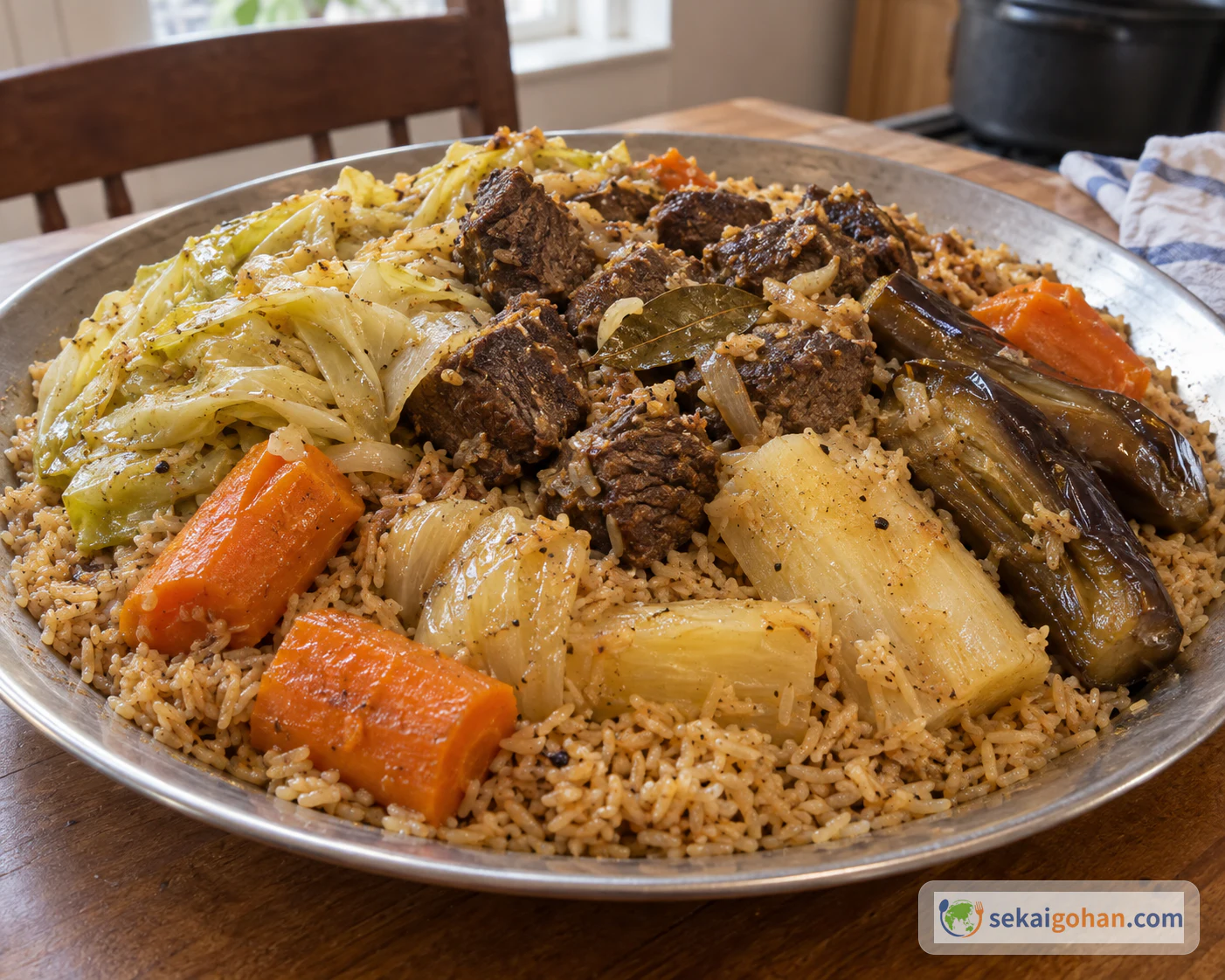
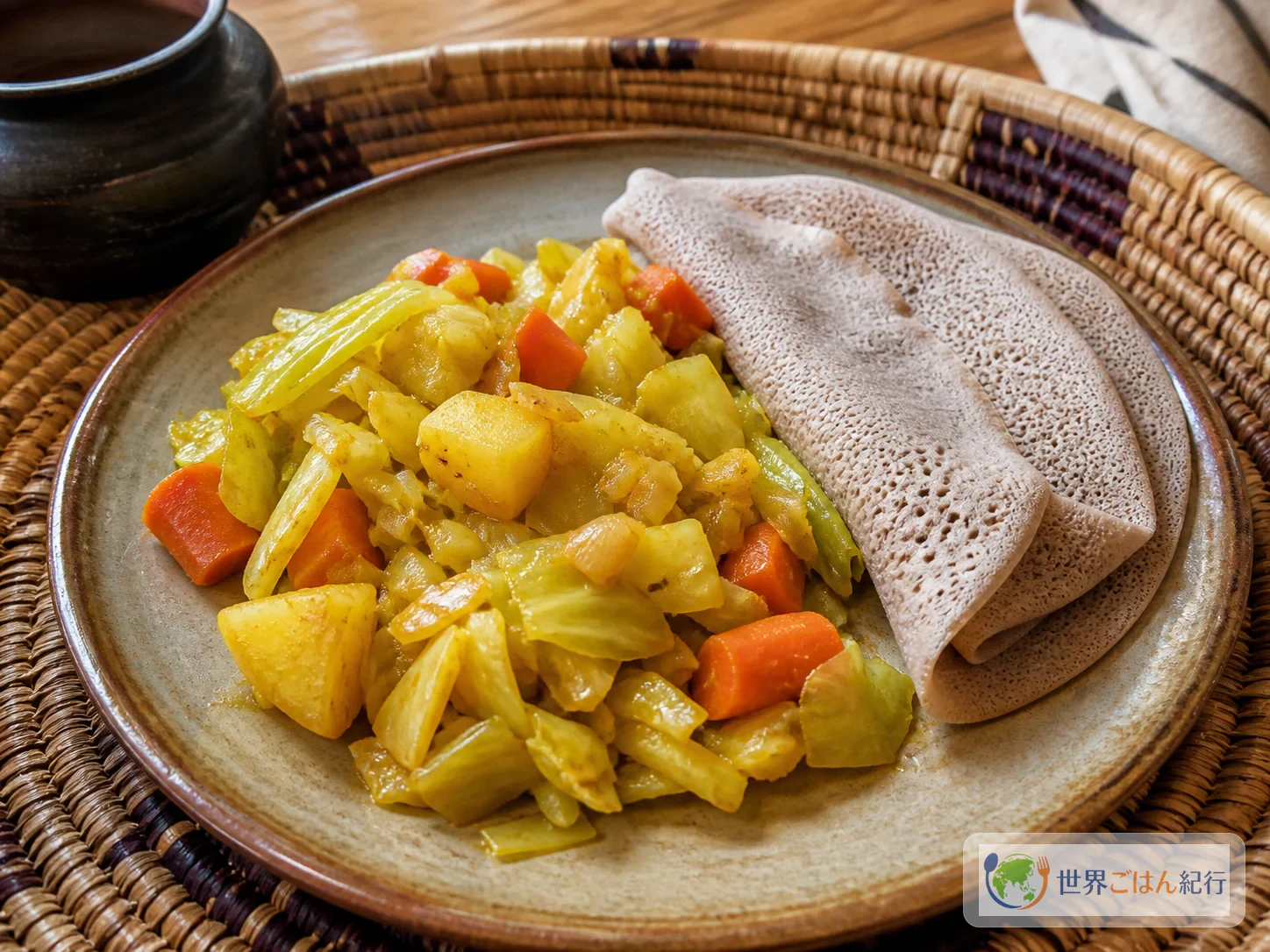
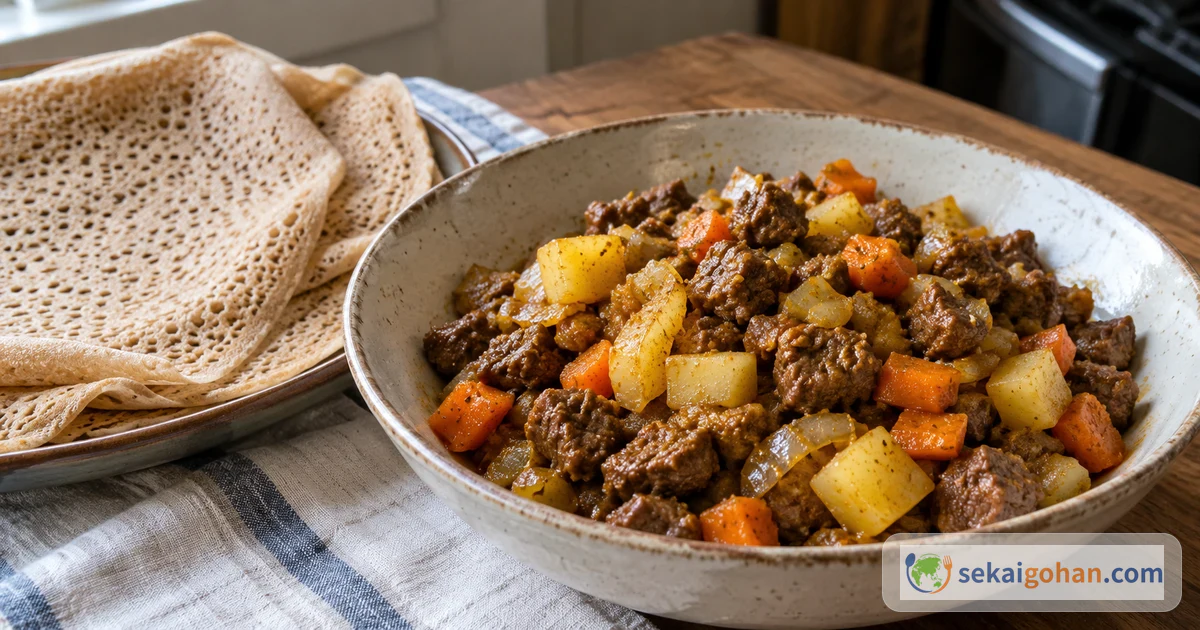
A dish that calls for a mountain of chopped onions makes you brace a little before you start. Thinly sliced onions pile up on the cutting board, a bowl waits with lemon juice, mustard, garlic and chili, and the moment you work the chicken thighs in by hand, a sharp, sour aroma rises. Chicken yassa (yassa chicken / poulet yassa / yassa au poulet) is one of Senegal's signature chicken dishes. The chicken is marinated in lemon, onion, mustard and chili, browned, then simmered in a sweetly cooked onion sauce. It isn't a showy spice curry; the star is the way those acidic onions slowly turn sweet.

Chicken yassa in Senegal
Yassa is closely tied to the Casamance region of southern Senegal. Chicken is marinated in citrus, onion and chili, and that marinade is then reused as a sweet-sour onion sauce. The word "yassa" is linked to a Wolof meaning of "cooked in an onion sauce," which is a fair description of the whole idea.

Yassa is really a family of dishes in which meat or fish is enveloped in a sour onion sauce. There is yassa poisson made with fish, yassa made with lamb, and home versions with vegetables or beans. The chicken version became known worldwide because the savoriness of bone-in meat pairs so well with the onion sauce and holds together as a single plate on rice.
If Senegal's thieboudienne unites fish and rice in one pot, chicken yassa is chicken and onions spooned over white rice. It is lighter than a red rice dish like jollof rice, and its sourness comes further forward than in a peanut stew like mafe. Both Senegalese dishes belong to a teranga table centered on rice.
How chicken yassa is eaten

On the plate the chicken stands out, but what you actually taste is the onion sauce. Pour it over rice, break up the chicken while lightly crushing the onions, and the rice takes up the lemon's acidity, the mustard's heat and the chicken's fat, so the flavor shifts with each bite. That's why the sauce should be finished to a thickness that is right over white rice, not one that tastes good straight from the pot.
At home, rice spread on a platter with the chicken and onions on top works well. Everyone serves themselves from the same pot and sets their own intensity on the plate, and that is a big part of what makes chicken yassa home cooking.
Mustard in yassa
Senegalese cooking bears the influence of French food culture from the colonial period, and Dijon mustard is one example. In home cooking, though, its role is practical: it is the glue that binds the lemon's sharp acidity, the onion's sweetness and the chicken's fat into one sauce.
Ingredients (serves 4): strong acidity, salt decided last
Made with bone-in chicken thighs, savoriness comes out during the simmer and gives the sauce body. For convenience, boneless thighs are fine. In that case, shorten the simmer and turn off the heat before the chicken gets tough.

Chicken and marinade
Finish and sides
This recipe uses chicken. Depending on the product, mustard contains apple cider vinegar, wine vinegar or spices. A chili left in the pot makes the whole dish hot, so in households that dislike heat, use a whole chili for aroma and take it out partway through.
The most worthwhile things to buy the first time are Dijon mustard, bone-in chicken, lemons and rice. Habanero and peanut oil can wait. The onions may look like too many, but they cook down to less than half.
Ingredients and tools for this dish
Dijon mustard is the axis that makes the lemon and onion blend. A first jar gives a steadier flavor than substituting tube mustard.
Chicken yassa is good with ordinary white rice, but a lightly fragrant long-grain rice keeps the onion sauce from feeling heavy.
Since you spread the onions out to cook them, a wide-bottomed skillet or a shallow pot makes failure less likely.
Choosing ingredients for chicken yassa
The trickiest questions at home are which mustard to use and how strong to make the lemon. To lean toward the local version, use bone-in chicken, Dijon mustard, lemon or lime, and chili. Boneless chicken thighs, whole-grain mustard, a little rice vinegar and a dried red chili get you close enough, and they make this a dish you can manage on a weeknight.
The one thing not to cut is the onions. For 1.5–1.75 lb (700–800 g) of chicken, 4 onions looks like a lot, but yassa is a dish where you eat the onion sauce. Halve them, and it becomes just lemon chicken.

Japanese-style tube mustard has a pungency that pushes too far to the front. Dijon, whole-grain mustard, or failing that a small amount of ordinary prepared mustard thinned with lemon juice is easier to handle. The table below shows what to keep and what can be swapped.
| Ingredient or step | Closer to the local | Realistic substitute | Effect on the dish |
|---|---|---|---|
| Chicken | Bone-in, skin-on thighs and wings | Chicken thighs, drumettes | Bone-in gives richer broth. Boneless is for saving time |
| Acidity | Plenty of lemon or lime | Fresh lemon + bottled lemon juice if short | Fresh lemon aroma keeps it from feeling heavy |
| Mustard | Dijon mustard | Whole-grain mustard, a little prepared mustard | Japanese hot mustard is pungent, so use little |
| Oil | Peanut oil | Rice bran oil, vegetable oil | Peanut oil has an aroma. Ordinary oil is fine |
| Chili | Habanero, Scotch bonnet | Dried red chili, cayenne; doubanjiang not recommended | Adding heat afterward suits families better |
| Rice | White rice, broken rice, long-grain rice | Short-grain rice, jasmine, basmati | If it needs to take up the sauce, cook it firmer |
Bone-in chicken is closer to the local dish, but boneless supermarket thighs work with the same amounts. Keep the heat in the pot gentle and leave the chili to add at the table.
Bottled lemon juice has a more direct aroma than fresh lemon, so it is safer to start with 4 tbsp instead of 5 and adjust the acidity at the end.
Chicken breast tends to turn tough with acid and heat. Even out the thickness, keep the marinade to 2 hours or less and stop the simmer at 10–12 minutes. Reducing the sauce first and then returning the chicken makes failure less likely.
Method: separate the marinade, the browning and the onions
Simmer everything in one pot and the chicken skin turns soft while the onions stay sour. Chicken yassa comes together even on a home burner if you season with the marinade, brown the chicken, slowly sweeten the onions and then combine them.
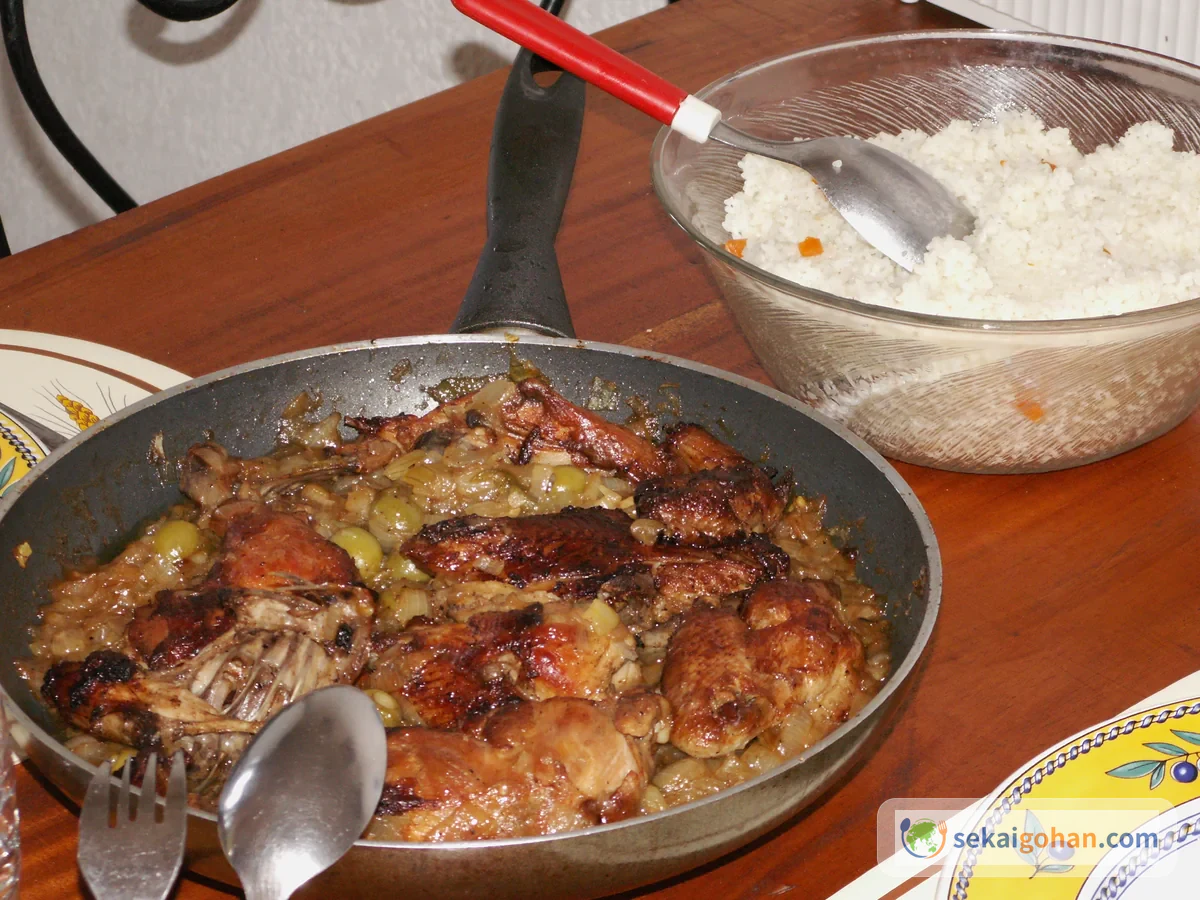
Cook the chicken through to the center. Bone-in meat tends to stay red around the bone, so insert a bamboo skewer and check that clear juices run out. With a thermometer, use a center temperature of 167°F (75°C) as the guide. Don't leave leftovers at room temperature; refrigerate promptly once they have cooled slightly.
Common chicken yassa problems and fixes
The usual failures are four: too sour, harsh onions, tough chicken and a watery sauce. With so few ingredients, every difference in cooking shows up directly in the taste, so when the flavor doesn't come together, look at the onions, the acidity, the salt and the reduction before reaching for more spices.
Browning the chicken and sweetening the onions
The character of yassa lies in two things: the toasty flavor of the browned chicken and onions that have soaked up the acid and come together almost like jam. Treat them as separate jobs and the flavor stays clear, even in a home skillet. Cook the chicken until the center reaches 167°F (75°C).

Over a charcoal fire it is easy to give the chicken strong browning, and some households grill it, but a skillet is enough. Drain the moisture before searing, then scrape up the browned bits at the bottom of the pan with the onions. Brown the chicken, fry the onions, return the marinade: keep to that order and the pot changes from smelling of weak lemon juice to a sauce you want on rice.
Too thin and they melt into a sweet sauce but lose texture. Too thick and they stay as sour boiled onions. Aim for about 0.125 inch (2–3 mm) slices; cutting along the fibers helps them keep their shape.

Chicken yassa troubleshooting

| Problem | Cause | Fix |
|---|---|---|
| Too sour | Too much lemon, not enough onion sweetness | Add ½ cup (100 ml) water and 1/2 tsp sugar and simmer 5 minutes |
| Onions are harsh | Under-cooked, cut too thick | Take out the chicken and simmer only the onions another 10 minutes |
| Chicken is tough | Marinated too long, over-simmered | Marinate shorter next time. For now, spoon more sauce over it |
| Watery | Finished with the lid on | Take off the lid and reduce over medium heat |
| Flavor is weak | Not enough salt, not thick enough for rice | Add salt little by little, and a few drops of lemon at the end |
Acidity is rounded by salt and sweetness. This isn't a dish for lots of sugar, but if the lemon is too strong, just 1/2 tsp brings back the onion's sweetness. If it tastes dully sweet instead, add lemon juice 1 tsp at a time.
More mustard doesn't bring it closer to the original; too much turns it into a Western-style mustard stew. For 4 servings, 2 tbsp is the base, and if it feels lacking, add just 1 tsp at the end.
Serving, storing and varying chicken yassa
Serving chicken yassa

The sauce of onion, lemon, mustard and chicken fat is made for white rice, and eating the chicken alone with a knife and fork misses the point. At a Western table, set out the chicken, onion sauce, rice and lemon a little apart rather than mixing everything at the start. People who like acidity add lemon, people who want heat add chili, and children or anyone who dislikes heat can take more onion.
Side dishes can be simple. A cucumber and tomato salad, boiled greens, fried plantains, or a cassava-based staple such as attiéké keeps the meal light. When the chili is strong, a salad squeezed with lemon settles the mouth better than yogurt.

Spread rice on a large platter, put the chicken in the center and spoon plenty of onion sauce over the top. Serve lemon, chili and parsley on a separate plate for everyone to add as they like.
Dishes to compare with chicken yassa
Among West African rice dishes, jollof rice is a close relative: red with tomato and chili where yassa is bright with lemon and onion, so the two make a good contrast. Elsewhere in Africa, yassa's lightness stands out. Ethiopia's doro wat simmers deeply with berbere and eggs, tibs stir-fries meat over high heat, South Africa's bobotie is a baked dish of egg and spices, and Kenya's nyama choma is all about grilling the meat itself.
As a sour chicken dish, it sits well beside the Philippines' adobo, made with vinegar and soy sauce, and sinigang, sour with tamarind. Yassa's lemon and mustard leave a different aroma on the rice. For other ways of putting acidity on meat or fish, look at Peru's lomo saltado and ceviche or Brazil's vinagrete; farofa, the toasted flour served beside grilled meat, and the herb sauce chimichurri go with meat too, but in a different direction.
To stay in Senegal, thieboudienne shows a completely different table built from the same onions and rice, and reading jollof rice, mafe and attiéké side by side shows how West Africa uses rice, acidity, peanuts and cassava. For more marinated chicken, try tandoori chicken, grilled with yogurt and spices, soto ayam, in a yellow chicken broth, or biryani, wrapped in fragrant rice. If you like bright acidity, shakshuka with tomato and eggs is next, and tagine and cachupa are good for comparing the weight of stews.
Storing and making ahead

Chicken yassa suits making ahead, and the onion sauce actually blends better with the chicken the next day. Store the rice separately, though, or it absorbs the sauce and turns into a sour porridge. Cool the chicken and sauce slightly, put them in a shallow container and refrigerate for 2–3 days.
To reheat, move it to a pot or skillet, add 2–3 tbsp water and warm over low heat. In a microwave, warm the chicken first and then spoon the sauce over it so it is less likely to toughen.
Boneless chicken is easier to freeze than bone-in. Pack one portion at a time with sauce in a freezer bag, press out the air and freeze, then thaw overnight in the refrigerator. The onions get a little softer, which is no problem for a dish poured over rice.
Leftovers make good yassa fried rice. Fry a little oil, leftover onion sauce and warm rice in a skillet, finish with lemon and black pepper, and mix in shredded chicken for a Senegalese-style sour chicken rice.
Chicken yassa variations

For fish yassa, toss white fish fillets with lemon, onion and mustard briefly, grill them, then simmer lightly in the onion sauce. Fish firms up if left long in acid, so keep the marinade to 30 minutes or less. As with the white fish used in thieboudienne, sea bream, sea bass and swordfish are easy to handle.
Made with 8–10 drumettes and simmered for 25–30 minutes, yassa gets richer, with savoriness coming out around the bones. If children are eating, leave out the chili and put red pepper flakes or sambal on the table for the adults.
Leftover onion sauce also works like an onion jam. Put grilled chicken, lettuce and the sauce between slices of bread for a sandwich with the tang of lemon and mustard. You can add a little carrot, bell pepper or cabbage to the onions for a weeknight version, but pile in too many and the dish loses its focus. Make it mostly onion the first time, and add a few vegetables from the refrigerator after that.
Frequently asked questions
Q1. Can I make it without mustard?
You can, but the flavor holds together less well, because mustard links the lemon juice, oil, chicken fat and onions. Without it, add 1 tsp vinegar, a little sugar and black pepper, and adjust with salt at the end.
Q2. How much can I cut the lemon juice?
If you dislike acidity, start by cutting 5 tbsp to 3.5–4 tbsp, then taste at the end and add more. Cut it too far and it becomes plain onion-braised chicken, so I recommend keeping lemon wedges for the finish.
Q3. Can children eat it?
Leave out the chili and it is easier for them. The mustard's pungency rounds off a lot as it simmers, but if it concerns you, cut it to 1 tbsp. Adults can add red pepper flakes, sambal or black pepper at the table.
Q4. What kind of rice goes well?
Short-grain rice is fine; cook it slightly firm so it takes up the sauce. For lightness, basmati or jasmine rice suits. The rice isn't cooked in the pot as in thieboudienne, so plain white rice from a rice cooker is enough.
Sources
The regional background of chicken yassa, its ingredient composition and the way to make the marinade and onion sauce were reconstructed to suit home shopping and a home stove, with reference to English- and French-language food media, the cooking category of Wikimedia Commons and existing articles on Senegalese cooking.
- Saveur, "Chicken Yassa Recipe" https://www.saveur.com/article/recipes/yassa-poulet-grilled-chicken-caramelized-onion/
- 196 flavors, "Chicken Yassa" https://www.196flavors.com/chicken-yassa/
- African Bites, "Yassa Chicken" https://www.africanbites.com/yassa-chickenpoulet-au-yassa/
- AfroKitchen, "Chicken Yassa Recipe | Senegal" https://afrotools.com/tools/afrokitchen/recipes/yassa-poulet-sn/